
New Molecular Research Suggests Commercial Caviar-Derived Cosmetic Ingredients Are Biologically More Complex Than Current Industry Definitions Imply
Is It Time to Reconsider What “Caviar Extract” Means in Premium Skincare?
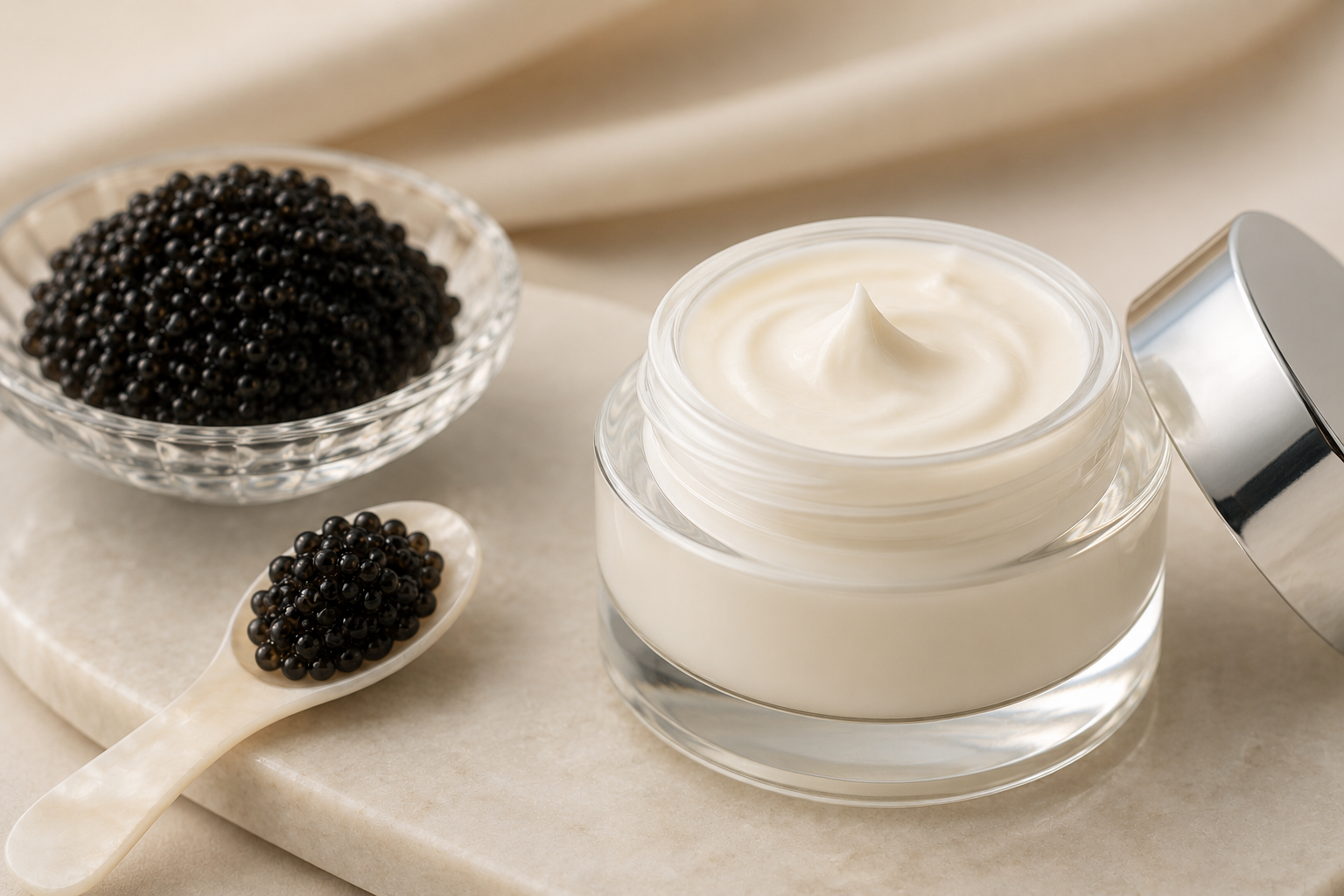
A newly published peer-reviewed scientific study in Cosmetics, the international journal covering the science and technology of cosmetics, is expected to generate significant discussion across the global cosmetics, biotechnology, regulatory and premium skincare sectors.
The paper, titled “Biological Composition of Commercial Caviar Extracts: Proteomic Insights and a Cell Culture Alternative,” presents one of the most comprehensive molecular analyses yet performed on commercially sourced caviar-derived materials, including the globally promoted cosmetic ingredient commonly described as “caviar extract.”
The findings are particularly relevant to major beauty and skincare markets, including China, the European Union, the United States, Japan and South Korea, where scientific substantiation, ingredient innovation, functional skincare claims, consumer transparency and regulatory compliance are increasingly central to product positioning, both domestically and across export markets.
For many years, industry observers have questioned whether caviar-led luxury skincare marketing always reflects the amount and character of caviar extract present in finished products. This study takes that discussion to a new scientific level. By applying proteomics to commercial caviar-derived materials, it shifts the question from marketing emphasis alone to molecular identity: what does “caviar extract” actually contain, and are current ingredient definitions keeping pace with biological reality?
The research analysed commercial caviar samples sourced from multiple geographic regions and sturgeon species, including samples from China, using advanced proteomics workflows conducted independently by two laboratories: Oxford University in the United Kingdom and Biognosys in Switzerland. Across the analysed samples, researchers identified ovarian fluid-associated proteins alongside roe-derived proteins.
According to the study, this co-extraction appears to be biologically intrinsic to standard global sturgeon roe harvesting processes, rather than merely incidental contamination.
The publication challenges a longstanding industry assumption that “caviar extract” represents a biologically homogeneous ingredient derived exclusively from sturgeon eggs. Current cosmetic nomenclature frameworks and ingredient definitions generally describe caviar extract as an extract obtained from roe alone.
Researchers identified multiple classes of biologically active proteins associated with ovarian physiology, including immunoglobulins, complement proteins, coagulation-associated proteins, antioxidant enzymes and zona pellucida glycoproteins.
The paper states that these findings may have important implications for ingredient standardisation, molecular characterisation, safety assessment, claims substantiation and regulatory transparency within the premium skincare industry.
For beauty manufacturers, ingredient suppliers, contract manufacturers, exporters and luxury skincare brands, the study raises a practical question: are existing caviar-extract specifications, safety files, marketing claims and product dossiers sufficiently aligned with the molecular composition of the materials being used?
Importantly, the study does not target any specific product or company. Instead, it addresses a broader scientific and regulatory issue affecting a rapidly expanding global ingredient category spanning luxury skincare, nutraceuticals and biotechnology.
The authors also propose that future development within the sector may increasingly move toward controlled biotechnology systems and cell-culture-derived alternatives capable of producing more defined, reproducible and sustainable protein compositions.
As China, Japan and South Korea continue to shape the future of science-led skincare innovation, the publication is expected to contribute to wider discussion across Asia and global export markets regarding ingredient identity, molecular transparency, clean-label claims, safety substantiation and the next generation of marine-derived luxury skincare technologies.
The study was authored by researchers from Germany, Poland, the Czech Republic and the United Kingdom, and was published on 28 April 2026 in Cosmetics (MDPI).
Boilerplate
Caviar Biotec is a biotechnology company operating across the United States, United Kingdom, European Union and UAE, focused on unlocking the full biological potential of caviar and sturgeon-derived materials for cosmetics, nutrition, cellular agriculture and advanced ingredient innovation. Its work is particularly relevant to Asia’s leading beauty markets, including China, Japan and South Korea, where premium skincare, ingredient transparency, scientific substantiation and regulatory compliance are increasingly central to product development and consumer trust. By combining proteomics, lipidomics, recombinant protein research and cell-culture technologies, Caviar Biotec is developing next-generation caviar-based and caviar-inspired ingredients designed to support molecular characterisation, sustainability, supply-chain traceability and scientifically substantiated applications for luxury skincare and biotechnology markets.