
TissenBioFarm Achieves World-First Cultivated Meat with Cell Density Equivalent to Real Meat
Through tissue engineering, TissenBioFarm has moved cultivated meat beyond theoretical possibility by achieving real-meat-level cell density through a technically realized, measurable outcome.
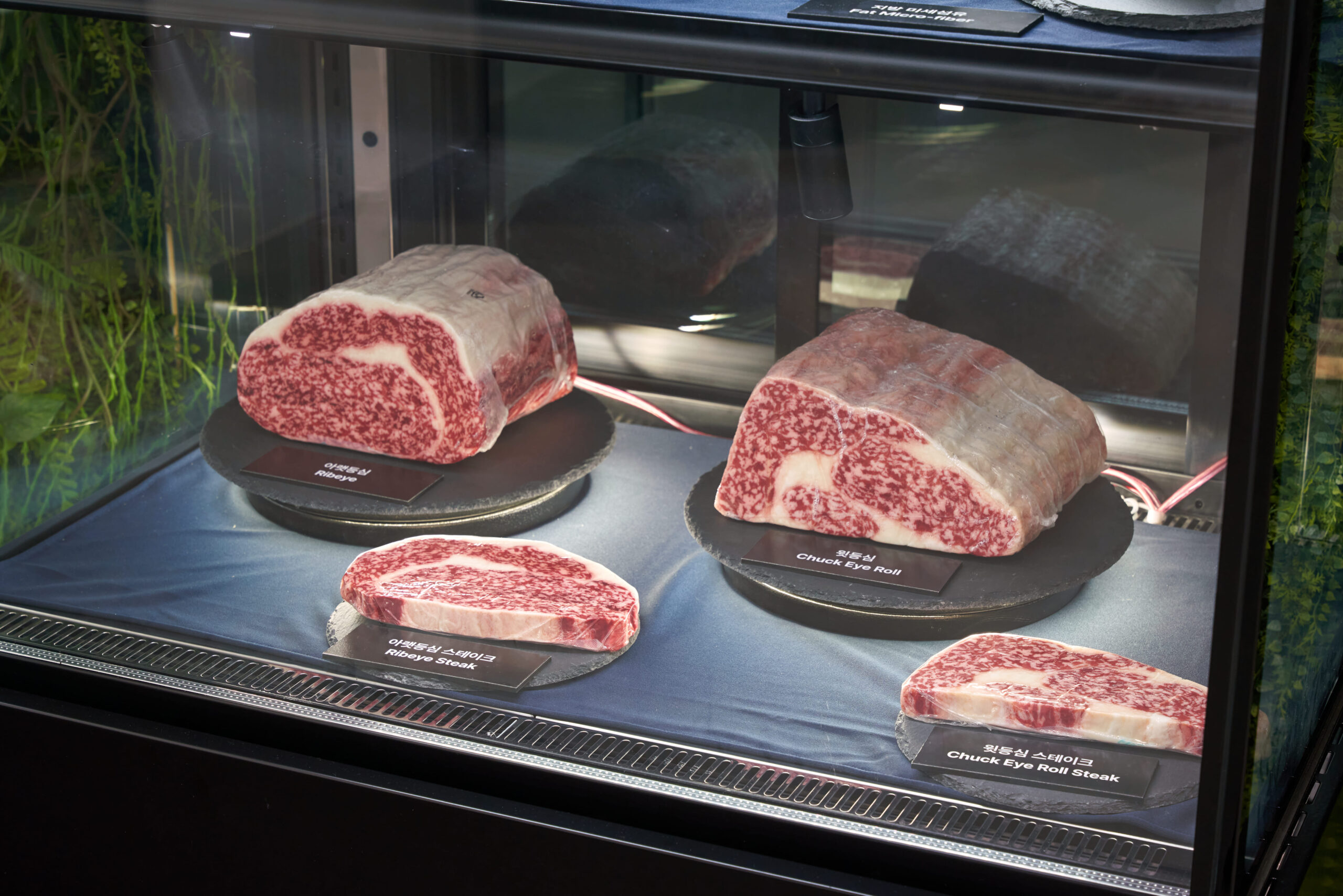
TissenBioFarm announced that it has become the first company in the world to achieve cultivated meat with cell density equivalent to that of real meat through tissue engineering technology. The company added that it has also succeeded in producing cultivated meat with cell density exceeding that of real meat.
TissenBioFarm explained that this achievement represents a shift for cultivated meat away from discussions of theoretical possibility toward a phase defined by technically realized, measurable outcomes.
In recent years, the cultivated meat industry has undergone increasingly cautious evaluation. Critics have pointed to slower-than-expected technological progress, while skepticism has grown compared to the optimism seen in the sector’s early stages.
However, analysts note that there is a fundamental distinction between what is considered technically possible and what has actually been realized, underscoring the significance of this world-first achievement.
One question that has been repeatedly raised in the cultivated meat industry is:
“So how many cells are actually in cultivated meat?”
This question has long been a burden for many companies. It has been widely believed that achieving cell densities comparable to real meat is technically challenging, leading to perceptions that cultivated meat more closely resembles a scaffold-based structure than true meat tissue.
TissenBioFarm has approached this issue from a different perspective, focusing on tissue rather than individual cells. The company defines the essence of cultivated meat not as a collection of cells, but as tissue.
Biologically, meat is not a simple aggregation of cells, but a form of tissue. According to the company, the same principle applies to cultivated meat, which is also meat built from cells. When cultivated meat is approached as edible artificial tissue, the technological boundaries it can reach can be redefined in a fundamentally different way.
The company stated that its latest achievement is the result of this approach, emphasizing that it is not a theoretical projection or an estimate, but a technically realized outcome demonstrated for the first time.
According to TissenBioFarm, by controlling initial cell density conditions, it is possible to produce cultivated meat with cell density equivalent to that of real ribeye steak, as well as cultivated meat containing more than twice the cell density found in real meat.
As a result, analysts suggest that the discussion surrounding cultivated meat may also evolve. Rather than asking,
“How many cells are in cultivated meat?”
the focus may shift toward a broader question:
“What new value can cultivated meat with higher cell density than real meat deliver to consumers and to the industry?”
TissenBioFarm said that this world-first achievement opens a new horizon for cultivated meat technology, adding that it plans to continue further validation and technological advancement centered on tissue engineering–based cultivated meat.
Boilerplate

TissenBioFarm Co., Ltd. is a multi-disciplinary deep-tech startup based in South Korea, developing technologies for future food, ultra-fast biofabrication platforms, and bio applications based on edible biomaterials. Leveraging its proprietary technologies—including biofabrication for meat structuring and scalable production, edible bioink, cost-negligible cell culture technology, and food-grade cell culture materials—the company is expanding applications across cultivated meat, biomaterials, cosmetics, and artificial organ development. By approaching cultivated meat as edible artificial tissue rather than a simple aggregation of cells, TissenBioFarm applies tissue engineering principles to address key technical challenges such as cell density, structure, and scalability. Through continued validation and process optimization, the company aims to enable commercially viable cultivated meat while advancing into high-value bio-based industries.