

Trump’s Beef Tariff Plan Protects the Largest Driver of Global Deforestation

Beef production is responsible for over two-fifths of deforestation worldwide, with the majority coming from the Brazilian industry, new research shows.
With beef prices on an upward trajectory, and with no end in sight, US President Donald Trump’s solution is to ease his tariffs on imported cattle meat.
It’s a decision unpopular with his own party, carries a strong whiff of lobbying influence, and is damning for the environment.
Last year, Wesley Batista warned that beef’s record-breaking prices were a result of high tariffs and the GLP-1 boom. Along with his brother Joesley, he is the owner of JBS, the world’s largest meat company, the single largest corporate donor to Trump’s inauguration committee, and a $15B stain on the climate fight.
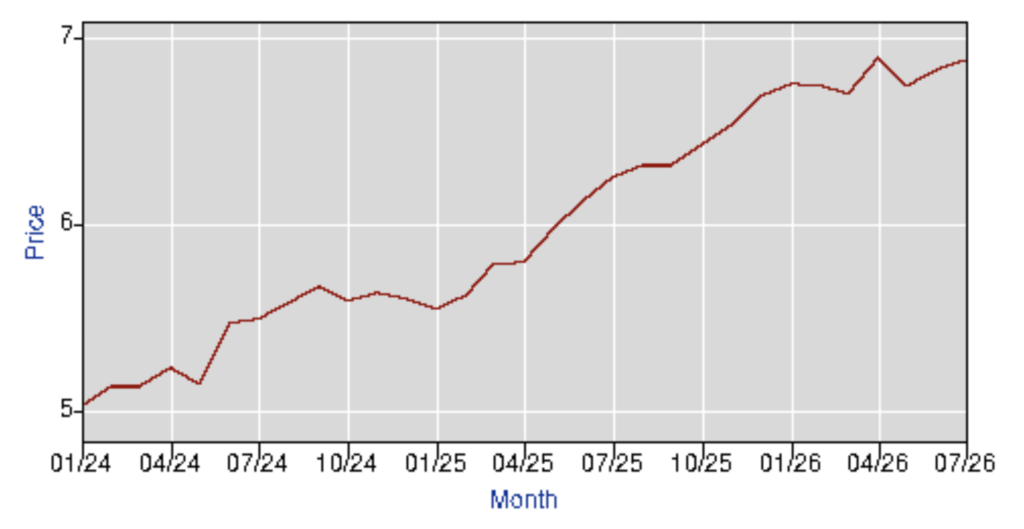
This year, beef prices have kept rising. In the US, average ground beef prices reached nearly $6.90 per lb in April, an all-time high. Last month, with the cost of this meat still near that figure, Joesley reportedly met with Trump to lobby him to drop his 26% import tax on beef.
A day later, the president announced a temporary relief on beef tariffs, noting that imported ground beef would sell 25% below current prices.
The decision ignores one of the major reasons why beef prices are on the up in the first place: climate change. Beef is the food system’s worst contributor to the climate emergency, so in many ways, the industry is in a crisis of its own making.
New research now sheds further light on beef’s outsized impact on the planet, making the merit of Trump’s decision all the more confounding.
Brazilian beef the biggest culprit
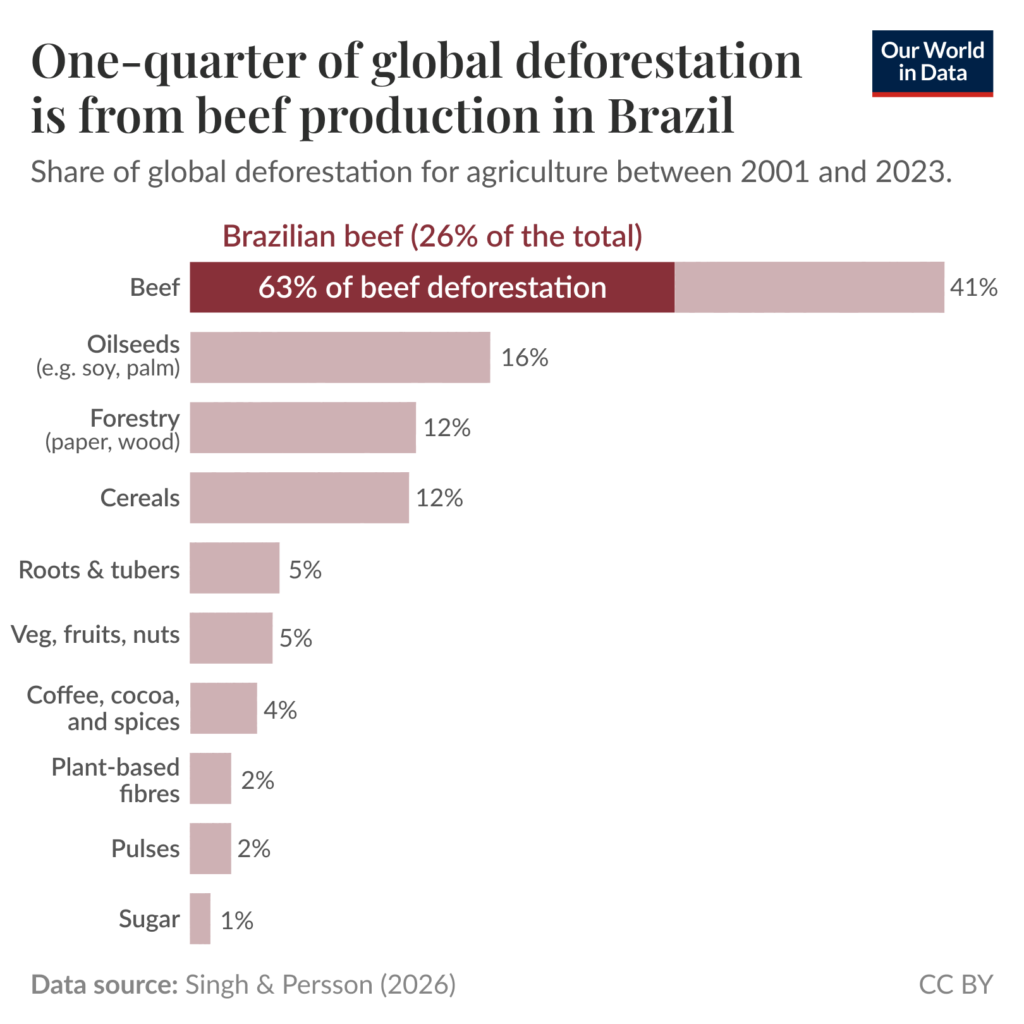
As outlined by Our World in Data, a 2026 study shows that beef production, specifically the clearing of forests to unlock more land for grazing pastures, has driven 41% of global deforestation since the start of the century.
That is far higher than any agricultural product. For instance, oilseeds such as palm and soy account for 16% of deforestation, while cereals and forestry products such as paper and wood account for 12%.
Beef’s impact mostly comes from Brazil, home to JBS. Nearly two-thirds (63%) of cattle-related deforestation originates in this country, making Brazilian beef responsible for a quarter (26%) of global deforestation.
Much of this comes from domestic demand, with per capita beef consumption in the South American nation doubling over the last 50 years. The average intake of this meat is now three times higher here than in Europe.
Beef alone makes up 87% of Brazil’s deforestation impact, with 85% of it is consumed domestically. The land-clearing doesn’t just impact forests: it is particularly damanging for biodiverse regions in the Amazon rainforest and Cerrado savanna.
Separate research has similarly found that growth in demand for grazing land for beef production is the leading direct driver of tropical deforestation, accounting for over 40% of forest clearing in the region between 2005 and 2013.
Climate-friendly beef doesn’t exist
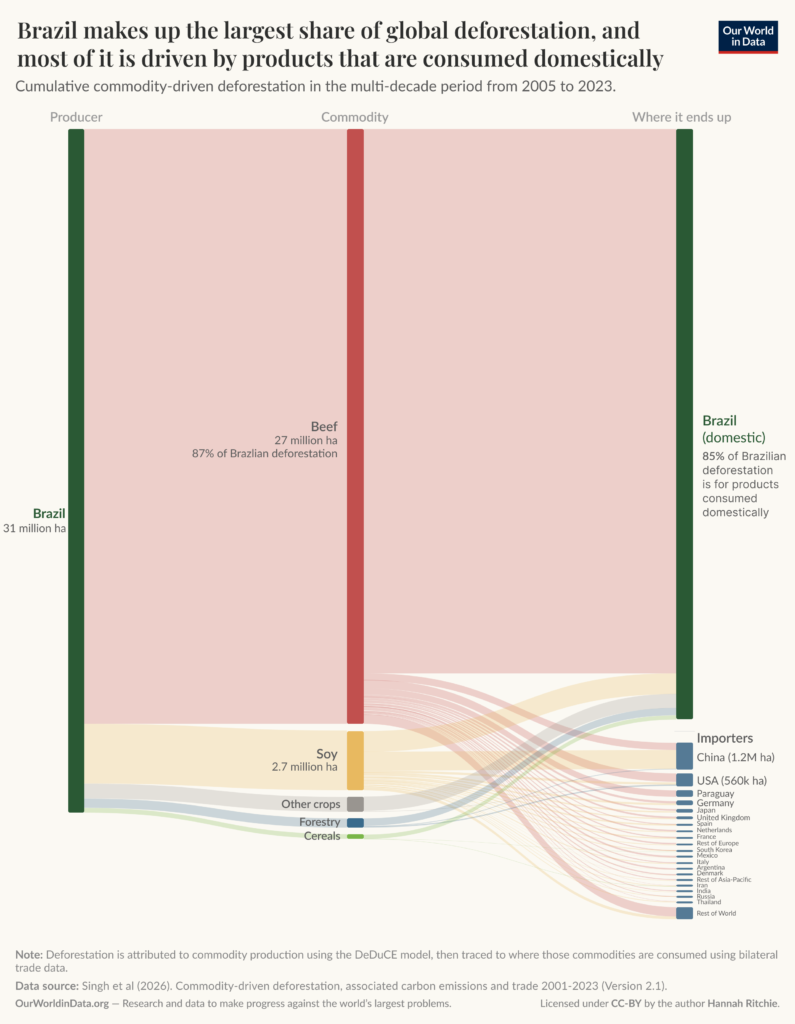
International demand for beef does drive some deforestation in Brazil, which exports 15% of its output, mainly to China and the US. The latter’s purchases of Brazilian beef have increased in recent years. In 2025, the US imported $1.75B worth of this meat, up from 39% in 2024. And in the first three months of 2026, Brazil shipped $795M worth of its beef stateside, a 21% hike from the same period last year.
Soy also carries some of the impact, but as research shows, 77% of global soy production is reserved for livestock feed. Much of the remaining amount is used for biofuels, industry, or oils – only 6% goes to human food applications, like soy milk or tofu.
Analysis by the Breakthrough Institute last year pointed out that Brazilian beef has four times the carbon footprint of its American counterpart, so lowering tariffs on the former will only make things worse for the planet.
It’s not just the environment that will suffer, though. As many ranchers and Republicans have argued, offering a discount on beef imports won’t have a tangible impact on prices in the short term. “You don’t put America first by putting US cattle producers last. This move will weaken our markets and gamble with food safety in the process,” said Justin Tupper, president of the US Cattlemen’s Association.
According to the World Resources Institute, while measures like continued efficiency gains, optimised grazing, improved disease management, more effective feed additives, and changes in animal breeding and genetics can help cut beef’s climate footprint, it can never be an eco-friendly product.
“The only way to guarantee you’re lowering the climate impact of your beef is to buy less of it,” it said. That, unfortunately, is sure to fall on deaf ears with this climate-sceptic White House.