

When It Comes to Climate, Fermentation-Derived Proteins Blow Meat & Dairy Out of the Water

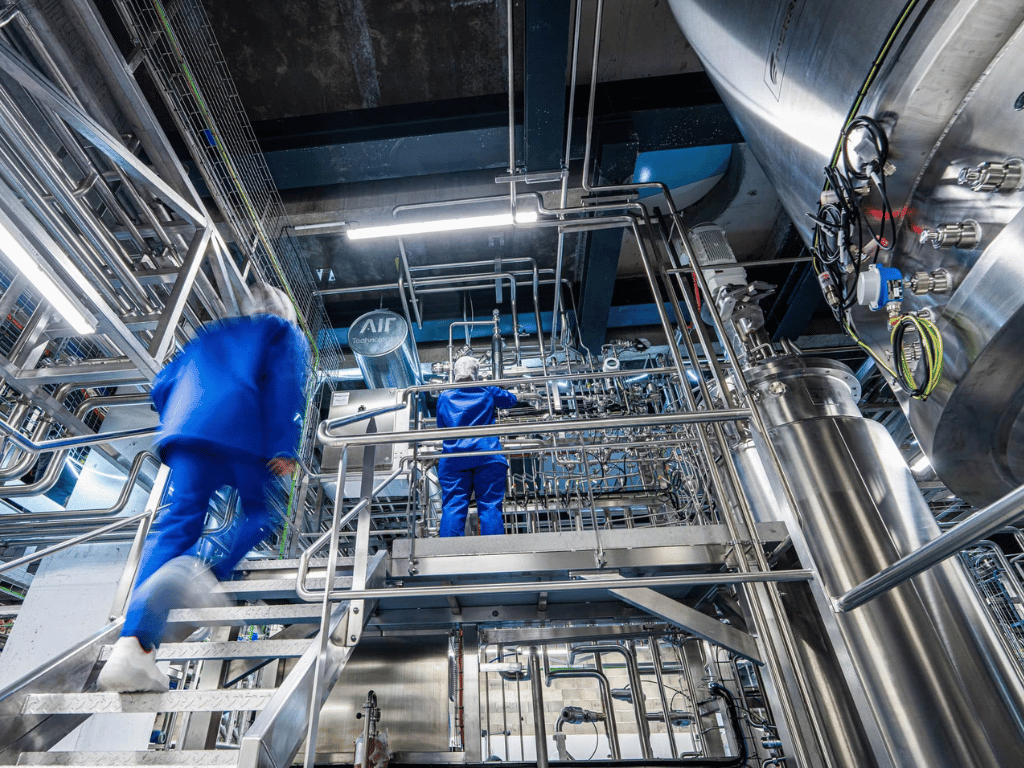
An analysis of dozens of life-cycle assessments has found that fermentation-derived proteins and ingredients are far better for the environment than meat, dairy and seafood.
If you weren’t already convinced about the potential environmental wins fermentation can deliver, a new analysis puts all doubts to rest.
Alternative protein think tank the Good Food Institute (GFI) examined more than 30 life-cycle assessments (LCAs) to highlight the massive climate benefits of proteins and ingredients produced via biomass, precision and microalgae fermentation.
“Fermentation-derived protein represents an efficient, nutritious, and scalable solution to decrease environmental impacts associated with animal-sourced foods,” GFI said in its report. “Environmental advantages – including lower greenhouse gas emissions, land use, and water use – prevail across all three production pathways and across multiple end product types.”
Across the board, fermentation outdoes animal-sourced foods
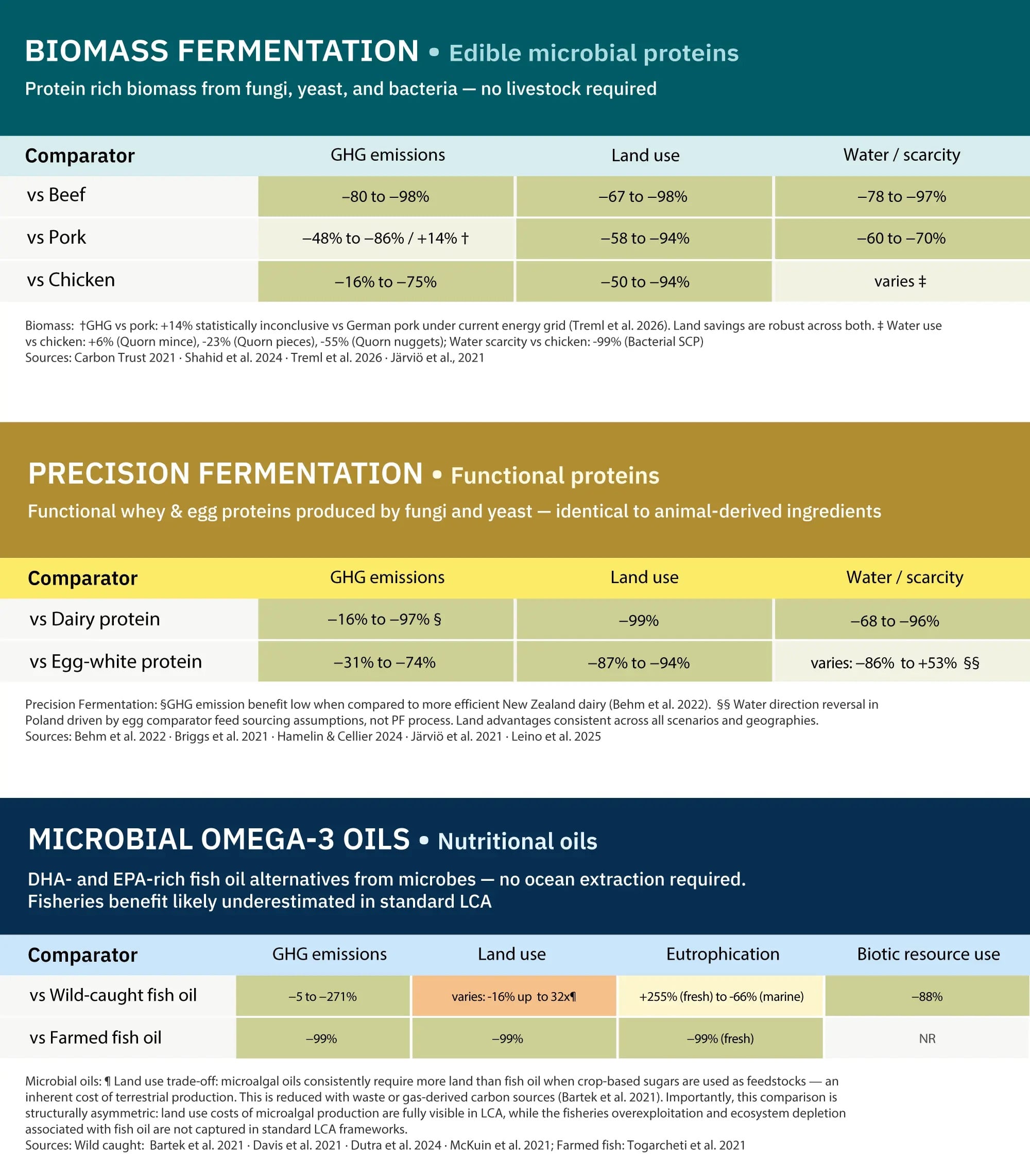
GFI describes biomass fermentation as a process to make single-cell protein from fungi, bacteria or yeast, where microbial biomass can be the main component or serve as one of several ingredients in a blend.
Proteins produced this way – which include mycoprotein and gas protein – have been found to reduce emissions by 98% compared to beef, 86% compared to pork, and 75% compared to chicken. Not to mention, they require 98% and 94% less land than beef and pork, respectively, while lowering water use by 97% and 70%.
Precision fermentation, on the other hand, uses microbes as biological factories to produce proteins functionally equivalent to dairy, eggs, and others. This technology emits 62-97% fewer greenhouse gas emissions than US dairy protein, while occupying up to 99% less land and using up to 97% less blue water.
Likewise, precision-fermented egg white protein is associated with 31-74% fewer emissions, 87-94% less land use, and up to 86% less water consumption than its chicken-derived counterpart.
Beyond proteins, GFI looked at the climate impact of microbial omega-3 oils produced via microalgae and yeast. These have 29-73% lower emissions than wild-caught fish oil when using crop-based feedstocks, and a whopping 271% smaller GHG footprint when leveraging food-waste-derived feedstocks.
They’re also associated with “consistent reductions in marine and freshwater eutrophication, terrestrial acidification, and ecotoxicity”, impacting categories where conventional fish oil performs poorly due to vessel emissions and aquaculture nutrient runoff.
The research identifies three levers that will determine whether fermented proteins deliver on their environmental potential: transitioning to renewable energy (the “single highest-leverage improvement”); using next-generation feedstocks like agricultural sidestreams, waste-derived carbon, and CO2-based sources; and selecting locations that take into account grid carbon intensity, water scarcity, feedstock sourcing geography, and local infrastructure.
How policymakers can advance the fermentation sector
“Governments can unlock further innovation in the sector and accelerate production with targeted policy actions,” GFI states. “Policies to support commercialisation, including loans, loan guarantees, and manufacturing grants, can de-risk and attract private capital to support scale-up.”
It outlined a range of policy measures to enable fermentation at scale and futureproof the food system. Policymakers should incentivise commercial-scale production by providing loans, loan guarantees, manufacturing grants, transferable tax credits, and procurement commitments. This helps de-risk and attract the private capital needed to fund scale-up activities.
Further, they should finance open-access research and development to increase competitiveness with animal proteins, since the private sector alone can’t meet the investment needs within the timeframe required to avert severe climate depletion.
GFI recommends that governments invest in public-private fermentation hubs with shared pilot plants and scale-up facilities to reduce the capital expenditure burden on individual companies, create regional bioeconomy hubs by co-locating fermentation plants with industrial decarbonisation projects, and support low-cost renewable electricity for bioprocessing facilities to speed up improvements and drive down costs.
Moreover, support for regionally produced crops, like corn, sugarcane and sugarbeets, as primary feedstocks is important, as is the development of clean sugar processing facilities and next-generation feedstock infrastructure. Fermentation facilities can also be connected to local agricultural sidestreams to enable resource use and new revenue streams for farmers.
Finally, governments must maintain efficient, proportionate regulatory pathways for fermentation-derived ingredients, which should be governed by risk-based regulation and placed on a fair regulatory playing field with animal proteins and fats.