

South Korea’s SeaWith to Build $15M Cultivated Meat Facility in Food Tech Hub

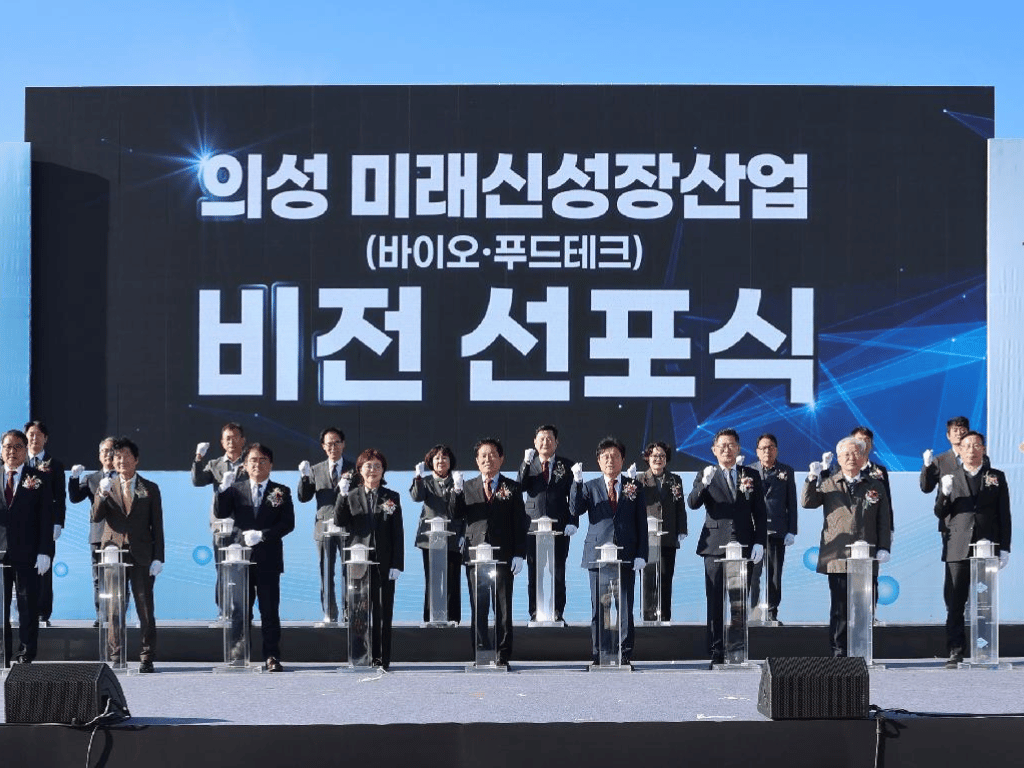
South Korean cultivated meat startup SeaWith has signed an MoU to invest ₩20B ($14.9M) in Uiseong County’s Food Tech Research Support Center to build an industrial-scale production facility for its Hanwoo beef.
SeaWith, one of South Korea’s leading cultivated meat startups, is eyeing a new production site at the upcoming Food Tech Research Support Center in Uiseong County.
The startup has signed an MoU with Gyeongsangbuk-do province and Uiseong-gun county to establish an industrial-scale facility to manufacture its cultivated beef within the Uiseong Biofood Valley.
SeaWith, which currently operates out of the Uiseong Cell Culture Industry Support Center, will increase its employee count at the site to 46, as well as invest ₩20B ($14.9M) in the under-construction Food Tech Research Support Center.
Meanwhile, the provincial and county governments will provide support for administrative procedures and financial cooperation, and work with the startup on R&D, technology demonstration, and product commercialisation.
Separately, plant-based food producer Ograe Agricultural Cooperative is pouring in ₩25.5B to build a protein food manufacturing site and create 37 new jobs at the food tech centre.
New facility will expand bioreactor capacity fourfold
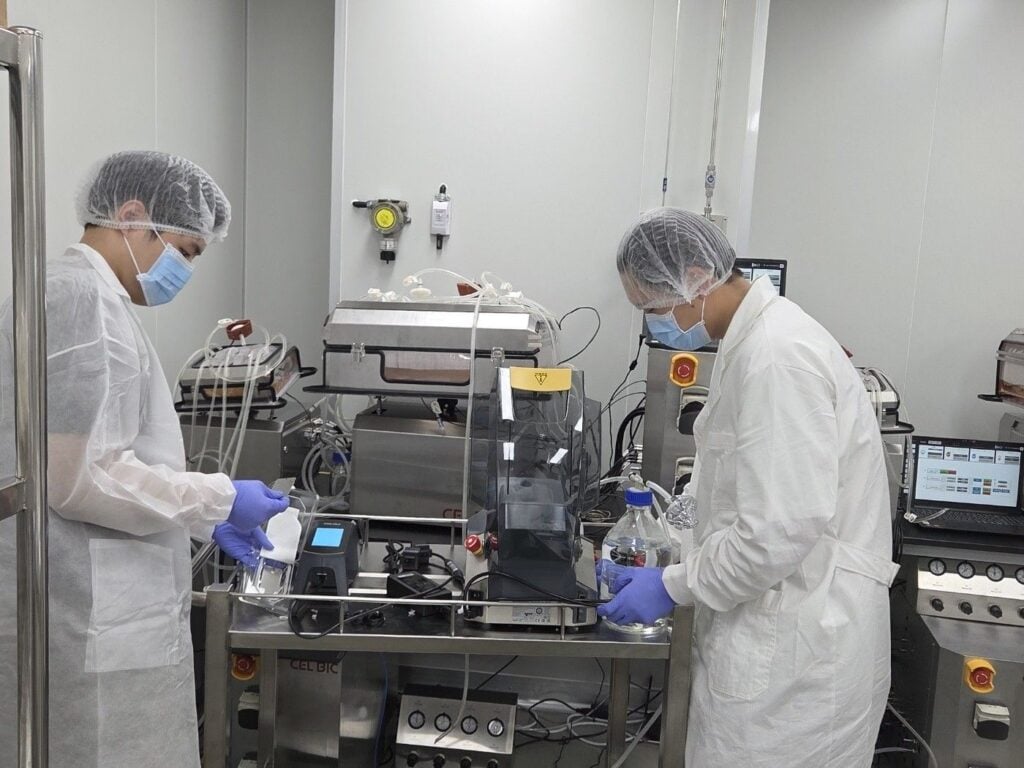
SeaWith has created a seaweed-based technology to produce cultivated meat, with it plans to sell under its Welldone brand. It’s starting with meatballs derived from the cells of Hanwoo cows, a breed native to South Korea and prized for its high-quality beef.
“We have worked with Gyeongsangbuk-do and Uiseong for four years,” co-founder and CEO Keum Joonho said in a LinkedIn post, referring to the startup’s participation in the regulation-free special zone created in Gyeongsangbuk-do in 2024.
SeaWith began its work in this zone in 2025. “Since then, we have stored more than 7,000 vials of cells from Uiseong Hanwoo cattle, selected with AI, and three 500-litre bioreactors there now make our approval batches,” said Joonho.
The MoU was announced the same day construction began on the Food Tech Research Support Center. SeaWith aims to build a Good Manufacturing Practices-compliant facility with three 2,000-litre bioreactors and a production capacity of 400 tonnes by next year, eventually expanding to 1,200 tonnes annually by sequentially assembling processing and logistics facilities and mass production modules.
SeaWith also plans to take the same production model outside South Korea, with Joonho indicating that the company is exploring the US as a potential market.
“We will enhance the gourmet value of Hanwoo from existing farms, while SeaWith will take the lead in minced meat production to stabilise distribution costs and expand the foundation for Hanwoo exports,” he said in a statement.
SeaWith to file for regulatory approval this year
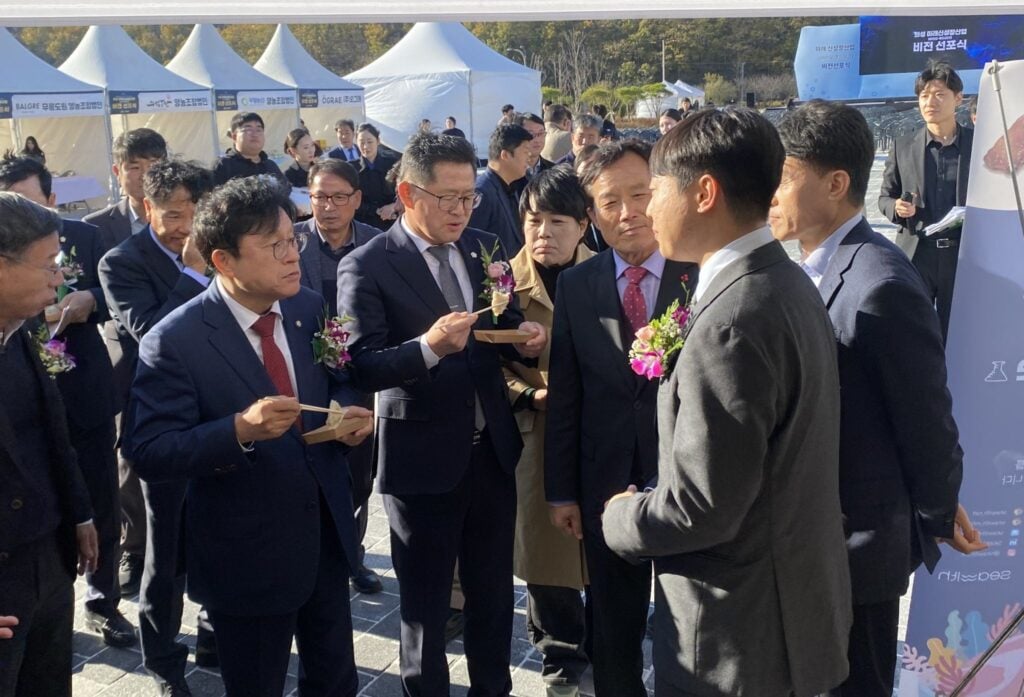
The regulation-free zone was created by the federal government to ramp up R&D for cultivated meat. It exempts companies from certain red-tape regulatory hurdles to fast-track the commercialisation of these proteins by scaling up production and achieving price parity with conventional meat.
The food tech centre, meanwhile, is funded by ₩14.5B ($10M at the time) from the national and local governments. Spanning 2,660 sq m, it’s set to open in 2027 and will help cultivated meat and future food companies develop their processes, scale up production, and apply for regulatory approval.
Joonho, who stressed that the MoU is non-binding and subject to approval, confirmed that SeaWith plans to file a regulatory application with the Ministry of Food and Drug Safety this year. It will begin commercial production once it secures the green light.
Several others are vying for regulatory approval of cultivated meat in South Korea, including CellMeat and Simple Planet, with the Good Food Institute APAC (which is working to advance the domestic future food industry) pinpointing the country as one to watch for upcoming regulatory approvals.
Polling shows that 90% of Koreans are willing to try cultivated meat, and two in five are in favour of it being sold at supermarkets and restaurants. Pricing is the most important purchase driver, cited by 65% of respondents, followed by taste and texture (62%).
SeaWith isn’t the only producer of cultivated Hanwoo beef. At the Gyeongsang National University, researchers have developed a 3D whole-cut cultivated meat product combining cultured cattle cells with plant-based proteins, which has a chewy, fibrous texture and visible marbling, and takes 70-80% less capital to produce.