

India’s AltM Nabs $10.3M to Upcycle Agricultural Waste Into Fossil-Free Cosmetics, Textiles & More


Indian biomaterials startup AltM, founded by Tesla alums, has raised $10.3M to scale up its tech that converts farm waste into specialty materials for cosmetics, beauty, packaging, textiles, and other industries.
Bengaluru-based firm AltM, which converts agricultural waste into bio-based materials, has closed a $10.3M Series A funding round to expand its R&D and manufacturing operations.
The investment welcomed new backers Rainmatter by Zerodha and Mela Ventures, who joined existing shareholders Omnivore, Theia Ventures, Aureolis Ventures, Spectrum Impact, and strategic angel investors.
Founded by two former Tesla manufacturing executives, AltM will use the funds to move from pilot production to commercial-scale manufacturing, expand its R&D and customer qualification programmes, and grow its engineering and commercial teams.
The startup’s technology turns agricultural residues into high-performance sustainable materials and molecules for a host of industries, including beauty and personal care, textiles, industrial chemicals, construction, packaging, and consumer goods.
“Rewiring foundational supply chains away from fossil-derived inputs is one of the most critical challenges facing modern manufacturing today,” said Abhinav Negi, climate and deep tech lead at Rainmatter by Zerodha.
The AltM team has demonstrated outstanding technical depth alongside strict commercial discipline, and we are proud to support their long-term vision to build a globally relevant materials platform from India,” he added, nodding to India’s “immense domestic agricultural residue base”.
The technologies powering AltM’s waste-derived materials

AltM’s proprietary thermochemical biorefinery, AltMorph, converts agricultural byproducts like sugarcane bagasse and rice straw into materials designed to replace fossil fuels. It separates biomass into valuable components, such as cellulose, hemicellulose and lignin, to be transformed into multiple ingredients from a single feedstock.
Its process begins with the aggregation of biomass from various sources, whose impurities are removed to prepare for efficient deconstruction. It then applies heat and chemicals to break the biomass into its constituent fractions, which are isolated and refined to remove impurities for higher-quality biopolymer streams.
The final phase of the process involves modifying biopolymers for improved catalytic reaction efficiency, transforming base chemicals into higher-value derivatives, and final processing to meet quality standards and specifications for end-use form factors and applications.
The firm enlists four core technologies to support its processes. AltEnrich processes residues into pure, carbohydrate-rich streams free from lignin and silica to simplify downstream operations and boost efficiency. AltEnhance is a recovery process to extract valuable carbohydrates and lignin from bioenergy and agri-residue processing waste streams.
Meanwhile, AltEn Biogas is a feedstock enhancement solution that leverages post-harvest agricultural residue to improve biogas production from lignocellulosic biomass, and AltEnol is a bioethanol production tech that uses catalytic pretreatment to lower enzyme dependence by up to 70%.
“Industrial manufacturing has relied on fossil carbon for more than a century. We are building a new source of industrial carbon from agricultural residue,” said AltM co-founder and CEO Apoorv Garg
“Our focus is on developing materials and manufacturing processes that allow customers to adopt these materials at the performance, cost, quality, and scale required for industrial applications.”
AltM advancing six biomaterials to demo-scale manufacturing
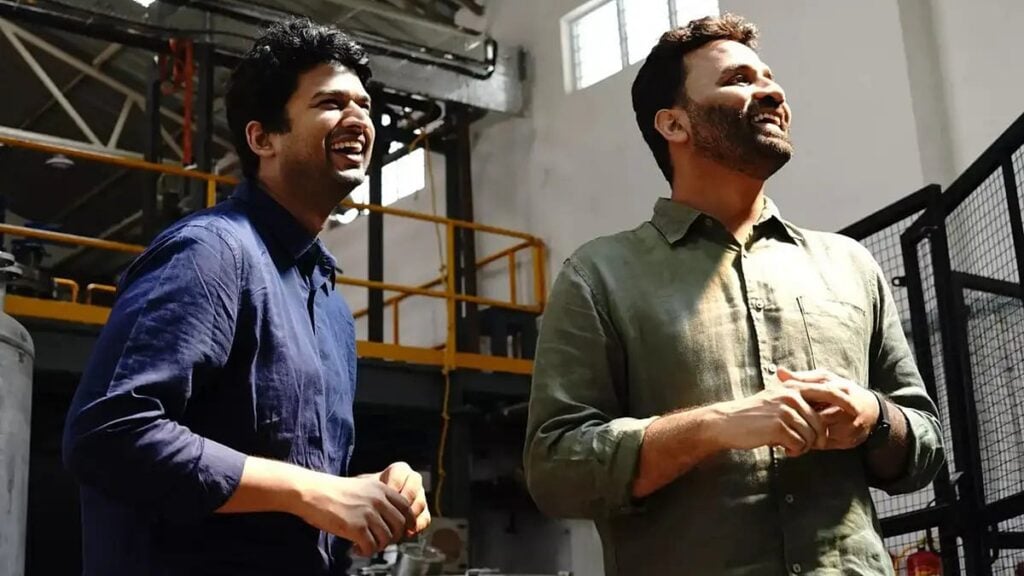
At the heart of AltM’s business model is the fact that we generate vast amounts of agricultural waste every year, most of which is either burnt or used in low-value applications. At the same time, biorefineries struggle with high costs that can often exceed the regulated selling prices of products.
So the startup leverages zero-waste biotech processes to convert biomass into sustainable materials and maximise resource utilisation, while also tackling the astronomical greenhouse gas emissions associated with producing petroleum-derived materials.
The Series A round comes three years after the firm secured $3.5M in seed funding, which it used to build an integrated R&D and pilot manufacturing facility in Bengaluru. This has brought lab research, process demonstration, and pilot-scale production under one roof.
The company has already expanded its lab footprint nearly fivefold, commissioned its demonstration facility, and advanced six molecules to demonstration-scale, with three selected for pilot manufacturing.
Its first products advancing towards commercialisation are a lignin-derived SPF booster for sunscreen formulations, a cellulose-based rheology modifier (used for thickening and viscosity in cosmetics), and a bio-based ferulic acid for cosmetics and other applications.
AltM’s technology can also help enhance fibre performance in textiles, delivering high-purity inputs with low ash content to enable improved softness, strength and consistency. By eliminating impurities and inorganic residues, its tech ensures cleaner processing and better control over fibre quality.
“Moving a material from the laboratory to commercial production requires more than proving that it works. It requires processes that can consistently produce the same material at increasing scale,” said co-founder and COO Yugal Raj Jain. “We have built AltM around that principle, combining materials development with process engineering and manufacturing from the beginning.”