

Amai Proteins Gets FDA Approval to Sell Sweet Proteins Inspired by Serendipity Berries


Israeli food tech startup Amai Proteins has secured a ‘no questions’ letter from the US FDA, clearing the way for the market entry of its sweet protein in food and beverage applications.
As sugar reduction reaches new heights in the US, one more startup has gained regulatory clearance to sell ‘sweet proteins’ in a variety of food and drink products.
This is a new class of alternative sweeteners derived from natural proteins and made via fermentation. The latest approval concerns Sweelin, a sweet protein developed by Israeli startup Amai Proteins.
The firm has obtained a ‘no questions’ letter from the US Food and Drug Administration (FDA) for the ingredient, enabling it to enter the market as a general sweetener.
Amai Proteins CEO Amir Guttman called it a “pivotal step” for the startup. “This milestone validates our regulatory strategy and allows us to move forward with commercialisation discussions with partners who are looking for clean-label, next-generation sweetening solutions.”
A teaspoon of Sweelin can replace 12kg of sugar
Founded a decade ago by Ilan Samish, Amai Proteins uses its AI-powered Pro3 Platform to develop a line of Designer Sweet Proteins to reduce the amount of added sugar in food and beverage products, from dairy alternatives, soft drinks and fruit juices to peanut butter, snacks and ketchup.
Sweelin, its first product, is a calorie-free ingredient made via the precision fermentation of Komagataella phaffii, the same yeast strain that powers the heme ingredient in the Impossible Burger.
Based on monellin, a sweet protein found in the serendipity berry, Sweelin is 3,000 times sweeter than sugar – making it one of the most saccharine alternatives approved for use in food products.
The ingredient can replace 40-70% of added sugar content, and has a 98% lower climate footprint. So a teaspoon of this sweet protein is equivalent to 12kg of sugar, saving enough water to fill 150 bathtubs, energy to power a clothes dryer for 30,000 hours, and land spanning two football fields.
It does so without any effect on blood glucose or insulin, as proven in a controlled clinical trial. Last year, a landmark study also demonstrated full digestion of the ingredient, with no harmful effects even at the highest dose tested.
Amai Proteins looks to bank on America’s sugar reduction drive
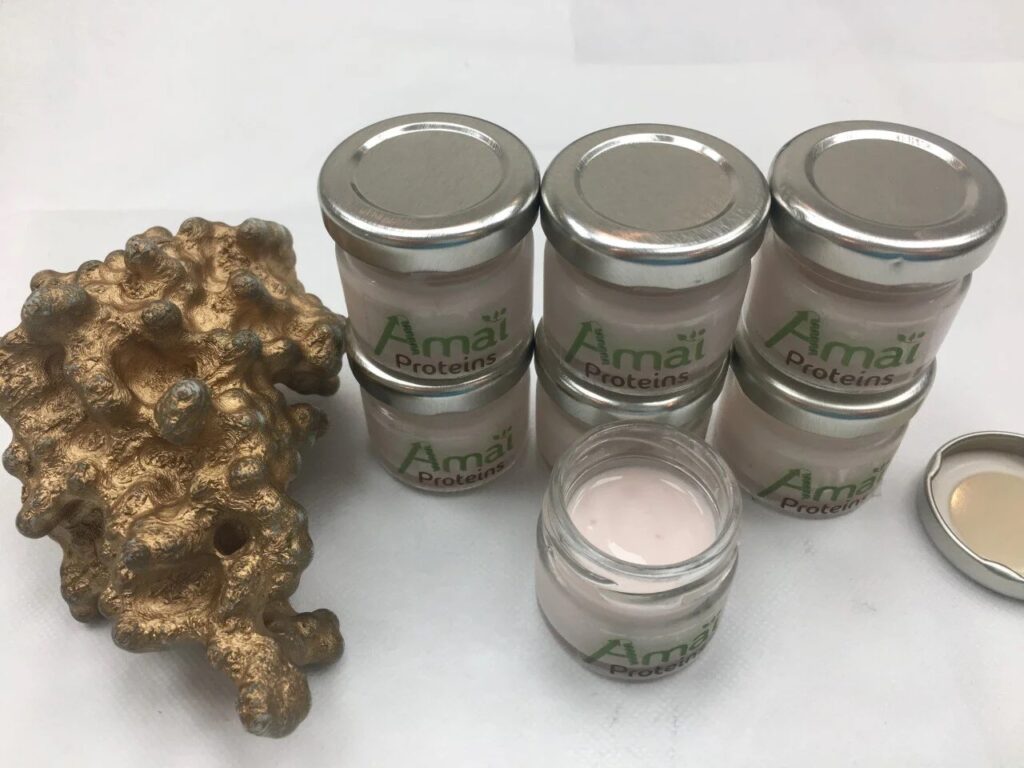
Following the FDA approval, Sweelin can be labelled ‘serendipity berry sweet protein’ on food packaging, making it easy to understand for consumers looking for next-gen sugar alternatives.
The sweet protein is compatible with industrial food processing practices, and enables stability and cost efficiency for companies looking to deliver sugar reduction without compromising on taste or affordability.
Amai Proteins is already working with food and supplement manufacturers to reduce sugar in an array of food and beverage products. And just as well, with the growing use of GLP-1 drugs like Ozempic and Mounjaro putting people off the sweet stuff amid rising obesity rates.
Now, 75% of Americans are actively trying to limit or avoid sugar, according to a 2025 survey by the International Food Information Council. And among these consumers, 63% were specifically targeting added sugars, and the same share were concerned about how much sugar they consume.
And while 41% of people still have a negative perception of low- and no-calorie sweeteners, this is down from 45% in 2018. On the flip side, the share of consumers who view these alternatives favourably rose from 23% in 2018 to 27% last year.
Sweelin isn’t the first monellin-based sweet protein to receive the FDA green light. US startup Oobli earned approval for its precision-fermented monellin sweetener in December 2024, and has a total of three sweet proteins cleared for sale in the country.
Others in the sweet protein space include Californian startup Sweegen, Colorado-based MycoTechnology, and Chilean company Naturannova.