

Beyond Meat Bets on International Markets As US Sales Plunge Further in Q2 2026

Continued headwinds in foodservice and the US led to an 8% decline in Beyond Meat’s Q2 2026 sales, but success in European and Canadian retail helped it beat its own revenue estimates.
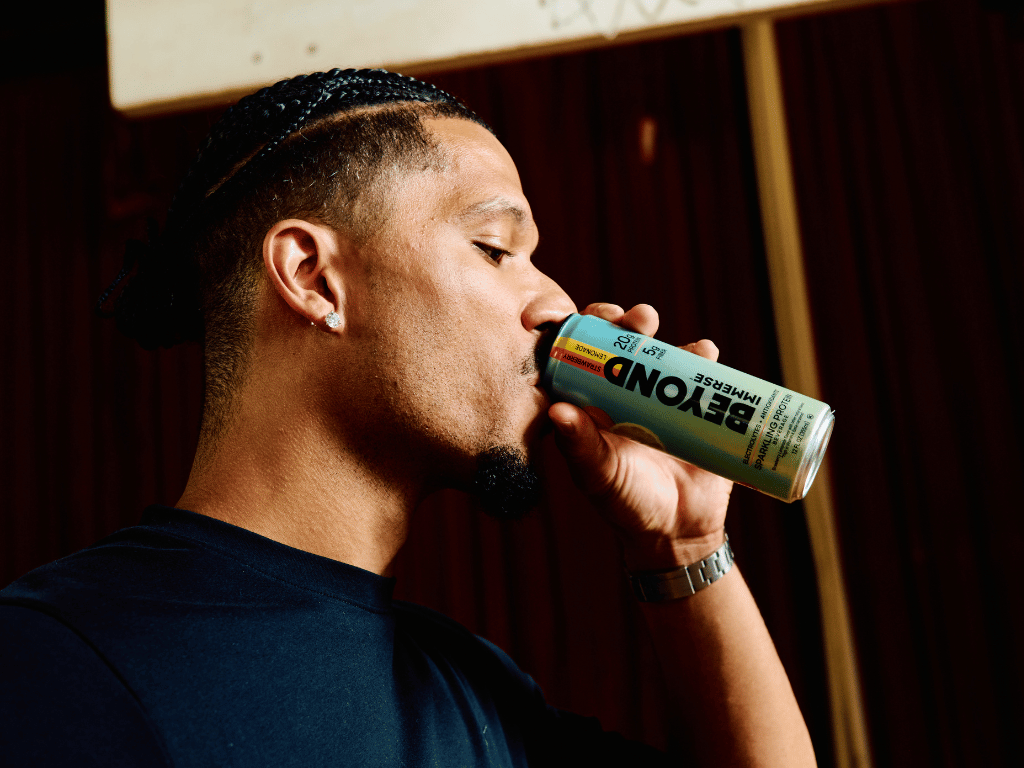
As it ramps up the rollout of its sparkling protein drinks with the help of its brand ambassador, New York Knicks star Josh Hart, Beyond Meat’s top line continued its slide in the second quarter of the year.
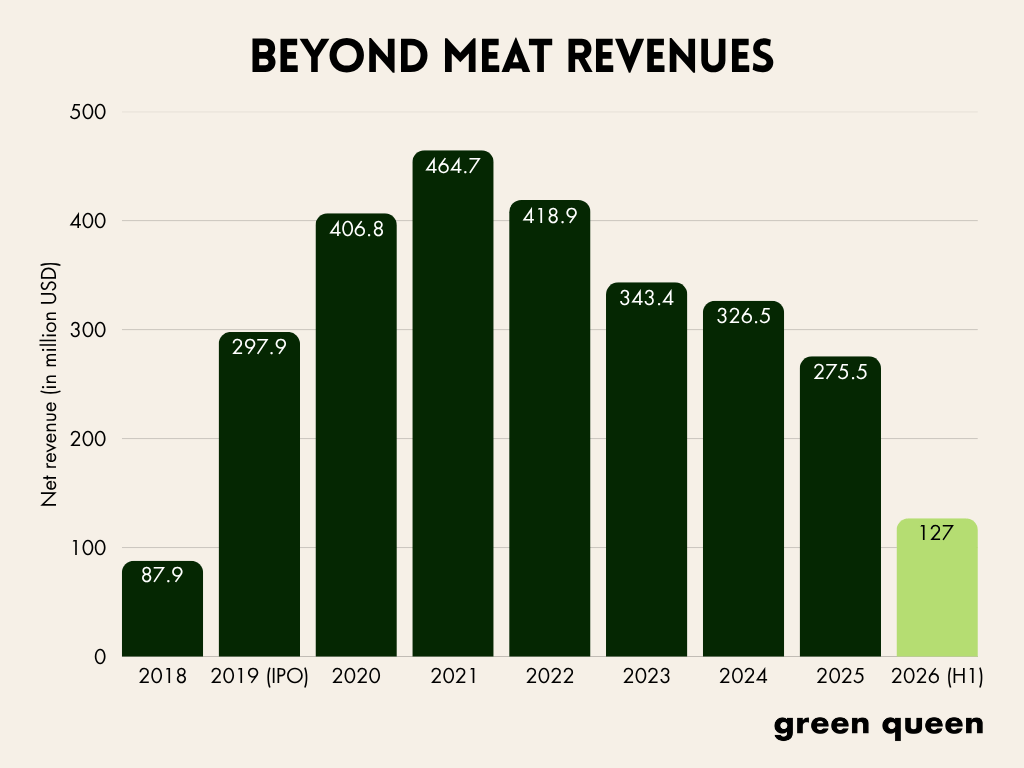
Now known as Beyond The Plant Protein Company, its revenue for the April-to-June period totalled $68.8M, an 8.2% fall from Q2 2025, primarily driven by a 9.5% decrease in volume sales.
Still, this exceeded its own revenue guidance of $60-65M for the quarter and beat analysts’ estimates of $62.4M. And the contraction in sales was much less severe than the 15.3% drop in Q1 2026 and 19.7% dip in the last quarter of 2025.
The firm is now deepening its investment into the one bright spot of its business, international retail, while working to stabilise its US performance and evolve from “a narrow focus on plant-based meat to a broader focus on nutrition”, founder and CEO Ethan Brown told investors.
Beyond recorded a gross profit of $5.9M in Q2 2026, down by 8.5% from the corresponding period a year ago. Its net income, meanwhile, reached $16.4M, compared to a loss of $31.8M last year – this was thanks to a $57.7M non-cash gain on debt extinguishment from the conversion of some of its 2030 notes.
“Broadly speaking, on a year-over-year basis, we continue to experience [the] greatest pressure in our foodservice channels, both in the US and abroad, while our retail channels are showing more encouraging signs of improvement, most notably in international,” Beyond CFO Lubi Kutua said in an earnings call.
US retail sees ‘signs of stabilisation’, but meat industry attacks continue to bite
Beyond’s net revenues in its home market were down by 14.4% year-on-year. Sales in retail shrunk by nearly 10% to $29.6M, with the decline worsening to 27.6% in foodservice (totalling just $8M), the worst-performing part of the company’s business.
In both these channels, it suffered from lower volume sales and net revenue per pound, with Beyond blaming weak category demand, reduced distribution, higher trade discounts, and lower price realisation on certain products. These factors were offset by changes in the product sales mix.
“We are seeing some signs of stabilisation in certain pockets of US retail, with our core burger, ground beef, and dinner sausage products demonstrating resiliency in specific – though certainly not all – accounts,” said Brown.
“We are hopeful that these positive signs endure and strengthen, but are also acutely aware that misinformation regarding the health of our products continues to impact our retail and foodservice businesses in the United States,” he added, touching upon a familiar gripe for the plant protein maker.
“We still operate in a world where clean protein from fava beans grown by farmers in the rich soils of North Dakota and Montana, blended with heart-healthy avocado oil, has been […] tarnished by incumbent industry-funded campaigns.
“To this end, we are increasingly addressing the source of this information in our efforts to educate consumers,” he noted, pointing to Beyond’s acclaimed Don’t Believe the Cropaganda campaign.
Misinformation less effective in Europe, where climate is ‘taken more seriously’
The company witnessed a 16% dip in its international revenues, totalling $12.7M, driven mainly by lower sales of its burger and chicken products to certain quick-service restaurants.
However, Beyond’s fortunes in the retail sector outside the US continued to improve, with revenues up by 16.5% to reach $18.5M. This was thanks to an 8.2% increase in volume sales and a 7.7% increase in net revenue per pound, with the firm pointing to higher sales of its burger and chicken offerings in Europe and of ground beef products in Canada, as well as price increases for certain SKUs.
“In Europe, we do not face the same very significant campaigns and misinformation that we do here in the US from the incumbent industry. They are organised there, they do have some activities going on, but it did not gather the same momentum,” explained Brown.
“The consumer there, I think, links much more readily their food consumption choices to climate. Climate there is obviously being taken more seriously than it is here in the US from a policy and consumer behaviour perspective. Of course, they’re experiencing some of the most difficult summers they’ve had in a long time. I think those types of things are working in our favour in the markets.”
The company recently appointed Adriaan Figee as its EMEA head, and former Olam Food Ingredients exec Brijesh Krishnaswamy (who has experience in the US and the Netherlands) as its new COO, decisions it hopes will further bolster its international growth.
“You look at different pockets. Germany is very strong. UK is pretty good. Netherlands […] also has some strength to it,” said Brown. “You’ll see us continue to invest in Europe. The dynamics there are such that the kind of negative narrative that was framed here [in the US] by the meat industry is just not present there in the same strength.”
Beyond unveils turnaround strategy hinged on three pillars
Beyond has unveiled a three-pillared strategy to turn its fate around. The first, as mentioned above, is to invest in Europe and Canada, the “clearest near-term growth engines” for its core products, and simultaneously work to stabilise its US business.
“In Europe, we are cautiously encouraged by markets such as Germany and the UK, as well as performance therein, while in Canada, [we] continue to enjoy strong retail distribution,” said Brown.
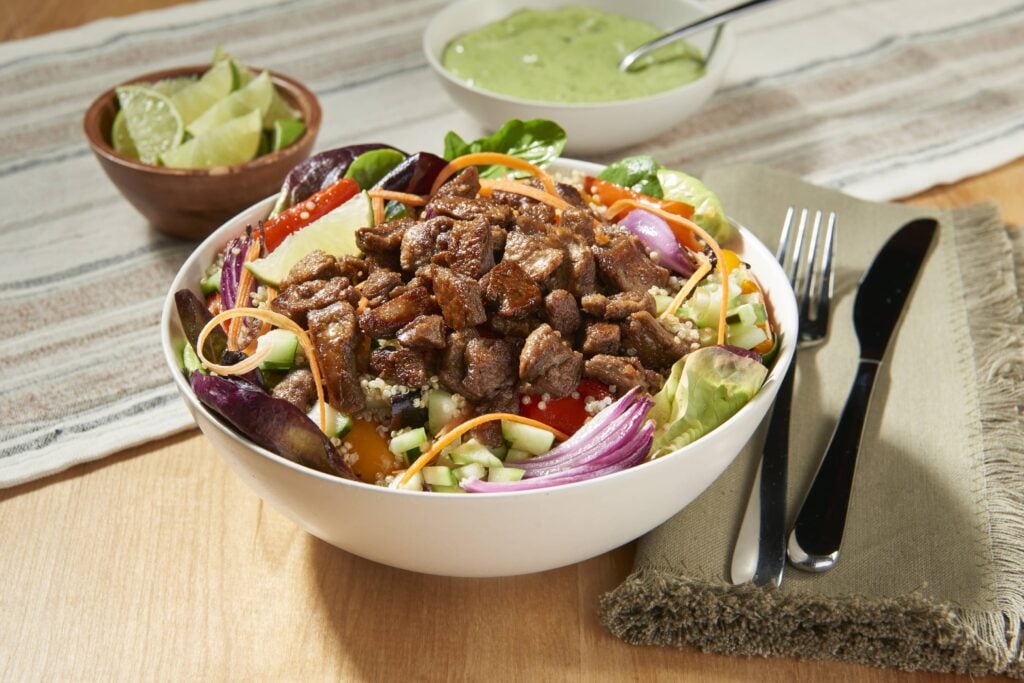
In its home country, Beyond is betting on the rollout of its mycelium steak filet, which delivers 28g of protein and 3g of fibre, and is now available in retailers like Wegmans, H-E-B, and Meijer, with more to come. The company is also “building stronger brand blocks in frozen retail”, expanding the distribution of its buffalo chicken pieces to more than 2,000 Kroger stores.
“We’ve become exceptionally good at making simple plant-based ingredients perform as delicious centre-of-the-plate proteins, leveraging significant investments across plant biology, chemistry, and functionality,” the CEO said.
These capabilities form the basis of its second strategic pillar, through which it aims to complete its evolution from a meat-alternative maker to a nutrition-first plant-protein company. “As we enter adjacent categories, we are not looking to repeat what has already been done. Instead, we apply a different lens,” said Brown.
“We seek to deliver powerful phytonutrients that are often under-consumed in modern diets, but can be so essential to optimised health. Today, many products make claims that deliver a light dusting of phytonutrients, when in fact, clinically meaningful amounts are required to create useful signals in the body. Our system is intended to avoid that trap.”
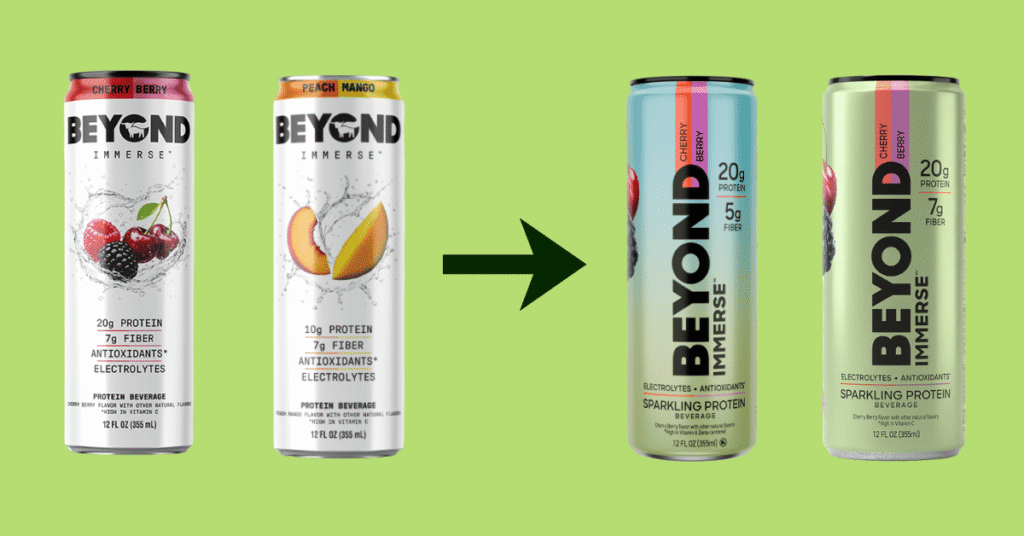
The first product under this expanded strategy is Beyond Immerse, a carbonated protein drink line that has gone through several iterations since its launch in January. The range, which has undergone a packaging refresh and now has a standalone website, currently comprises three flavours with 20g of pea protein and 5-7g of fibre per can, sweetened either with agave or stevia leaf, in combination with monkfruit.
These are now stocked in retail and foodservice locations across the New York metro area, thanks to a partnership with Big Geyser, one of the country’s largest non-alcoholic beverage distributors. Beyond has tapped Hart, now an NBA champion, to market the drinks, as it returns to a playbook of leveraging “athletes who understand the superpowers of plants and what they can do to build, fuel, and restore the body”.
The final pillar entails improving operational efficiency, unit economics, fixed cost absorption, and cash use. “With a more efficient operating model, a disciplined and cutting-edge approach to innovation, and a focused go-to-market strategy, we believe we can deliver improved financial performance and the extraordinary powers of plant-based nutrition to an ever-broadening base of consumers,” said Brown.