

Beyond Immerse: Plant-Based Meat Giant is Now Selling Protein Drinks

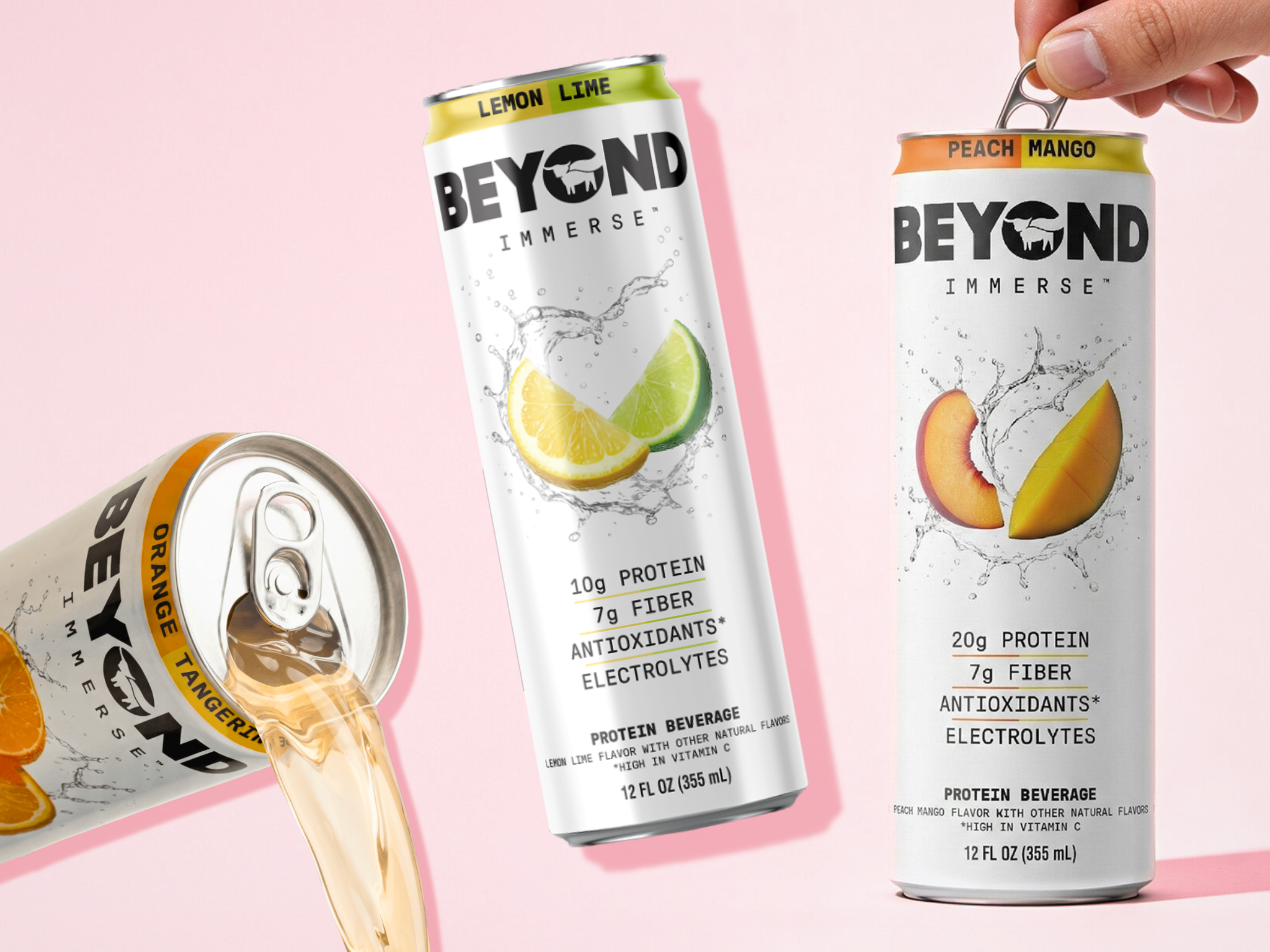
Plant-based giant Beyond Meat has diversified past food for the first time, launching a line of clear protein drinks called Beyond Immerse to support gut and muscle health.
Ethan Brown wasn’t kidding.
It was in July last year when the Beyond Meat CEO announced a gradual rebranding of the company he founded in 2009, suggesting that it would shift away from the ‘Meat’ moniker to highlight traditional plant proteins in new formats.
Soon after, the Californian firm launched a clean-label Beyond Ground line of minced products made from a fava bean base that wasn’t intended to mimic meat.
Now, the pioneer of the modern vegan burger is literally going beyond meat, identifying that America’s explosive demand for protein could be met in more ways than one.
The company has launched Beyond Immerse, a range of plant-based protein drinks that target the country’s health and wellness market. These aren’t protein shakes; they’re canned sparkling beverages that pack a hefty amount of protein and fibre in a 12-oz serving.
Asked what separates the new line from existing protein drinks on the market, a spokesperson for Beyond Meat told Green Queen: “By shifting from animal-based meat to plant-based protein, we can positively impact four growing global issues: human health, climate change, constraints on natural resources and animal welfare.”
What’s in the Beyond Immerse protein drinks?

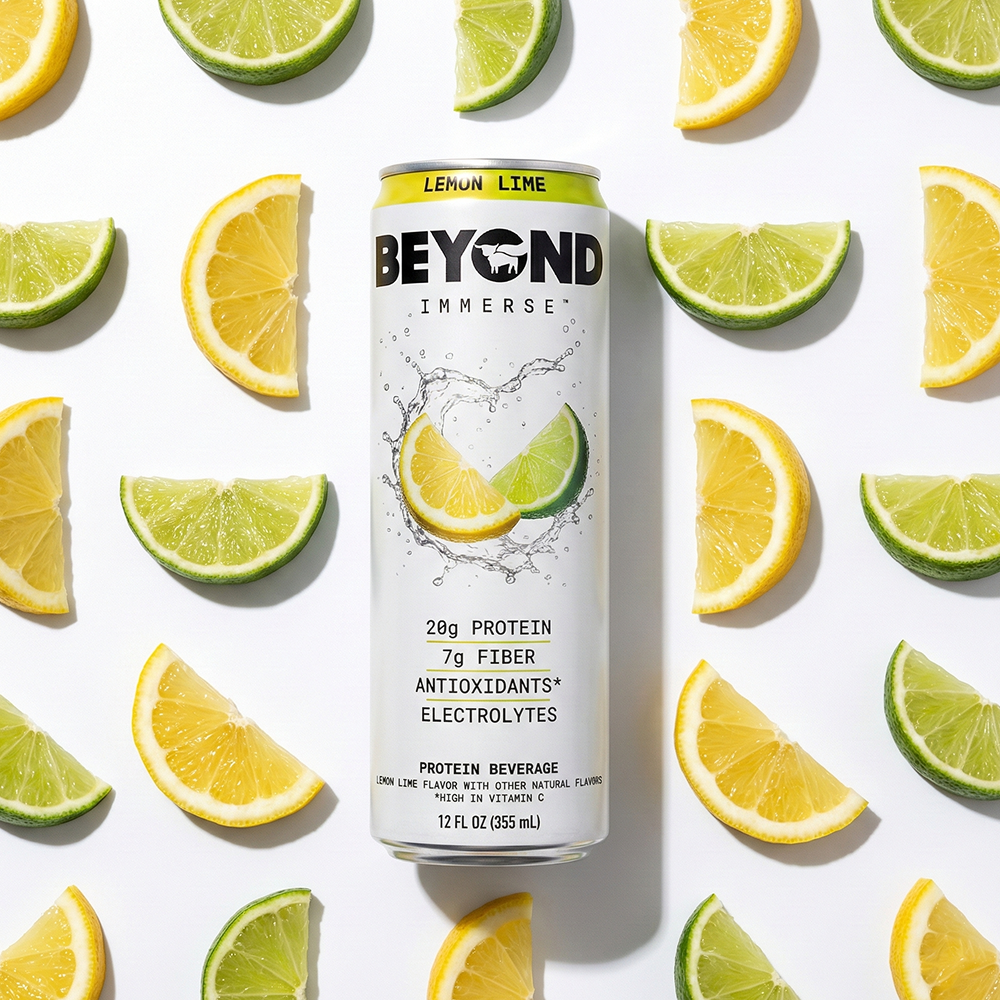
Beyond Immerse is available in peach-mango, lemon-lime and orange-tangerine flavours, with two levels of plant protein content: either 10g or 20g per can, ranging from 60 to 100 calories, respectively.
The drinks are made from a base of hydrolysed pea protein and tapioca fibre, with a small amount of tartaric, ascorbic and citric acids, stevia leaf and monkfruit extracts, and natural flavours.
They boast 7g of fibre, alongside vitamin C for immune support, antioxidants, and electrolytes. They contain no genetically modified organisms or sugar alcohols.
They are designed to support muscular growth and health, a balanced gut, and strong immune function. This is reflective of the magnified focus on gut health in food and drink launches in the US, a result of the TikTok trends like fibremaxxing and the rise of GLP-1 drugs such as Ozempic and Mounjaro.
In fact, the share of Americans using weight-loss drugs more than doubled between early 2024 and summer 2025, from 5.8% to 12.4%. That has also led to an increase in demand for protein: people on GLP-1 medications witness a 25-40% decrease in muscle mass over eight to 16 months, several times more than non-medicated weight-loss approaches and age-related muscle loss.
The Beyond Immerse range is being sold for a limited time on the Beyond Test Kitchen platform, which was launched in October to give customers an exclusive first taste of the firm’s new products before wider rollout. Each 12-pack costs $34.95 for the drinks with 20g protein, and $29.95 for those with 10g.
Sparkling beverages offer a lighter option than protein shakes
Beyond Meat, which filed a patent for Beyond Immerse in December, describes the carbonated drinks as “crisp, refreshing and without any of the heaviness of a protein shake”, betting on one of the hottest trends within the protein category.
Protein tops Americans’ list of dietary priorities in 2026, with 57% intentionally planning to focus on the nutrient, and how they consume it is diversifying quickly. Whole foods remain critical to their strategy, while protein-fortified products like beverages are gaining popularity.
They hold some important advantages over protein shakes. “Unlike powders, fortified snacks and beverages face fewer headwinds around price perceptions and being artificial for the health-conscious consumer,” Numerator’s analysts explained.
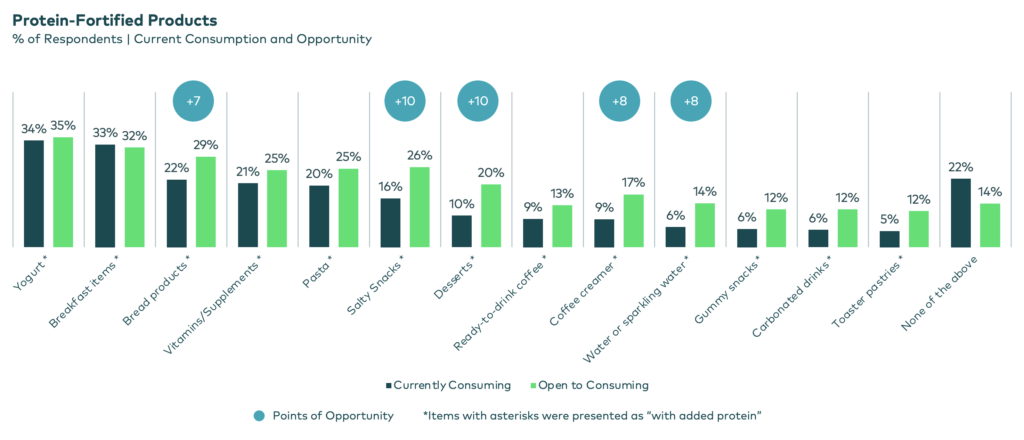
Between 2020 and 2024, the number of high-protein drinks on the market grew by 122%. And while the share of consumers who currently consume protein-fortified sparkling beverages is just 6%, twice as many say they’re open to buying these products in the future, according to polling by Numerator.
Unlike conventional protein powders, clear formats are broken down into smaller particles, with the fat, carbs, and other non-protein components all filtered out. The resulting powder can better dissolve in water to create juice-like drinks that are easier on the stomach than protein shakes. The additional processing also helps them digest faster, creating a lighter sensation.
Can beverage bet buck Beyond Meat’s slump?
Beyond Meat is one of several brands that have introduced protein-fortified sodas and fizzy drinks recently. These include Barebells, Bucked Up, Clean Simple Eats, Applied Nutrition, and, most recently, PlantFusion.
Protein has been appearing in everything from syrups and waters to cereals and pretzels, and was thrust firmly into the nutrition spotlight by the new US dietary guidelines last week.
Beyond Meat is looking to bank on this after emerging from the most turbulent year in its history, when its sales continued to decline and its stock price fell to an all-time low, thanks to a debt restructuring deal, a meme stock frenzy, and rumours of bankruptcy.
However, speaking to analysts after reporting a 13% revenue drop in Q3, Brown struck a hopeful tone and expressed “genuine optimism and excitement regarding our future.”
Speaking to Green Queen after the Beyond Immerse launch, the company’s representative said: “Beyond Meat’s brand promise, Eat What You Love, represents a strong belief that there is a better way to feed our future and that the positive choices we all make, no matter how small, can have a great impact on our personal health and the health of our planet.”