

Japan’s Kinish Scoops Up $3.1M in Funding to Ramp Up Rice-Based Ice Cream & Casein Development

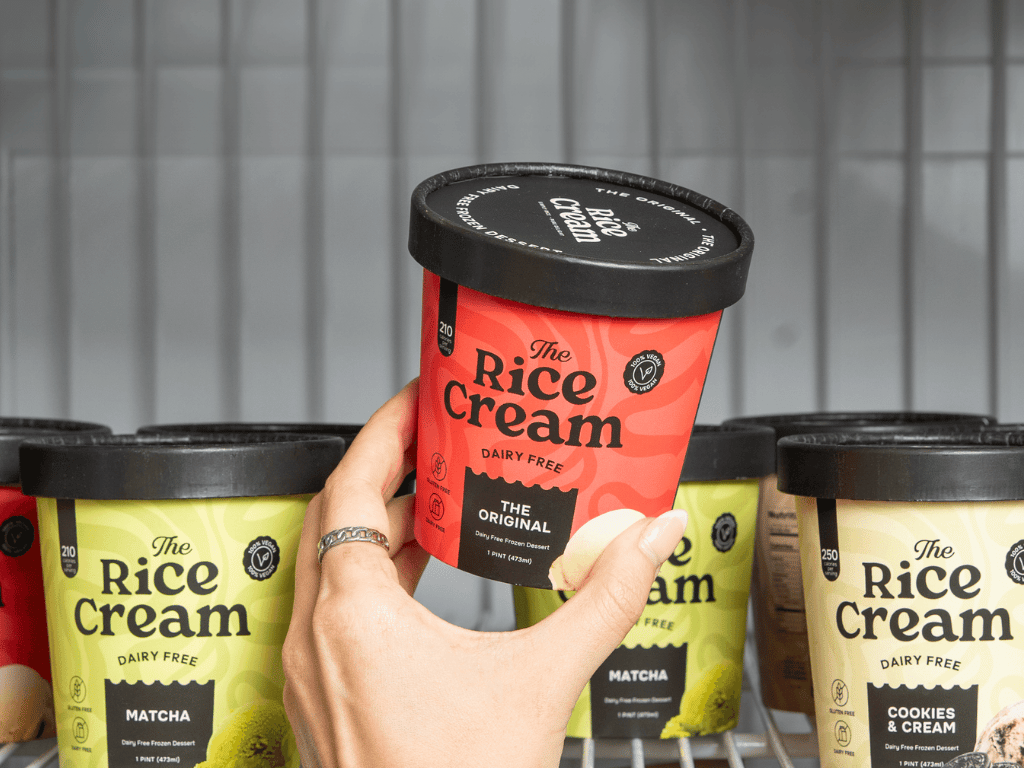
Japanese food tech startup Kinish has raised ¥490M ($3.1M) to expand the sales of its rice-based ice cream brand at home and in the US, and advance its work on rice-derived casein protein.
Kinish, a Tokyo-based startup using rice to create dairy alternatives, has secured ¥490M ($3.1M) in the first close of a Series A funding round.
The investment, which comes through a third-party allotment of shares, involved the Inspire Mutualistic Symbiosis Fund 1, the Shimadzu Future Innovation Fund, the Obayashi Corporation, and Love Veggies Holding.
The firm sells rice-based ice creams under The Rice Creamery brand in Japan and Washington, DC in the US, and is developing a molecular farming process to grow casein (the main protein in cow’s milk) within rice grains.
It will use the capital to expand the sales of its ‘rice cream’, advance its R&D in plant factories and molecular farming, and strengthen recruitment of managers and business positions in both Japan and the US.
The funding follows its ¥120M ($800,000) seed round in 2025 to support its molecular farming programme. Kinish has since opened an office in New York, and will use this as a central hub to boost local production, retail distribution, and brand awareness.
“Our mission is to transform the future of dairy through rice, creating delicious and sustainable food without compromise,” Kinish founder and CEO Hashizume Hiroya said in a LinkedIn post.
“With this funding, we’re moving from proving what’s possible to scaling what works. Our next chapter will focus on expanding our ice cream business, particularly in New York, while accelerating R&D to scale up our rice-based protein production technology.”
Tackling dairy’s outsized climate footprint with natural sweetness of rice

Founded in 2023, Kinish works on a number of alternative dairy applications based on rice, with ice creams as its flagship product range. For these, the brand relies on the “unique sweetness” of Japanese rice.
The naturally sweet varieties are short, plump and sticky, and enable products to deliver sensory qualities that even dairy cannot, according to the startup.
Its ice creams are made from rice syrup and cashew butter, which are combined with sugar, dextrose, inulin, gum acacia, guar gum, locust bean gum, and salt for the original flavour.
Kinish adds Uji matcha and Dutch cocoa powder to this base for its other two variants. The range contains 4-5g of proteina nd 5-6g of fibre per 140g serving, alongside 7g of fat (1.5g of which is saturated) and 13g of added sugar.
The Rice Creamery products are available at around 500 stores in Japan, and have also been sold in Washington, DC at retailers and the office of tech giant Meta. Hashizume suggests the brand received “great feedback from consumers” in the US capital.
Rice-based ice cream alternatives are a niche category. In Asia, Morinaga Company sells two versions under its Okometo brand in Japan, and Singapore’s Smoocht supplies brown-rice-based ice creams.
But they deal with two of the largest contributors to the food system’s methane emissions: dairy and rice. Both industries generate a similar amount of methane, but the former’s carbon impact is more than twice as high as the latter’s. Moreover, in Japan, the number of dairy farmers is declining, while milk consumption has been shrinking since the 1990s.
At the same time, climate change is wreaking havoc on Japan’s rice production. Consumption of the staple has more than halved since the 1960s, and a crop shortage has forced the government to release 200,000 tonnes of emergency rice stockpile.
Kinish’s molecular farming process outperforms open-field rice cultivation
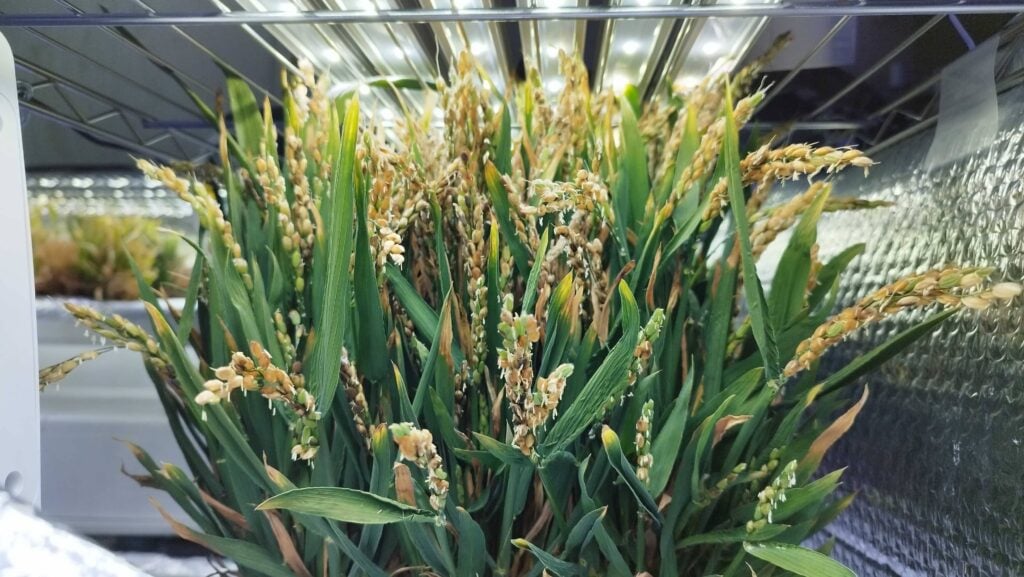
This is why Kinish has simultaneously been working on its plant-derived casein, blending molecular and vertical farming to use a fraction of the land and water used by both rice and dairy.
Molecular farming involves genetically engineering plants to produce ingredients like proteins, which can then be harvested from leaves or other tissues. This eschews the need for expensive fermentation tanks (as is the standard for cell cultivation or precision fermentation), since plants themselves act as the bioreactors.
Kinish applies the technology to dwarf rice plants, which are just 20cm tall and can be cultivated in large quantities in plant factories. By utilising vertical farming, it can grow the crops in stacked cultivation and harvest them in less than half the time required for traditional rice.
It has successfully expressed casein – which facilitates emulsification, gelation, thickening, and foaming, and is responsible for making hard cheeses melt and stretch – in rice.
In a demo experiment at its plant factory, its process yielded 2,080g of brown rice per sq m in three months. To put that into context, the average rice yield for open-field cultivation in Japan is 539g per sq m from one crop annually.
Kinish will now continue breeding improvements to further increase casein content, and expand the scale of cultivation trials to solidify methods for mass production, utilising the data to enhance cultivation recipes. It eventually aims to create an ice cream combining the rice-derived casein with rice starch, as well as a variety of cheese and yoghurt products with its cow-free milk protein.
“Kinish’s efforts in developing rice-derived plant-based foods, cultivating dwarf rice multiple times a year (multi-season cropping), and developing high-value-added protein production technologies are promising initiatives towards building a sustainable food system,” said Tamaki Horii, head of Obayashi Corporation’s business innovation division.