

Better Dairy Eyes 2027 Launch of Human Lactopontin Protein After Securing US Clearance

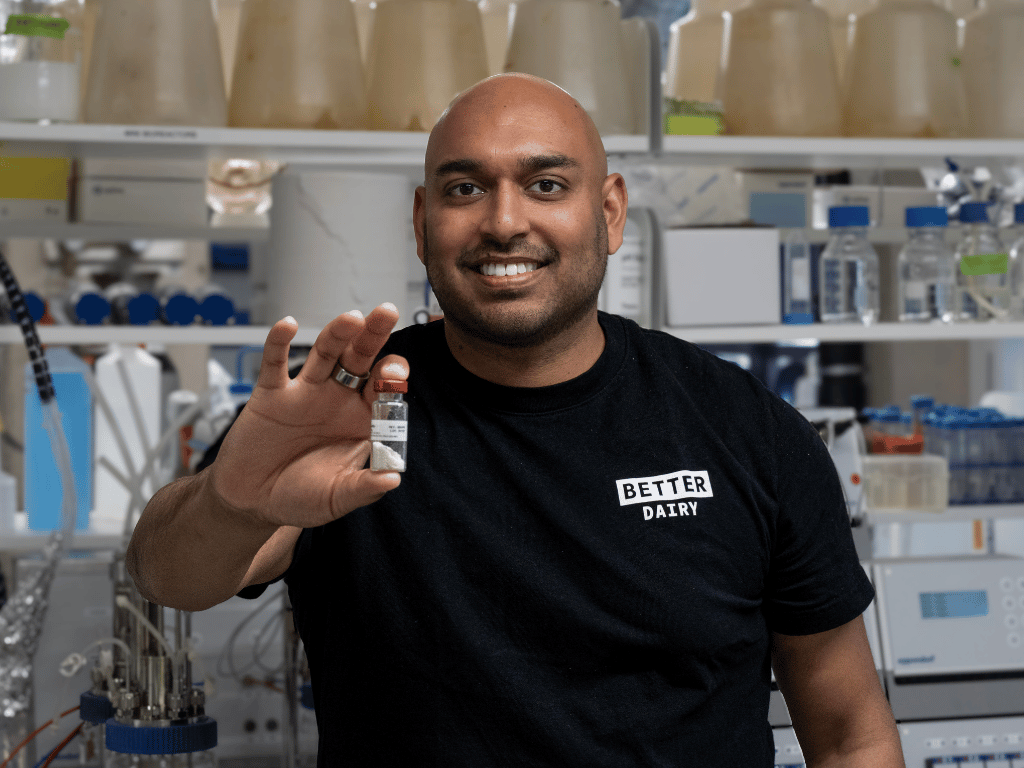
Ahead of a new funding round, UK precision fermentation startup Better Dairy has secured self-affirmed GRAS status for lactopontin, a human-identical milk protein for supplements and nutrition products, in the US.
Better Dairy, a London-based startup using precision fermentation to produce recombinant milk proteins, has been cleared to sell the first commercially available source of lactopontin in the US.
Also called osteopontin, this is a signalling protein found in both bovine and human milk, and is known for its biological signalling pathways associated with tissue growth, repair and renewal. It can be used as a stacking ingredient for healthy ageing, gut wellness, immunity boosting, joint and skin health, and sports recovery applications, among others.
The startup offers the world’s first supply of precision-fermented lactopontin, which is structurally identical to the native version found in human milk. It has self-affirmed the ingredient as Generally Recognized as Safe (GRAS), and plans to notify the Food and Drug Administration (FDA) of its determination next year.
Better Dairy, which began with casein before expanding into lactopontin last year, is currently fundraising to support its next phase of growth, with its ingredient set to enter the market via finished products in Q1 2027.
“Casein is still part of our platform, but we’ve scaled back effort there,” co-founder and CEO Jevan Nagarajah tells Green Queen. “The response to lactopontin has been exceptional, so that’s where our focus is. It’s a faster route to market, a higher-value ingredient, and the opportunity in front of us is significant.”
Precision fermentation opens up the world of lactopontin
Founded in 2020 by Nagarajah and Christopher Reynolds, Better Dairy makes what its CEO calls “one of the most valuable and abundant proteins in human milk”, but one that’s also among the hardest to source.
“Found at far higher levels in human milk than in cow’s milk, this protein has exciting potential as a next-generation functional ingredient. However, traditional extraction from cow’s milk is highly inefficient, requiring tens of thousands of litres to obtain just 1kg,” Nagarajah explains.
Lactopontin is only found in trace amounts (around 18mg per litre) in dairy, so extraction from this source leads to minuscule yields, alongside a large number of byproducts. That makes it extremely challenging to create a scalable supply.
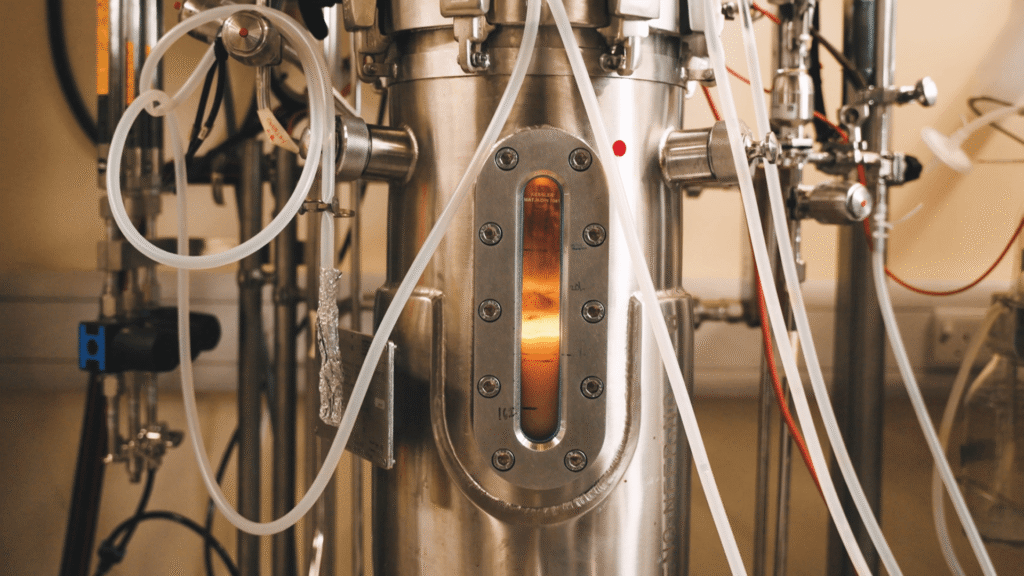
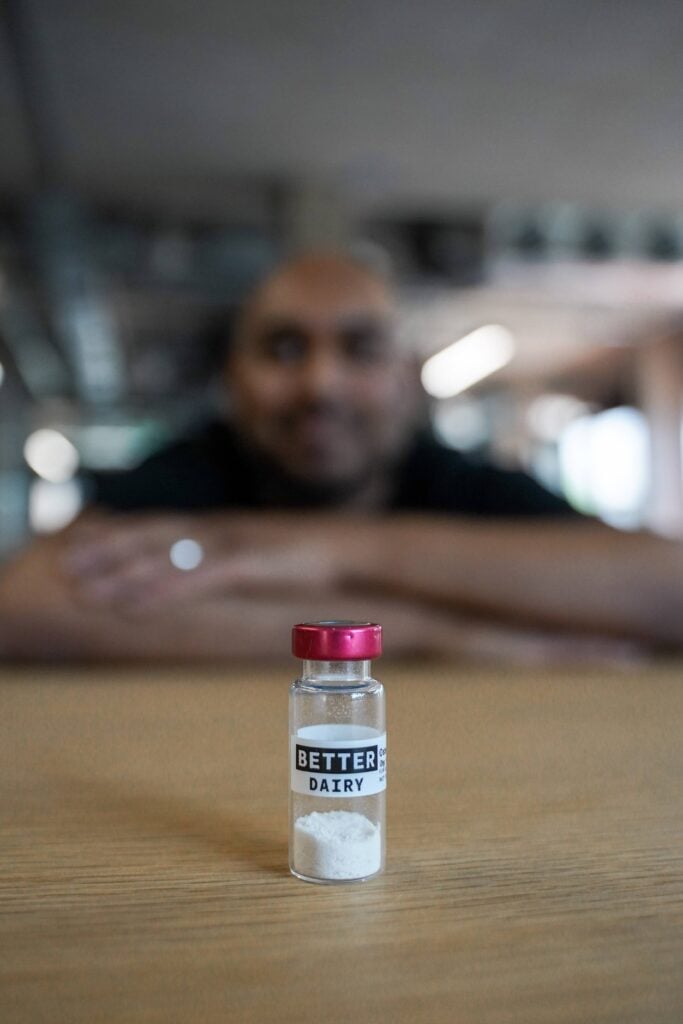
Better Dairy’s answer is precision fermentation, which involves inserting specific DNA into microbes to teach them to produce the desired molecules when fermented. “Our proprietary food-grade yeast produces human lactopontin, which we then purify and dry into a powder,” says Nagarajah.
“Precision fermentation offers a way to overcome this supply challenge, whilst lactopontin’s high value and low inclusion levels create an attractive route to market,” he adds.
The company has already proven the process at scale and secured 100,000-litre fermentation tanks for its next production campaigns through contract manufacturing partners in India and Europe.
“Like many of today’s most successful functional ingredients (including DHA, lactoferrin, and HMOs), lactopontin was first researched extensively in infant nutrition and is now crossing into adult nutrition,” he notes. “As our focus is an ingredient for human health and wellness products, it naturally made sense to make the human-optimised lactopontin.’
Another reason why lactopontin hasn’t been used as a functional ingredient so far is that no form of it has had a US safety position for use in food.
“Our proprietary process fixes the supply issue, and our self-affirmed GRAS approval demonstrates that we’ve assessed and provided clear evidence of the safety basis (unanimously ruled on by a panel of independent experts), giving us the supply and safety position to bring a source to the US market,” Nagarajah says.
How lactopontin can be stacked with other functional ingredients

Instead of just being another source of nutrition, lactopontin works alongside the body’s own biological processes. “[It’s] a signalling protein, unlike many other functional ingredients, which are building blocks,” the Better Dairy CEO explains. “During digestion, lactopontin breaks down into bioactive peptides that signal the body’s own processes for absorbing nutrients, building tissue and renewing it.”
The protein can strengthen the gut barrier, organise and direct other bioactives, trigger the body’s hyaluronic acid production, promote iron, zinc, calcium and magnesium absorption (even in phytate-rich diets), support muscle repair and recovery after exercise, and regulate a balanced inflammatory response.
Lactopontin also has a place in the GLP-1 market. It can feed beneficial gut bacteria and boost short-chain fatty acid production, which regulate appetite and keep you feeling full, just as drugs like Ozempic do. “While lactopontin can truly do many things, our focus areas are bone and joint, gut health, skin, and sports recovery,” says Nagarajah.
Rather than replace functional ingredients, this protein provides an opportunity to stack several of them, capitalising on synergies and making the rest of the formulation “work harder”. Lactopontin pairs particularly strongly with lactoferrin (another protein found in bovine and breast milk popular with precision fermentation companies), collagen, calcium, probiotics and prebiotics, whey proteins, and iron.
For instance, lactopontin and lactoferrin naturally bind each other in milk, forming complexes that enhance anti-inflammatory activity and reinforce the gut lining. Speaking of which, probiotics and prebiotics naturally support healthy bacteria, and lactopontin can help shape the environment they colonise.
This protein can also bind collagen and help the body assemble peptides to support skin and joint health, a process that becomes less organised with age and physical strain. Lactopontin further stimulates skin and joint cells to make their own hyaluronic acid, rather than relying on supplemented fragments.
It can bind calcium and move it across the gut lining to increase transport by up to 95%, tackling falling calcium absorption and supporting healthy bones. Age tends to lower muscle response to dietary protein as well, but lactopontin can act on the repair process by clearing damaged fibres and facilitating the regeneration process. Plus, its phosphate groups hold minerals like iron in complexes that phytate can’t break down, ensuring superior absorption.
Better Dairy eyes further approvals amid fundraising efforts
One of the main questions looming over both ingredients like lactopontin and processes such as precision fermentation surrounds the economics: how pricey is Better Dairy’s ingredient?
Nagarajah isn’t providing exact figures, but suggests that the number that matters to its customers – which include nutrition and supplement brands – is cost-in-use. “At low inclusion, lactopontin adds a premium bioactive at a per-serving cost that fits most existing price points,” he says.
“It suits capsules, powders, ready-to-drink shakes, bars, and yoghurts. Additionally, it’s easy to formulate with – highly soluble, stable through heat processing, and effective at low inclusion levels,” he adds.
And unlike many other milk-derived ingredients, Better Dairy is currently the only source of lactopontin of any kind in the US, so there’s no competing supply chain or comparator.
Asked about the firm’s commercialisation plans, Nagarajah outlines that the strongest near-term demand is coming from the adult nutrition sphere, particularly in categories like bone and joint supplements, collagen-based beauty formulations, gut health products stacking lactopontin with lactoferrin or probiotics, and sports recovery powders and drinks.
Better Dairy has raised around £18M ($24M) to date, though that capital was largely secured on the back of its casein programme. Nagarajah confirms the company is now in the middle of a new funding round to “support rollout in the US, build out our commercial function, continue to invest in studies (including clinical trials), [and] continue to invest in technology development and regulatory approvals”.
Its self-affirmed GRAS status comes amid a proposed overhaul of the FDA’s regulatory system, which would scrap this self-determination pathway and require companies to submit their ingredients for full review, a process that could take up to six months.
“We will notify the FDA next year. FDA notification was always our next step, so the proposed rule doesn’t change our plan,” says Nagarajah, who is also pursuing approval for infant nutrition in the US. “Outside the US, we’re in the pre-submission process with the UK and EU regulators and in active discussions with them, with Asia to follow.”