

Naturbeads Gets €4.1M EU Funding to Replace Microplastics with Cellulose Materials

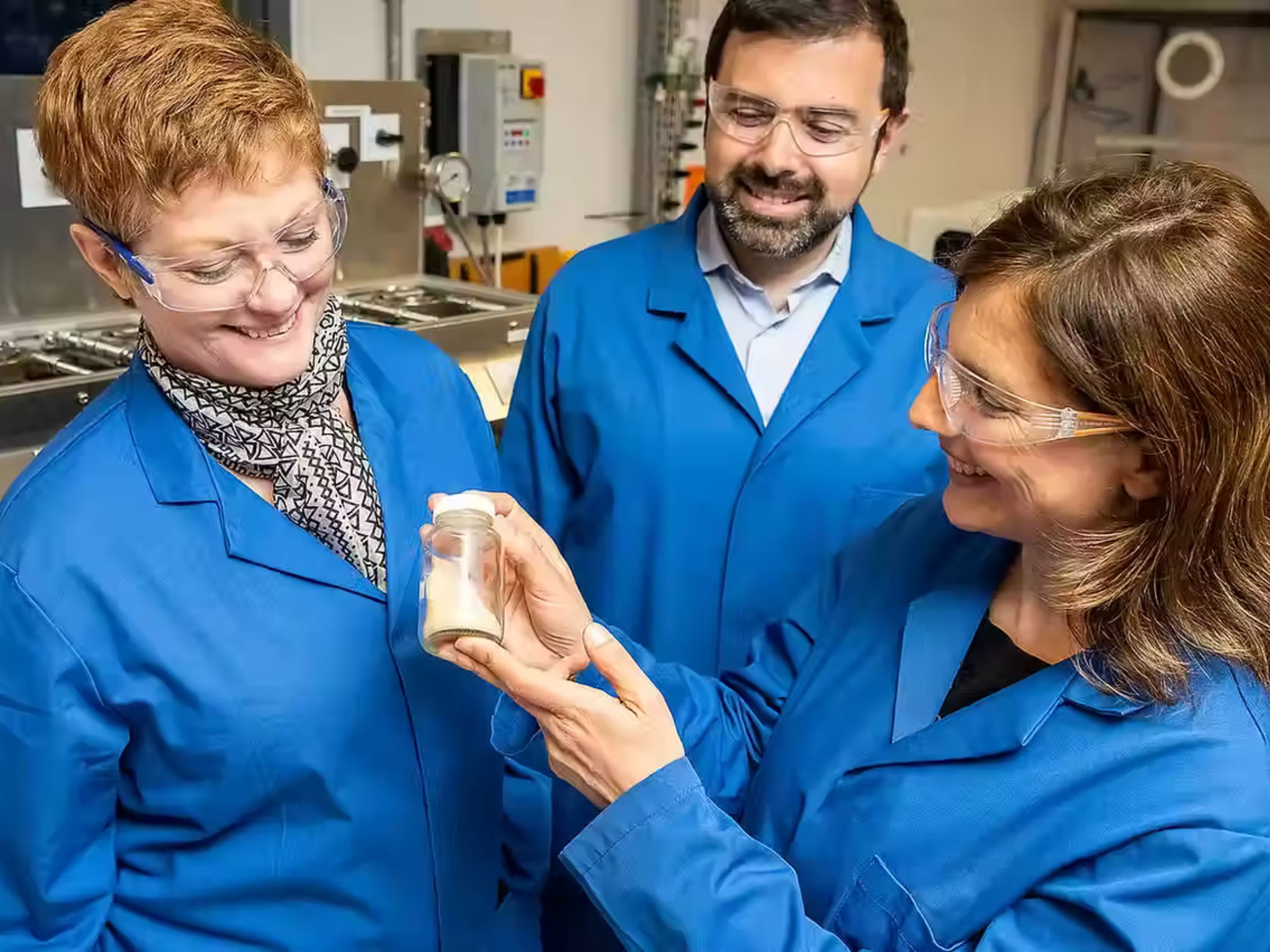
UK startup Naturbeads has received a €4.1M ($4.8M) EU grant to support the construction of a new factory in Italy to produce cellulose-based alternatives to microplastics.
Cellulose materials are attracting investor attention in Europe, and British firm Naturebeads has become the latest beneficiary.
The biomaterials startup turns cellulose into microplastic alternatives for use in a variety of products, including cosmetics, paints, detergents, coatings, leather, and other consumer and industrial applications.
Naturbeads has won a €4.1M ($4.8M) grant from the European Structural Fund, a funding programme of the EU that helps finance bespoke economic and social development projects in selected areas.
The firm secured the investment through its Italian subsidiary to support the opening of a new production plant in Puglia, which is recognised for its young and educated local workforce and strong focus on business development, innovation, and digital transition.
“We’re nature’s fix to using microplastics as we tackle the problem at source while maintaining the same performance and cost as plastics,“ said CEO Giovanna Laudisio.
“The use of our innovative technology isn’t restricted to cosmetic goods. It can be employed in multiple industries to eliminate the use of microplastics in making paints, coatings, detergents, adhesives, softeners, [and] even biomedical devices,” she added.
The EU funds will partially reimburse Naturbeads for the construction of its facility in Puglia, and support R&D costs as it gears up towards full commercialisation over the next two years.
A closed-loop system for cellulose microbeads
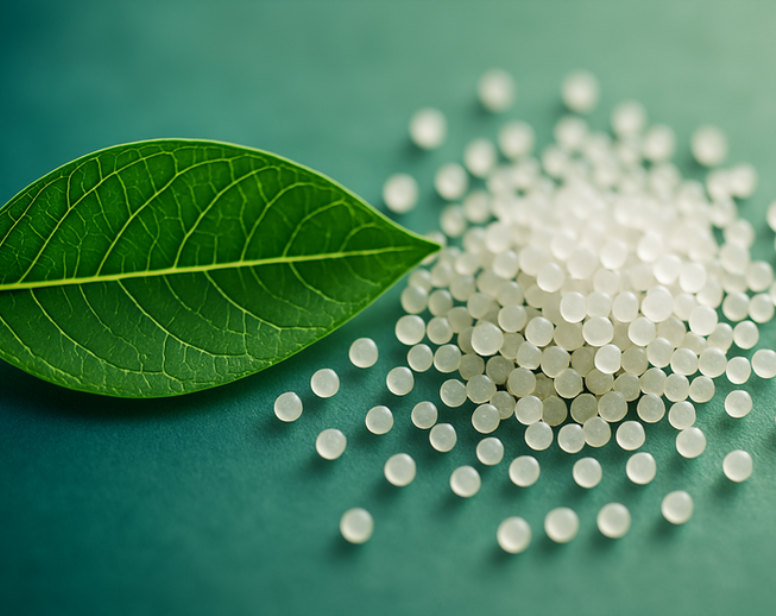
“Due to its versatility and durability, tiny microspheres of plastic are a popular ingredient in a range of everyday products,” said Naturbeads CEO Giovanna Laudisio. “For example, they’re routinely found in makeup that stays on your skin for only a few hours, but when you wash your face, they end up in the drain and from there in the oceans where they last for centuries.”
She added: “Tiny particles of plastic are found in our food, our bodies – they’ve even been discovered in Antarctica – and are putting at risk both our personal health and the health of the planet.”
To tackle this problem, Naturbeads leverages cellulose, the world’s most abundant polymer, which forms the building block of plants. Its patented process involves a green-solvent system that dissolves cellulose fibres and reforms them into perfectly spherical, uniform beads without altering their chemical structure.
The startup, which spun out of the University of Bath in 2018, says its breakthrough lies in combining solvent chemistry with membrane emulsification and phase inversion, a process that enables complete control over particle size, surface texture, and porosity.
The beads match plastic properties at a competitive cost, aided by a closed-loop strategy engineered for maximum efficiency. All solvents are recovered and reused to minimise waste and energy consumption. The cellulose-derived material is biodegradable and delivers the performance and consistency demanded by industrial applications across an array of industries.
In cosmetics, microspheres can replace plastic in rheology modifiers, sensory enhancers, and film formers thanks to their spherical shape, smooth surfaces, and high stability. These attributes can also help Naturbeads deliver the elasticity and scratch resistance, thick layers, and increased solid content that microplastics offer in paints and coatings.
Plus, the hardness, porosity and surface chemistry enable the spheres to be used in glass packaging, adhesives, and drilling fluids. In the life sciences space, the startup’s biomaterial can be used as a cell culture substrate and enzyme carrier in applications such as biocatalysis and vaccine development.
Naturbeads gears up for industrial-scale production
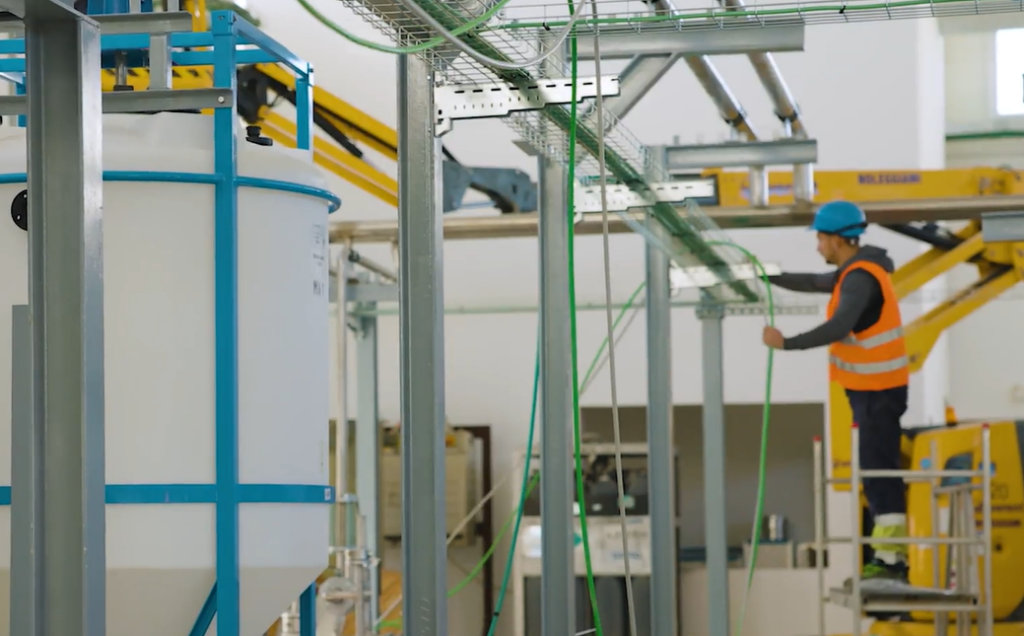
Naturbeads’s first commercial plant is located in Lecce, Puglia, where it’s validating its technology at an industrial scale, optimising its products and processes, and supplying its first customers. In parallel, it is designing a full-scale commercial plant to meet the growing demand for bioplastics.
“We’ve already reached a key milestone by successfully starting production in our plant,” said Laudisio. “Our current focus is to complete the startup of different sections of the plant so that in June, we can ramp up production and start serving our customers around [the] world that are waiting for our product.”
The company’s tech extends beyond just cellulose. Its approach can be adapted to other biopolymers and even inorganic materials, paving the way for the development of capsules and advanced biodegradable particles.
It has worked with industrial partner Chiral Vision to develop and test a platform of prototype carriers for enzyme immobilisation, and with UK-based Cellular Agriculture to test prototype carriers for cell attachment, proliferation and differentiation for cultivated meat production.
Moreover, it has partnered with University College London and German AI startup Vitafluence to develop novel thermally stable vaccine formulations based on its cellulose microspheres.
Petrochemical-derived plastic takes 20 to 500 years to break down and is responsible for 3.4% of global emissions – and that share will only increase as production triples by 2060. These materials are hard to recycle and end up in landfills, where they can leak microplastics into our soil and water supply.
This has pushed companies to look for more sustainable alternatives, and upcoming regulatory changes in Europe will ramp up these efforts. The EU, for instance, will impose a ban on ‘rinse-off’ cosmetics that shed microplastic beads next year, and ‘leave-on’ cosmetics (which also contribute to microplastic pollution) in 2029.
Naturbeads is among several startups innovating with cellulose that have received a financial boost this year. Swiss firm Seprify raised 12.25 million francs ($15.7M) to scale its cellulose-based alternatives to titanium oxide for the food, cosmetics, and coatings sector, while Finland’s Elea & Lili emerged from stealth with a €2.5M ($2.9M) round to launch its cellulose alternative for diapers and farming.