

Heura Turns Profitable & Unveils White-Label Strategy for Plant-Based Meat

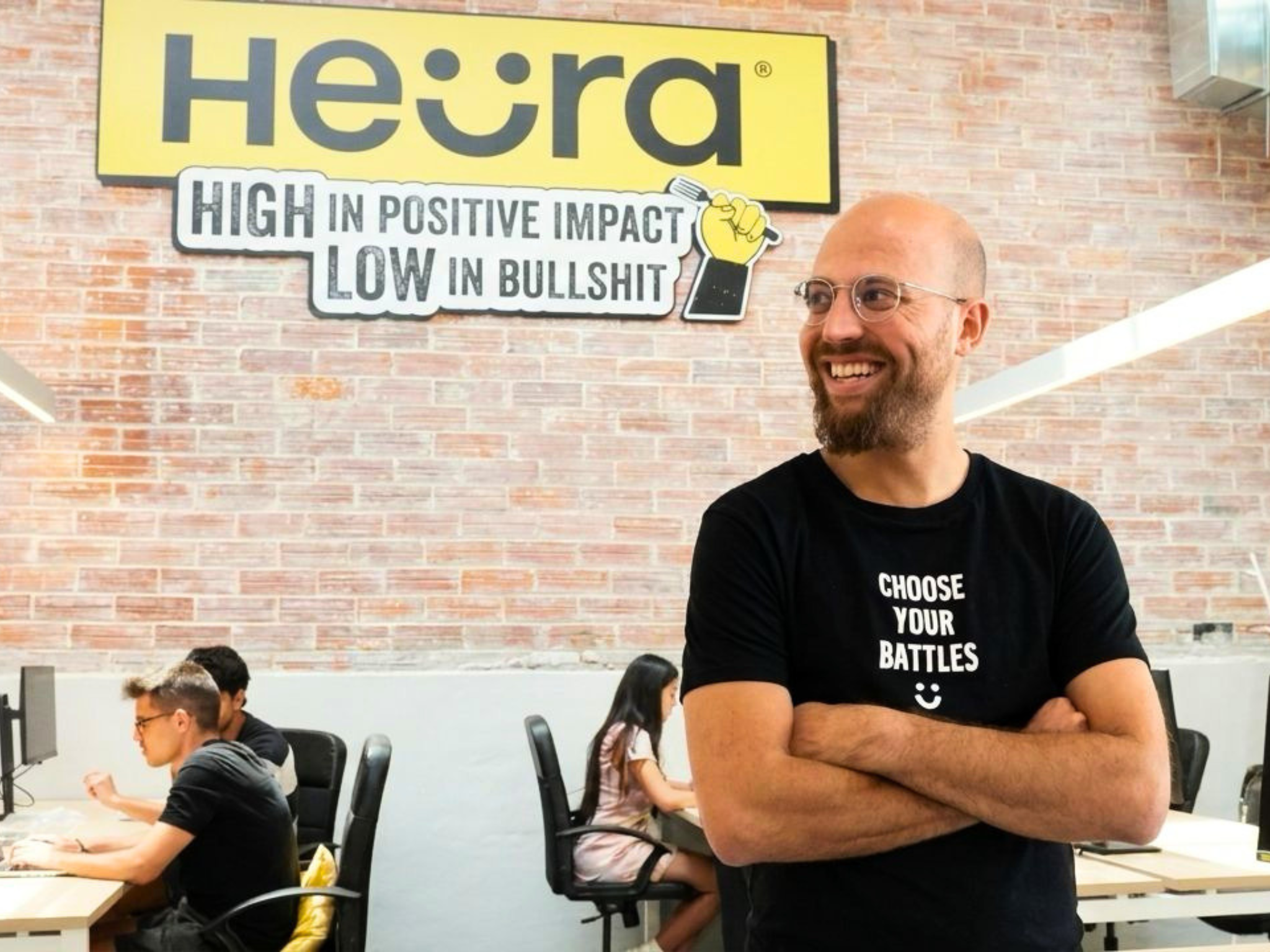
Spanish plant-based meat leader Heura reached profitability for the first time in Q1 2026, and is now opening up its production tech to other players in markets where it doesn’t compete directly.
Two years ago, after raising €40M in Series B funding, meat alternative startup Heura set itself on a path to profitability. It has now achieved that goal.
The Barcelona-based firm recorded positive EBITDA for the first time in Q1 2026. The term refers to revenue excluding all non-operational and one-time expenses, and is seen as a more nuanced measure of a business’s cash flow and profitability.
“Reaching positive EBITDA wasn’t the destination. It’s proof that the model works,” said Heura co-founder and CEO Marc Coloma.
The company, which has raised €108M to date, is now looking to expand the plant-based category by becoming a tech supplier to other brands and retailers, enabling them to leverage its production and formulation expertise to manufacture products that better match consumer needs.
Heura outsells every other plant-based meat brand in Spain
Heura said its profitability was a result of “years of focused investment in proprietary food technology and supply chain efficiency”, built on the belief that plant-based alternatives can only be successful if they outperform meat on taste, nutrition and value.
The company unveiled its Good Rebel Tech division in 2023, which uses a novel thermomechanical processing technique to create vegan products with superior sensory and nutritional values and shorter ingredient lists.
The process relies upon mathematical models similar to AI to develop breakthrough solutions based on new scientific knowledge, instead of optimising technologies based on existing data. It only requires protein, water and oil to structure the product and incorporate texture and sensorial properties without additives.
This tech has enabled Heura to produce market-leading meat alternatives while “optimising its supply chain to a level of efficiency that now supports a profitable business model”.
According to Nielsen data cited by the startup, Spain’s meat alternative market contracted by 7% in 2025, driven by product rationalisation (although Circana data points to a 7.5% uptick in sales of the overall plant-based category). But Heura held its position and became the category’s primary growth driver.
It accounted for half of the plant-based category’s growth in Spain and reached its highest market share yet (double that of its nearest competitor).
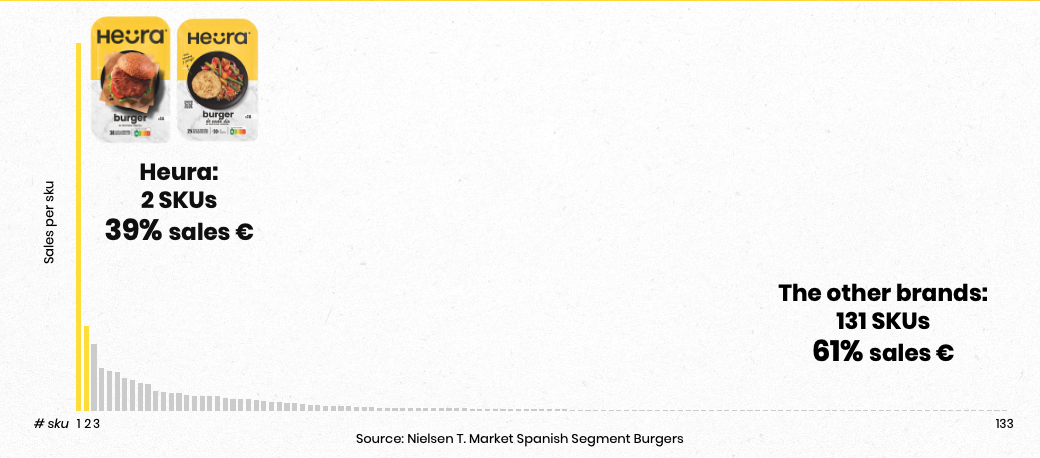
This is best illustrated by its flagship burger range. Out of 133 burger SKUs in the national market, its two plant-based patties capture 39% of total sales, and deliver 41 times more revenue per product, making them the highest-velocity meat alternatives in the country.
Outside Spain, Heura’s burger was recognised as one of the five best vegan options at the 2025 Tasty Awards in San Francisco, denoting that at least half of omnivores found it to taste the same or better than a beef burger.
A white-label approach to expand the wider category
Heura’s products are available in more than 20,000 stores in 20 countries. The company says it’s working on a wider range of categories to battle the ultra-processed tag that has plagued the plant-based sector.
At Future Food-Tech London last year, the company served up spaghetti made from wheat semolina and soy protein isolate, boosting its protein content from under 20% to 60% and reducing carbohydrate content by 74%.
It also exhibited dairy-free versions of feta, parmesan, mozzarella, and melty cheese that contained 20% protein and low saturated fat, and gave a glimpse of its nutrient-forward cold cuts, describing them as the only vegan deli meats “with high protein, low saturated fat, and no additives while having an unparalleled sensory experience”.
Having secured operational profitability, the startup is now looking to expand through a B2B model by producing plant-based products for retailers and brands in markets where it doesn’t compete directly.
The company launched five new products across strategic segments in 2025, several of which already rank among the 10 fastest-rotating branded products in the plant-based category in Spain. That track record of continued innovation amid industry headwinds underpins its offer to partners, enabling them to develop products that consumers actually want to choose.
The white-label approach will see Heura bring its food tech platform, formulation expertise, and supply chain efficiency to partner companies to help them develop superior plant-based products under their own brands.
“We built proprietary technology and a highly efficient supply chain with one obsession: making plant-based products that consumers genuinely choose and love. Now we want to put that same capability to work for retailers and brands beyond our own markets,” noted Coloma.
“The category doesn’t grow brand by brand. It grows product by product, and we’re ready to help build those products for others.”