

California Cultured, UC Davis Get $2.8M in Govt Grants to Cut Costs of Cell-Cultured Chocolate

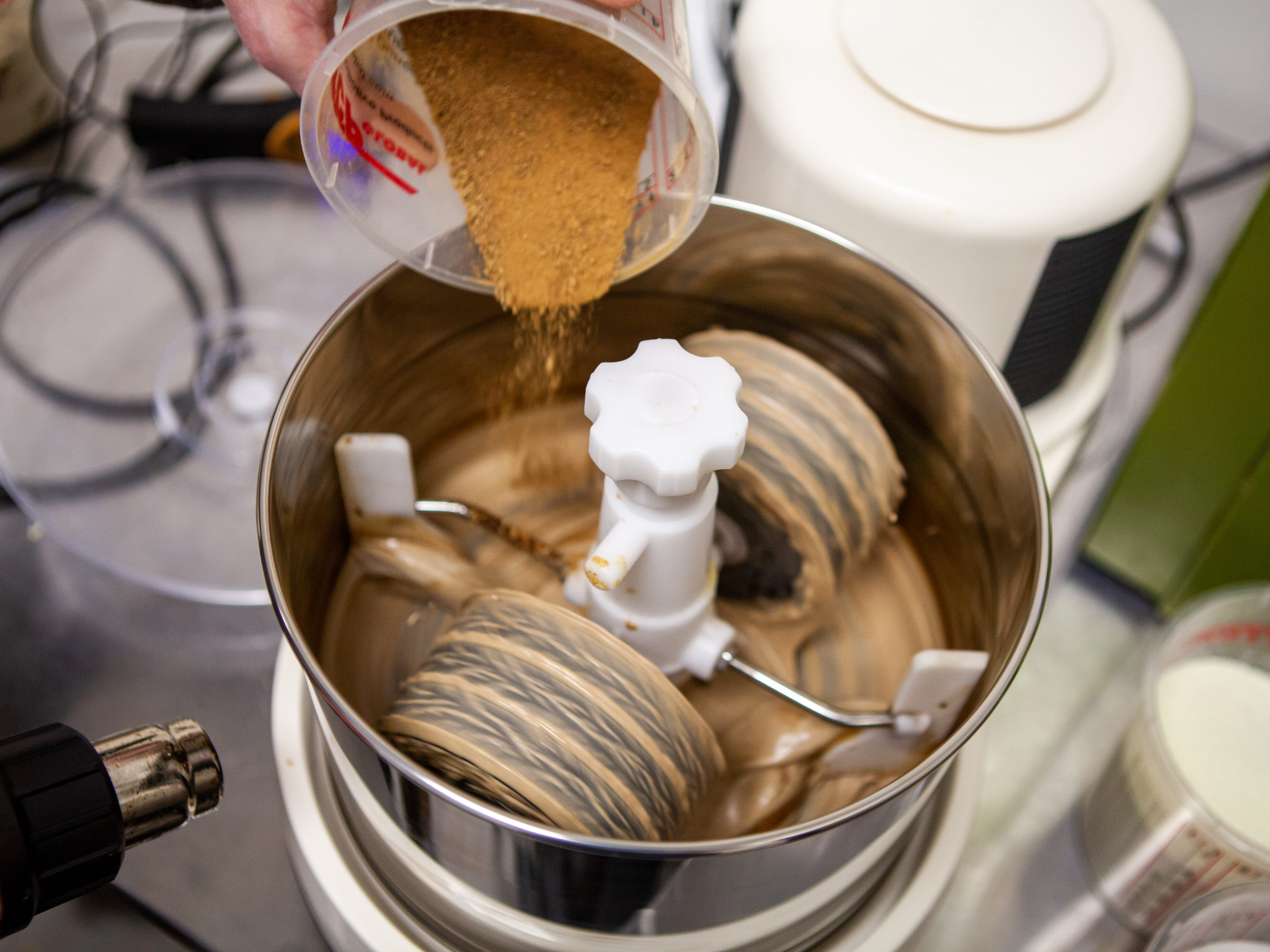
Food tech startup California Cultured and UC Davis have partnered on a project to reduce the production costs of cell-based chocolate, backed by $2.8M in US government funding.
Months after obtaining clearance to sell its cell-based chocolate in the US, California Cultured is now working with the University of California, Davis to make the innovation more affordable.
The project is funded by grants from the public-private biomanufacturing consortium BioMade and the National Science Foundation (NSF), totalling $2.77M.
“This grant directly supports the hardest and most important part of what we are building, which is lowering the cost of production, so cultured cocoa can move from a breakthrough technology into a real commercial ingredient platform,” Steve Stearns, head of strategy at California Cultured, tells Green Queen.
The two entities will do so by “improving some of the key scale-up pieces, including lower-cost bioreactors, better sterilisation methods, process monitoring, and in-line biomass sensors”. Commercial manufacturing is expected to begin in early 2027 to fulfil their first purchase order from a chocolate company.
“The project is also part of BioMADE’s larger investments backed by the US Department of Defense and NSF across 14 projects focused on strengthening US biomanufacturing, domestic supply chains, and technologies tied to commercial and national security priorities,” says Stearns.
The food tech startup has already self-determined its ingredient as Generally Recognized as Safe (GRAS), and submitted a GRAS notice to the Food and Drug Administration (FDA), in pursuit of a ‘no questions’ letter. It’s planning to launch its cell-cultured cocoa powder with partners in the US later this year.
What the government-backed cultured cocoa project entails
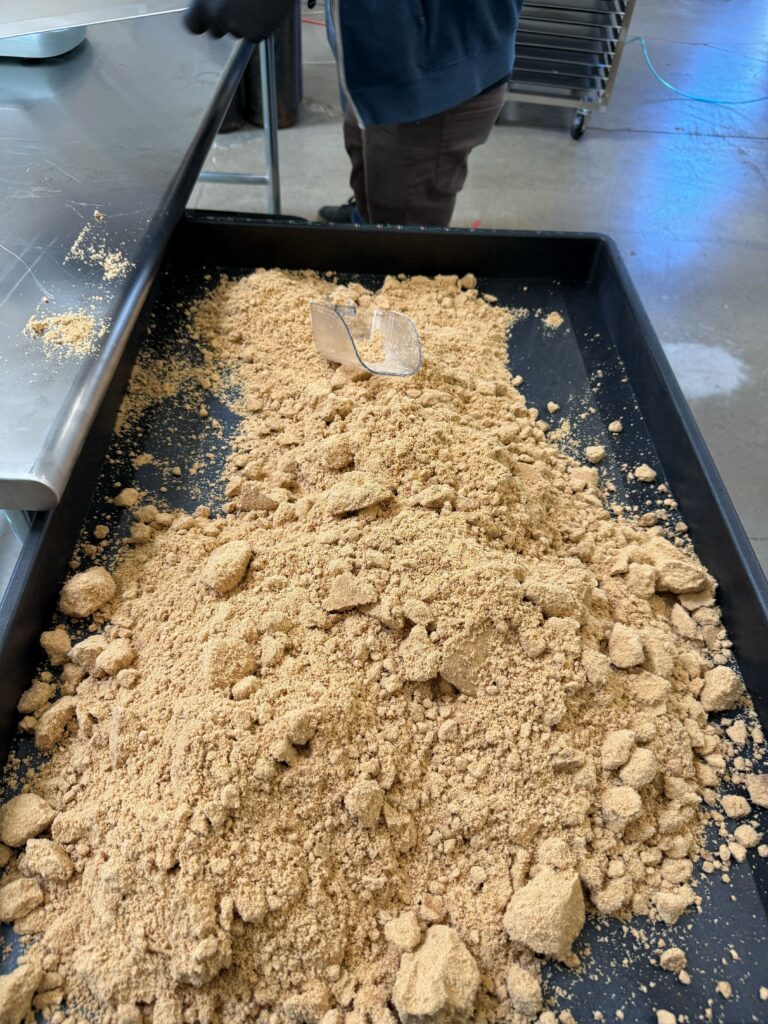
California Cultured starts with cocoa plant cells and grows them in controlled bioreactors. The cells produce the same compounds found in cocoa, including the flavanols. Once the culture reaches the desired density, it is harvested, dried, and processed into cocoa powder.
The NSF notes how manufacturing cocoa with current cellular agriculture technology is expensive. Bioreactors are traditionally made of steel and sterilised through high-pressure steam – both costly inputs. The productivity of cocoa batch cultivation is low, too. All of this contributes to high annual operating expenditure.
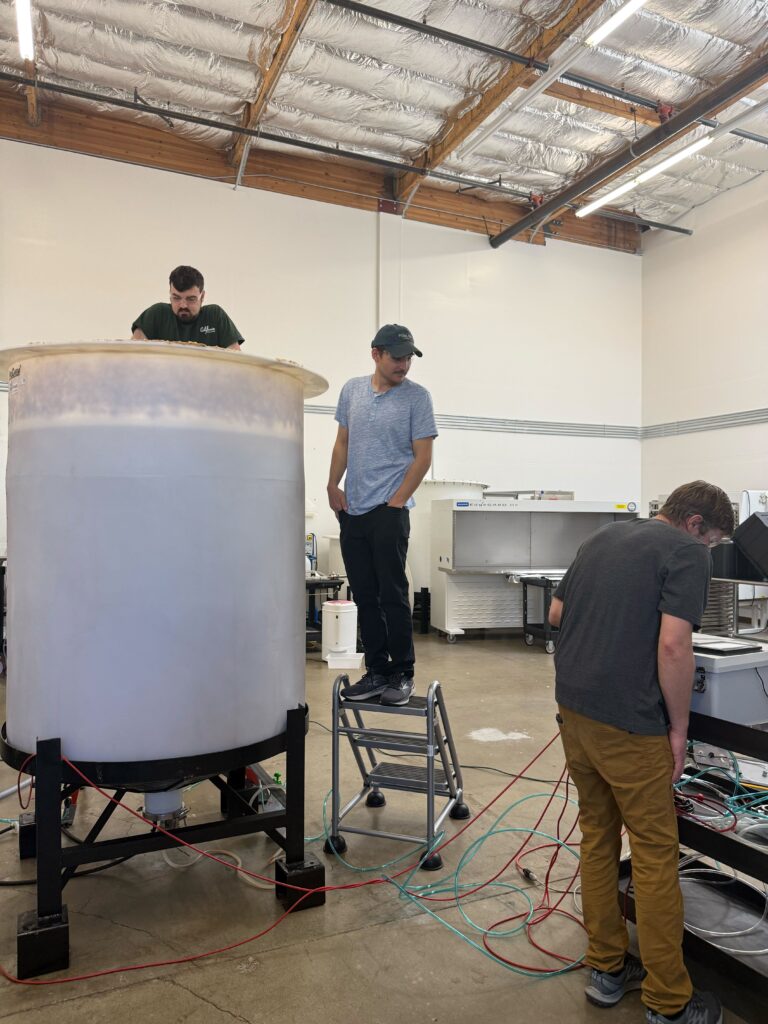
The teams at California Cultured and UC Davis will pursue several strategies to address this. They will design custom high-density polyethylene (HDPE) bubble bioreactors, as well as evaluate alternative sanitisation strategies.
The project will also see them develop process intensification strategies based on semi-continuous operation (assisted by real-time in-line biomass monitoring), alongside low-cost drying methods, to increase volumetric productivity and product quality.
They will then conduct techno-economic and life-cycle analyses to ensure the economic viability and sustainability of the R&D efforts, with the results directly applied to other plant or algal cell bioreactor-based processes and to fermentation processes that require lower capital and operating costs (particularly microbial or fungal production of food and industrial products).
California Cultured has already developed low-cost alternative bioreactors specifically suited to plant cell cultivation, and UC Davis will help validate prototype designs, enhance cleaning and sterilisation techniques, and assess advances in commercial viability.
“Right now, those reactors are commercially ready and competitive with prices in our first markets, but we are always looking to improve our technology,” says Stearns.
“Our own internal tests are starting to show that these reactors are outperforming stainless steel reactors in plant cell culture, but we want to take them to the next steps and improve yields, lower labour costs, and make things more intelligent and automated.”
In addition, the researchers are working to create food-safe growth media, boost strain productivity, and understand the sensory and nutritional properties of cultured plant cells.
Cell-based chocolate can solve climate and cost constraints
The project comes amid unprecedented volatility in the chocolate industry, thanks in large part to the climate crisis, which pushed cocoa stocks to their lowest levels in a decade and prices to all-time highs in 2024. In the US, cocoa prices reached a record $12,565 per tonne that December.
Extreme weather and crop diseases have hit plantations hardest in the Ivory Coast and Ghana, the two largest cocoa producers, which have already lost over 85% of their forest cover since 1960.
Scientists warn that a third of the world’s cocoa trees could die out by 2050. And a 2025 study predicted shifting temperature and rainfall patterns would make up to 50% of cocoa‑growing areas in the Ivory Coast unsuitable for production by 2060 (the country accounts for 36% of the global cocoa output).
Plus, producing chocolate emits more greenhouse gases than any other food except beef, and a single bar of chocolate requires 1,700 litres of water on average. The industry is linked to widespread tropical deforestation, and is the subject of anti-deforestation legislation in the EU and the UK.
This is where technologies like California Cultured’s come in. Unlike cultivated meat or precision fermentation, the media, R&D, capex, and bioreactor costs for culturing plant cells are much lower, since they use inexpensive nutrients like sugars, minerals, and vitamins and don’t require costly growth factors or pharmaceutical-grade facilities.
“We already know there is a real need for a more reliable cocoa supply. This project helps us work on the engineering and cost problems that need to be solved, so cultured cocoa can move from a promising technology into a real commercial ingredient platform,” says Stearns.
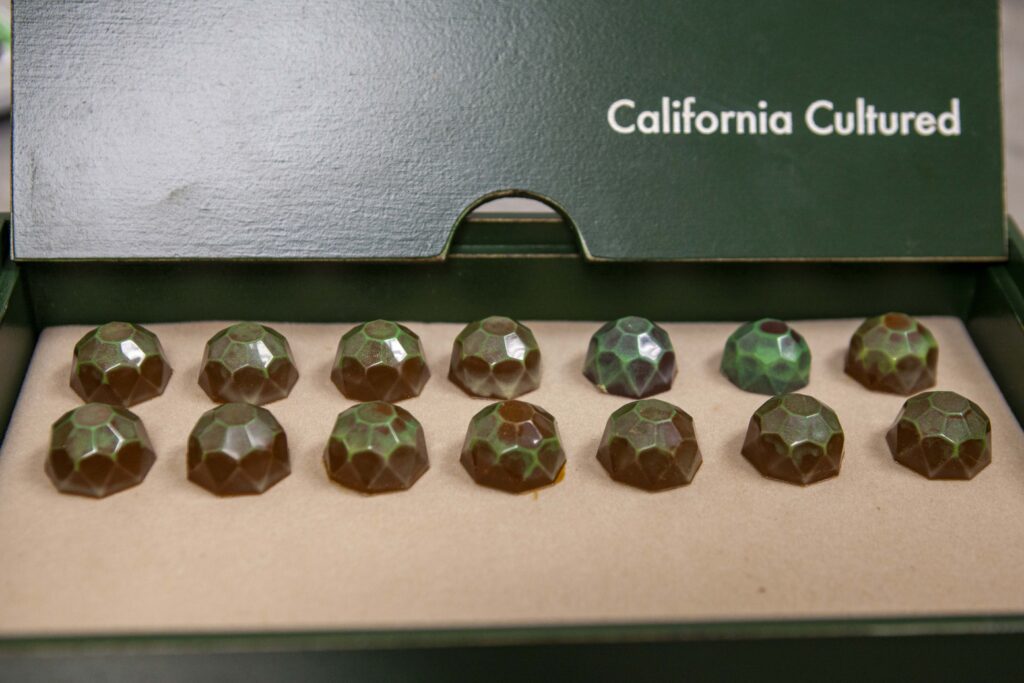
The company says its tech has enabled its cell-based cocoa to be price-competitive with supermarket chocolate products. It has demonstrated proof of concept for growing Theobroma cacao cell culture in novel 16,000-litre bioreactors, moving to large-scale manufacturing last year via a partnership with biomanufacturing firm Pow.Bio.
It has also opened a 12,000 sq ft facility in West Sacramento (with an eventual capacity of 160,000), and has been co-developing high-flavanol products with Japanese chocolate giant Meiji and cell-based chocolate with Belgian confectionery giant Puratos, both of which are set to launch in the US this year.
Puratos is an investor in California Cultured through its VC arm Sparkalis. The startup has secured $15.9M to date, and is currently raising a Series A3 round to expand production and partnerships and support these initial launches.
Other Big Chocolate players are getting into this space. Mondelēz International unveiled the world’s first cell-based chocolate bar in collaboration with Celleste Bio last month, while Cargill is developing cultured cocoa solutions with Kokomodo. And Barry Callebaut, the world’s largest B2B chocolate supplier, is exploring both cell-based and cocoa-free chocolate.