

Mosa Meat Gets $1M Loan from Dutch Govt to Expand Cultivated Beef Beyond Europe

Dutch cultivated meat pioneer Mosa Meat has received an €875,000 ($1M) loan from state-owned Invest International to navigate regulatory processes and launch into countries across the globe.
Seven months after raising €15M ($17.6M at the time) to accelerate its path to market, Dutch cultivated meat maker Mosa Meat has obtained financial backing from the federal government to fuel its international expansion.
Invest International, an impact investor owned by the Dutch finance ministry and development bank FMO, has made a repayable deployment capital contribution of €875,000 ($1M) through its Development Accelerator to support the startup’s next phase of growth.
The investment will help Mosa Meat validate new strategic markets, establish production and supply chain partnerships, and navigate complex regulatory frameworks to prepare for market entry in geographies like Singapore, the UK, the US, Canada, Australia and New Zealand.
“Mosa Meat has demonstrated that its technology works. We know that cultivated meat can be produced. The next challenge is gaining access to international markets, navigating regulatory frameworks, reaching consumers and scaling production,” said Jeroen Plag, chief investment officer at Invest International.
Invest International highlights cultivated meat’s international challenges
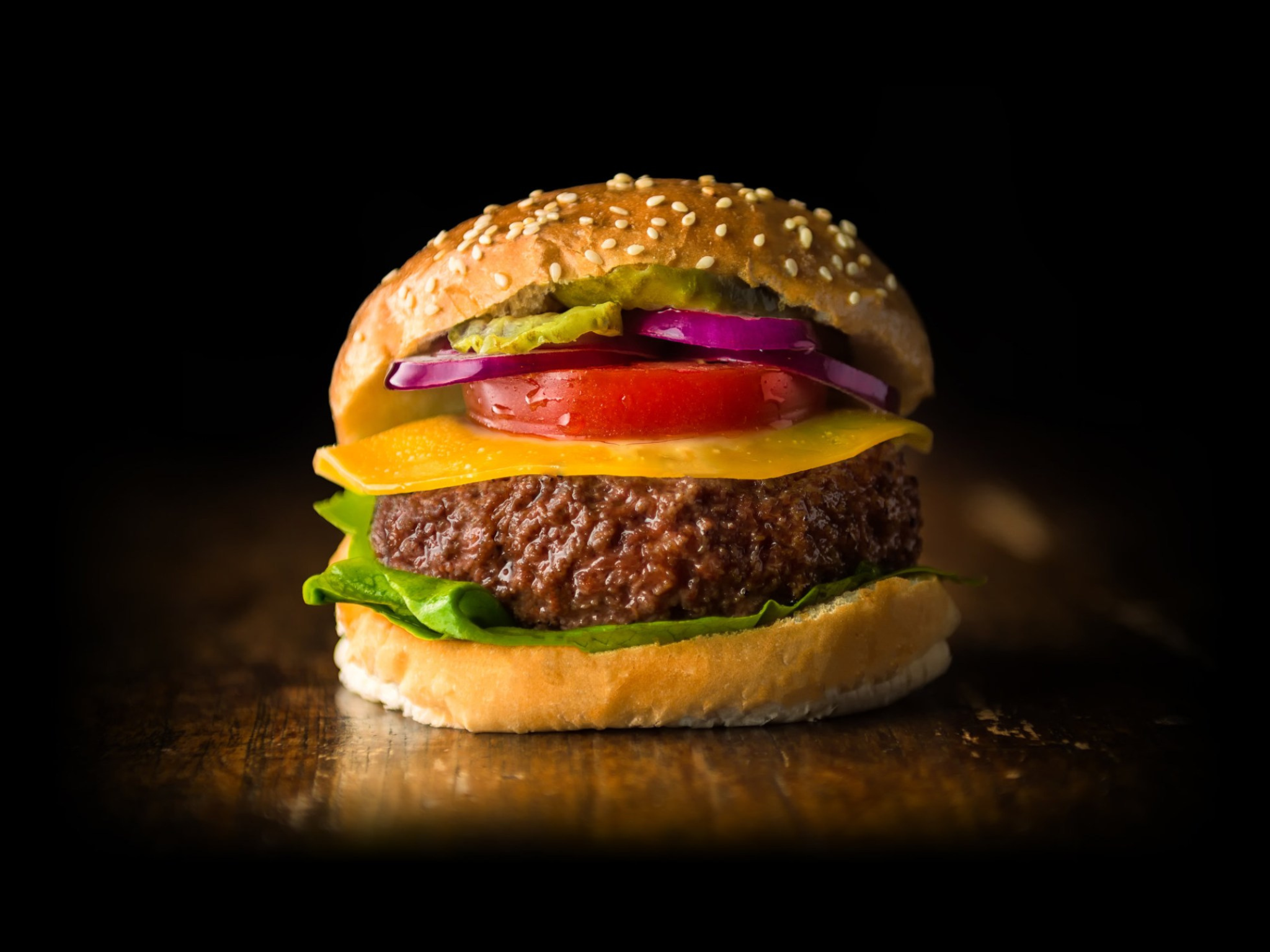
Mosa Meat, which made headlines by unveiling the world’s first cultivated burger back in 2023, is commercialising cultivated beef fat, which can be combined with plant-based ingredients to make hybrid hamburgers, meatballs, empanadas, and more.
Last year, it filed a string of regulatory applications in Europe, submitting dossiers to the European Food Safety Authority (which covers all 27 EU member states), Switzerland’s Federal Food Safety and Veterinary Office, and the UK’s Food Standards Agency.
According to Invest International, entering new markets requires more than just technical innovation. Securing funding for the transition from lab-scale development to commercial production remains a tall order.
”Mosa Meat faces regulatory, production scale-up, and market entry hurdles before its cultivated products can reach supermarket shelves,” the investor said, noting that its accelerator scheme enables that step towards international commercialisation and long-term growth.
These challenges are particularly relevant in markets outside the EU, although its own novel food regulation has been criticised as overly complex and slow (approval can take up to six years). Other jurisdictions have their own cultivated meat regulations, which are evolving at different speeds.
Singapore has been the pace-setter, doling out the world’s first approval for cultivated meat back in 2020. It has since greenlit four other cell-cultured products. The US has cleared five to date, and Australia and New Zealand’s joint regulator has allowed two cultivated meat innovations on the market.
“The Netherlands has built a strong global reputation as an innovator in agriculture and food technology,” said Plag. ”By supporting Dutch companies with breakthrough technologies in their international scale-up journey, we help ensure that valuable knowledge, innovation and economic activity remain anchored in the Netherlands.”
He added: ”At the same time, we strengthen the international position of Dutch solutions and contribute directly to the resilience and earning capacity of the Dutch economy.”
Mosa Meat’s cost breakthroughs impress investors in an otherwise bleak landscape
To date, Mosa Meat has raised over $157M, which includes an investment from actor Leonardo DiCaprio and a €3.7M ($3.9M) crowdfunding round in 2025. It is one of the best-funded companies in the cultivated meat space.
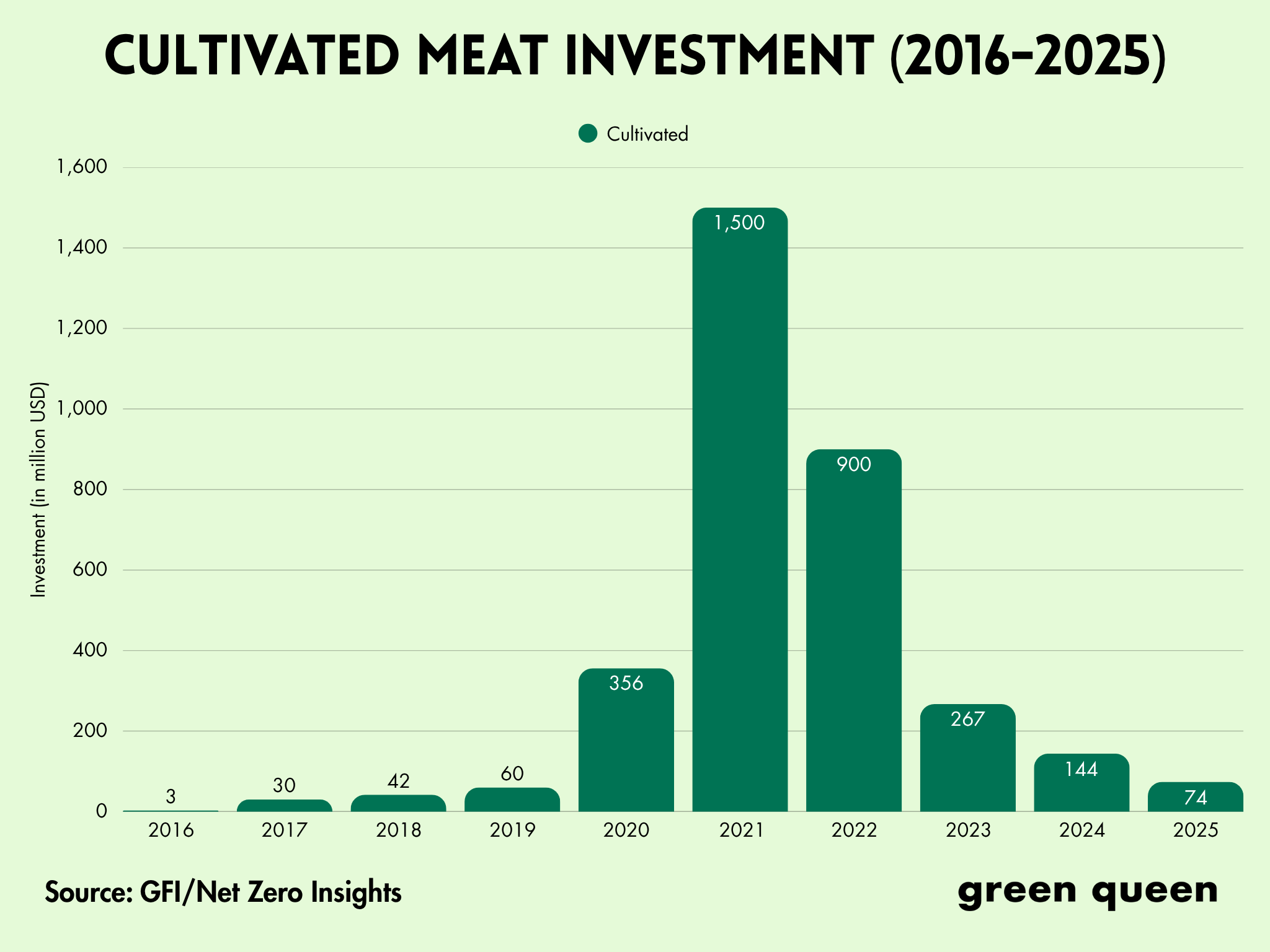
This segment has seen a dramatic fall in investor interest over the last few years. Cultivated meat startups raised more money ($1.5B) in 2021 than they have in all the years since, combined. In 2025, its annual funding total was slashed in half, reaching just $74M.
Mosa Meat alone made up around 23% of this sum, with investors impressed by its cost breakthroughs. The company’s two burger prototypes in 2013 cost to make $330,000 – since then, it has slashed costs 100,000-fold, and it expects to further lower these by the time it secures regulatory approval.
A major factor behind this reduction – in addition to efficiencies in inputs like growth and fat media – is the hybrid approach. Fat is the primary flavour carrier and textural base for meat, and forms an ideal base for end products when blended with plant-based proteins. This is viewed as the most viable way of commercialising cultivated meat in the medium term.
Mosa Meat also operates four facilities, including what it claims is currently the world’s largest cultivated meat plant in Maastricht. It has a 1,000-litre bioreactor scale that can produce “tens of thousands of cultivated hamburgers”, with a cumulative footprint of 7,340 sq m (79,007 sq ft) across its sites.
The B Corp-certified firm has indicated that it expects approval in the UK first, although that was before the UK moved to realign with the EU’s single market rules, which could jeopardise the novel food regulatory progress made by the FSA. Mosa Meat has been part of a sandbox programme operated by the regulator, which is running until early 2027.
”The investment from Invest International is helping us bridge the gap between breakthrough science and commercial reality, bringing that vision within reach,” said Mosa Meat CEO Maarten Bosch.
“I dream of the day when people can enjoy cultivated beef burgers. Perhaps in some of the world’s most innovative restaurants first, and eventually in some of the world’s largest burger chains. That’s when we’ll know we’re truly reshaping the food system.”