

Transfarmation Turns Pig Barn Into Mushroom Farm in America’s Largest Factory Farming State

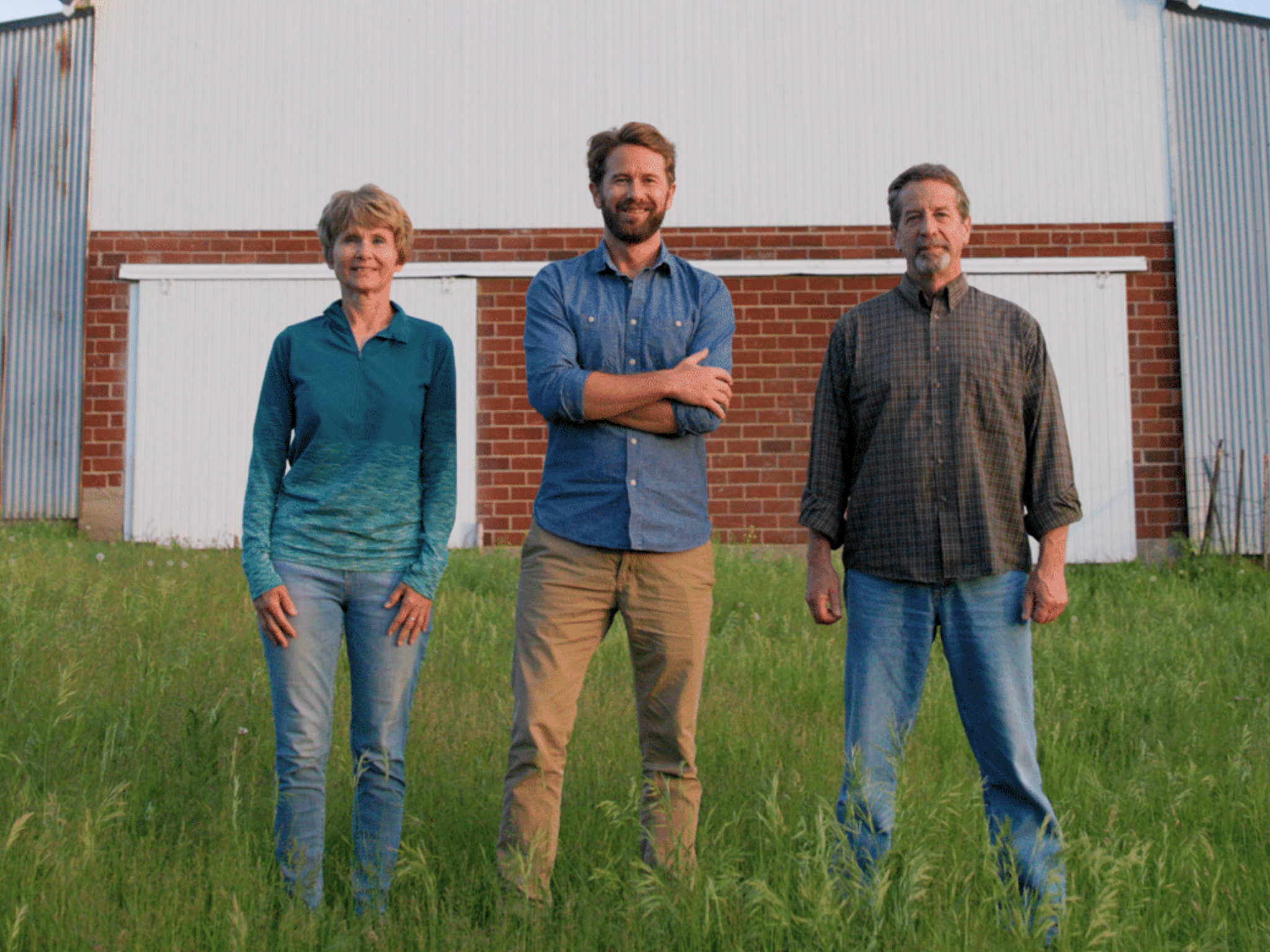
The Transfarmation Project has opened a demonstration hub in Iowa, turning a former pig factory farm into a space for growing specialty mushrooms.
At America’s “ground zero” for factory farming, one former hog operation has replaced pork production with mushroom cultivation.
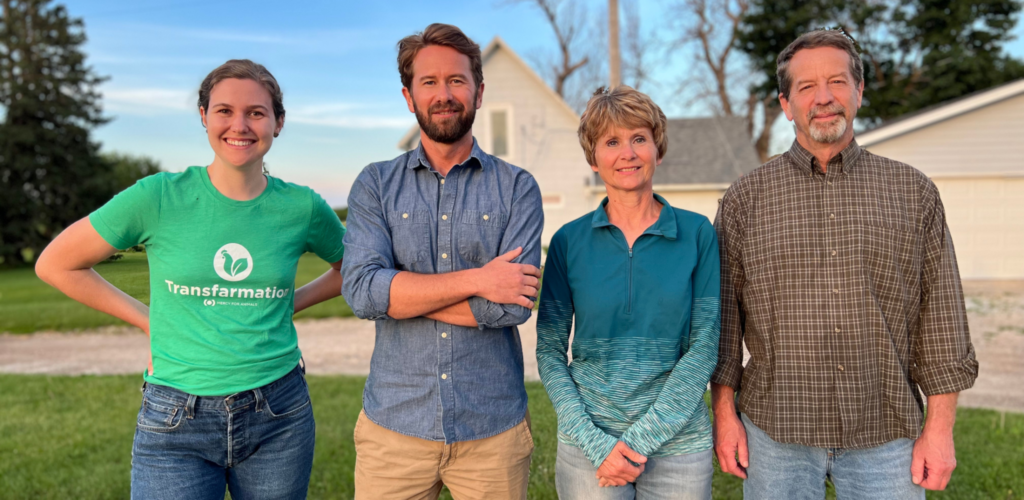
At their 1100 Farm in Radcliffe, Iowa, the Faaborg family used to raise around 8,000 pigs a year. Now, they’re cultivating specialty mushrooms, having transitioned away from intensive livestock farming with the help of The Transfarmation Project.
The initiative helps farmers move away from industrial animal agriculture towards raising crops for human consumption. The 1100 Farm serves as Transfarmation’s second demonstration hub, following the establishment of the first – a converted poultry farm – in North Carolina in 2021.
It aims to demonstrate how transitioning from factory farming to crop production is not just possible, it’s also profitable and sustainable for farmers.
How the Faaborgs went from factory-farmed pork to growing mushrooms
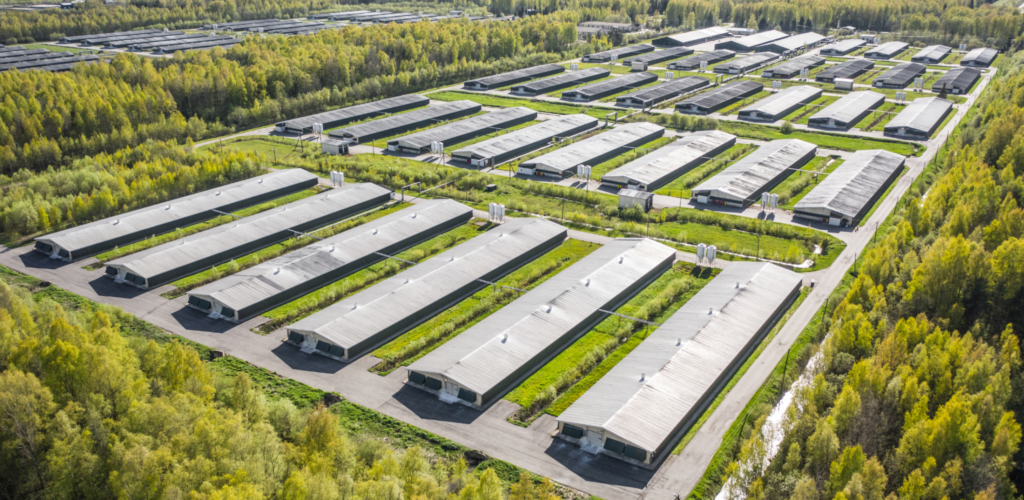
The Faaborgs have been raising pigs for 30 years, growing from a small farm to a concentrated animal feeding operation (CAFO), which is legally defined as spaces where animals are kept in confined conditions without access to the outdoors for at least 45 days in a 12-month period.
Working with an integrator, the family built two barns that each house 1,100 pigs. Their five kids grew up working on the farm too, but over time, the Faaborgs felt the need for a change.
They began working with Transfarmation in June 2021 and decided to stop raising pigs and pursue a full farm conversion a year later. The latter organisation awarded the family a grant in 2023 to pursue a pilot mushroom-growing project, which it said was a “huge success”.
The Faaborgs were then ready to expand and scale up production, which entailed breaking ground on a complete overhaul of their pig barns. They collaborated with the Transfarmation team, contractors, and consultants, and took on most of the construction themselves.
“It takes unimaginable courage to look at a multi-decade family business and say: ‘We need to find a better way.’ But that is exactly what the Faaborgs did. Theirs is a story of ecological and personal healing,” said Transfarmation director Katherine Jernigan.
“This hub is a living testament that we don’t have to tear down our agricultural heritage to build a better future. The Faaborgs have shown us that a food system that works for farmers, animals, and the planet isn’t just a dream – it’s already happening.”
Why transitions away from factory farms are crucial
Estimates show that 98% of all pigs farmed in the US are raised in CAFOs. Iowa is at the centre of this industry. The state suggests it’s home to nearly 11,000 factory farms – but research shows that number is actually above 15,000. It houses a third of the country’s intensively farmed hogs, and is the leading producer of pork.
The number of hogs in the state has risen over sixfold since the 1980s, and is seven times higher than humans. Iowa’s CAFOs collectively produce 300 million lbs of manure every day, 25 times higher than what’s produced from the state’s entire human population.
That has dire effects for public health. The state’s waterways rank among the highest nationwide for nitrate pollution, which is directly linked to its agricultural production. In 2022, hogs and cattle released as much methane as driving a car for over 25 billion miles would – this gas is highly potent and leads to air pollution and the formation of ground-level ozone, which raises the risk of asthma, heart disease, stroke, and premature death.
This is why Transformation believes the opening of its demonstration hub in Iowa is “nothing short of a miracle”. The facility will provide a space for research, host visitors interested in alternatives to factory farming, and showcase how farm transitions can create viable opportunities for former industrial livestock farmers.
The Faaborgs are a good example. In addition to fresh mushrooms, they found a market for mushroom tinctures, jerky, coffee, and hot chocolate blends. And a 2025 story in the New York Times significantly boosted their sales, resulting in nearly 1,000 orders in the first few days after publication.
Apart from Iowa and North Carolina, Transfarmation has supported farm transitions in Indiana and Texas, with most farms shifting to specialty mushrooms.
The Physicians Committee for Responsible Medicine is also piloting a farm transition grant programme, and has already supported farmers in Alabama and Nebraska. The Animal Outlook is spearheading a similar initiative, while ProVeg Brazil has kicked off the Cultiva Project to help ranchers shift to plant-based agroforestry systems.