

Meala Triples Pea Protein Production in Europe to Replace 82,000 Eggs A Day

Israeli food tech startup Meala has entered full-scale production of its texturising pea proteins at two sites in Europe, which will enable it to replace 1,400 tonnes of eggs a year.
Aiming to help food manufacturers de-risk their egg supply chains with functional plant-based alternatives, Meala has moved to full-scale manufacturing of its texturising pea proteins.
The company has more than tripled its production capacity at two sites in France and Germany, which will enable it to produce enough pea protein to replace 1,400 tonnes of eggs annually, or 82,000 eggs a day, starting next year.
“Our infrastructure also provides flexibility to increase output as customer demand grows,” Meala co-founder and CEO Hadar Ekhoiz-Razmovich tells Green Queen.
The milestone puts Meala on track to accommodate the steady commercial demand it’s attracting from dozens of food manufacturers, with its ingredients replicating the multifunctionality of eggs and texture additives like hydrocolloids in a range of applications.
“Our expanded manufacturing capacity enables us to support customers’ new product launches and reach more applications and markets,” says Ekhoiz-Razmovich. “The first plant-based meat alternatives featuring Meala’s protein have already been successfully launched by customers and are now commercially available across Europe.”
Texturising pea proteins offer greener, cleaner labels

Founded in 2021 by Ekhoiz-Razmovich, CTO Liran Gruda, and chief business officer Tali Feldman-Sivan, Meala’s pea proteins are designed to simplify formulations and enhance the texture, nutritional value, and overall sensory performance.
“Our proprietary process combines physical and enzymatic treatments to unlock the functional potential of plant proteins. This transforms them into texturising ingredients that bind, gel, foam, emulsify, and hold water, replacing functionality traditionally provided by eggs and hydrocolloids,” Ekhoiz-Razmovich explains.
“Over four years of development, we have progressed from laboratory quantities to industrial production, optimising the process and establishing controls to ensure consistent quality and performance at scale.”
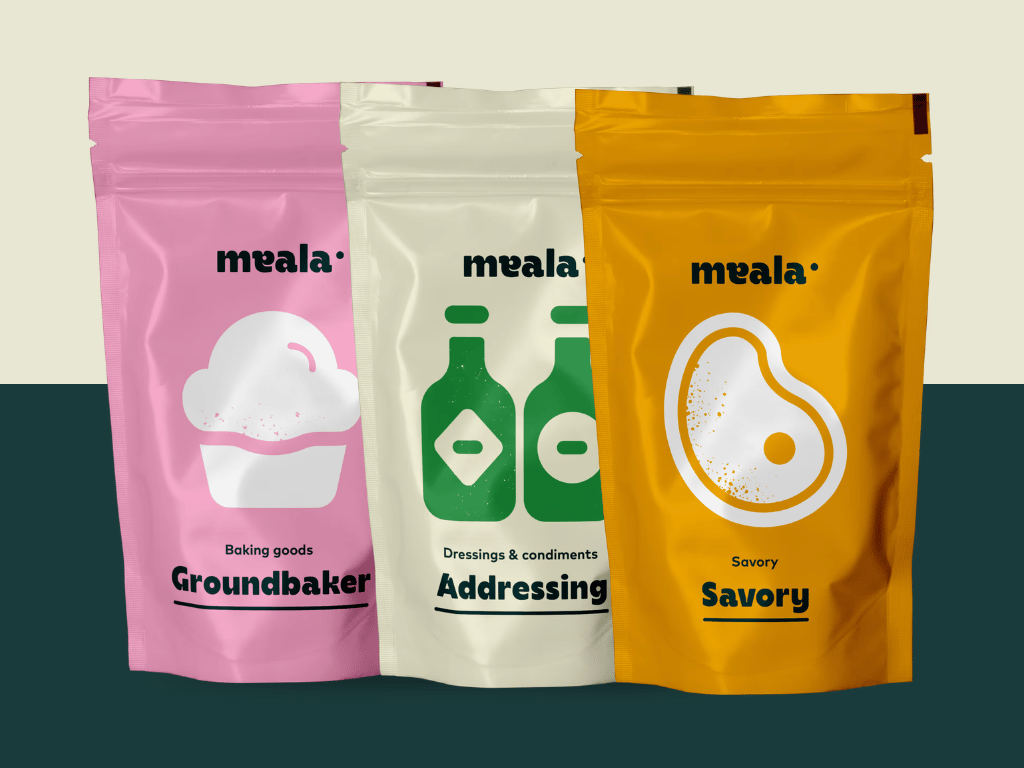
Meala’s portfolio spans three products. Groundbaker is a clean-label, allergen-free egg replacer that offers the same gelling, binding, emulsifying and foaming attributes, and can be used in baked goods like cakes, muffins, waffles, brioches, and pancakes.
Savory and Addressing both replace multiple binders, stabilisers and thickeners with single-ingredient solutions, offering a superior structure, texture and bite in plant-based meat products and enhancing the smoothness and stability of sauces and dressings, respectively.
These innovations enable shorter ingredient lists and higher protein content, two key consumer trends amid the global backlash against ultra-processed foods (UPFs). “The future of food formulation lies in making each ingredient deliver more. But changing even one ingredient can affect texture, stability, and processing behaviour,” says Feldman-Sivan.
“Meala gives formulators a simpler starting point: one ingredient that delivers multiple texturising functions, reducing the need to rebuild recipes around complex combinations of substitutes. We help our customers meet sensory, processing, and cost requirements together, with a focus on consistent performance from lab and pilot trials to commercial products.”
Aside from the functional benefits, Meala’s pea protein is environmentally superior, generating 63% lower carbon emissions and using up 96% less water per kg of protein than egg powder, according to an independent life-cycle assessment.
Meala to file GRAS notice with US FDA amid Series A fundraise
The manufacturing scale-up comes as the egg industry continues to experience supply disruptions. Avian flu and Newcastle disease led to widespread shortages amid a sharp rise in demand, causing egg prices in Europe to hit a decade-long high last year.
According to Meala, the volatility in this market is set to intensify, affecting a broader range of food ingredients. Its pea-based solutions offer manufacturers a stabler, more economical alternative to reduce exposure to price fluctuations and achieve greater cost predictability across multiple bakery products.
For instance, the company’s pea protein was found to potentially reduce the formulation costs of sponge cakes by more than 40% compared to an egg-based reference. The analysis also demonstrated that its ingredient helps cut the refrigeration logistics of liquid eggs, which could simplify storage, transportation, and inventory management.
“In meat alternatives, our texturising protein provides binding and structure while replacing conventional texture additives,” says Feldman-Sivan. “In bakery applications, it typically accounts for just a few percentages of the formulation, replacing egg functionality and enabling meaningful cost-in-use savings.”
Meala’s pea protein ingredients are already commercially available in Europe through partnerships with DSM-Firmenich (which sells Savory as Vertis PB Pea) and Lasenor (which markets Groundbaker as VP-100).
“Our innovation transforms plant proteins into multifunctional texturising ingredients. Customers and distribution partners, particularly leading food brands, require a clear regulatory basis before adopting an innovative ingredient,” says Ekhoiz-Razmovich.
“Meala’s pea protein ingredient is supported by an expert opinion confirming its non-novel status in the EU and a self-affirmed GRAS determination for its intended food uses in the US,” he reveals, adding that the company is now filing a notification with the Food and Drug Administration (FDA).
Asked about the firm’s investment plans, the CEO says: “Meala has raised approximately $10M to date and has recently opened its Series A funding round, alongside securing approval for a significant A round grant from the Israel Innovation Authority.”