

New Barn Organics Acquires Bam’s Buckwheat Milk Recipe to Fuel Regenerative Farming Push

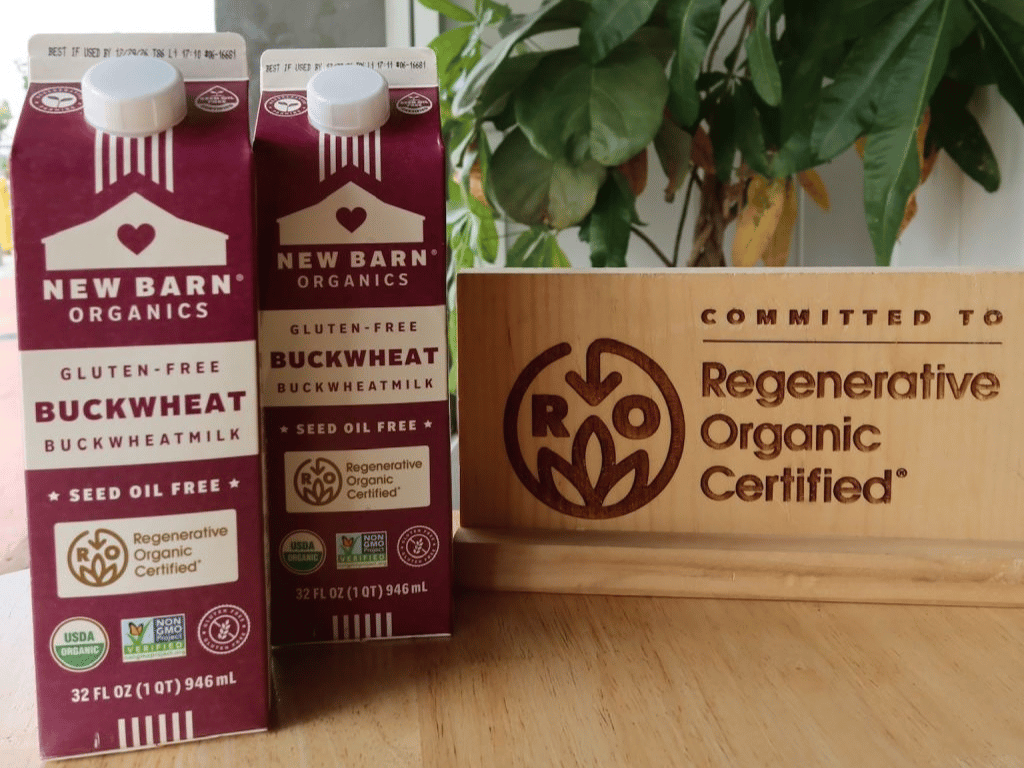
Californian startup New Barn Organics has acquired the recipe IP of Bam’s buckwheat milk, together developing an alternative highlighting the ingredient’s regenerative agriculture attributes.
To differentiate their portfolios and succeed in an ailing market, plant-based milk makers are branching out with products that home in on hyper-specific consumer trends, from clean-label and high-fibre alternatives to those rich in protein and designed for cold foams.
In the US, a new innovation is targeting people’s demand for regeneratively farmed products. Californian startup New Barn Organics has partnered with Bam to launch a regenerative, seed-oil-free buckwheat milk, after purchasing the latter’s recipe IP.
The collaboration began via Whole Foods Market’s Local and Emerging Accelerator Program, where Bam was selected as a participant and paired with New Barn as a mentor. The new dairy-free milk is now available in the retailer’s regional stores across Southern Pacific, Northern California, Southwest, Rocky Mountain, and Florida.
Bam shifts focus to supply buckwheat milk powder
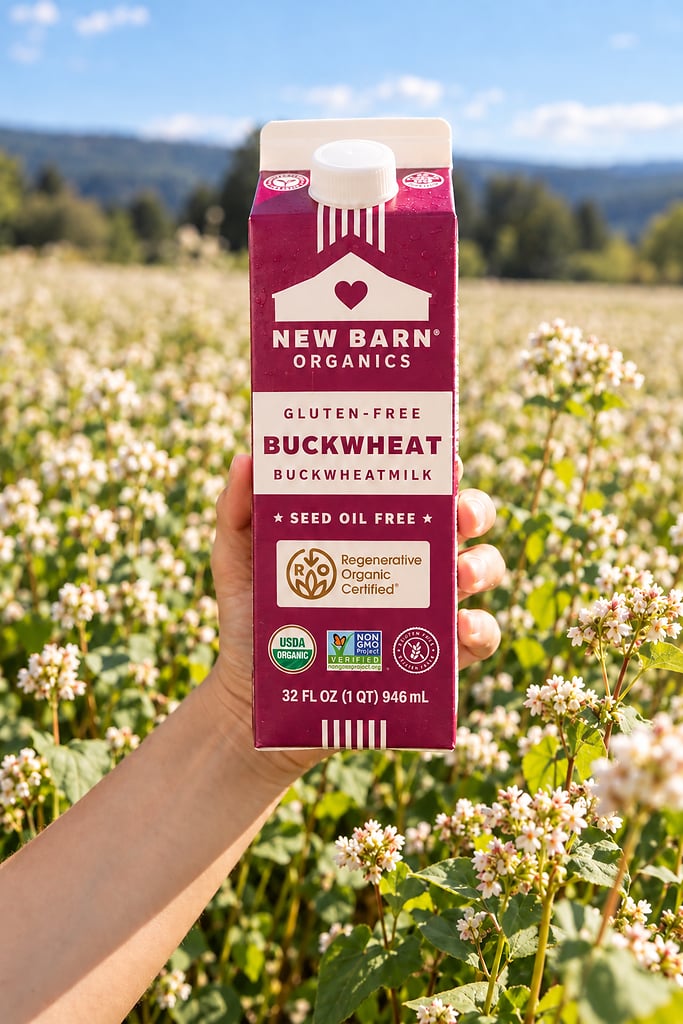
Bam claims to be the company behind the US’s first buckwheat milk. It sold the product in a range of flavours at retailers like Whole Foods, Erewhon, Jimbo’s Mother’s Market, and even appeared on Shark Tank last year. But it evolved into a B2B supplier this year, after New Barn acquired its recipes to bring buckwheat milk to market nationally.
Their partnership combines Bam’s buckwheat ingredient platform with New Barn’s expertise in organic, regenerative food production and retail distribution. The latter has become Bam’s first commercial customer under its new business model, which will see it scale the Regenerative Organic Certified (ROC) buckwheat supply chain through the introduction of buckwheat milk powder across new categories.
“The CPG industry is competitive, and we saw a unique opportunity to be stronger together,” said Bam founder and CEO Paige Hansen. “Plant-based milk remains a core category, and Buckwheat Milk is a natural next step as consumers seek regenerative, delicious ways to diversify their diets. This partnership accelerates category growth and enables Bam to expand buckwheat into new formats.”
The new buckwheat milk powder is a shelf-stable, single-ingredient innovation designed to make the seed more scalable and versatile across food and beverage applications. It is highly soluble and neutral-tasting, and can be used to improve the texture and simplify formulations of products like chocolate, confectionery, bars, bites, crackers, and snacks.
Bam and New Barn both worked closely with the Regenerative Organic Alliance, which administers the ROC standard, to develop the supply chain for this buckwheat milk. The companies said the organisation’s support was “instrumental” in commercialising the dairy alternative and establishing a scalable supply chain for regenerative buckwheat.
“We chose buckwheat because of Bam’s early leadership and the consumer traction Paige created,” said Jasen Ureña, VP of New Barn. “Bam’s innovation gives us a powerful ingredient to build from, and we’re thrilled to bring it to consumers through the New Barn portfolio.”
Plant-based dairy gets in on regenerative agriculture trend
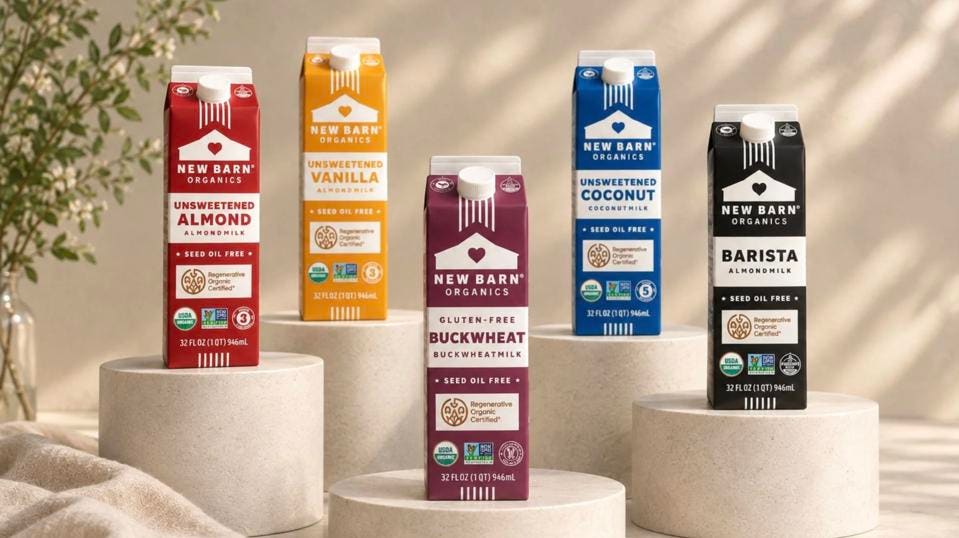
Regenerative agriculture has been thrust into the spotlight with documentaries like Kiss the Ground, its sequel Common Ground, and Feeding Tomorrow, as well as the appointment of Robert F Kennedy Jr as US health secretary.
And while food companies have been accused of using it as a silver bullet to greenwash consumers, regenerative agriculture does have benefits for soil and nature – especially when used to grow crops, not livestock.
A 2025 study revealed that regenerative agriculture is the most effective approach for a just transition of the global food system, with the authors highlighting its “enormous potential to contribute to climate-resilient, equitable and economically sustainable protein production systems”.
“However, negative impacts associated with greenhouse gas emissions, freshwater extraction and livestock diversity need to be addressed,” they added.
The lack of a standardised definition is another issue here, which makes the ROC seal even more crucial for products like New Barn’s buckwheat milk. And it fits right in with consumer trends in the US: the share of Americans who understand regenerative agriculture has tripled since 2023 (though it’s still at 13%), and 75% of them would be willing to pay more for certain types of food grown using regenerative techniques.
New Barn and Bam aren’t the only plant-based milk makers championing regenerative farming. In the UK, Minor Figures launched a regeneratively grown barista oat milk in partnership with Wildfarmed, and Glebe Farm leverages regenerative agriculture to produce its PureOatly line of oat milks.
Meanwhile, Oatly is investing in these practices across a third of its oat supply by 2030, rising to 90% a decade later and 100% by 2050. And as part of its diversity and equity commitment, it will support at least 100 oat growers in transitioning to regenerative farming.