

As Texas Goes Blue, Will Cultivated Meat Get A Reprieve?

A day after Texas elected its first Democratic state leaders in decades, two companies urged a court to overturn the state’s ban on cultivated meat.
Meat was, in a sense, on the ballot in Texas during this week’s astonishing midterm elections, which put Democrats in the US Senate and the state governor’s office for the first time in over 30 years.
James Talarico’s resounding victory over attorney general Ken Paxton followed a campaign where the former was repeatedly attacked for suggesting that meat consumption is a driver of climate change, and we should try and eat less of it.
The Senator-elect from Austin was nicknamed “Tofu Talarico” and derided as a vegan (he isn’t one), with President Donald Trump saying: “You can’t get elected as a vegan in Texas.”
Texas is the US’s largest beef producer, its largest meat consumer, and its largest greenhouse gas emitter. The cattle industry plays an outsized role in the state’s politics, and backed the effort leading to the ban on cultivated meat under Greg Abbott, the outgoing governor.
This prompted a joint lawsuit by Upside Foods, which had plans to sell its cell-cultured chicken in the state, and Wildtype, which was already selling its cultivated salmon in Austin, alleging that Texas’s ban was unconstitutional.
This week, an appeals court heard oral arguments from the companies and the state, with the plaintiffs arguing that their businesses suffered irreparable harm as a result of the law.
With the state’s two-year ban expiring in 2027, the same year it will shift to Democratic leadership, will cultivated meat companies finally get their day in the sun?
Why the court rejected Texas’s bid to dismiss the lawsuit
Abbott signed SB 261 into law in June, authorising a two-year ban on the production, sale and marketing of cultivated meat within state borders. Those found violating the law could face an administrative fine of up to $25,000 per day, a civil penalty of up to $25,000 per day, and up to one year in jail for a first offence.
That immediately affected the plaintiffs, both of which had already given Texans a taste of their products. Upside Foods sold limited amounts of its first chicken product at a “well-attended private event” during the 2024 South by Southwest conference in Austin.
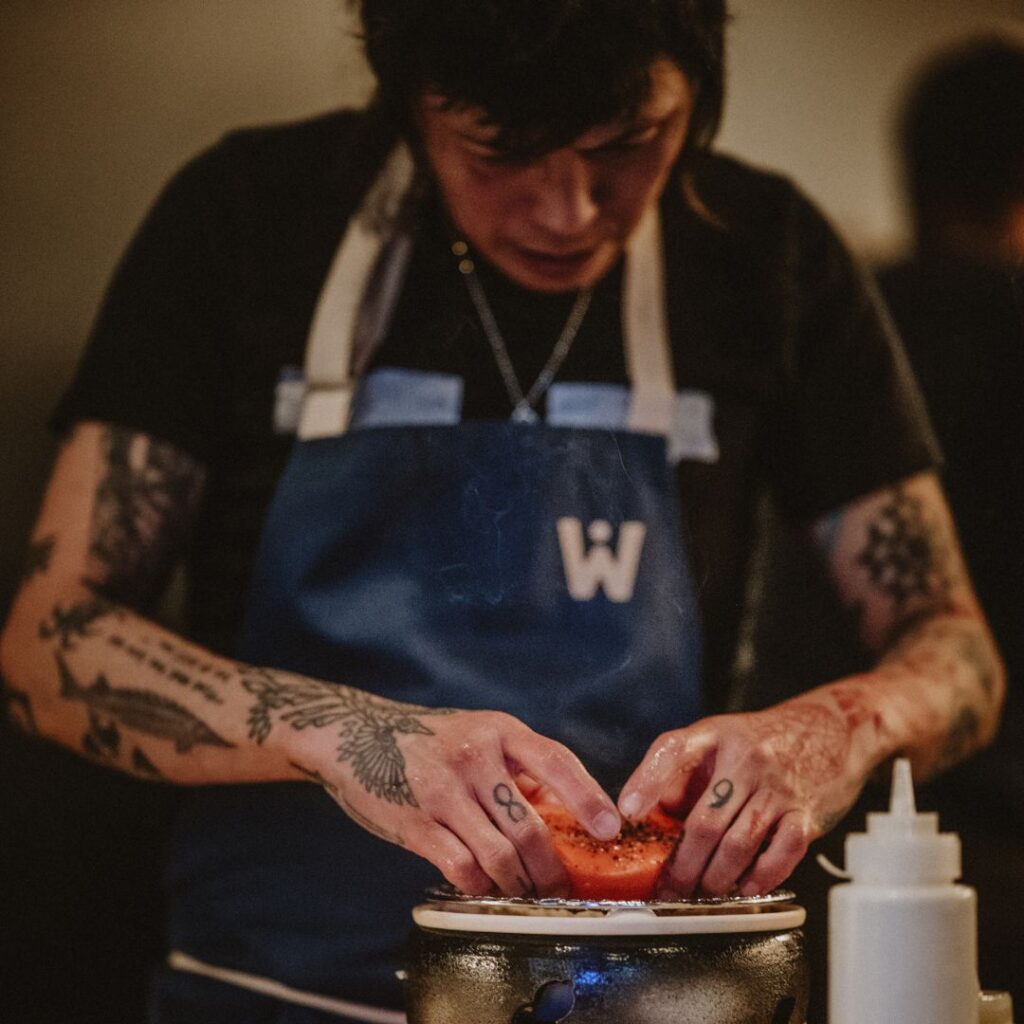
And Wildtype debuted its cultivated salmon at Otoko, an omakase restaurant in Austin. “Following our launch in July, we had planned to build on our momentum in Austin by making Wildtype available to a number of seafood restaurants across Texas, including in Dallas and Houston, but this bill closed those markets to us,” Kolbeck told Green Queen last year.
The Institute of Justice filed its complaint on behalf of Upside Foods and Wildtype in September 2025, a day after Texas’s ban came into force. The state promptly filed a motion to dismiss the lawsuit, but in January, a judge in the US District Court for the Western District of Texas denied the attempt, allowing the case to proceed under the plaintiffs’ dormant Commerce Clause claim.
Under this law, the federal government has exclusive power to regulate interstate commerce, and states have limited power to interfere. The cultivated meat companies believe Texas’s ban violates this clause, since both have been approved to sell their cultivated proteins by federal food safety agencies.
With ban set to expire in 2027, can cultivated meat finally get a win?

On November 4, as results from the midterms confirmed a wipeout of the Republican Party nationally, Upside Foods and Wildtype’s lawyers asked a federal appeals court during oral arguments to rule that the ban was enacted to shield the Texan livestock industry from out-of-state competition and irreparably harmed their businesses.
“We have our lost revenue, our lost business opportunities, our lost goodwill and our lost time in the market,” Marco Vasquez Jr, an Institute for Justice attorney representing the companies, told the court, according to the Courthouse News Service.
“SB 261 is no different from the law in [another] case that this court upheld that banned the sale of horse meat in Texas,” countered Douglass Duncan, Texas’s assistant solicitor general. “It treats all in-state and out-of-state companies the same by way of a blanket ban […] It therefore cannot be considered economic protectionism.”
However, the only companies that have received approval to sell cultivated meat in the US are based outside Texas, so the law discriminates against those firms in violation of the Commerce Clause, the plaintiffs argued.
The state’s solicitor general argued that Upside Foods and Wildtype’s sales were minimal in Texas, and that a two-year ban was reasonable to allow further research on the safety impact of cultivated meat.
However, the Institute for Justice attorney responded that Texas is yet to produce any evidence of health risks and that the Food and Drug Administration and US Department of Agriculture had already reviewed the companies’ safety data. He also pointed to statements by the bill’s sponsor that “the goal of this bill is to protect our agriculture industry”.
The panel of judges, all of whom were appointed by Trump, are now considering the case, and the ban remains in effect in the meantime. However, the two-year period ends in September, and it seems unlikely that a Democratic government led by Gina Hinojosa will revisit the ban – after all, the eight states that have outlawed the sale of cultivated meat all did so under Republican leadership.
Talarico fended off anti-meat attacks to become Texas’s newest senator. Can cultivated meat ride that blue wave to, ahem, “steak” its claim on the dinner plate?