

Amyris Installs New Production Line in Brazil for Precision-Fermented Ingredients

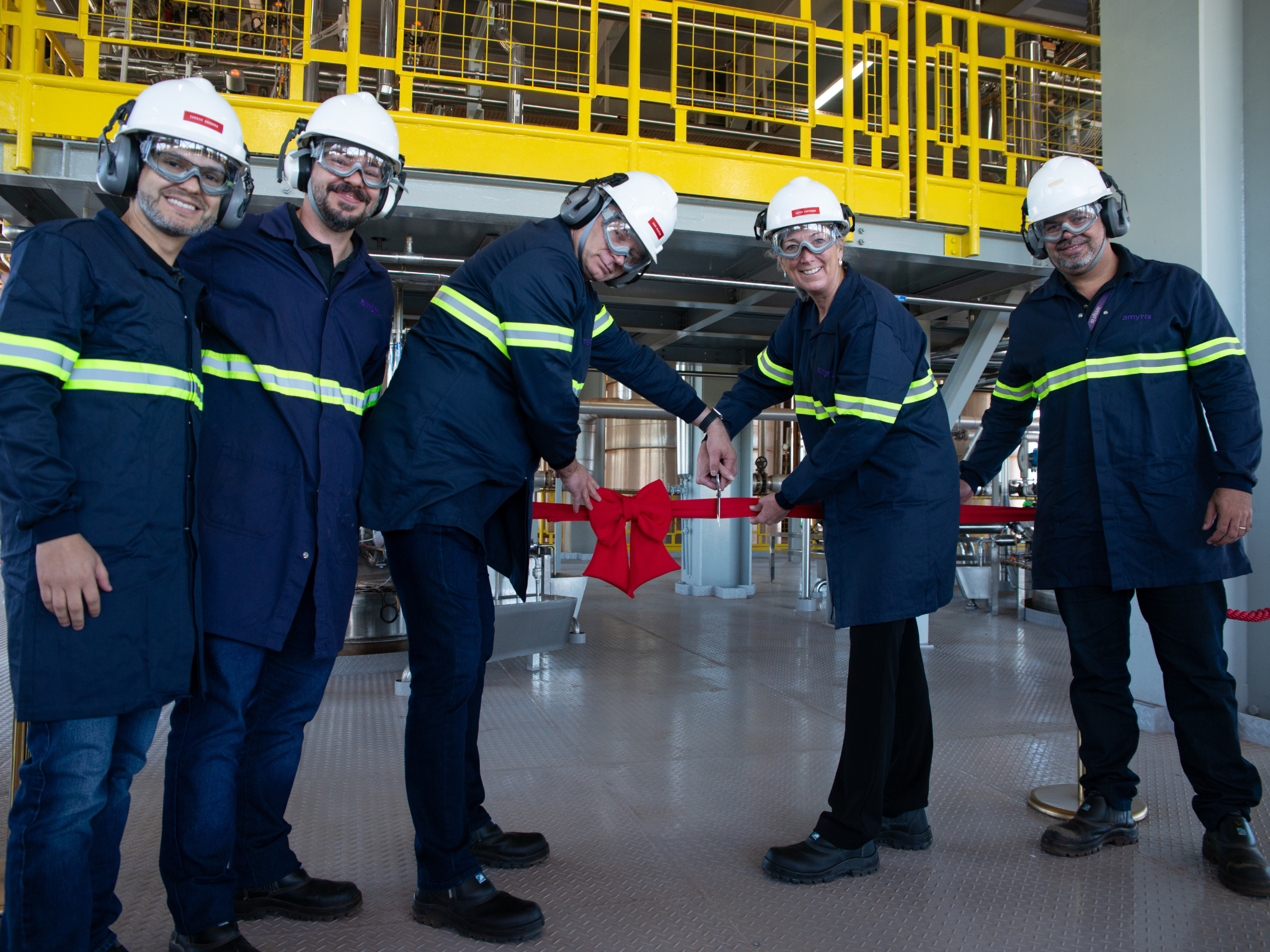
Californian biotech firm Amyris has completed construction of a new manufacturing line at its precision fermentation plant in Brazil, the latest move in its post-bankruptcy rebuild.
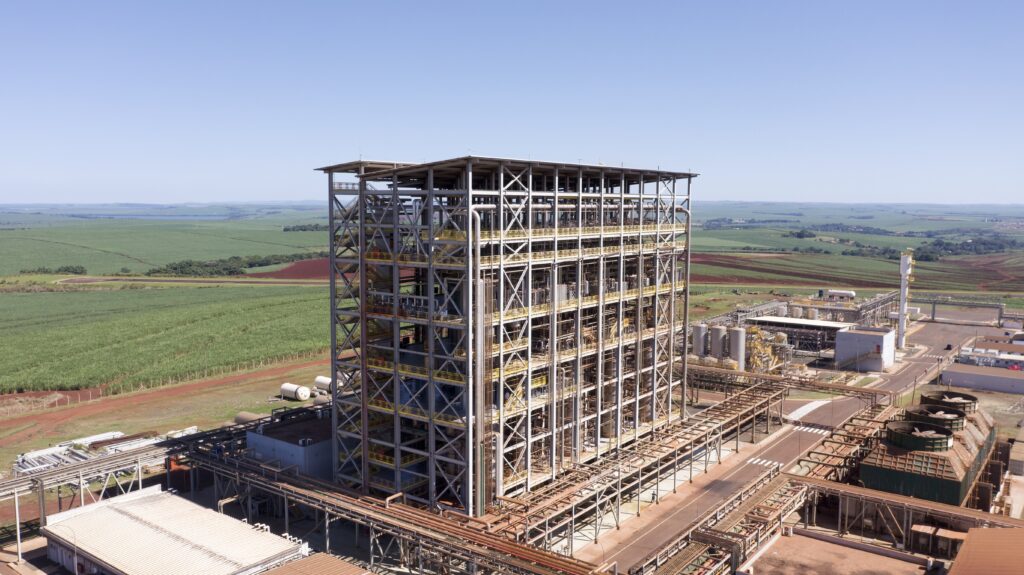
US biomanufacturing company Amyris is expanding its precision fermentation capabilities with the establishment of a new production line at its facility in Barra Bonita, Brazil.
The 2x80m³ configuration adds to the firm’s three existing 2x200m³ lines at the plant, accelerating its scale-up efforts and enabling more efficient production of high-value specialty molecules for a variety of industries.
“We produce renewable specialty molecules used across flavours and fragrances, beauty and personal care, food and beverage, agriculture, health, and advanced materials,” Amyris CEO Kathy Fortmann tells Green Queen.
“We now have four fully independent operational production lines,” she added. “Each of these lines is also supported by additional fermentation capacity for biomass generation.”
How Amyris’s precision fermentation tech sets it apart
A pioneer in the synthetic biology sector, Amyris has been around since 2003, operating a vertically integrated biomanufacturing setup to create customised sustainable ingredients.
At the heart of its technology is precision fermentation, a process that involves inserting specific a DNA sequence into microbes to teach them to produce desired molecules – like proteins, fats, vitamins, pigments and flavour molecules – when fermented.
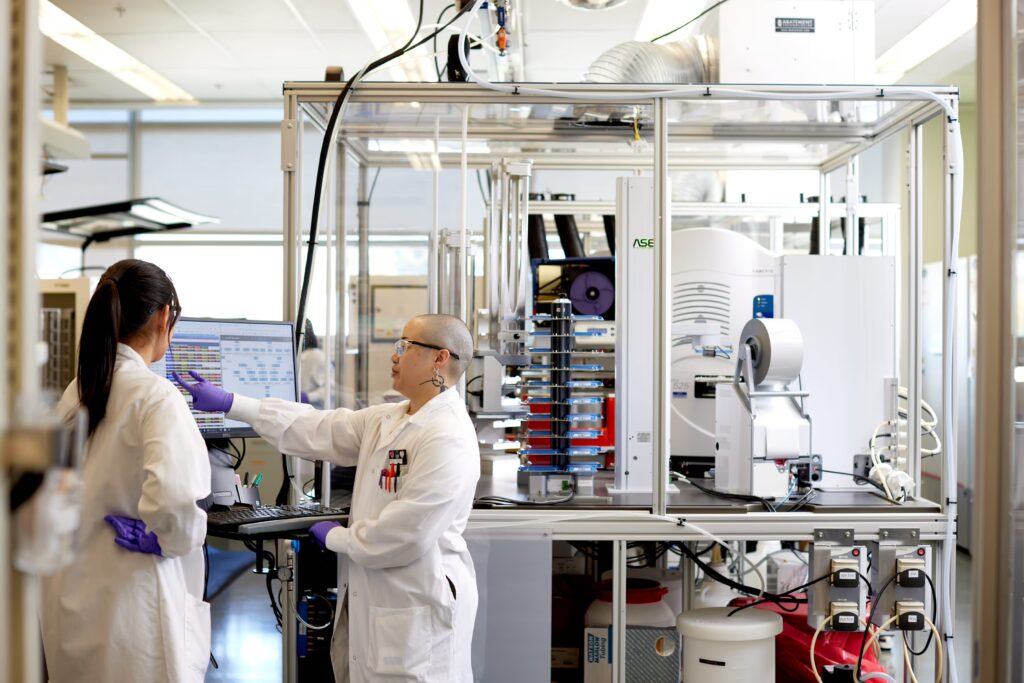
“Amyris’s platform combines advanced production strains, specialised fermentation processes, and sophisticated operational capabilities. Our engineered strains deliver exceptionally high titers, yields, and productivities that remain stable over long production runs,” explains Fortmann.
“To support this performance, we’ve developed highly tailored fermentation processes optimised through advanced controls and deep technical know‑how,” she adds.
“To execute these precision processes at scale, we’ve developed our facility with specialised and custom instrumentation, automation, and real‑time data systems that translate strain performance in the lab into consistent, industrial‑scale results.”
The new line at the Barra Bonita plant is equipped with advanced instrumentation, process controls, and “unmatched” automation, supporting clients at different stages of the commercialisation life cycle. “It maximises efficiency, flexibility, and reliability through advanced engineering solutions and in-depth analysis of process performance using our data science capabilities,” says COO Adam Blaziak.
“Together, these components make Amyris the go-to partner to create and produce customised molecules for industries from flavour and fragrance to agriculture, health, food and beverage, and more,” he adds.
Customers span skincare, perfumes, shoes, and agriculture
Fortmann suggests that customers rely on Amyris for ingredients that offer “high purity, consistent performance, reduced environmental impact, and improved supply chain resilience”. These include squalene, farnesene, bisabolol, and patchouli, among others.
“Our partners include DSM‑Firmenich, Givaudan, and Croda, among others,” the CEO says. “Our customers incorporate Amyris‑made molecules into home care, beauty, and personal care products used by hundreds of millions of consumers globally. These can include perfumes, cleaning products, skincare products, and more.”
She adds: “Given our ability to produce ingredients using renewable biological chemistry across a range of industries, we have the capability to work with additional companies that make products for several different end markets. For instance, we work with companies in the specialty chemical space that have introduced our materials in diverse products ranging from athletic shoes to agriculture.”
With precision fermentation, regulatory approval is a major hurdle to commercialisation. Amyris works with regulators and clients globally to ensure it can manufacture and sell into its intended markets.
“The requirements can change depending on both the geography and the end market,” notes Fortmann. “Whether our client or Amyris leads on the regulatory process is determined on a case-by-case basis, depending on the product and partnership.”
Amyris doubles down on B2B post-bankruptcy
This latest production line comes live more than two years after Amyris filed for bankruptcy protection, entering a period of restructuring that saw it sell off its consumer brands like Biossance, Pipette and MenoLabs, and fully pivot to a B2B model.
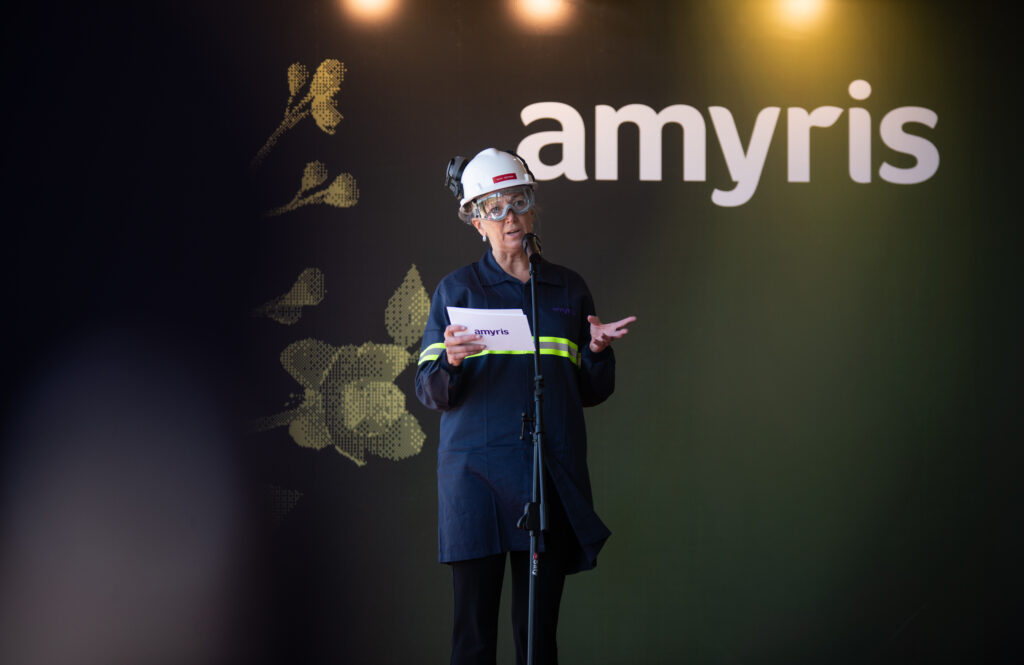
“We’ve rebuilt the company with an emphasis on technological innovation, operational discipline, business strategy, and execution,” says Fortmann, who joined as CEO in May 2024. She outlined how the firm is “laser‑focused on operational excellence and on the technical core competencies”.
“Our business model continues to serve our long-standing partners in delivering renewable, sustainably derived ingredients at scale. In addition, we’re now giving partners a more flexible way of engaging with us, depending on their needs,” she notes.
“With our long-time expertise in strain engineering, scale-up, and manufacturing, we’ve opened avenues for partners to tap into a single capability, license a technology, or partner with us across the full value chain.
“With our increased focus and our updated business model, we are positioned to create maximum positive impact, accelerating more biotechnology innovations to market.”