

Wisecode Unveils Non-UPF Shield for A New Way to Define Ultra-Processed Foods

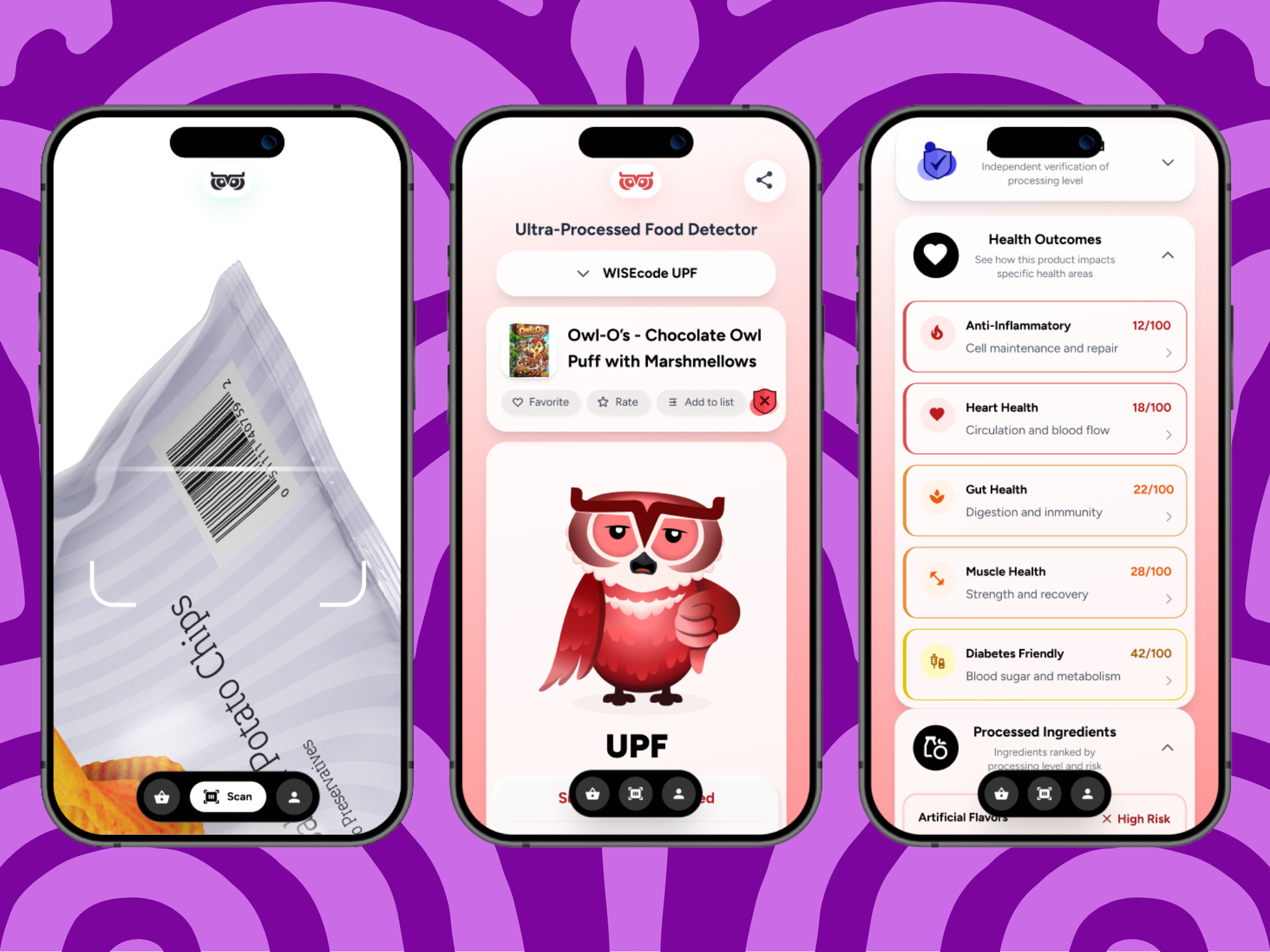
US startup Wisecode has launched a verification programme for brands and a consumer-facing app to bring clarity to the ultra-processed food debate.
Nearly a year after they first unveiled a nuanced way of defining ultra-processed foods (UPFs), scientists at US firm Wisecode have finally unveiled two tools to help consumers and businesses navigate this category.
UPFs have become a blight on the entire food industry, with consumers associating processing with ill health – against experts’ warning – and giving further rise to the clean-label movement.
The discourse, which has grouped products like Coke and Lay’s with wholemeal supermarket breads and meat alternatives, has forced food companies to reformulate and/or seek certification labels to assure consumers that their products are not UPF.
Two such verification programmes – from the Non-UPF Program and the Non-UPF Project – have already been launched over the last 15 months. And now, Wisecode has joined that list too.
The startup has launched a certification scheme called the Non-UPF shield for brands, in addition to an AI-powered UPF Detector feature in its consumer-facing mobile app.
Unveiled at Natural Products Expo West this month, both are powered by Wisecode’s new UPF Standard, an ingredient-level framework that marks a departure from the Nova classification, which has been criticised by many nutritionists as inconsistent and overly broad and for fuelling confusion among shoppers.
“Food systems are at a tipping point,” said Wisecode founder and CEO Peter Castleman. “The question is not whether ultra-processed foods matter. It is how we define them clearly and apply that definition consistently. That is what we are building.”
Wisecode offers more nuanced approach to UPFs
Under the Nova classification, food is grouped into four categories: unprocessed or minimally processed (like fresh produce), processed culinary ingredients (like olive oil and salt), processed foods (like certain cheeses and artisan breads), and UPFs.
The latter products are described as those made with industrial formulations and techniques or containing cosmetic additives thought to be of little culinary use. Put simply, they’re thought of as foods you can’t make in your home kitchen.
So this includes an ice cream tub from Ben & Jerry’s, a pack of Oreos, a can of Campbell’s soup, a flavoured yoghurt from Chobani, a box of Kellogg’s All-Bran cereal, and a barista oat milk from Oatly. The lack of consistency is what has led many health experts to discourage using Nova’s definition of UPFs as a blanket marker for unhealthy food.
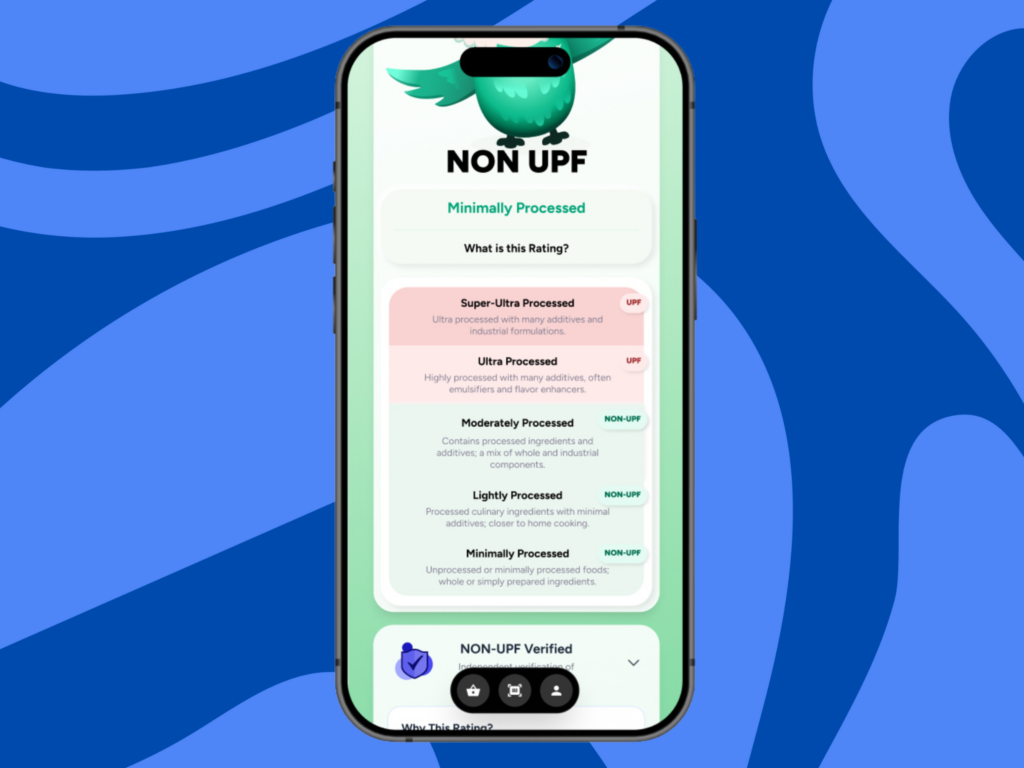
Wisecode takes a different approach to define these products. Its UPF Standard assesses individual ingredients, considers the degree of refinement, accounts for added sugar contribution, and flags industrial additives linked to heavy processing or potential health consequences.
Foods are classified across five categories under this standard: minimal, light, moderate, ultra, or super-ultra-processed. The latter two groups comprise products with many additives, industrial formulations, emulsifiers, and flavour enhancers.
Last year, the company’s scientists found far more differentiation among foods classed as UPFs under Nova, and less differentiation among minimally processed foods. While 95% of the analysed foods were classified as ultra-processed under Nova, they were more evenly dispersed across Wisecode’s system, where each category contained 16-23% of the foods.
This system is now incorporated into Wisecode’s product-scanning app, which determines if a food is ultra-processed or not based on the standard, and explains the ingredients that contribute to this status. Products that meet the non-UPF criteria are displayed with a clear verification batch, with ingredient clarity and contextual summaries outlining how they were manufactured.
“Awareness of ultra-processed food is rising, but shoppers still struggle to identify it consistently,” said Wisecode CSO Richard Black. “Our goal is to make processing visible and understandable in seconds.”
Verification programme follows Congressional effort to label UPFs
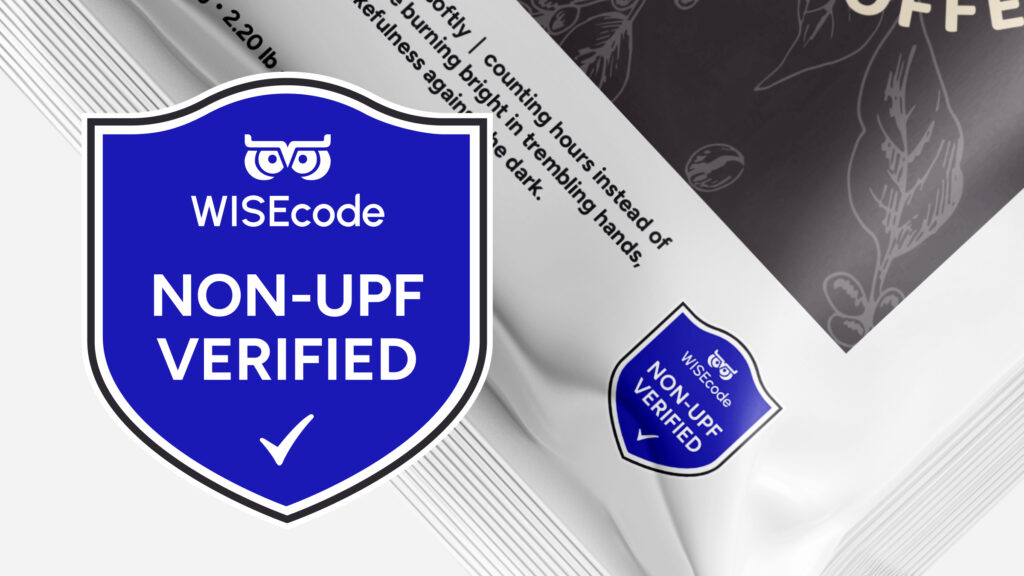
Wisecode’s business-facing launch, the Non-UPF Shield, attempts to get rid of the red tape that comes with conventional certification programmes. To verify a product as non-UPF, Wisecode leverages its pre-built ingredient database, automated review system, and public ingredient lists to make verification faster, more transparent, and easier without any extensive paperwork or audits.
When a product doesn’t meet the non-UPF thresholds, Wisecode identifies the specific ingredients and process techniques that pose a problem, enabling brands to reformulate more easily.
It works directly with CPG companies to evaluate individual SKUs and broader product portfolios, with its platform covering more than 840,000 packaged food products across 15,000 attributes. The startup delivers structured reports that outline processing drivers, benchmarking insights, and clear pathways towards non-UPF qualification.
Its initial customers include Blue Zones Kitchen and OKO, among others. “We believe food transparency requires clear standards that work in the real world. Consumers need clarity. Brands need consistency. Our standard was built to support both,” said Castleman.
The new verification label comes as the US House of Representatives considers a bipartisan childhood diabetes bill that seeks to convene an expert panel to define UPFs, prohibit them from being advertised to children, and require them to carry front-of-pack warning labels. For context, Americans now get 55% of their calories from UPFs, and this rises to 67% for children.
The Food and Drug Administration has already been working to develop a definition of UPFs to encourage companies to label their offerings as ‘non-ultra-processed’ the same way products are marketed as sugar- or fat-free.
These efforts have magnified under the rise of the Make America Health Again movement, whose latest attack on UPFs came in the form of a highly controversial Super Bowl ad with Mike Tyson, who has been convicted of rape (for which he served a three-year term in prison) and has a history of domestic violence.
US health secretary Robert F Kennedy Jr, the chief architect of the MAHA drive, has promised to act on a petition by former FDA chief David Kessler, who has asked the government to revoke the GRAS status of some UPFs. That said, he stopped short of promising that the agency will begin regulating these products.