

Call it ‘Cultivated Meat’, Not ‘Lab-Grown’ – At Least in the Two Largest Alternative Protein Markets

A new study suggests that consumers in the US and Germany are more accepting of cultivated meat when labelled with that term instead of ‘lab-grown’.
What do you call cultivated meat to deliver the maximum impact?
Do you keep that name as it is? Do you use ‘cultured’? Or perhaps ‘cellular’? Or ‘lab-grown’, as many are wont to do?
Researchers at the Tufts University Center for Cellular Agriculture (TUCCA) looked for an answer to this dilemma in a new study, exploring how terminology, trust and familiarity affect people’s willingness to eat these novel proteins.
“Our findings suggest that the words used to describe cell-cultivated meat can meaningfully influence consumer valuation,” said lead author Katherine Fuller.
The research revealed that consumers are more receptive to terms like ‘cultivated’ than ‘lab-grown’ meat, but food tech neophobia and trust in established institutions also significantly influence their attitudes.
Food tech neophobia and trust are top drivers
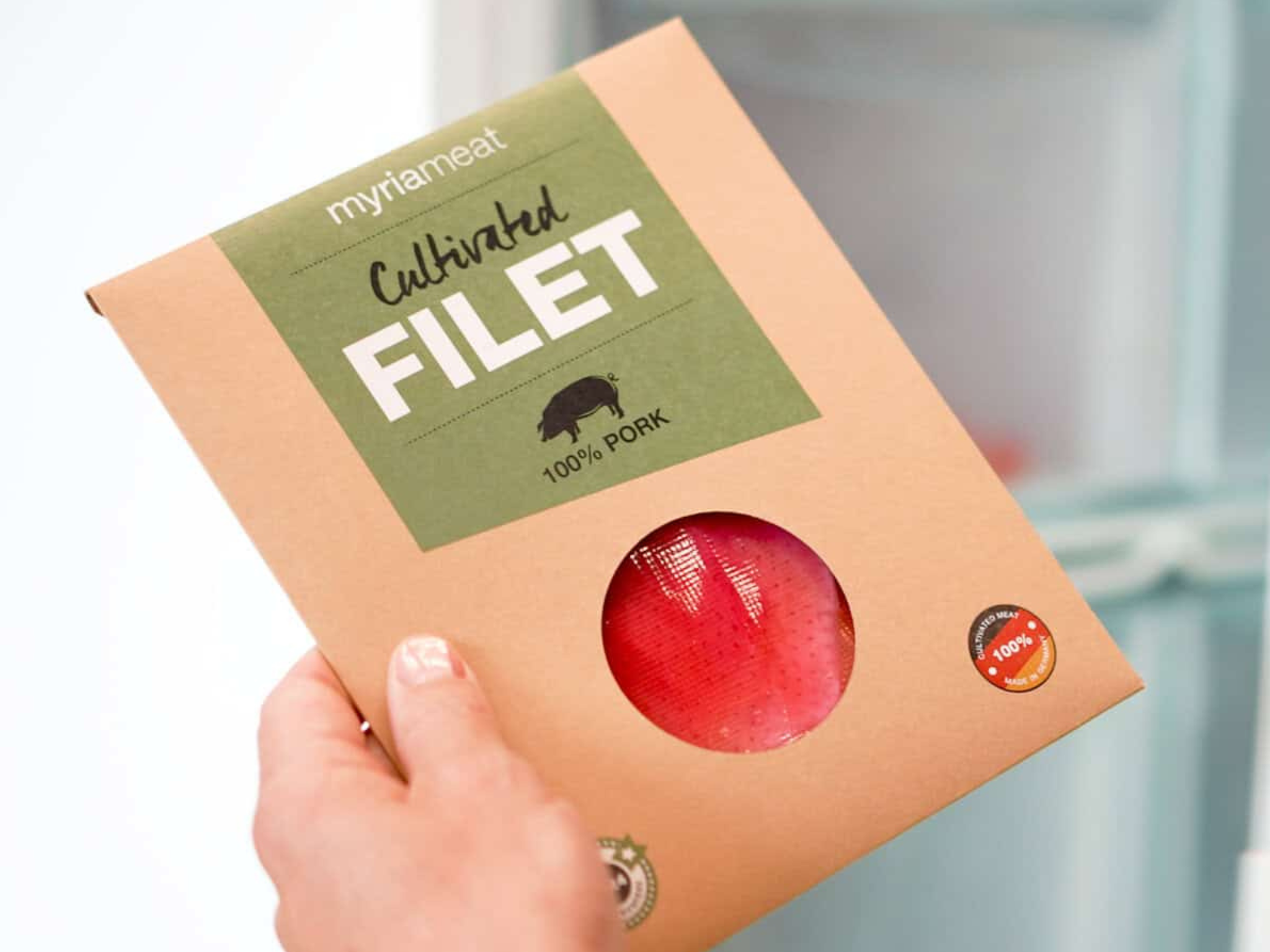
The study covered consumers in the US and Germany, the two largest markets for alternative proteins globally. In fact, several companies have already commercialised cultivated meat in the former country, with products spanning chicken, pork and salmon.
It revealed that the terms ‘cultivated’, ‘cultured’, and ‘cellular’ consistently outperform ‘lab-grown’, which tends to reduce consumer appeal and market share.
The research also examined how people’s willingness to pay varies depending on the terminology used to describe cultivated meat. Naturalness-oriented terms increased this intention by up to $1.97 in the US and €0.78 in Germany, compared to ‘lab-grown meat’.
This is a pattern “consistent with terminology activating different perceptual associations related to naturalness, risk, and technological intrusion”, the researchers noted in Food Quality & Preference.
“Naming is often one of the first pieces of information consumers find, so terminology can shape initial perceptions before people have direct experience with the product,” said Fuller.
“At the same time, we found that naming does not affect everyone equally. Consumers who are more open to trying new food technologies and who have greater trust in food system institutions tend to be more responsive to naming differences than those who are more sceptical.”
For instance, higher trust in food actors amplifies the impact of labelling, but religiosity did not show an independent impact, indicating that moral concerns “may be channelled through perceived risk and naturalness”.
Food tech neophobia – the tendency to be cautious about trying new, unfamiliar foods – had a big effect. “People with higher food neophobia were less willing to choose cell-cultivated meat products regardless of how they were named, suggesting that concerns about the product itself may outweigh the influence of terminology,” Fuller noted.
Prior surveys show division over ‘cultivated’ and ‘lab-grown’ meat
The findings replicate across both countries despite the cultural differences, suggesting that these responses reflect broader cognitive mechanisms.
It is one of several studies over the years that have examined the consumer acceptance impact of different labels for cultivated meat.
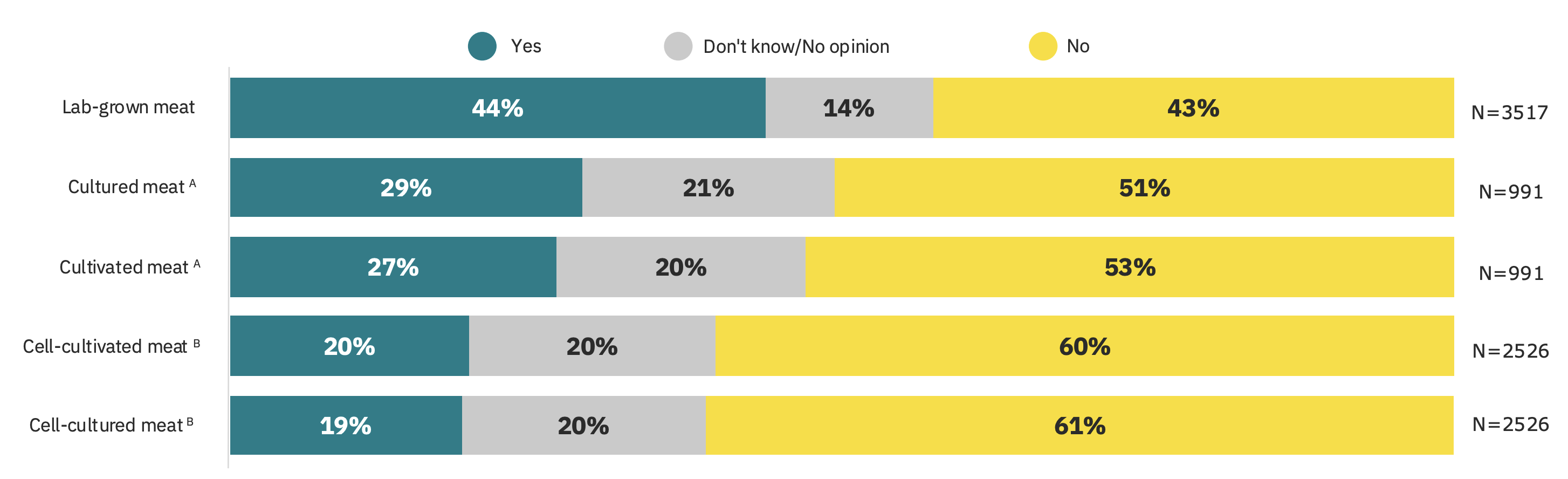
One survey published by the Good Food Institute this year suggested that a majority of Americans aren’t aware of this innovation – and of those who are, ‘lab-grown meat’ is the most popular term, familiar to 44% of the respondents (versus 29% and 27% for ‘cultured’ and ‘cultivated’, respectively).
And though only 21% of US consumers find these proteins appealing, 45% are likely to try these proteins, and one in four (26%) say they might buy them.
Meanwhile, in 2022, a peer-reviewed study found ‘lab-grown’ and ‘artificial meat’ to be the least favourable terms among consumers, and ‘cell-cultured’ and ‘cell-cultivated’ the most popular.
A year earlier, in a GFI survey of 44 industry CEOs, 75% preferred ‘cultivated’ too. In Singapore, too, meat-eaters had a more positive attitude towards ‘cultivated meat’ than other terms. This was followed by ‘lab-grown’, ‘animal-free’, ‘cultured’ and ‘clean’ – the more literal, ‘cell-based’, was the least favoured.
These polls show how attitudes towards cultivated meat labelling vary widely in different countries, and across multiple datasets, highlighting the need for clearer and more consistent communication on the industry’s part.
“Research like ours helps stakeholders understand how terminology shapes perceptions and valuation and can inform discussions about labelling standards and consumer education,” said Fuller.