

JBS, the World’s Largest Meat Company, Drops Its Net-Zero & Deforestation Goals

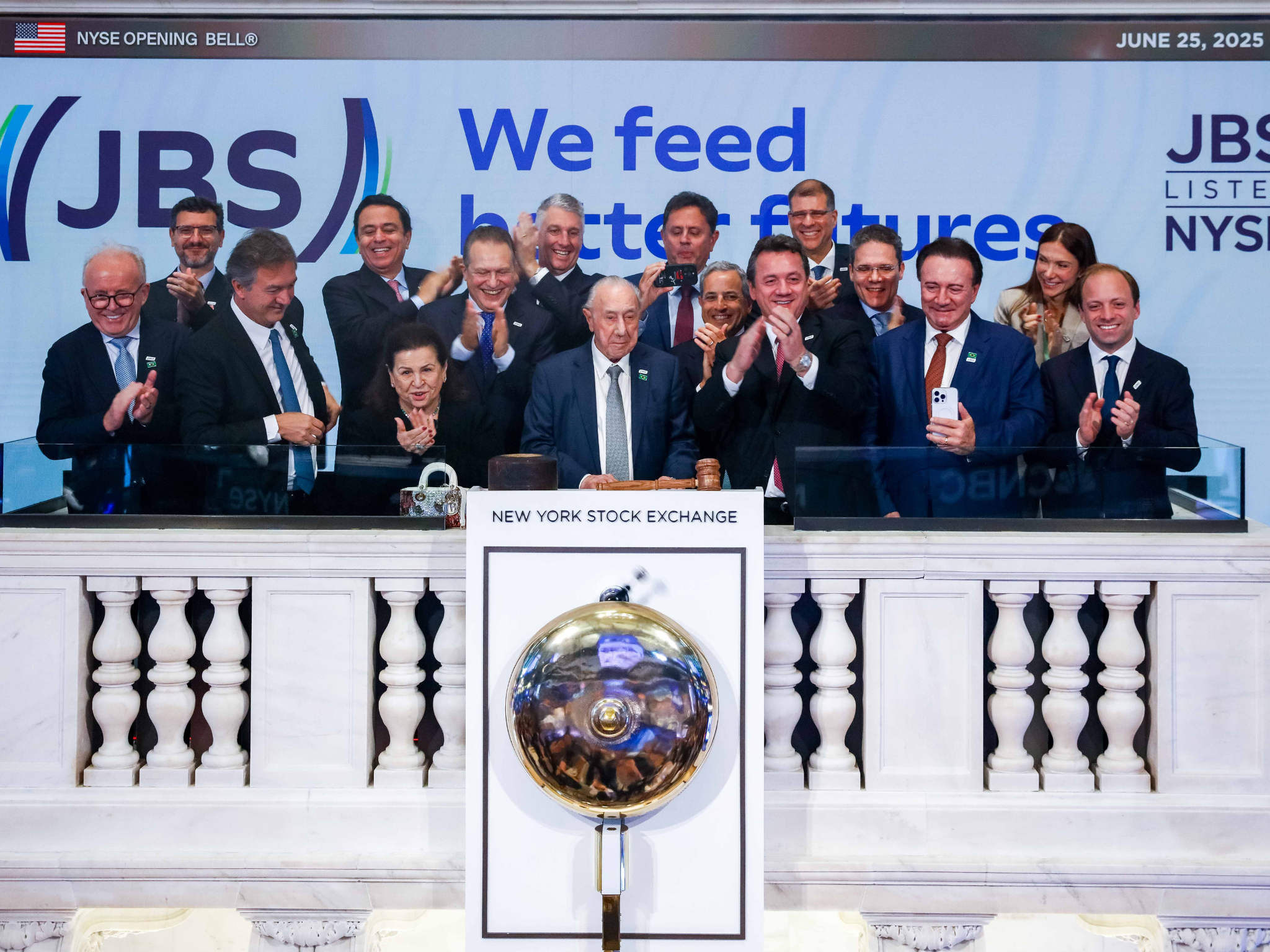
In its annual sustainability report, Brazilian meat major JBS scrapped its net-zero emissions goal for 2040 and omitted mentions of its earlier target of eliminating supply chain deforestation.
JBS, a meat producer that emits more greenhouse gases than 81% of the world’s countries, has abandoned the climate goals that helped it become a public company.
The Brazilian meat giant bid adieu to its target of reaching net-zero emissions by 2040 in its annual sustainability report, and omitted all mentions of an earlier goal to eliminate deforestation in its domestic supply chain.
It’s a dangerous, laughable, and frankly unexpected move from the world’s largest meat producer, which joins other livestock giants that have given up on accountability for their environmental impact.
JBS’s chief sustainability officer, Jason Weller, insisted that the company was “not walking away from challenges and opportunities in feeding a growing world in the face of a changing climate”.
Instead, he claimed JBS is “strengthening [its] framework” so its goals “better reflect where we can take direct action, measure progress consistently, and hold ourselves accountable”.
JBS abandons scope 3 reduction in favour of emissions intensity
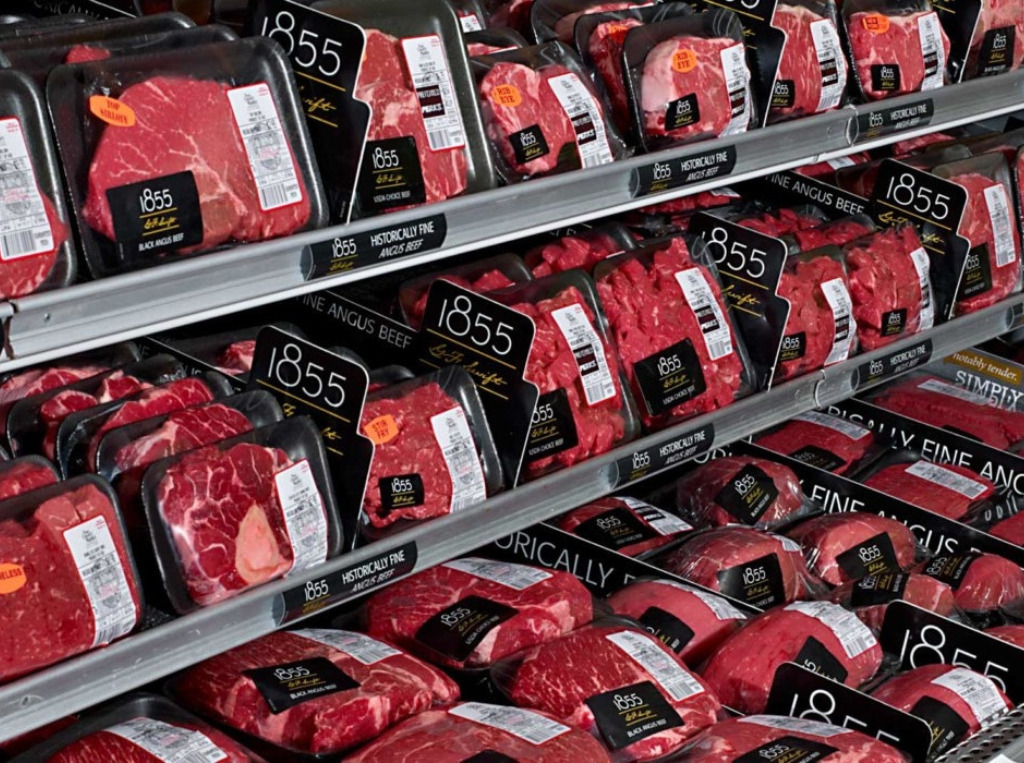
JBS is the largest polluter in the livestock industry, which itself accounts for up to a fifth of global emissions and 80% of the world’s farmland. Some suggest the meat and dairy sector is the leading driver of climate change when you use updated metrics to measure its impact.
According to its sustainability report, JBS’s overall emissions crossed 191 million tonnes of CO2e in 2025, representing a 22% increase from 2023. Separate analysis has shown that much of this footprint comes from methane from its beef operations, with the company generating more of this potent gas than fossil fuel majors Shell and ExxonMobil combined.
The share of its GHG emissions is heavily lopsided, as is the case with all agrifood companies, towards scope 3 emissions, which acocunt for the climate footprint from across a business’s value chain, not just its own operations. These make up over 97% of JBS’s emissions, and rose by 23% between 2023 and 2025.
However, this is the metric the firm is shifting away from. It will still continue to report its scope 3 emissions, but has scrapped its goal of reducing them.
“The further we got into execution, the clearer it became that a Net Zero goal spanning hundreds of thousands of independent agricultural producers across tens of millions of hectares in dozens of countries – each with different practices, different baselines, and no standardized measurement infrastructure – is an immense challenge,” Weller argued.
“Delivering a system-wide ambition at that scale depends on data, producer adoption, technology, and measurement infrastructure that are still developing across global agriculture.”
Instead, JBS says it will now focus on reducing scope 1 and 2 emissions intensity – a metric that allows for a rise in absolute emissions as revenues expand – by 30% by 2030 and 70% by across its processing facilities by 2050.
Livestock companies have long used emissions intensity as a measure to highlight their climate impacts and goals. However, experts say it can often mask their true impact and allow companies to greenwash consumers, since reductions in intensity can easily be negated by an increase in overall production of meat and dairy.
Political clout helps JBS grow profits while weakening climate goals
That JBS is no longer working to meet its climate and deforestation goals will come as no surprise to people familiar with the company’s contentious history. Back in 2019, the company claimed its meat production had little to no impact on the environment. A year later, however, it made the net-zero commitment that it abandoned this month.
That pledge, alongside time-bound promises to reduce or stop deforestation, formed a key part of its bid to go public on the New York Stock Exchange, an effort that invited strong backlash from environmental groups and politicians in both the US and the UK.
In 2024, JBS’s US arm was sued by New York Attorney General Letitia James for misleading consumers about its climate goals and profiting from “fraudulent and illegal environmental marketing practices”. It took aim at the 2040 net-zero goal, claiming that the company had “no viable plan” to meet this commitment despite making “sweeping representations” to consumers.
The case was settled last November, with JBS – which posted record revenues of $86B in 2025 – agreeing to invest $1.1M in climate-smart agriculture in New York, and frame that net-zero ambition as a “goal” instead of a pledge or commitment.
That came months after JBS’s IPO was approved by the Securities and Exchange Commission, which immediately followed the revelation that the company was the single largest corporate donor to President Donald Trump’s inauguration committee.
The meat giant contributed a $5M sum through its Pilgrim’s Pride subsidiary, dwarfing the much-publicised contributions of tech giants like Meta, Amazon, and OpenAI.
Since then, JBS’s majority shareholders, the billionaire brothers Joesley and Wesley Batista, have played a pivotal role in the Trump administration’s foreign diplomacy efforts, including arranging a meeting between the Republican and Brazilian president Lula Inacio Lula da Silva.
The evidence goes to prove JBS’s deep influence on the highest echelons of US politics at a time when the federal government cares little about the environment. So its decision to abandon its climate goals is in step with its larger lobbying efforts, and puts a stain on its efforts to expand its alternative protein portfolio through the acquisition of The Vegetarian Butcher and establishment of its $37M “superprotein” facility.