

‘Deeply Unfair’: Beef & Dairy Receive 500 Times More EU Subsidies Than Plant-Based Proteins

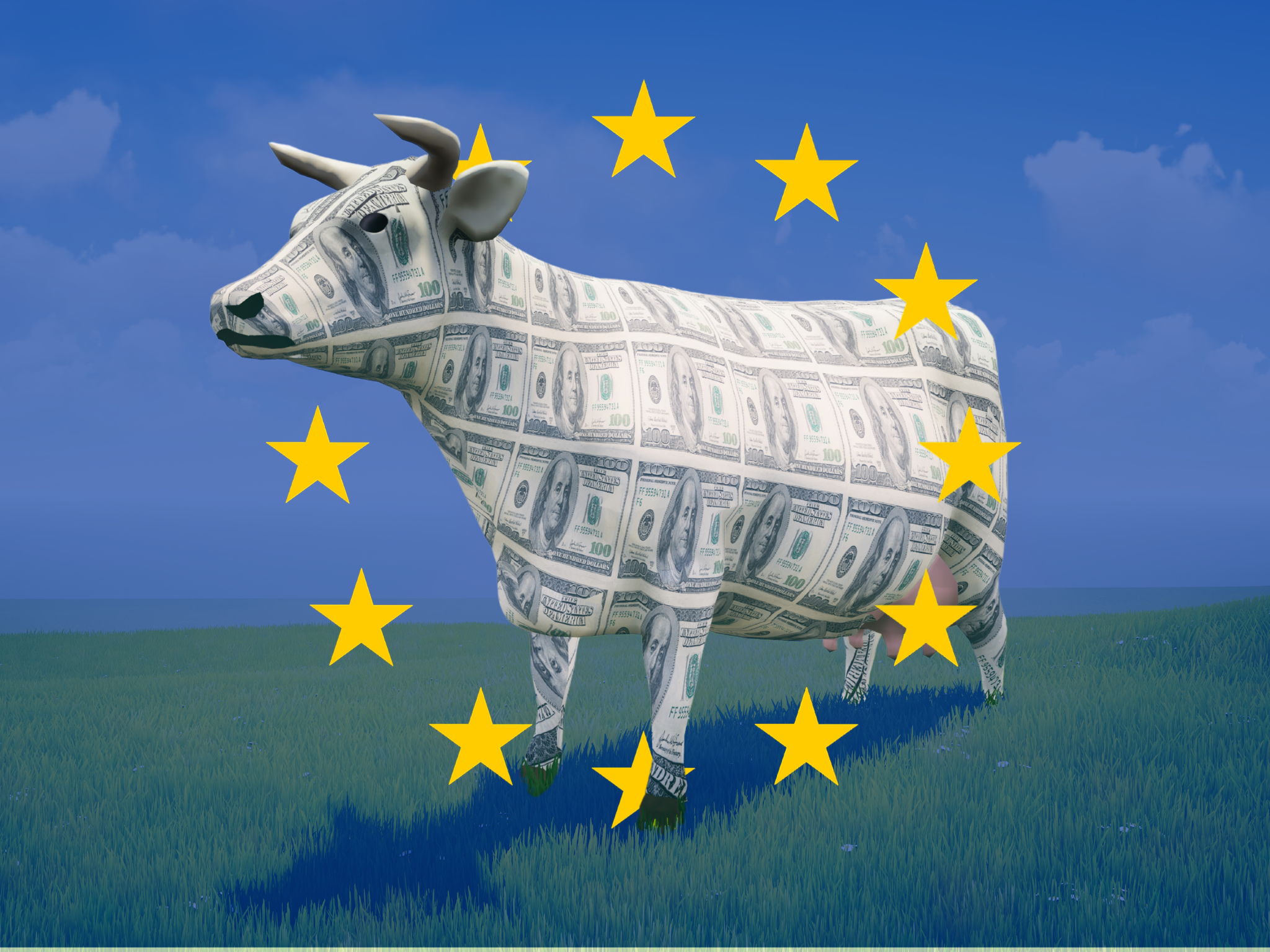
Driven by intense lobbying and the rise of the far-right, the EU spends over 500 times more money via CAP subsidies on beef and dairy than plant-based foods like legumes and nuts.
Ahead of the decision-making stage of the EU’s 2028-34 Common Agriculture Policy (CAP), a new investigation reiterates the chasm between the financial support it gives to animal agriculture over plant-based crops.
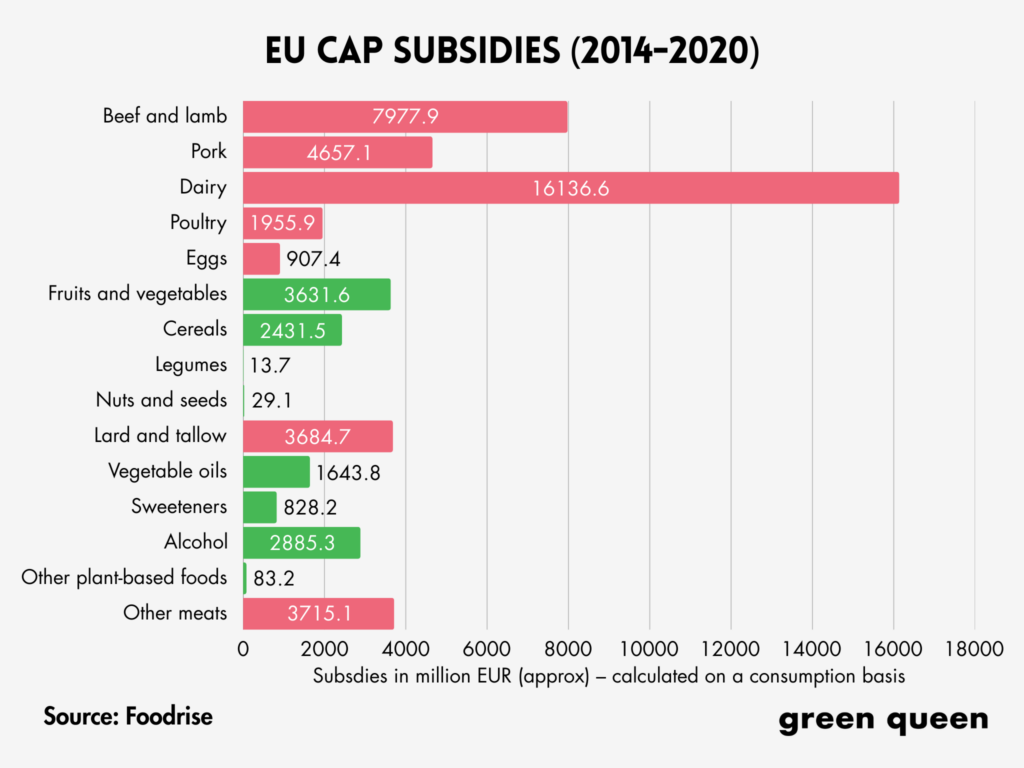
The analysis by food systems charity Foodrise shows that beef and lamb received €8B in CAP subsidies in 2020, 580 times more than legumes (€14M). And pork benefitted from nearly 240 times higher subsidies (€4.6B) than lentils, beans and the like.
Similarly, dairy received 554 times more money from the EU that year (€16B) than nuts and seeds (€14M). Collectively, the bloc pumped over 10 times more subsidy funding into meat and dairy (€39B) than fruit and vegetable production (€3.6B), and 16 times more than cereal production (€2.4B).
Overall, Foodrise estimates that subsidies for animal agriculture made up nearly a quarter (23%) of the EU’s total budget of €168.7M in 2020. In fact, meat and dairy accounted for 77% of all CAP subsidies (€50.6B) that year, over three times more than plant-based food (€11.6B).
The charity calls it “deeply unfair that the EU is wasting such a huge amount of EU taxpayers’ money to fund the unsustainable overproduction of meat and dairy”, at a time when the bloc is looking to enhance its environmental sustainability, public health, and food security.
“It’s scandalous that such an unfair share of EU subsidies, worth billions of euros of EU taxpayers’ money, are being pumped into propping up high-emissions meat and dairy production and distorting European diets,” said Martin Bowman, senior campaigns manager at Foodrise.
“CAP is at a crossroads, and EU policymakers have a huge opportunity to switch course and take the action required to support a just transition to healthy, sustainable plant-rich diets.”
Meat and animal fats account for half of CAP subsidies
The reason the livestock industry is the chief beneficiary of EU funds is that, in recent decades, CAP subsidies have been allocated on an area basis. And animal agriculture alone occupies 71% of the region’s farmland.
In fact, 63% of Europe’s cropland is used to grow animal feed, and much of the EU’s subsidies are directed towards this. In 2013, for instance, 38% of CAP funding went directly to livestock farmers, and 44% to producers of animal feed. Though 2020 data isn’t available, Foodrise estimates animal feed still likely takes up a significant share of the financing.
The meat industry, meanwhile, was the recipient of 43% of all CAP subsidies in 2020, dominated by beef (16%) and pork (9%). Dairy accounted for 32%, and eggs another 2%.
And it’s not just proteins – animal fats like lard and tallow took up a 7% share of the EU’s farm subsidies, receiving €3.7B in total. This is twice as high as vegetable oils (€1.6B) and greater than fruits and vegetables combined.
This gap exists despite animal-sourced foods causing 81-86% of the EU’s embodied greenhouse gas emissions, even though they only supply 32% of its calories and 64% of its protein intake.
Foodrise pointed to the “rise of far-right parties” across the EU and “the shameful alliance of many centre-right groups with the far-right to oppose and dismantle environmental legislation” as one of the chief reasons behind this disparity. These coalitions are behind the ongoing drive to ban plant-based alternatives from using meat-like terms on their marketing materials.
It comes despite the EU’s commitment to create a protein diversification strategy to address supply challenges and meet its net-zero target for 2050. There’s an economic argument too: the cost of air and water pollution from animal protein production totalled €181B in 2022, while diet-related diseases linked to meat and dairy consumption cost the EU around €452B in healthcare costs the same year.
Research has also shown that plant-based, fermentation-derived and cell-cultured foods can meet 10% of the EU’s meat demand and 25% of its dairy demand by 2040. If the EU invested just €1.4B annually into alternative proteins, it could generate €111B in annual gross value to the bloc’s economy by 2040.
Lobby groups and the EU spend millions promoting meat
Aside from the far-right influence, the report highlights just how influential the meat and dairy lobby is in the EU. Between 2014 and 2020, the meat and dairy industry spent €15M to lobby the EU into maintaining its livestock-favouring subsidies and abandoning any environmental policies that promote sustainable diets.
Likewise, the marketing of EU agricultural products is part of the CAP. The bloc spent €252M to exclusively promote local meat and dairy products between 2016 and 2020 (nearly a third of the overall spending on agricultural promotion). In comparison, only 19% of the budget was directed towards fruits and vegetables.
This trend has continued in recent years, with the EU spending €75M to promote animal proteinsin 2023 alone, €29M of which was for campaigns encouraging people to eat more meat.
This has created an unsustainable farm economy. European livestock producers are currently extremely reliant on subsidies for their income. In 2020, farming subsidies contributed to 96% of the income for beef and lamb producers, 71% for dairy, 54% for pork, and around 50% for poultry and eggs.
To balance the scales, Foodrise calls on the EU to stop using any of its money to promote meat and dairy, and increase the CAP funding available for the promotion of plant-based whole foods. Subsidies, it noted, should prioritise protein diversification and crops grown for direct human consumption.
Further, the EU should support a just transition for livestock farmers through the Agrifood Just Transition Fund outside of the CAP, and heed calls to introduce an action plan for plant-based foods, as recommended by the Strategic Dialogue on the Future of EU Agriculture report. The European Commission’s agrifood vision has ignored these calls, leading to heavy criticism.
Such an action plan would promote the procurement of plant-rich diets in public institutions, provide increased financial support for the production and processing of plant-based foods, and reform dietary guidelines to factor in both health and sustainability, aligning with the Planetary Health Diet.
The creators of the diet, the Eat-Lancet Commission, have also called on governments to reorient subsidies towards plant-rich food systems – as have institutions like the World Bank and food companies Unilever, Danone, Bel Group, McCain and Oatly.
“At the very least, plant-based foods deserve a fairer share of CAP subsidies, to compete on an equal footing,” said Bowman. “The shameful use of EU funds to promote meat and dairy to EU citizens – which is directly contrary to EU health and climate goals – should end immediately.”