

With New Round, Finally Foods Hits $2.6M in Funding to Grow Dairy Proteins in Potatoes with AI

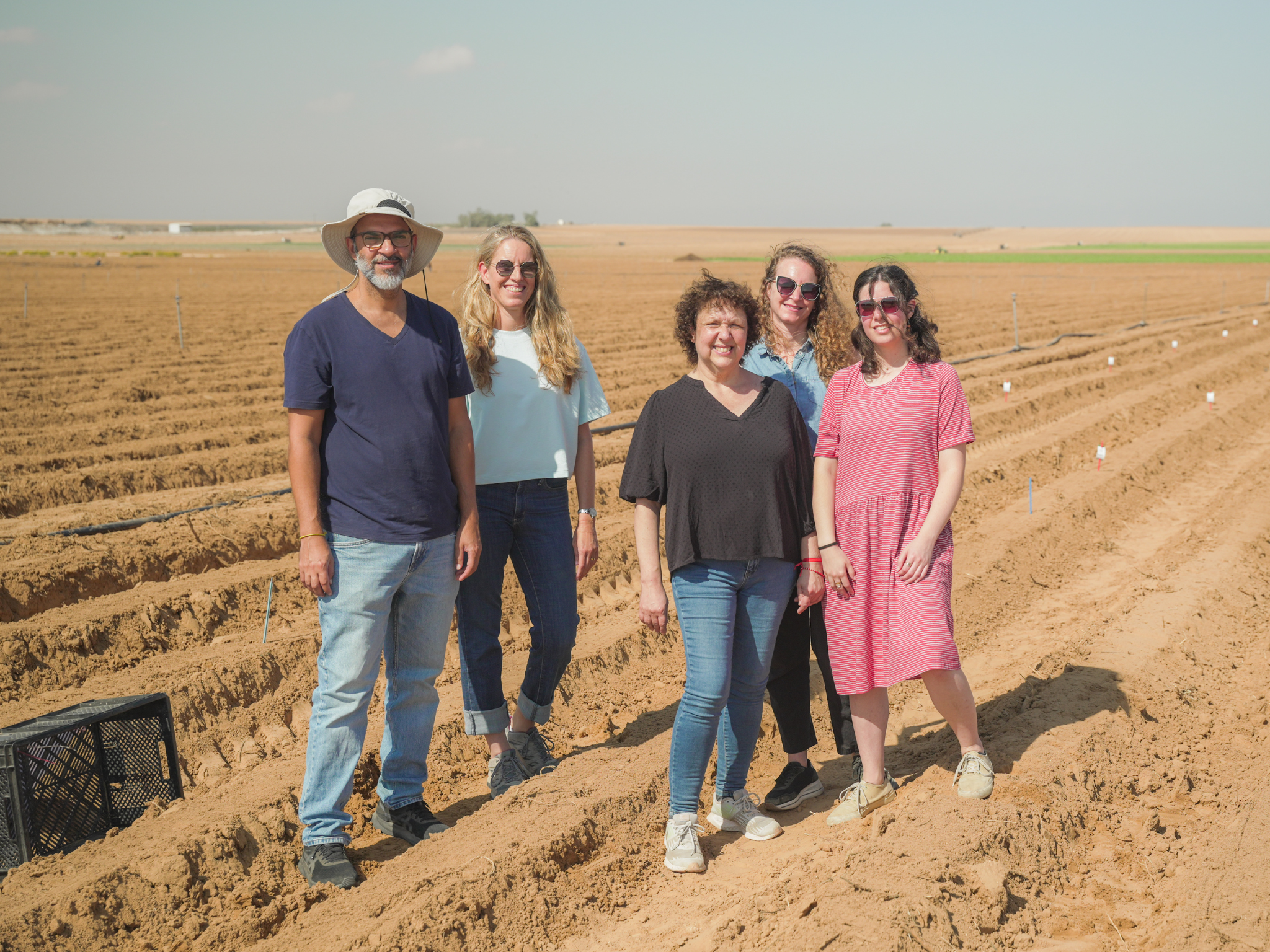
Molecular farming startup Finally Foods has closed a pre-seed funding round that brings its total raised to $2.6M, with another $4-6M targeted to expand production of its casein-containing potatoes.
Finally Foods, an Israeli startup growing dairy proteins inside potatoes, has completed a pre-seed funding round as it builds towards its regulatory filing in the US next year.
The investment was led by the Central Bottling Company (CBC Group) – the national distributor for Coca-Cola – with participation from I-Lab Angels, a group of US-based investors, as well as other private backers.
The new funding takes the firm’s total funding to around $2.6M to date. “This well positions the company ahead of a larger seed round planned for the coming months,” co-founder and CEO Dafna Gabbay tells Green Queen.
That round is expected to open in the coming months, with Finally Foods targeting a sum of $4-6M. This capital will “primarily support maximising the commercial potential of our existing agreement, scaling operations, and expanding activities in the US”, notes Gabbay, who established the startup CTO Basia Vinocur two years ago.
“We are excited to support Finally Foods at this important stage of growth and scale-up. We look forward to working with Dafna, Basia, and the team to help advance the vision of building a more sustainable future,” David Rosenbaltt, manager of I-Lab Angels, said in a statement.
Along with the funding, Finally Foods has brought on Alon Lederman, founder of the non-profit Neta Foundation, to its board of directors. Moreover, MCT Dairies president Ken Meyers and former VegInvest managing director Amy Trakinski have joined as strategic advisors.
Finally Foods can express all four casein sub-units in a single potato
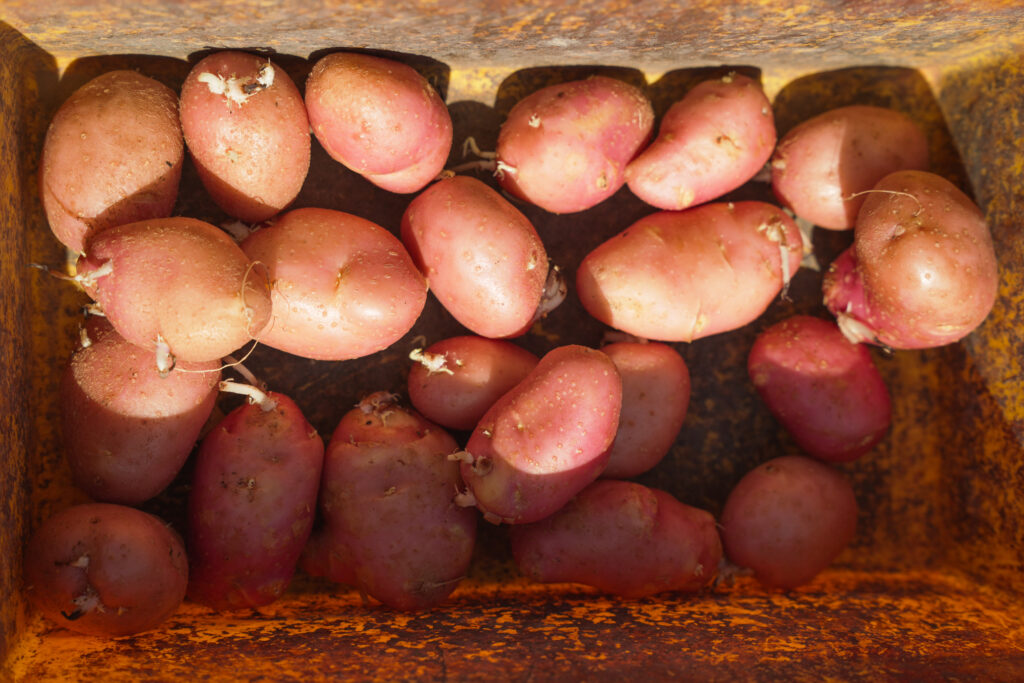
Plant molecular farming involves modifying plant cells (rather than animal or microbial cells, as in cultivated proteins or precision fermentation) to enable them to express animal proteins within the crop, which can then be harvested from leaves or other plant tissues for use in food applications.
Finally Foods is targeting casein, the main protein group found in dairy, known for emulsifying water and fat content to help products like cheese melt and stretch.
There are four kinds of casein proteins found in milk, which fold into a spherical structure known as a micelle, where they are suspended in a highly hydrated solution and bound together with minerals like calcium. This is central to casein’s functional attributes, and Finally Foods says it’s the first molecular farming startup to have expressed all four sub-units within a single organism (in the same cell).
“In fermentation-based systems, expressing the full casein complex would require producing each sub-unit separately. To the best of our understanding, companies in that space are not currently attempting to produce all four together, likely due to the significant cost implications,” says Gabbay.
“Molecular farming, as a category, is therefore particularly well suited for expressing a complex protein within a single biological system,” she adds.
Finally Foods has an exclusive license for the GeneRator AI technology developed by Evogene, where Basia was formerly the VP of R&D operations. It uses the tech to optimise its production process by enabling short R&D cycles, more efficient extractions, and faster commercialisation plans.
Multiple products in development, alongside a deal with CBC Group
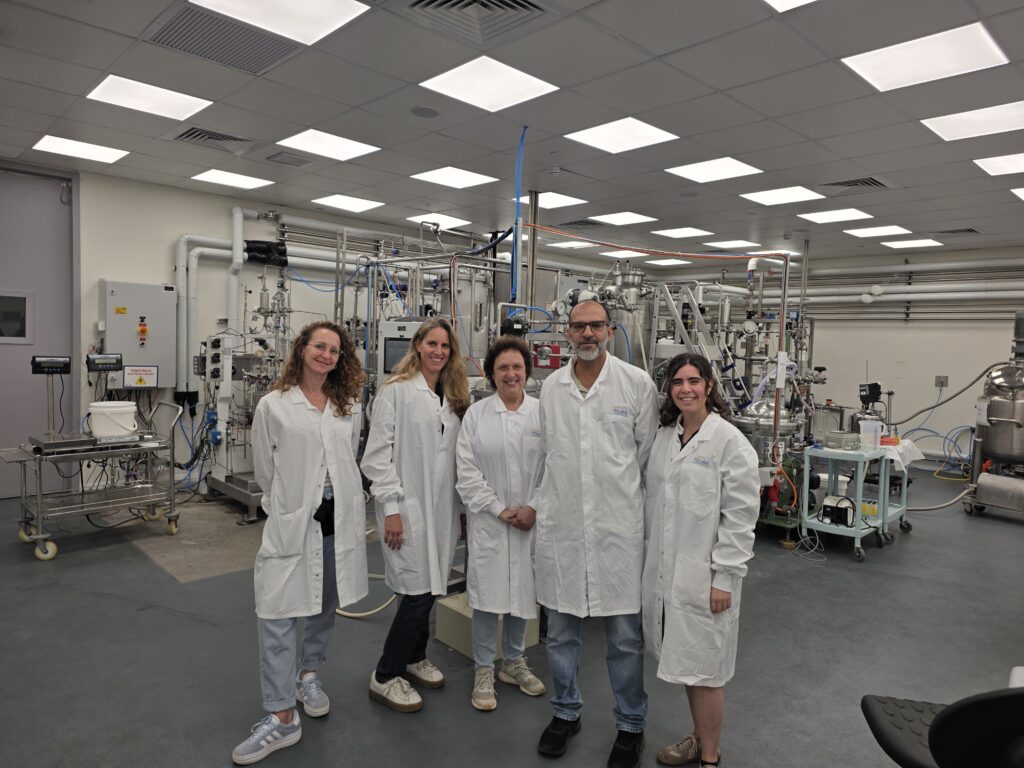
The startup elected to use potatoes because they met several efficiency parameters, including high yields and effective protein extraction. It has designed the potato as an optimised “expression system” that can formulate multiple variations of casein.
Integrating artificial intelligence (AI) into the process has enabled it to accelerate development and get high yields of functional casein within potatoes, while keeping costs low. Fellow Israeli startup PoLoPo is also using potatoes to grow proteins, although its focus is on increasing the native protein content for the chips industry.
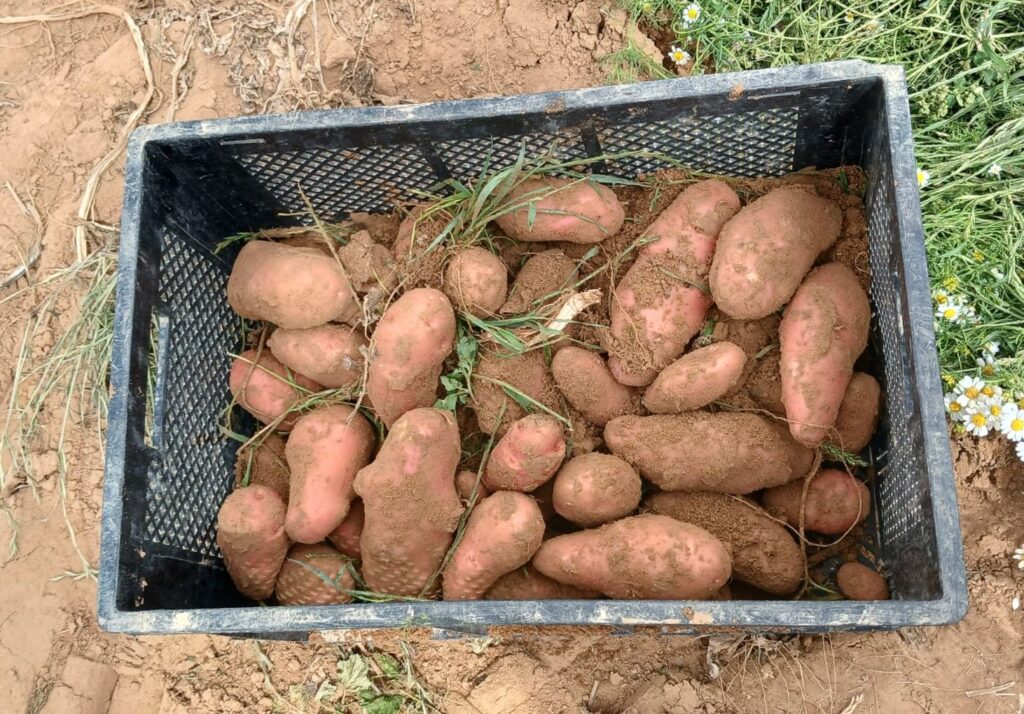
“Our first field trial focused on validating potato growth and confirming stable expression of recombinant casein proteins under real agricultural conditions,” says Gabbay.
“The second trial expanded scale and included cultivation of potatoes expressing additional combinations of casein sub-units, facilitating downstream casein extraction development.”
Finally Foods’s third field trial is underway, and is focused on growing potatoes that express all four casein sub-units. In the meantime, it is already charting its path to market.
“We already have a commercial agreement in place with CBC Group, and we are very proud that, as an early-stage company, Finally Foods already has two strategic investors alongside such an agreement,” Gabbay says.
“As for product formats, we have already developed multiple casein product formats for evaluation with commercial partners and are currently advancing confidential discussions under non-disclosure agreements with global dairy companies.”
Finally Foods targets USDA and FDA filings for 2027
Before any of that, the molecular farming startup would need to obtain clearance from regulators. Gabbay explains that Finally Foods’s regulatory strategy is built around two clearly defined and independent regulatory pathways.
“The first pathway addresses regulatory clearance of the extracted casein ingredient for use in food products. The second covers the cultivation, transport, and storage of potato lines used for protein expression,” she says.
“We plan to begin regulatory processes with the US Department of Agriculture [USDA] during 2027 in order to obtain approval for R&D cultivation activities in the US. In parallel, we expect to approach the Food and Drug Administration [FDA] in early 2027 to initiate regulatory discussions regarding approval of the protein ingredient itself.”
Moreover, this year, the company plans to work with the relevant regulatory authorities in Israel to secure the approvals required to fulfil its existing offtake agreement with CBC Group.
To support its regulatory progress, it recently joined the Global Stewardship Group’s Animal Protein Crop Stewardship (APCS) programme, which aims to help molecular farming companies come to market.
“We joined the APCS initiative because establishing clear stewardship standards is critical for advancing the regulatory pathways for plant molecular farming products expressing animal proteins,” says Gabbay.
“The programme was developed collaboratively by leading molecular farming companies in partnership with the Global Stewardship Group. Its objective is to establish stewardship rules and best practices aligned with US regulatory expectations, including those of the USDA, the FDA, and the Environmental Protection Agency,” she adds.
“As plant molecular farming has the potential to deliver more sustainable sources of critical food proteins, creating this framework is essential for responsible commercialisation and regulatory progress. Finally Foods is proud to be among the founding members of this initiative.”