

‘Open-Access Capacity is Critical,’ Says GEA After Deal to Build Novel Fermentation Scale-Up Line

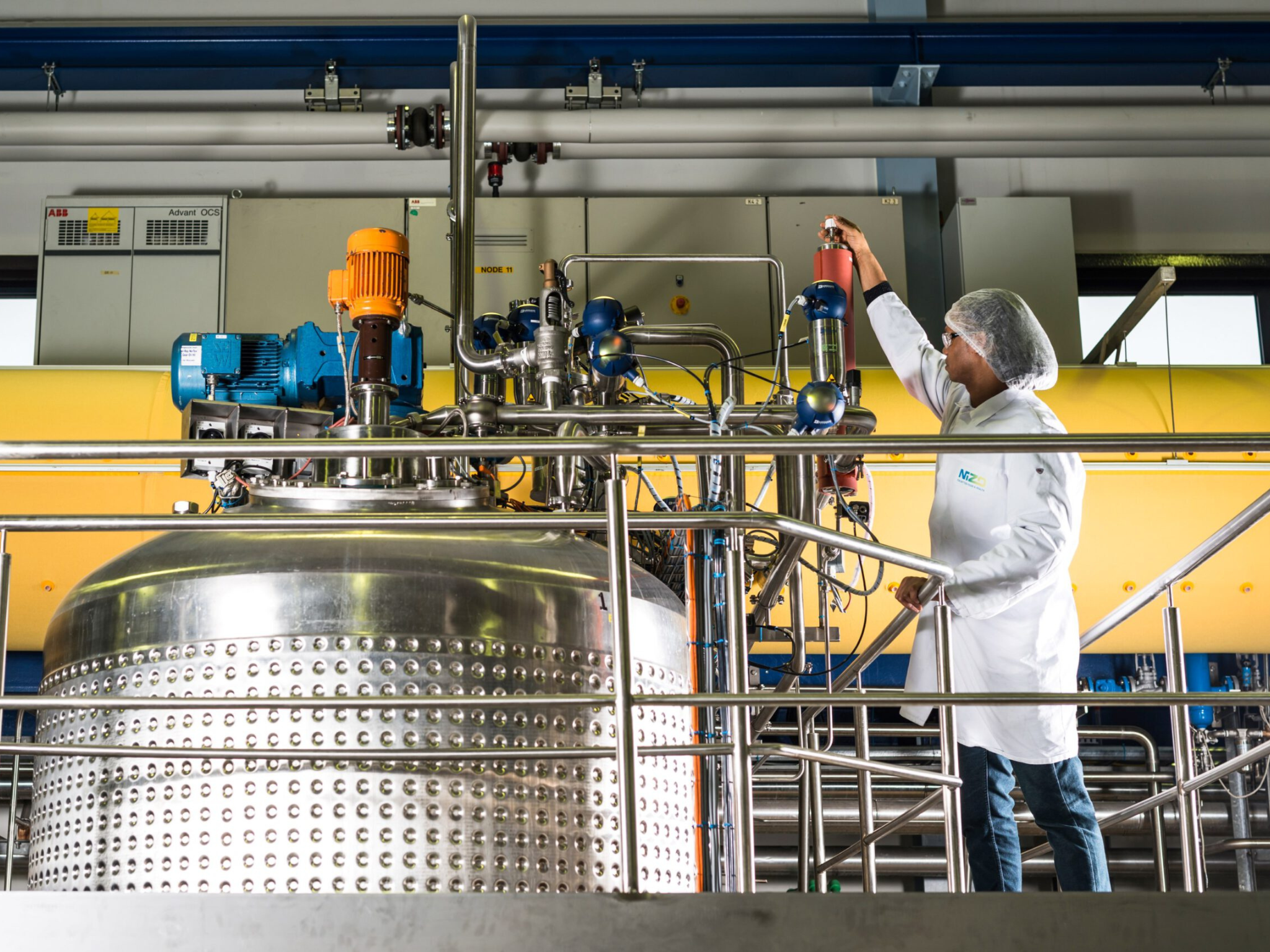
German engineering company GEA has teamed up with Bio Fermentation Factory to deliver a precision and biomass fermentation line at the latter’s open-access facility in the Netherlands.
When it comes to the future of food, open-access capacity is the “critical development link many innovators are missing”, according to Frederieke Reiners, VP of the New Food division at GEA.
It’s why the German engineering firm has been selected to install a precision and biomass fermentation upscaling line for Biotechnology Fermentation Factory, an open-access site on the Nizo Food Innovation Campus in Ede, Netherlands.
With pilot operations set to begin next year, the facility will give companies access to food-grade infrastructure to test, validate and scale a range of fermentation-derived products.
“Our aim is straightforward: to give the industry dependable open-access capacity to validate processes under realistic, food-grade and scalable conditions,” said Marcel Oogink, managing director of Biotechnology Fermentation Factory.
“With GEA supplying this line, companies will gain the technical reliability and speed they need to move confidently from lab development toward industrial readiness.”
Closing the gap between lab developments and industrial readiness
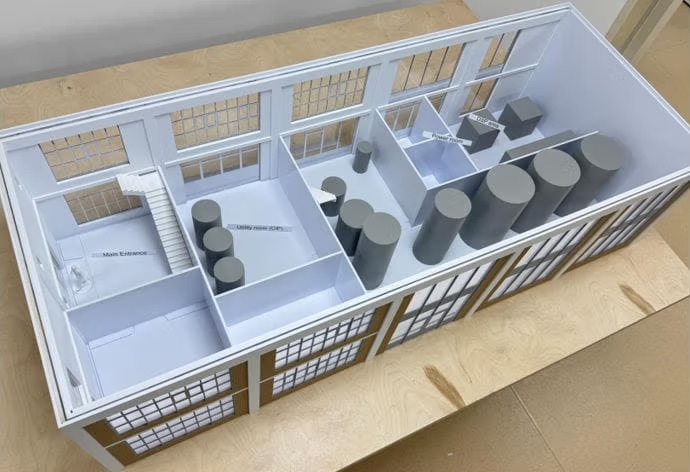
Biotechnology Fermentation Factory’s model seeks to address the fermentation industry’s gap between lab proof-of-concept and the first commercial investment decision. It does so with a coherent validation environment that derisks tech transfer and speeds up time-to-validation.
The site is the largest open-access food-grade pilot plant in Europe, housing over 80 specialised fermentation labs. And last year, it received a €12.5M infusion from the Dutch National Growth Fund, Nizo, and the province of Gelderland to expand via a large-scale upstream processing segment
It offers a bookable fermentation upscaling capacity, process expertise, and quality procedures to run pilot campaigns and generate decision-grade data without companies needing to build their own facilities.
The facility operates under food-grade standards and produces trial volumes suitable for sensory evaluation and application testing, giving companies material for use in end-product development, which could span from animal-free dairy and egg white proteins to specialty enzymes, flavours, fragrances and other functional biomolecules.
“By delivering Biotechnology Fermentation Factory’s line, we help teams validate their processes faster under food-grade conditions,” said Reiners.
“And as the logical next step from our GEA New Food Application & Technology Center, this pilot environment enables application-ready material and decision-grade data sets that derisk the move toward commercial manufacturing. It also advances Mission 30, where biotechnology meets scalable industrial production.”
GEA operates two such technology centres. The first, in Hildesheim, Germany, became operational in 2023, and the second came online in Janesville, Wisconsin last July (backed by a $20M investment). Both facilities are designed to scale up alternative proteins like cultivated meat and precision-fermented dairy.
Open-access approach critical for alternative proteins
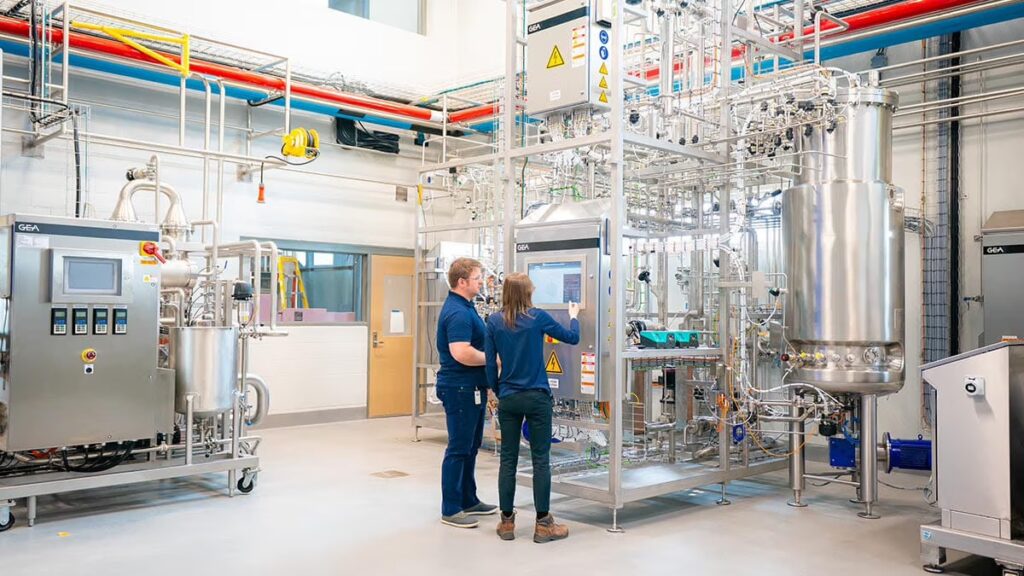
The open-access model can help fermentation companies secure their IP and support their downstream and food processing. It also removes several cost and time barriers for fermentation companies, allowing them to more quickly refine their processes and commercialise their innovations
GEA will deliver an integrated upstream-to-downstream line through both 1,000-litre and 10,000-litre fermenters, focusing on food-grade operations from media preparation and controlled fermentation to cell harvest and a filtration train for recovery and polishing.
The engineering firm will also provide commissioning and validation support to produce decision-grade datasets, while keeping organisms, recipes and commercial figures confidential.
This setup complements the existing pre-pilot assets and biomass fermentation lines at Biotechnology Fermentation Factory, and directly connects to the downstream processing plant at Nizo on the same campus. Teams can run fermentation, primary recovery and professional-scale concentration and purification in one place.
The open-access approach is crucial to the success of future foods, as evidenced by the work of Cellular Agriculture Netherlands. “If you look at the scale we can provide, we have been able to do this at astonishingly low costs,” its spokesperson, Ira van Eelen, told Green Queen last year. That’s super important if we want this food production [model] to be successful, and it will also mean that startups can do this at good conditions.”
Along these lines, the Good Food Institute (GFI) recently acquired cell lines and growth media from defunct cultivated meat startup SciFi Foods and partnered with Tufts University to put them in an open-access cell bank for researchers.
Dr Amanda Hildebrand, VP of science and technology at GFI, said this would invite more people to the field, give everyone a better starting position, and ultimately produce more winners: “Companies that get more products to consumer plates, and consumers who have more choices for foods they love.”