

French Fermentation Firm Bags $6M to Scale Up Upcycled Cocoa Alternatives

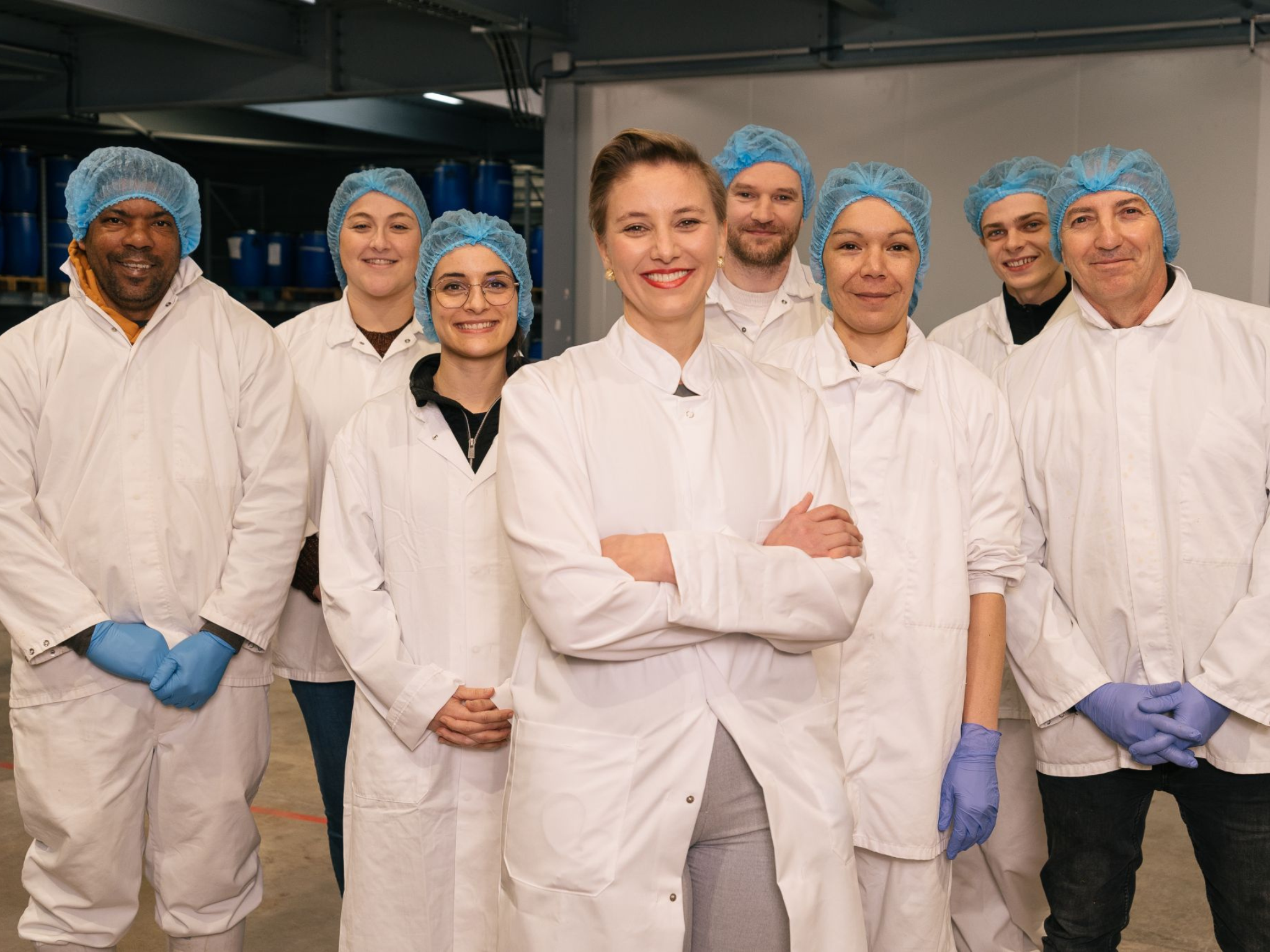
French startup Green Spot Technologies has raised €5M ($5.8M) to expand production of its waste-derived fermented ingredients, including cocoa alternatives under new brand Milatea.
As the hunt for cocoa alternatives reaches a fever pitch, one startup is turning to food waste to solve several environmental problems at once.
Based in Toulouse, Green Spot Technologies upcycles commercial food waste – such as spent brewer’s grain, tomato skins, and wine grape marc – by fermenting them into nutrient-dense, high-fibre powders for a variety of applications.
Now, the startup has secured €5M ($5.8M) in new funding to expand its production and portfolio. The round combined equity and bank loans and was led by Team for the Planet, with additional support from the European Innovation Council, EIT Food, and new angel investors.
Green Spot Technologies will use the capital to scale up its capacity from 100 to 1,000 tonnes per year, and launch a new ingredients brand called Milatea.
New brand bets on cocoa-free chocolate

Founded by Ninna Granucci, Green Spot Technologies collects food industry sidestreams and ferments them in GMO-free culture at its facility in Carpentras. Microbes predigest the fibres, boost the protein content quality, and consume sugar and anti-nutritional factors, and enhance the flavour.
Once harvested, the fermented product is dried and ground into a powder. The startup has previously unveiled three applications under its Ferment’Up range: a sauce made from tomato byproducts, a fibre-packed bakery ingredient from apple pomace, and a line of cocoa alternatives derived from the fava bean and grape industries.
The latter is the central focus of its new Milatea brand, which is targeting the bakery, pastry, and confectionery markets with its fermentation-derived fillings, chips and powders.
Its Color Plus ingredient range features powdered cocoa substitutes that’s stable in baking and freezing, while it also offers pastry-standard dark and milk chocolate (which can be veganised on request) chips. These can be used in cookies, cakes, brioches, and viennoiseries, among other applications.
As for its fillings, Milatea offers a cocoa-free chocolate flavour and chocolate-hazelnut version free from cocoa, milk and tropical ingredients like palm oil. These remain stable through freezing and thawing too, and can be used to fill or top pastries, viennoiseries, biscuits, and entremets.
“Milatea is building bridges with chefs, researchers, and industrial players to make sustainable indulgence both scalable and accessible,” Green Spot Technologies said on LinkedIn.
Reflecting on the capital injection, Granucci said: “We are proud to see our current investors renew their trust and to welcome new partners who share our vision: fermenting the future of food.”
Why investors and chocolate giants are eyeing alternatives

Green Spot Technologies is one of several alternative chocolate startups that have attracted investment this year, including cocoa-free chocolate makers Prefer and Win-Win, and cell-based cocoa players Food Brewer and Pluri.
Interest in this category is growing as the cocoa industry faces an existential threat from the climate crisis, which added six weeks of days above 32°C in over 70% of cacao-producing areas in Africa, with extreme weather and crop diseases hitting plantations hardest in the Ivory Coast and Ghana. These are the two biggest producers of the crop, and they have already lost over 85% of their forest cover since 1960. Now, scientists warn that a third of cocoa tree could die out by 2050.
At the same time, producing chocolate emits more greenhouse gases than any other food except beef, and making a single bar requires 1,700 litres of water on average. Further, the industry is the source of widespread deforestation and food waste.
Speaking of which, food waste itself accounts for up to 10% of global emissions, exacerbating food insecurity and hunger, and causing $1T in annual economic losses (though that is a conservative estimate).
Green Spot Technologies, which won the Kraft Heinz Co Innovation Challenge and was a finalist for the 2024 Earthshot Prize, valorises industry waste, lowers the impact climate footprint of producing chocolate, and safeguards the sector from climate shocks.
Its dry fermentation process uses 60% less water than wet methods, and has allowed the prevent 235 tonnes of food waste emissions even before scaling up (the technology can potentially produce 100,000 kg of product annually).
Big Chocolate is taking notice of this emerging sector too. Lindt, Puratos, Mondelēz International have all invested in cocoa-free or cell-based chocolate startups, while Barry Callebaut (the world’s largest B2B chocolate supplier) has struck partnerships to explore both avenues.