

Vegan Discovery App HappyCow Eyes ‘Reboot’ Following Team Restructuring & Acquisition


HappyCow, a popular discovery platform for vegan and vegetarian restaurants, has changed hands. In an exclusive interview with Green Queen, its new owner lays out the company’s strategy.
If you’re a vegan or vegetarian taking a trip, it’s highly likely you’ve come across HappyCow during your research.
For over two decades, the website has been a go-to for many travellers on the lookout for meat-free restaurants and menu options. As of this year, it has over two million members, whose word-of-mouth reviews (over two million to date, as per company stats) have helped direct attention to 260,000 eateries in more than 185 countries.
Now, the platform is being revamped through a tech reset that will broaden its directory and reach, thanks to its acquisition by Peruvian business consultant Claudia Torres, a long-time user of HappyCow. The terms of the deal remain confidential.
Under the new ownership, HappyCow will undergo a “full-scale tech reboot” and have its interface refreshed in a bid to improve the user experience and expand the platform’s global utility. It will move beyond just restaurant discovery, integrating listings for “eco hotels, organic stores and global plant-based experiences”.
“The new phase is modelled on expanding market verticals. While we recognise the success of other platforms, our strategic direction is to move beyond dining to healthy lifestyle verticals,” Torres told Green Queen.
Can HappyCow compete with Google and AI?
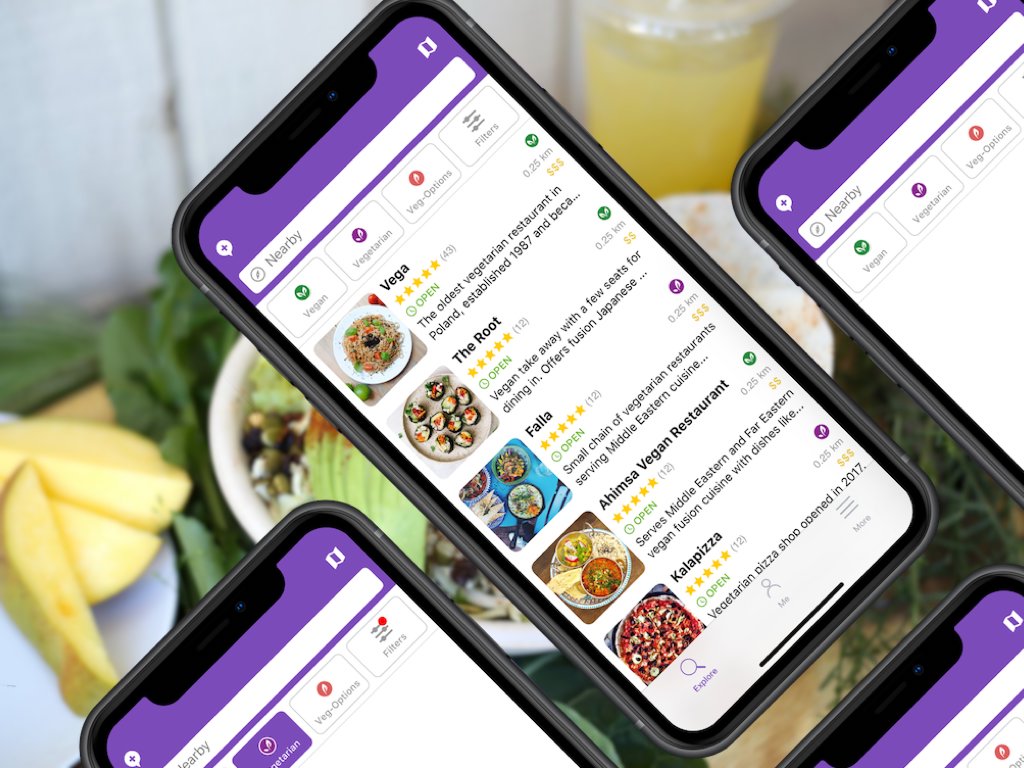
For many vegan and vegetarian folks, HappyCow has served as the sole food guide for their travels for the past decade. However, the way people discover food has rapidly evolved, especially in the last decade. Competitors to apps like HappyCow, including tools focused on specific dietary requirements, have expanded fast.
At the same time, social media algorithms now give people access to more personalised recommendations, and Google Maps and chatbots like Perplexity and ChatGPT have become key levers to find new options to eat out.
Artificial intelligence is likely the biggest threat to consumer-facing tech companies like HappyCow. In the US, 20% of consumers turn to large-language models for venue discovery, and this practice is particularly popular among young people – 61% of 24- to 35-year-olds have used AI for personalised food and drink recommendations.
“Google remains the dominant force in search, holding the vast majority of consumer search volume,” Torres told this publication. Indeed, 56% of Americans rely on Google Search for restaurant discovery.
“While AI provides search results, we provide authentic user reviews, user-generated content, real community feedback, and specific consumer data, which are key factors in consumer choices that AI often lacks,” Torres added, though she declined to comment on the platform’s specific technological roadmap or tool integration plans.
HappyCow confirms layoffs in favour of full-time hires
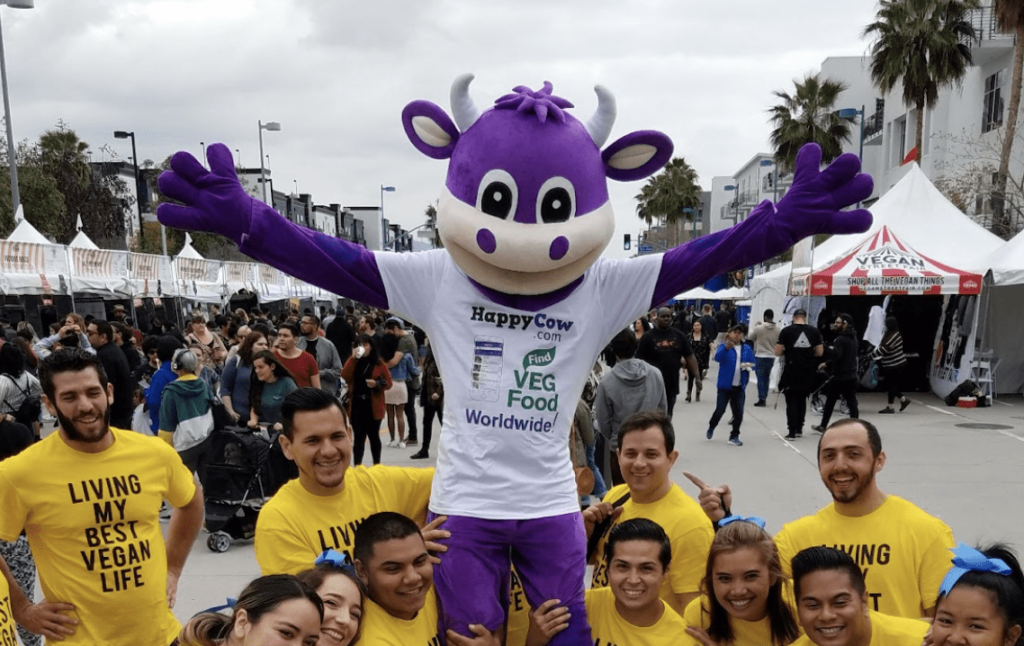
According to Similarweb, the website received over 1.1 million visitors in September 2025. Torres told Green Queen that this was not accurate; the company’s internal data shows the site is averaging two million visits per month. “Our overall traffic and engagement figures are aligned with our total user base,” noted Torres.
Happy Cow has both a website and an app, though Torres declined to share what the user base split was by device. According to the company’s FAQ section, the app has surpassed 4 million downloads since launch.
In terms of geographical split, Torres told us that 80% of the platform’s user base is concentrated in eight key markets: the US, UK, India, Germany, France, Greece, Italy, Australia, and Spain.
She declined to share the precise split between its app and its website, citing “competitive reasons”, and she did not disclose sales data or the revenue share between subscriptions and advertising.
The platform’s users have raised questions about the company’s ownership structure and future in recent weeks, with one suggesting that most of the staff had been let go. In response, Torres said, “We are expanding, our plans are ambitious, and we want full-time staff. So we let the HappyCow management team go.”
She added: “We are not disclosing specific internal staff numbers, but the new ownership structure is committed to significantly increasing development resources and expanding the team to support the new vision.”
Expanding while staying true to its roots

HappyCow is now actively seeking investors to propel its expansion, though the amount of capital Torres is seeking to raise is under wraps.
It’s a major shift for a platform that began in 1999, and the new owner wants to retain its roots. Though HappyCow’s founder, Eric Brent, hasn’t been involved in an official capacity since he sold the company in 2021, Torres is banking on his expertise.
“Eric has always been a brand ambassador, and we want him to continue,” she said. “The new ownership fully intends to continue and strengthen that partnership as we move into this exciting new era of growth and visibility.”
Green Queen reached out to Brent for a comment on the news, but did not receive a response.
HappyCow pioneered the restaurant discovery space for meat-free eaters, and aside from Abillion (which claims it has 17 million users and covers products too), competitors have been far and few between. And their engagement seems much smaller – according to Similarweb, Abillion’s website garnered 220,000 visits in September, while Picknic gets around 14,800 monthly hits.
“HappyCow’s competitive advantage lies in its community-driven data,” said Torres. “The volunteer ambassador model, alongside our community, has always been a great, valuable part of the brand. We would be honoured to expand the ambassador and community components significantly as part of our new growth phase.”
Torres hinted at expanding the verticals the platform currently serves. She noted that HappyCow is already positioned to extend beyond dining, given that it currently lists more than 13,000 organic stores. In addition, she said the company plans to cater to the lucrative hospitality industry.
“This market [organic stores], along with eco and sustainable hotels, represents a booming sector where we will leverage HappyCow’s position whilst maintaining our core vegan values,” she said. “The current market position means there has never been a better time to build a digital platform with this reach.”