

India’s Dairy Crown Comes At A Heavy Cost: To The Climate, Cows & Those Who Rear Them

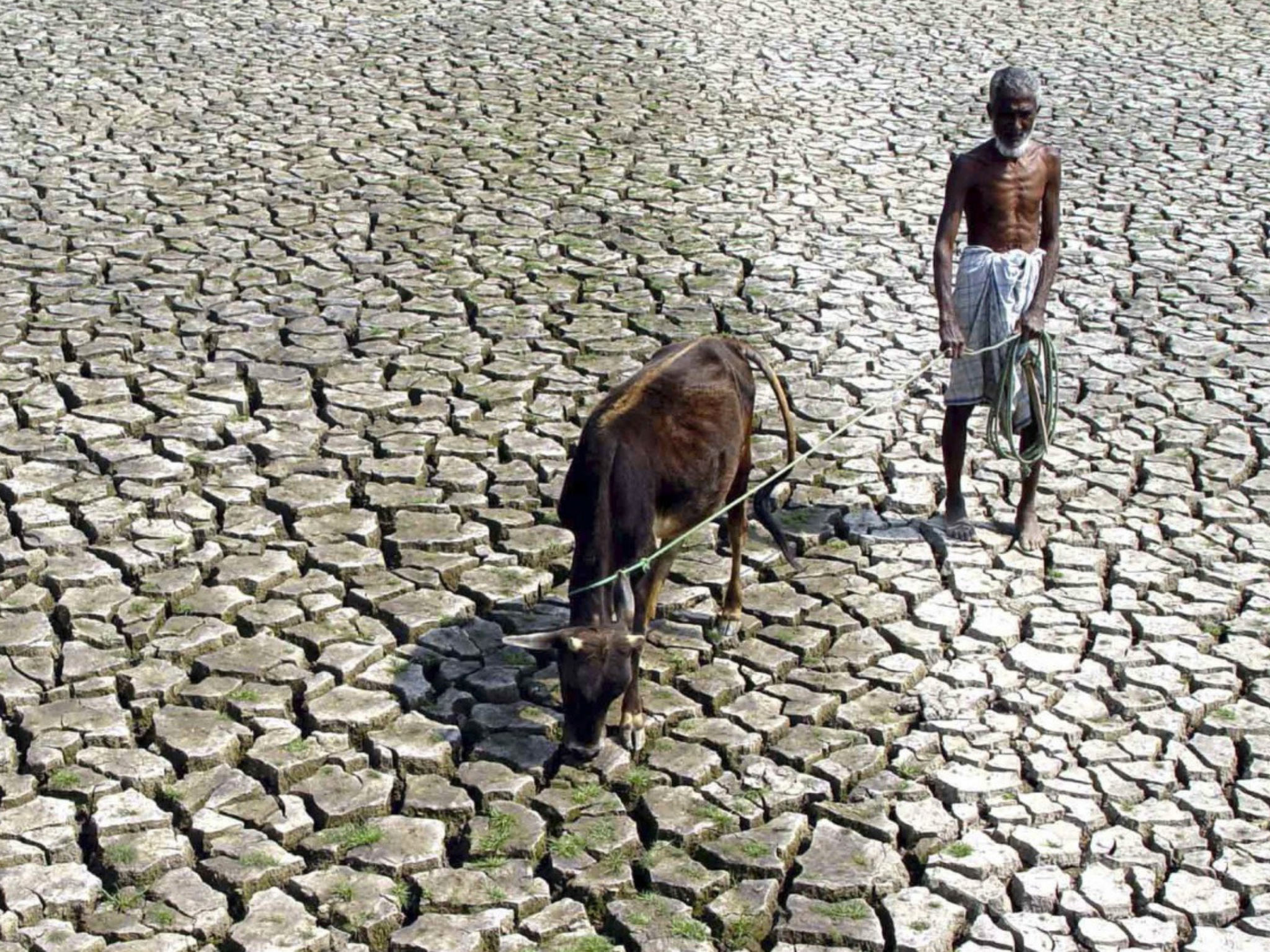
India’s celebrated White Revolution, which made it the world’s top milk producer, is now facing intense scrutiny over its hidden and significant costs to the climate, animals, and the economic security of its small-scale farmers.
For more than two decades after its 1947 independence, India faced a milk shortage. While milk consumption in the region can be traced back to the Vedic period, its scale and access were limited – until the late 1970s.
In 1950-51, per capita milk consumption in India was just 124g per day. During 1950-74, milk output in the country even lagged behind population growth. However, this story changed remarkably with the world’s largest dairy development programme, Operation Flood – often referred to as India’s White Revolution.
Today, India is the world’s top milk-producing country and has maintained this position for over two decades, contributing 25% of global milk production. In 2023-24, the per capita availability of milk stood much higher than the global average of 322g/person a day.
The program, under the leadership of Indian dairy engineer Verghese Kurien, not only transformed a milk-deficient nation into the world’s largest milk producer; it also contributed enormously to poverty alleviation and rural empowerment through its cooperative model, which relied heavily on small-scale farmers.
As a result, the programme came to be viewed as pro-poor, pro-farmer, and pro-women, a narrative reflected in one of the country’s most popular dairy advertisements. Milk now occupies an important place in Indian households, especially in the country’s northwestern regions.
In fact, in 2024, the government announced the launch of the White Revolution 2.0 to further strengthen and expand dairy cooperatives and procurement. Given this strong dependence on the dairy sector, the idea of India and dairy seem inseparable today.
Deeply woven into national pride, India’s dairy sector has largely escaped climate scrutiny – be it for its methane emissions, land or water use, and animal abuse – the kind of which the global beef industry has faced for decades. However, the cost of Indian dairy to the environment, animals, and small-scale farmers is slowly gaining attention.
The climate cost of India’s dairy
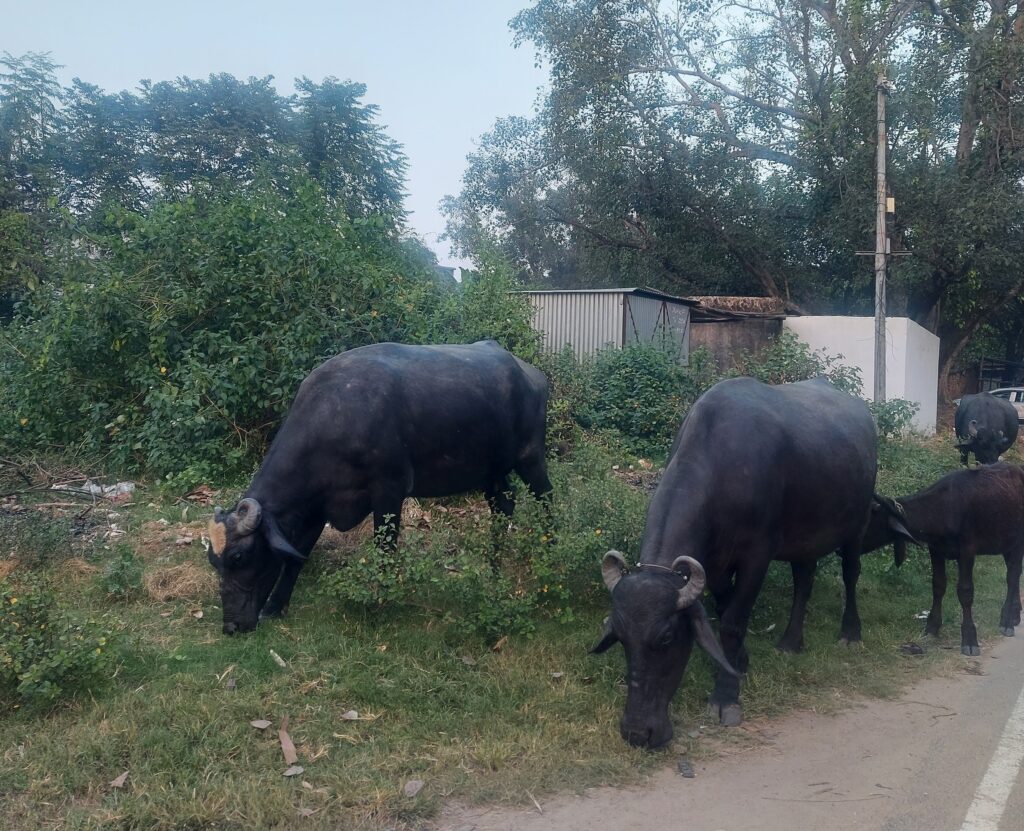
Over the last 50 years, India’s milk production has been driven by a ballooning population of dairy animals. The female bovine population has doubled during this period, resulting in a corresponding rise in methane emissions – a major byproduct of enteric fermentation, a digestive process occurring in ruminant animals such as cows and buffalo.
Today, India is home to an astonishing 125.75 million cows and buffaloes. According to a report submitted to the United Nations, methane emissions from these animals account for more than half (54.6%) of the country’s total agricultural greenhouse gas (GHG) emissions. Another recent 2024 report by the UN Environment Programme cites India as having the highest absolute increase in GHG emissions*.
Methane causes 86 times stronger warming than carbon dioxide per unit of mass over a 20-year period and is a major contributor to global warming, with 60% of it emitted by human activities.
The National Dairy Development Board, which launched Operation Flood, recognises this climate cost and considers feed nutrient optimisation for animals as a way to reduce emissions, as opposed to the traditional feeding practices followed by most small-scale Indian dairy farmers.
Beyond being a major methane contributor, India’s dairy production is also problematic due to its high water consumption across the supply chain. The water footprint of milk production in India is estimated at 1,078 litres per kg, compared to the global average of 1,020 litres per kg, while its per-cow milk yield remains low.
Reports suggest that about 95% of the total water consumed for milk production in India is used for feed and fodder cultivation, with the remainder used for cleaning and animal drinking. At a time when India is grappling with water shortages, it is estimated that about 65% of the freshwater used in milk production comes from surface and groundwater sources.
Climate cost is exacerbating the farmer’s burden
Not only does India’s dairy sector contribute significantly to rising global temperatures, it is also one of the most vulnerable to climate change. Small-scale farmers, in particular, are experiencing the worst impacts on daily milk production.
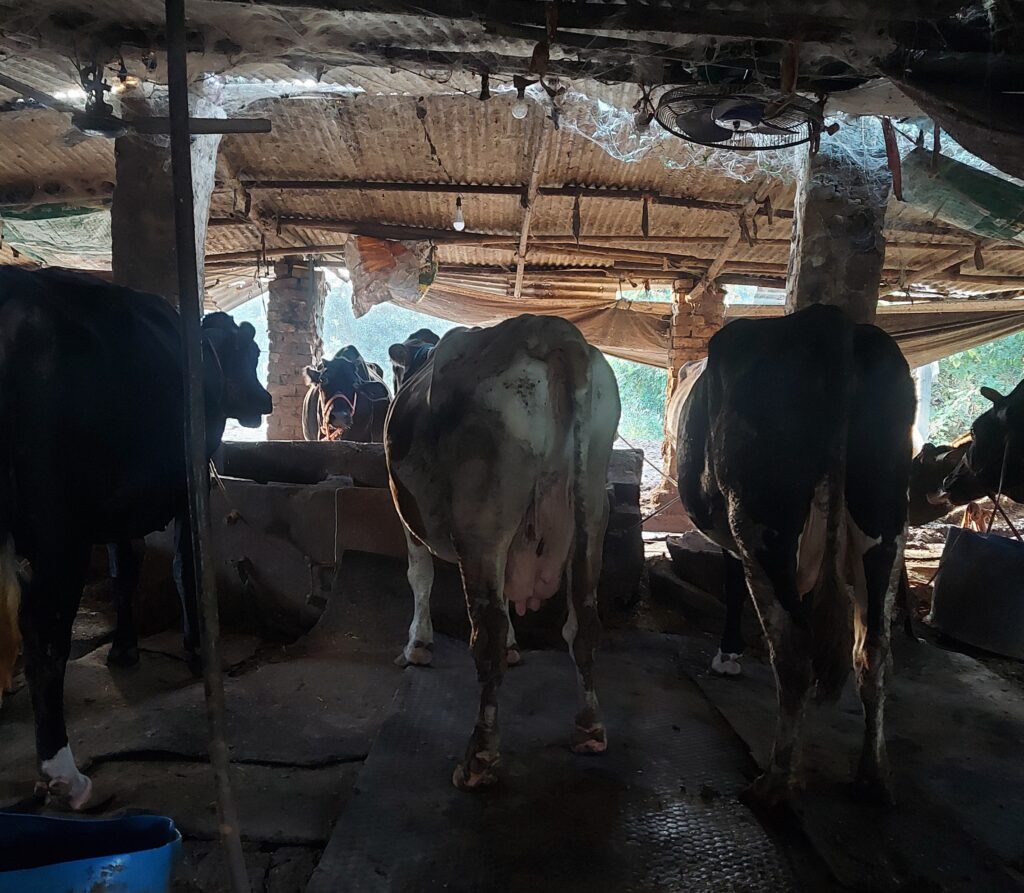
Tanmay**, a dairy farmer in his 30s from an industrial city in Jharkhand, provides water to his cows twice a day – morning and evening – with each cow drinking at least 60 litres per day, drawn from the family’s own well. While they have not faced water scarcity so far, Tanmay mentions the lack of an alternative water source as a serious concern should such a situation arise.
Tanmay began his dairy business about 15 years ago, following in his father’s footsteps. His father started the business in the 1990s but eventually left it, as losses often outweighed profits. Though warned by his father, Tanmay pursued dairy farming out of a fondness for animal rearing, which he developed from watching his father handle dairy cows.
Before the Covid-19 lockdown in 2020, Tanmay kept around 25 cows in his small shed. Now, he keeps just 10-12 cows due to persistent losses, worsened by the lockdown. On top of this, his business also suffered from continuous heat stress affecting his cows over the past five to six years.
He mentions the increased risk of mastitis in cows due to frequent, untimely weather changes, which raises his medical expenses and reduces his milk yield. Estimates indicate that the daily milk yield from a mastitis-infected but otherwise high-yielding cow can drop by 3-4 kg, translating to a loss of $3.40 to $5.09 per cow per day.
In recent months, dairy farmers across the country, from the south to the north, have protested against low milk procurement prices. Tanmay further described the rising cost of feed with stagnant milk prices as an additional burden that smallholder farmers like him have to carry.
In response to rising global temperatures and their impact on the dairy sector, the country’s Department of Animal Husbandry and Dairying, through Rashtriya Gokul Mission, is aiming to develop and conserve indigenous cattle breeds, which are known for their higher heat tolerance and disease resistance, and are therefore less affected by extreme weather.
However, Tanmay and his wife, Renu**, say they would never want their children to enter the business, calling dairy farming “a gamble”. “God forbid my son ever takes up this business,” says Tanmay.
“We won’t let them [the children] do this business, and they wouldn’t do it themselves anyway. The coming generations won’t engage in this business,” he adds. Tanmay explains that, just like him, everyone he knows in dairy farming is looking for private jobs to escape the risky business, citing high and untimely losses and negligible government support.
They needn’t worry too much – their children do not feel compelled to join the industry. As Renu observes, their eldest son dislikes even being near the shed, repelled by the smell of cow dung, not to mention his disinterest in shed operations.
Varda Mehrotra, co-founder of One Just World, an Indian organisation connecting animal, environmental, and social justice movements for ethical and just food systems, says that while much of India’s dairy comes from smallholders and cooperatives, this doesn’t make it ethical or sustainable.“
In fact, the conditions for animals and people in small-scale dairies are often worse – no infrastructure for waste management, limited veterinary care, and no systems to handle manure, effluents, or antibiotic residues,” says Varda.
Dairy claims animal lives just as beef does
While dairy in India is often associated with purity due to the elevated status of the cow in Hinduism, and continues to be linked with religious rituals, symbols, and narratives to this day, it’s worth noting that India also relies heavily on buffalo milk.
While the dairy sector has cultivated a ‘no-slaughter’ public perception, which allows it to distance itself from the beef industry, reality tells a different story. Though India bans the export of beef from cows, oxen, and calves, it is the third-largest beef and veal exporter in the world. This is made possible because of the country’s extensive buffalo meat trade. Notably, India’s largest milk-producing state, Uttar Pradesh, is also the largest producer and exporter of buffalo meat.
Kurien, widely known as the “Milkman of India,” was indeed opposed to any ban on cow slaughter, which he felt would negatively impact the country’s dairy economics.
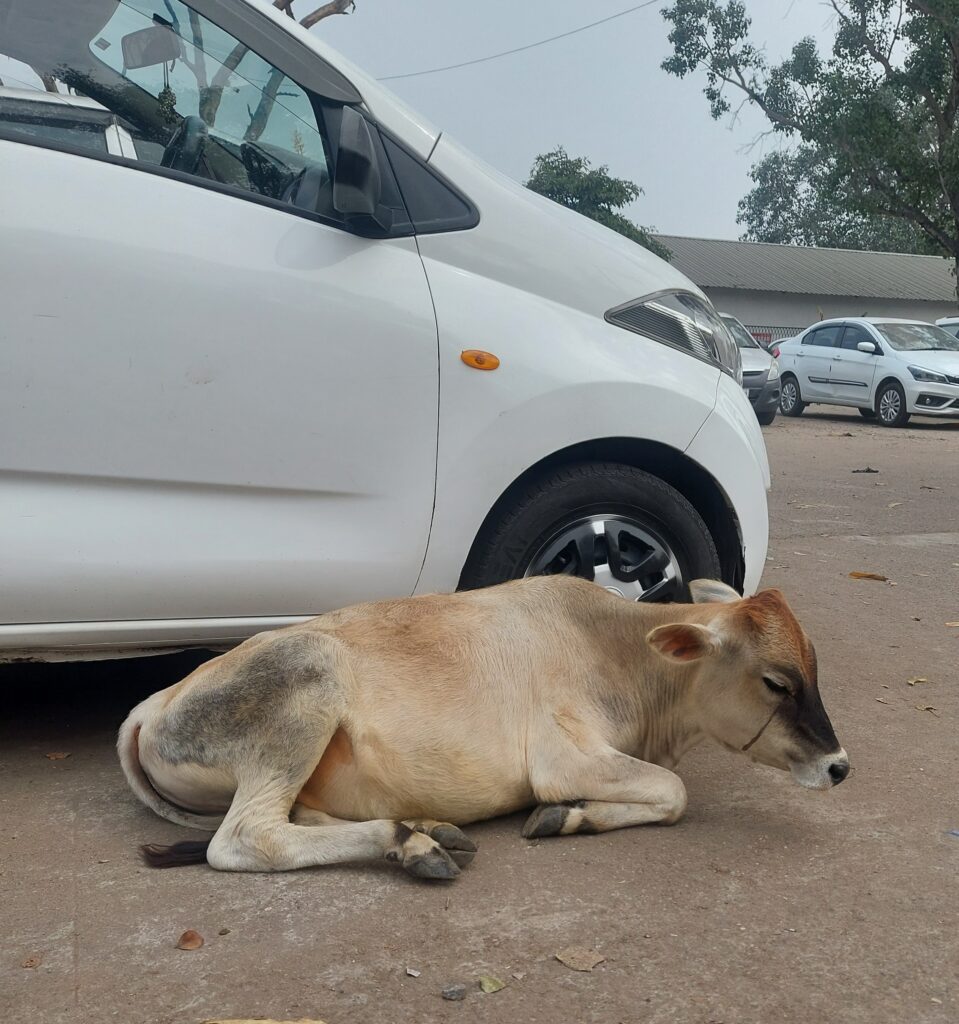
While buffalo slaughter is largely permitted in the country (with a few state-specific regulations and restrictions), cow slaughter is restricted or banned in several Indian states, including Jharkhand. One of the industry’s dirty secrets is that cow slaughter is common practice in the state, according to Tanmay. He says that animals that can no longer produce milk tend to be abandoned on the streets by farmers and are eventually picked up for slaughter.
Usually, female animals are given for slaughter if they are no longer able to produce milk. Male calves and their lack of milk yield are another problem. Tanmay says they usually don’t survive in dairy sheds due to a lack of care, as they aren’t beneficial for the business. “Nobody wants male calves as they provide no benefits,” he explains.
It’s not always an easy decision for farmers like Tanmay, who refers to his cows as Laxshmi (the name of the Hindu Goddess of Wealth). Recalling her uncle’s desperate first sale of a cow, Tanmay’s niece says: “He had tears in his eyes when he had to sell off his first cow when she was unable to produce milk.”
“No one wants to send their cow to a slaughterhouse; however, due to financial hardship, we’re forced to sell [them],” Tanmay says. He is sanguine about the reality of his situation, reflecting: “No matter how you look at it, it is still wrong for a Hindu; nevertheless, everything works out here.”
Since 2015, India has witnessed several violent incidents of cow vigilantism targeting minorities under the guise of cow protection by Hindu nationalist groups, resulting in the loss of human lives. While these attacks may aim to portray the targeted communities as enemies of the cow because of their cultural associations with beef consumption, it is notable that the state-sanctioned dairy system, which itself plays a primary role in the abandonment, slaughter, and cross-border smuggling of cows in the first place, rarely receives comparable scrutiny.
At the mention of gaurakshaks (self-proclaimed cow protectors), Tanmay says: “Nobody is a cow protector here; everyone is motivated by money.” During the two-hour interview with him and his family, I observed the tethered cows repeatedly shifting between sitting and standing in the same constrained spot on a concrete floor soaked with dung and urine, which someone in the family had to clean every few hours.
“We haven’t been able to let them out for nine months because it’s been raining so much all this time. If we let them out now, you’d see they’ll roam around so happily, just like how we’d feel if someone kept us tied up for a long time and then finally set us free. That’s the kind of joy they’ll feel,” Tanmay said.
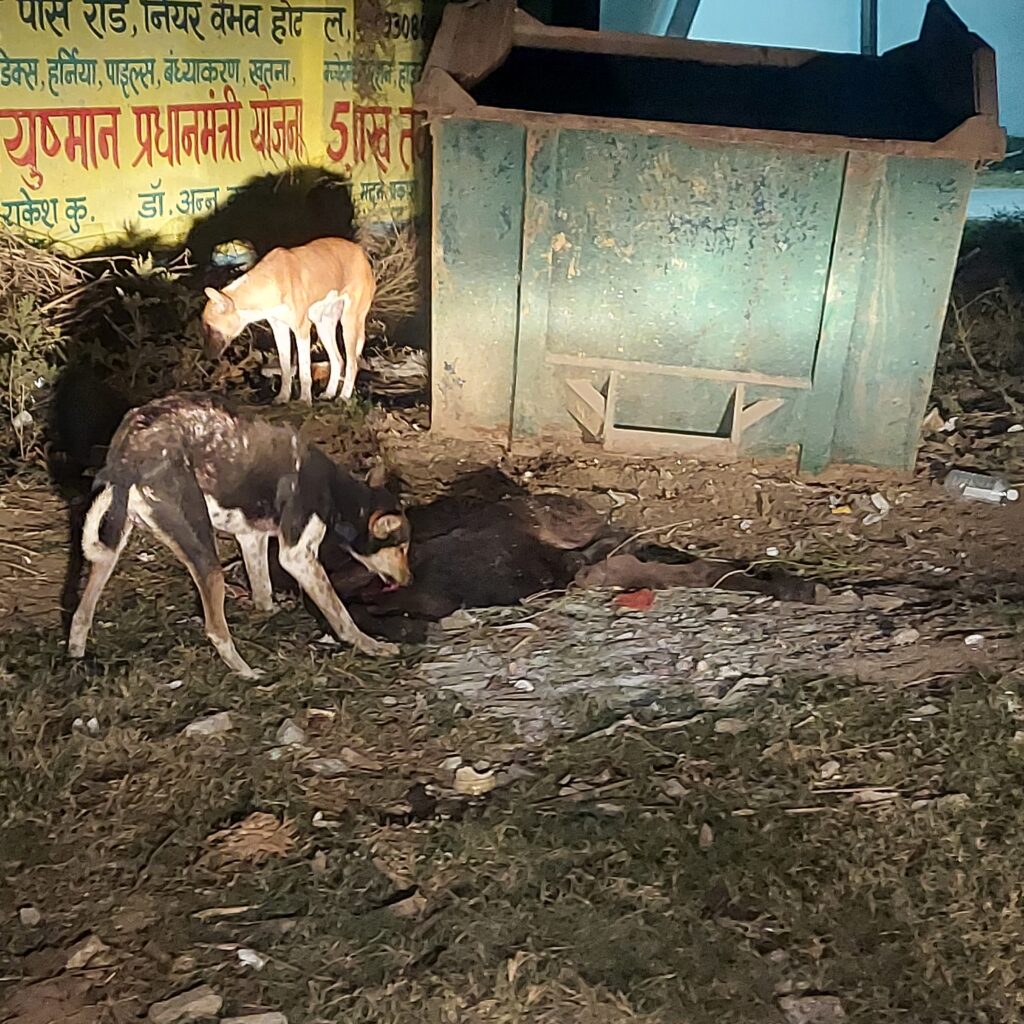
Priyam*, a 35-year-old sweeper working on contract with the local administration, says that they are often called to pick up and dispose of the carcasses of dead cows and calves left on the streets by dairy farmers.
“They quietly and secretly leave these dead animals on the streets, openly or stuffed inside gunny bags, when no one’s watching,” he says. “When the authorities take note of the bodies, we’re immediately called to discard the corpse on a strict deadline… Sometimes, street dogs have already ripped apart the corpse before we arrive.”
Speaking about the need for a just transition away from dairy, One Just World’s Mehrotra emphasises that the country needs “a livelihood plan for farmers and workers, because without addressing their transition, any shift will remain superficial”.
Considering a transition away from dairy as a “necessity” given the sector’s climate and ethical costs, she adds: “The goal isn’t to villainise dairy farmers — it’s to imagine a fairer, healthier, more resilient food system for everyone.”
While India’s dairy sector is deeply woven into the nation’s identity, the escalating, often-unseen costs to the climate, animals, and small farmers raise a critical question: Do the industry’s significant burdens now outweigh its celebrated contributions?
*Excluding Land Use, Land-Use Change, and Forestry (LULUFC).
**Names changed to protect identities.