

India Spotlights Regulatory Reform in $691B Bioeconomy Plan, With Smart Proteins in Focus

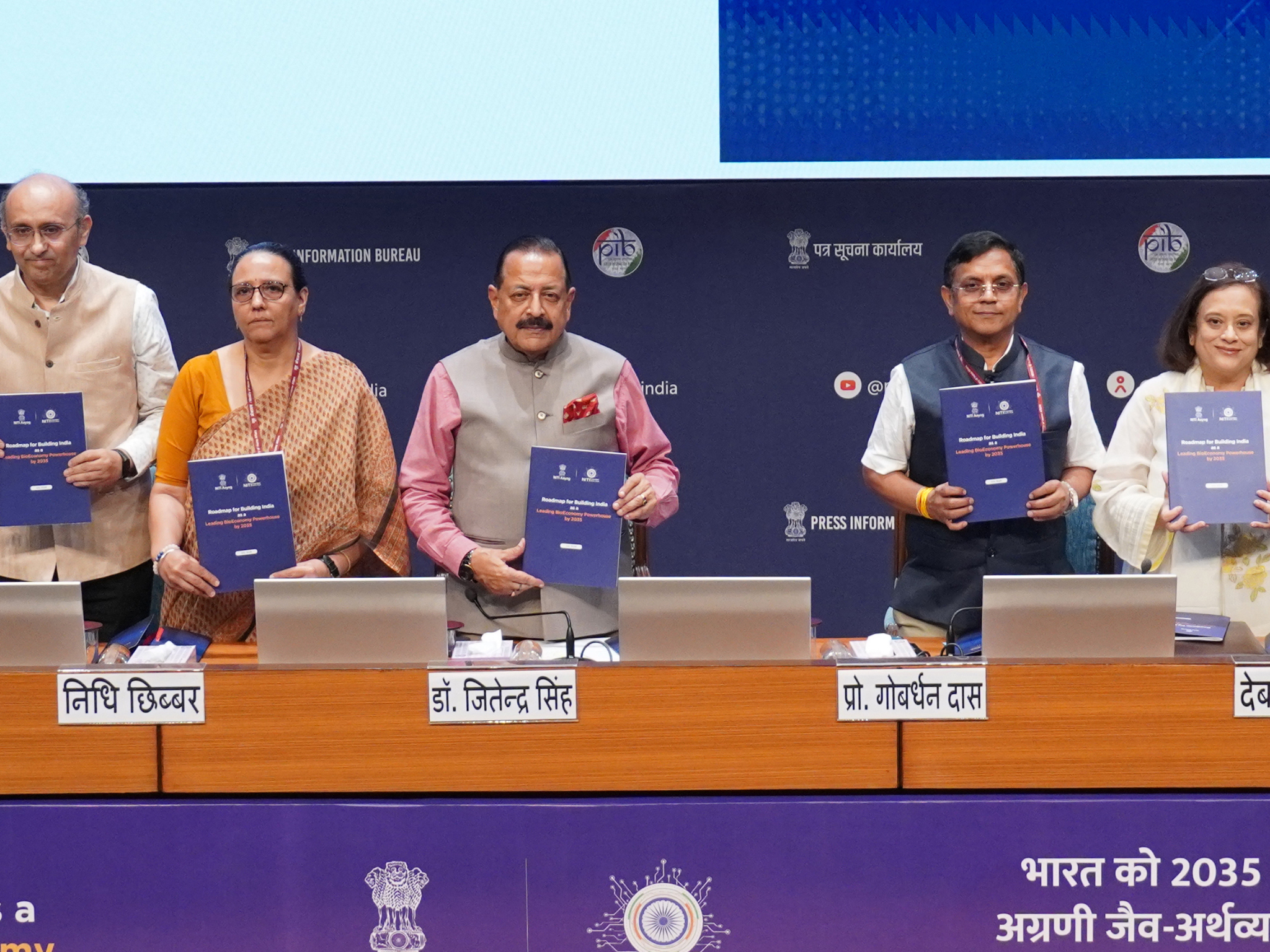
The Indian government has published a 10-year roadmap to boost the national bioeconomy sector, which includes building the alternative protein sector through manufacturing and regulatory progress.
India’s commitment to the bioeconomy has just been turned up a notch.
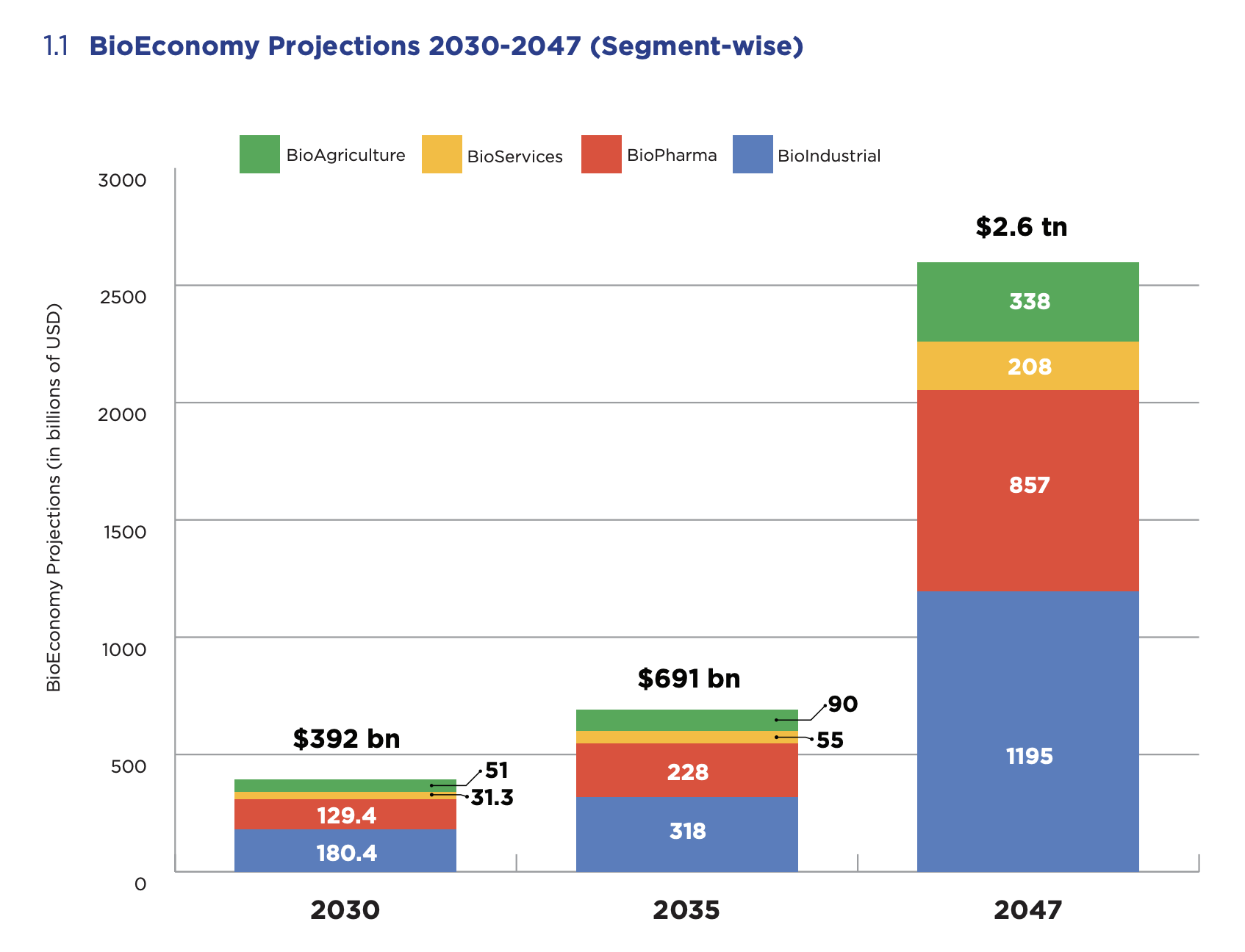
Niti Aayog, the government’s apex public policy think tank, has published a roadmap to more than triple the value of the biotech sector over the next decade, from $195B today to $691B in 2035. It’s part of a longer plan that aims to make India’s bioeconomy a $2.6T market by 2047.
In a press release, India’s government called biotech one of its most important growth engines, transforming medicines, food, fuels, chemicals, materials, and climate-resilient solutions. This gives the country a “time-bound opportunity” to become a leading global bioeconomy powerhouse.
The blueprint recommends the creation of six National BioMissions as focused executive platforms: GeneIndia, AgriBio 2.0, BioX Foundry, One Health Grid, Marine Biotechnology, and BioPharmaNext. These are designed to convert scientific and manufacturing strengths into scalable capabilities across health, agriculture, industrial biotech, pandemic preparedness, blue economy, and biopharma, respectively.
In Niti Aayog’s projections, the largest opportunity lies with the bioindustrials segment, which has the potential to reach $318B a decade from now. This includes categories like smart proteins, enzymes, food-grade media, biopolymers, and more.
“Today’s breakthroughs in genome editing, synthetic biology, AI-assisted protein design, and precision fermentation are turning biology into a reliable platform for manufacturing and problem-solving across medicines, materials, food, and agriculture,” said Niti Aayog member Prof Gobardhan Das. “This transformation aligns with India’s planning horizon for Viksit Bharat [Developed India] 2047.”
Can India create 100 synbio startups in the next decade?
The publication suggests that the bioeconomy already makes up 4.8% of India’s GDP, employing over 3.3 million professionals and supporting nearly 12,000 startups. However, the nation only has 259 researchers per million people, and the talent pipeline is “too thin” to sustain biotech leadership. By investing in the world’s largest population, the government can create 30 million high-value jobs by 2035.
The roadmap is a call to treat biotechnology as core national infrastructure on par with digital public goods or energy systems, and uses the 2024-announced BioE3 policy as its compass.
The latter focuses on accelerating tech development and commercialisation by setting up biomanufacturing hubs across the country, covering six growth areas: high-value bio-based chemicals, biopolymers and enzymes; smart proteins and functional foods; precision biotherapeutics; climate-resilient agriculture; carbon capture; and marine and space research.
Smart proteins like plant-based, microbial and cell-cultured foods have become a central part of India’s biomanufacturing ambitions, and they’re featured prominently in the BioX Foundry mission in Niti Aayog’s roadmap.
This aims to turn India’s industrial biotech innovations into commercial-scale products, building upon emerging biofoundries and biomanufacturing hubs. These platforms provide the foundation for establishing fully automated design-build-test-learn (DBTL) innovation cycles for synthetic biology.
The government’s think tank recommends building DBTL platforms to drive product innovation across novel biomaterials, biochemicals, industrial enzymes, biopharma, and smart proteins. Supported by AI-led design tools and advanced lab automation, these platforms can help create at least 100 high-potential synbio startups by 2035.
“Priority actions include strengthening domestic supply chains, mobilising public-private partnerships, developing specialised talent in automation and computational biology and positioning India as a preferred destination for contract biomanufacturing and fermentation-based production,” the document states.
India calls for regulatory overhaul to speed up approvals
Another central proposal of the roadmap is the creation of a 10-year, ₹50,000 crore ($5.18B) BioEconomy Growth Fund, with which the government is vying to close what it says is India’s “most dangerous gap”: the so-called “valley of death” between proof-of-concept and manufacturing at scale.
This fund would deploy blended finance, catalytic equity and infrastructure support for biomanufacturing, advanced therapeutics, fermentation platforms, biomaterials, diagnostics, and synthetic biology. It would focus on mid- and late-stage biotech ventures, particularly those needing scale-up infrastructure, GMP manufacturing, biofoundries, and regulatory readiness.
Speaking of which, the roadmap outlines how regulatory complexity and multi-agency approval processes have slowed innovation across agriculture, pharma and synthetic biology, pointing to the need for “clearer, faster and more internationally aligned pathways”, particularly for products like alternative proteins and enzyme-based manufacturing.
The government says there’s an “immediate need to establish differentiated, time-bound, and risk-based regulatory pathways that enable faster translation from lab to market”, calling for a “bold, coordinated reform agenda” to unlock innovation, attract global investments, and position India as a biotech leader.
To do so, it recommends immediately establishing a regulatory sandbox – à la the UK – to serve as a testbed for faster approval of near-to-market innovations, and revitalising the regulatory framework to overcome delays and bureaucratic hurdles with AI-led biologics, automated biomanufacturing, biosensor-based diagnostics, and more.
“India has a significant opportunity to establish leadership in areas such as advanced biologies, synthetic biology, precision fermentation, and AI-enabled drug discovery, but this window will narrow as global competition intensifies,” said Niti Aayog CEO Nidhi Chhibber.
“Realising this potential will require timely execution, sustained investment, and close coordination between the centre, states, industry, and research institutions.”
The roadmap follows the establishment of a host of biomanufacturing facilities and research hubs in India, including the Centre for Smart Protein and Sustainable Material Innovation (an incubation hub) and the Alternative Proteins Innovation Center in Bengaluru, the National Institute of Animal Biotechnology in Hyderabad, and the BIRAC-BioNest Incubation Centre in Mysore.