

GLP-1 Users Plan to Spend More on Protein & Fibre – Can Food Companies Capitalise?


The share of global GLP-1 users is set to expand rapidly, which will bring about changes in how we eat. Protein and fibre will only grow in importance, underscoring a key opportunity for food companies.
The weight-loss drug boom will only get more explosive over the next five years, and food companies that recalibrate their priorities towards protein and fibre – including plant-based and fermentation startups – stand to win big.
The Boston Consulting Group (BCG) surveyed nearly 1,900 GLP-1 users from nine markets to identify how their food spending habits shift before, during and after they’re on the medications.
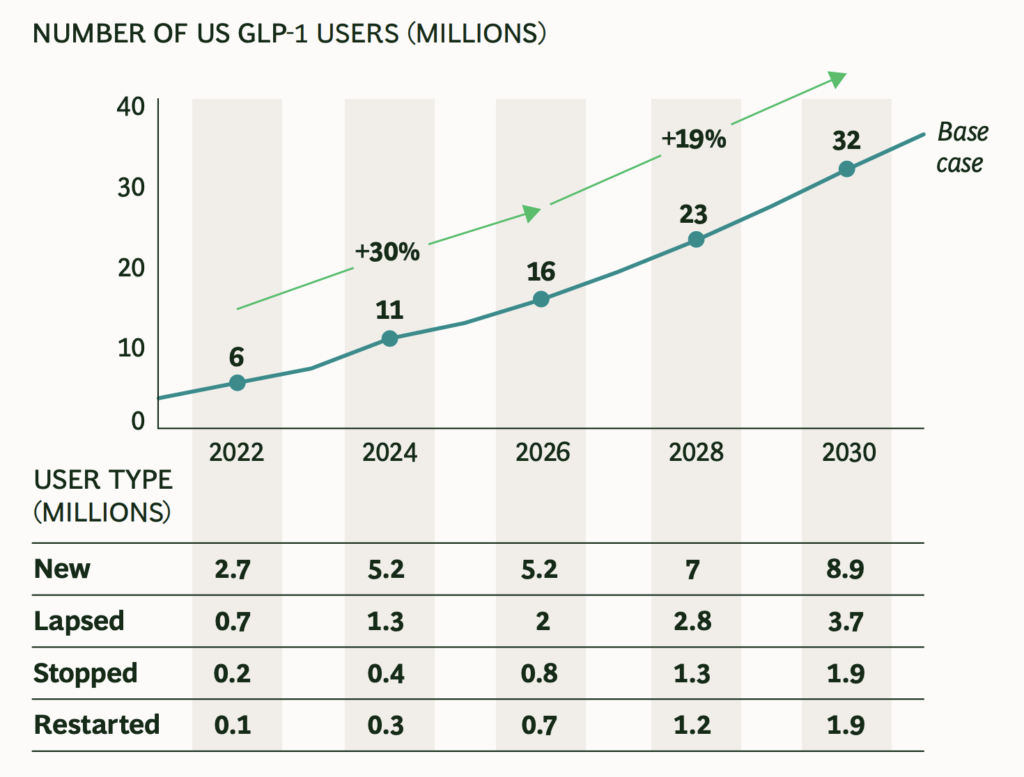
In the US, the number of people taking these weight-loss drugs has tripled since 2022, accounting for 9% of the total adult population (including both active and lapsed users). This is expected to further double by 2030, when a fifth of Americans would have used Ozempic, Mounjaro and their counterparts.
At any given moment, around a third of users are lapsed, but their exit isn’t permanent – 60% of people who stopped their medication plan to restart, and more than 10% of active users already cycle on and off intentionally. “This creates a recurring pool of re-entry, instead of a one-time adoption curve,” BCG’s authors said.
Although the US has led the GLP-1 wave so far, Europe and Asia-Pacific are set to outpace the user base over the next five years as coverage expands and lower-cost formats arrive. Between a quarter and a third of non-users in China and India who are aware of these drugs are interested in trying them, more than double the rate in the US (14%).
This will further transform the food industry. Already, GLP-1 users eat 40% more protein and 30% more fibre, with one study suggesting that their appetite for protein outdoes that of any age-based demographic in the US. BCG’s analysis shows that the focus on these two key macronutrients will be even more magnified as weight-loss drugs infiltrate more households.
Protein and fibre are all the rage for the GLP-1 clan
Many weight-loss drug users expect to change how they spend on food both at and away from home, with a third each of the freed-up money directed towards savings, covering GLP-1 co-pays, and categories like supplements, beauty and personal care, apparel, fitness, and aesthetics.
They’re nearly twice as likely to choose functional products that emphasise health benefits than premium options. Active users plan to spend 15% more each month on fruits and vegetables, 11% more on high-protein foods, and 10% more on fibre and whole grains. Functional fibre products (+8%), protein drinks (+7%), meal replacement shakes (+3%), and functional gut health drinks (+2%) also stand to benefit.
The spotlight on protein comes as GLP-1 users experience a 25-40% decrease in muscle mass over eight to 16 months (several times more than non-medicated weight loss approaches and age-related muscle loss). On the other hand, dietary fibre can trigger the body’s natural GLP-1 response, helping your gut bacteria produce short-chain fatty acids, which regulate appetite and keep you feeling full.
This is a shift being recognised by Danone, which has bet big on protein and fibre to fill the GLP-1 gap over the last year. It has made shrewd acquisitions to target some of the growth areas highlighted by the BCG poll, expanding distribution of high-protein, high-fibre shakes and meal replacement drinks via the takeover of plant-based nutrition brands Kate Farms and Huel, respectively.
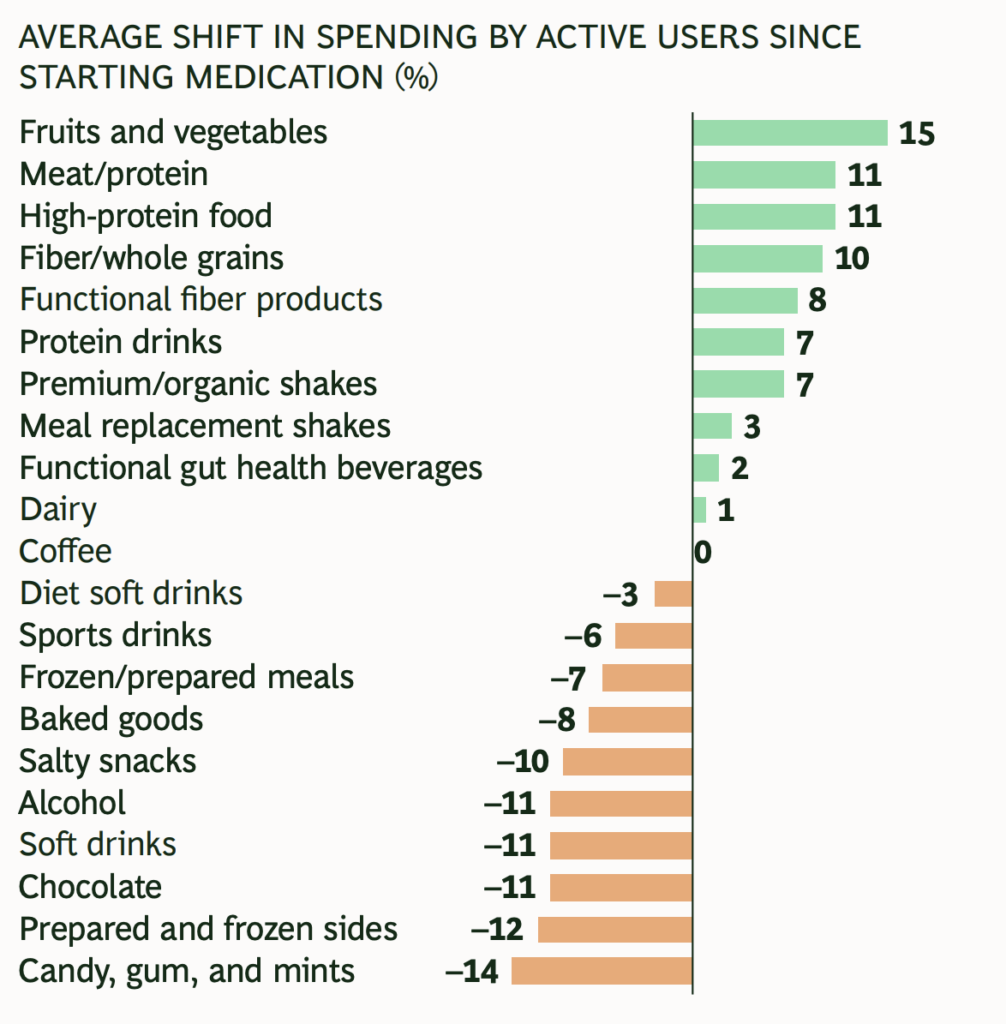
The products witnessing a decline in spending with rising GLP-1 use include candies, gums and mints (-14%), prepared and frozen sides (-12%), chocolates, soft drinks, alcohol (all -11%), and salty snacks (-8%). That’s a blow to manufacturers of processed foods and confectionery products.
In fact, 45% of GLP-1 users say they’re eating both more frequently and larger portions of fruits, vegetables and other categories of interest, while 70% are doing the opposite for products set to lose wallet share.
The supplement aisle will undoubtedly emerge as one of the biggest winners. Active users plan to spend around 24% and 22% more on protein and fibre supplements, respectively, with gains also seen in red-hot categories like multivitamins (18%), probiotics (15%), and prebiotics (14%).
“This pattern reflects both genuine need – GLP-1s suppress appetite, prompting users to be more intentional about nutrition – and a broader shift toward health tracking and optimisation that the medications appear to catalyse,” the authors said.
Companies should ‘pressure-test’ 2030 scenarios with tailored products and pack sizes
When it comes to restaurants, monthly dining occasions are halved when people start taking GLP-1 medications. When they do go out, they plan to order smaller portions, lighter dishes, and less alcohol, with fast-casual and quick-service eateries witnessing the largest spending decline (15-20%). When users lapse, dining out rebounds slightly, with these two formats experiencing the fastest recovery.
Interestingly, the spending shifts extend well beyond food: active users are set to spend 19% more on casual clothing, 15% more on footwear, 10% more on active- and leisurewear, and 7% more on formal wear and accessories.
BCG identified four patterns that predict food consumption shifts around GLP-1 use. Use of products like frozen meals, salty snacks, alcohol, confectionery and soft drinks shrinks when people are on these medications, but rebounds later. Protein drinks, functional fibre products, and meal replacement shakes witness a hike during use, but return to baseline after.
Sports drinks and dairy are met with a sustained decline even after lapsed GLP-1 use. On the other hand, people eat more high-protein foods, fruits, vegetables, and meat when they start on weight-loss drugs, and this consumption pattern continues its increase post-use.
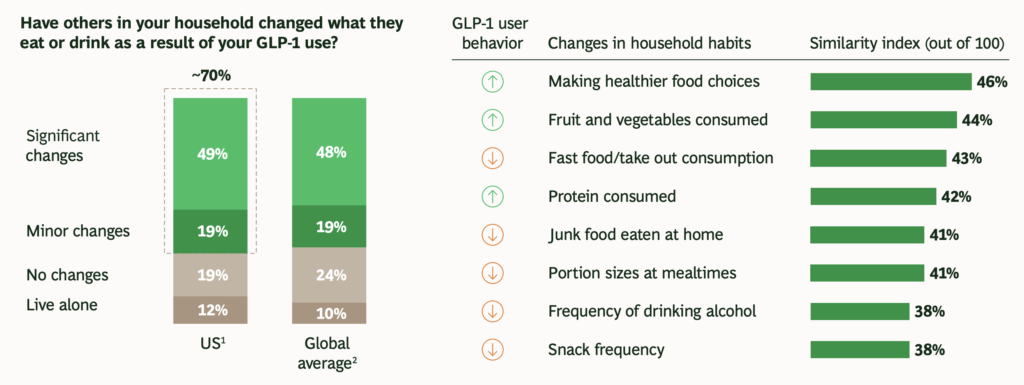
Moreover, nearly 70% of GLP-1 users report that the changes affect their entire households, making the addressable market 50% larger. People living with this cohort tend to eat fewer processed foods, make healthier food choices, as well as consume more fruits, vegetables, and protein.
So, how can companies capture this opportunity? BLG suggests reframing the portfolio around function by accelerating the launch of products rich in protein and fibre, selectively investing in premium offerings, and rationalising exposure in rebounding categories.
Food producers should consider smaller pack sizes in premium and indulgent categories for users who plan to upgrade while staying within their current budgets, and plan for the entire household by introducing family or shareable sizes. Moreover, they should build for lapsed users, many of whom will keep buying more supplements and health- and wellness-minded products.
Finally, they’re advised to pressure-test scenarios for 2030 – by when the GLP-1 user base is projected to double – through pre-position pricing strategies, innovation, and the planning of production capacity.
The BCG report comes the same month Nestlé, the world’s largest food company, said it was leveraging artificial intelligence (AI) and nutritional science to develop products tailored for GLP-1 users and the side effects they face.