

Humble Edition: Planet Oat Releases Five-Ingredient Oat Milk with Banana Purée

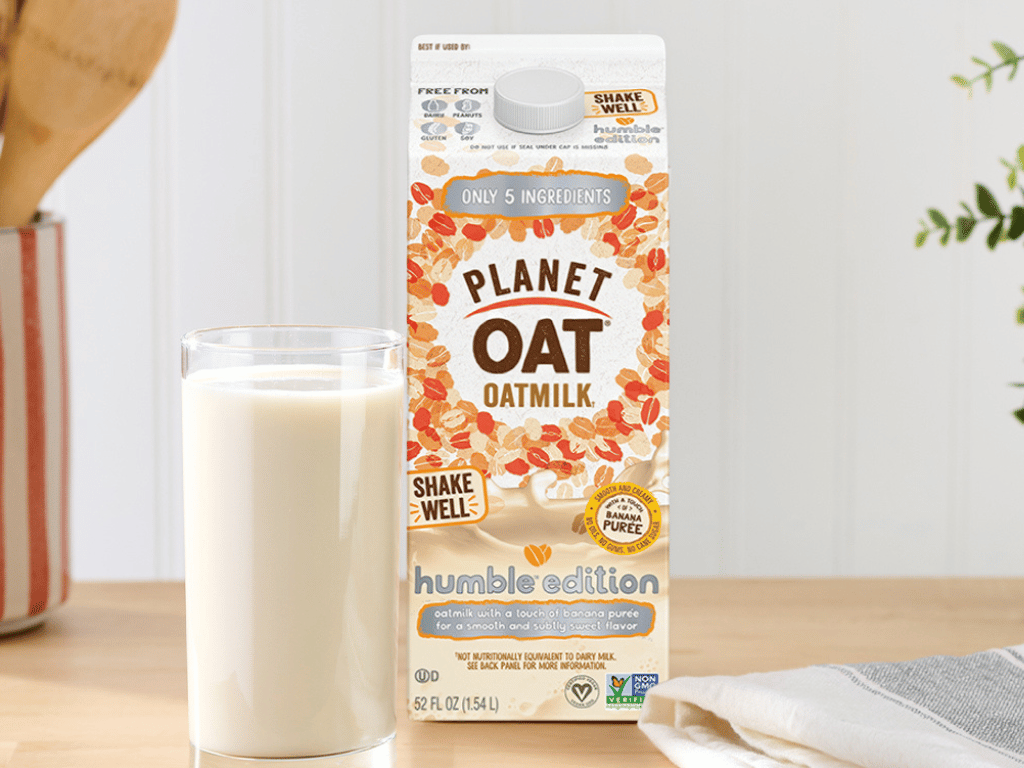
US plant-based dairy brand Planet Oat is leaning into the clean-label trend with a new Humble Edition oat milk that contains just five ingredients and is free from additives, but is also light on the nutrition front.
Can bananas and baking soda restore consumers’ faith in non-dairy milk?
That’s the bet Planet Oat is making. The plant-based brand has come out with a five-ingredient oat milk, titled Humble Edition, which does away with oils, cane sugar, and the additives that have driven Americans away from dairy-free alternatives.
Touted as its “simplest” oat milk yet, the new product contains oats, water, banana purée, sea salt and baking soda. It isn’t high in protein, with the company instead going all-in on the clamour for clean-label products with short ingredient lists.
“We wanted to create an oatmilk inspired by the earliest homemade recipes but is still silky-smooth and delicious, showing consumers they don’t need to compromise to feel good about what’s in their glass,” said Chris Ross, senior VP of marketing and R&D at HP Hood, Planet Oat’s parent company.
Planet Oat taps into Americans’ waning appetite for UPFs
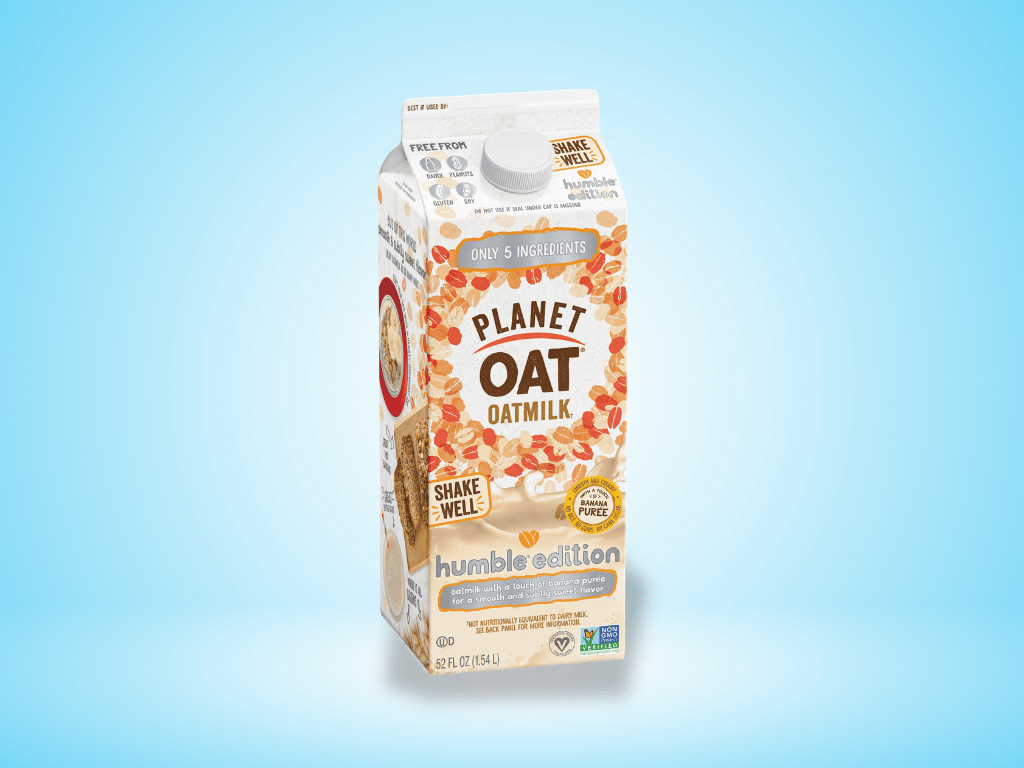
Planet Oat said the short ingredient list doesn’t reflect a compromise on the taste or mouthfeel of the oat milk, which is described as having a “creamy texture inspired by homemade oatmilk recipes from around the globe”.
It has only 1.6g of sugar per 100g, with the company swapping cane sugar for banana sweetness. It also has a negligible amount of fat, protein and fibre – the latter two are nutrients increasingly sought by Americans, prompting many of Planet Oat’s competitors to introduce milk alternatives that deliver on that demand.
However, with the Humble Edition oat milk, it is purely focused on the ultra-processed food (UPF) debate. These products now top consumers’ list of health concerns – 72% of them are trying to avoid these products in their diets, and 79% feel they’re a “significant threat” to public health.
It’s a highly contentious food category, since UPFs’ broad profile makes it difficult to paint them with a single brush. Studies have pointed out how a fortified oat milk doesn’t carry the same health risks as, say, a bottle of Coke, so bundling them into the same category is misleading.
Still, UPF concerns have boosted the popularity of clean-label products – today, half of American shoppers are worried about artificial ingredients, chemicals and preservatives, and 58% of Americans read labels before buying new items (rising to 87% among health-focused consumers).
Another survey shows that UPFs are the top health concern for these consumers, as cited by 38% of respondents. They’re followed by artificial additives, a worry shared by a third of them. This has contributed to the decline in the US market for plant-based milk, which experienced a 2% dip in sales last year.
“The launch of Planet Oat Humble Edition Oatmilk is an opportunity to reinforce what the brand stands for: thoughtful innovation rooted in the mighty, humble oat,” said Ross.
Are clean labels worth the nutritional trade-off?
Planet Oat’s focus on the ultra-clean ingredient list highlights the problem with the ultra-processed argument. Stripping products of key ingredients strips them of important nutritional elements too. While there may only be a handful of ingredients in the oat milk, there aren’t any nutritional advantages of that move, aside from the fact that it has no additives.
Even that has been brought into question by health experts. After a recent study found plant-based alternatives to contain twice as many additives as meat and dairy, some took it as a sign that these products are unhealthy.
The researchers themselves noted that this didn’t mean plant-based milk and meat carry an additional health risk, a sentiment shared by a range of experts. Roberta Alessandrini, director of the Dietary Guidelines Initiative at the Physicians Association for Nutrition, told Green Queen it wasn’t surprising that these innovations had more additives, as they can help recreate the sensory attributes of animal products.
“A higher number of additives does not automatically mean a product is unhealthy or unsafe,” she said, arguing that it “should not be read as a simple ‘plant-based foods are worse’ story”.
“Many ingredients commonly referred to as ‘additives’ serve important functions, including food safety, product quality, and fortification,” added Marjorie Mulhall, executive director of the US-based Plant Based Foods Association. “The presence of these ingredients alone is not a measure of a food’s healthfulness. Consumers should evaluate foods based on their overall nutritional profile.”
Indeed, fortified plant-based milks fall into the UPF category, even as they often offer more nutritional value than stripped-down versions, including vital micronutrients like vitamins B12 and D, as well as calcium.
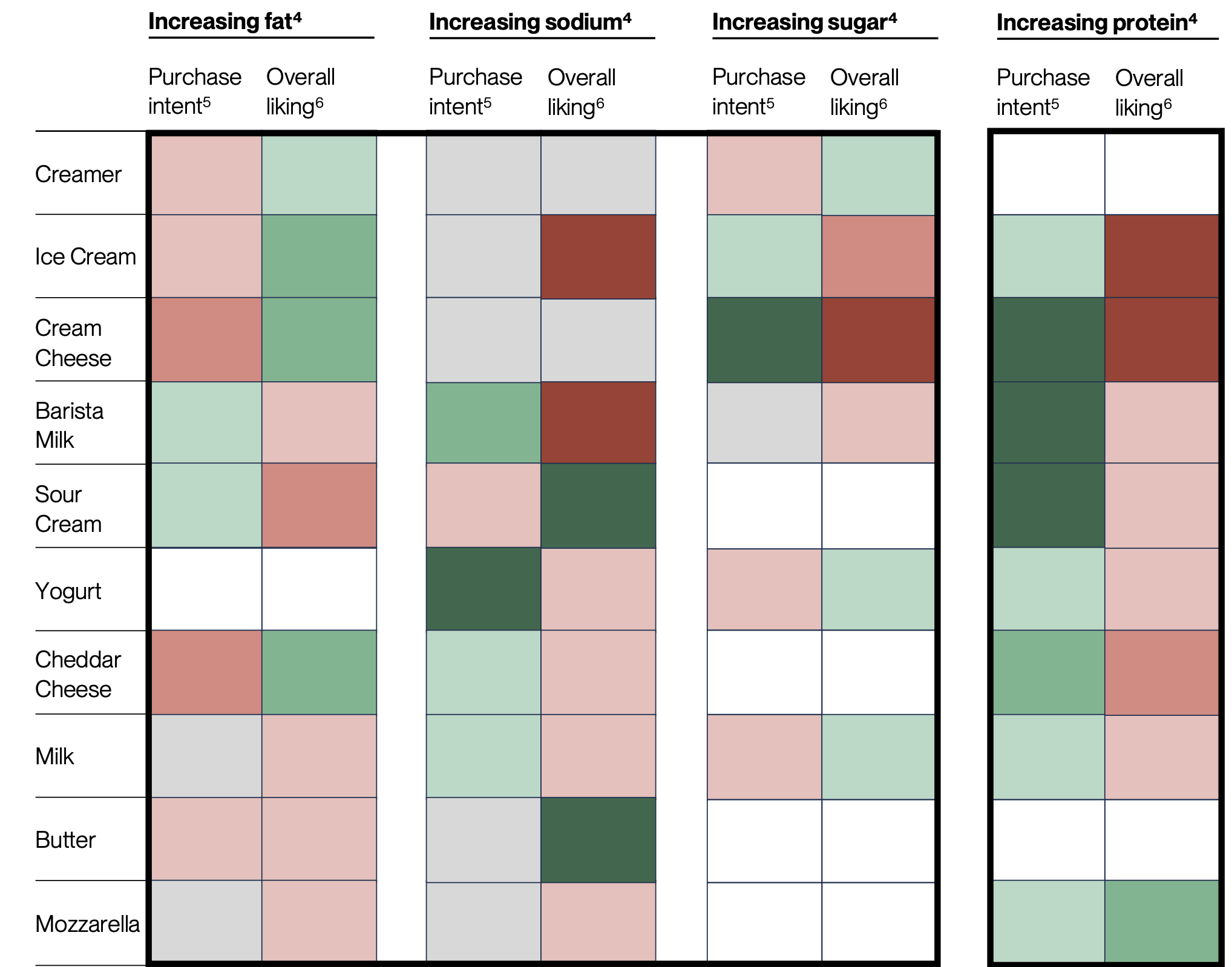
And despite the noise around seed oils, a large taste test by Nectar, a sensory insights initiative, found that protein ingredients are more likely to impact Americans’ intent to purchase plant-based milk (cited by 20%) than oils (16%).
Still, non-dairy players see value in clean-label formulations – especially if they are part of a broader, differentiated portfolio that addresses a range of health needs. Oatly, for instance, has resisted adding a protein-boosted option to its lineup; rather, it sells a four-ingredient oat milk in the US.
Malk Organics, which has built its brand on clean-label plant-based milks, has put this strategy to successful use, witnessing a 46% hike in sales to reach $94M in 2025. Even so, the brand has recognised the need for more functional options, launching a high-protein whole milk alternative last month that keeps the ingredient label clean and doesn’t ignore nutrient fortification.