

California’s $500M School Food Budget Enables Broader Access to Plant-Based Milk & Meals

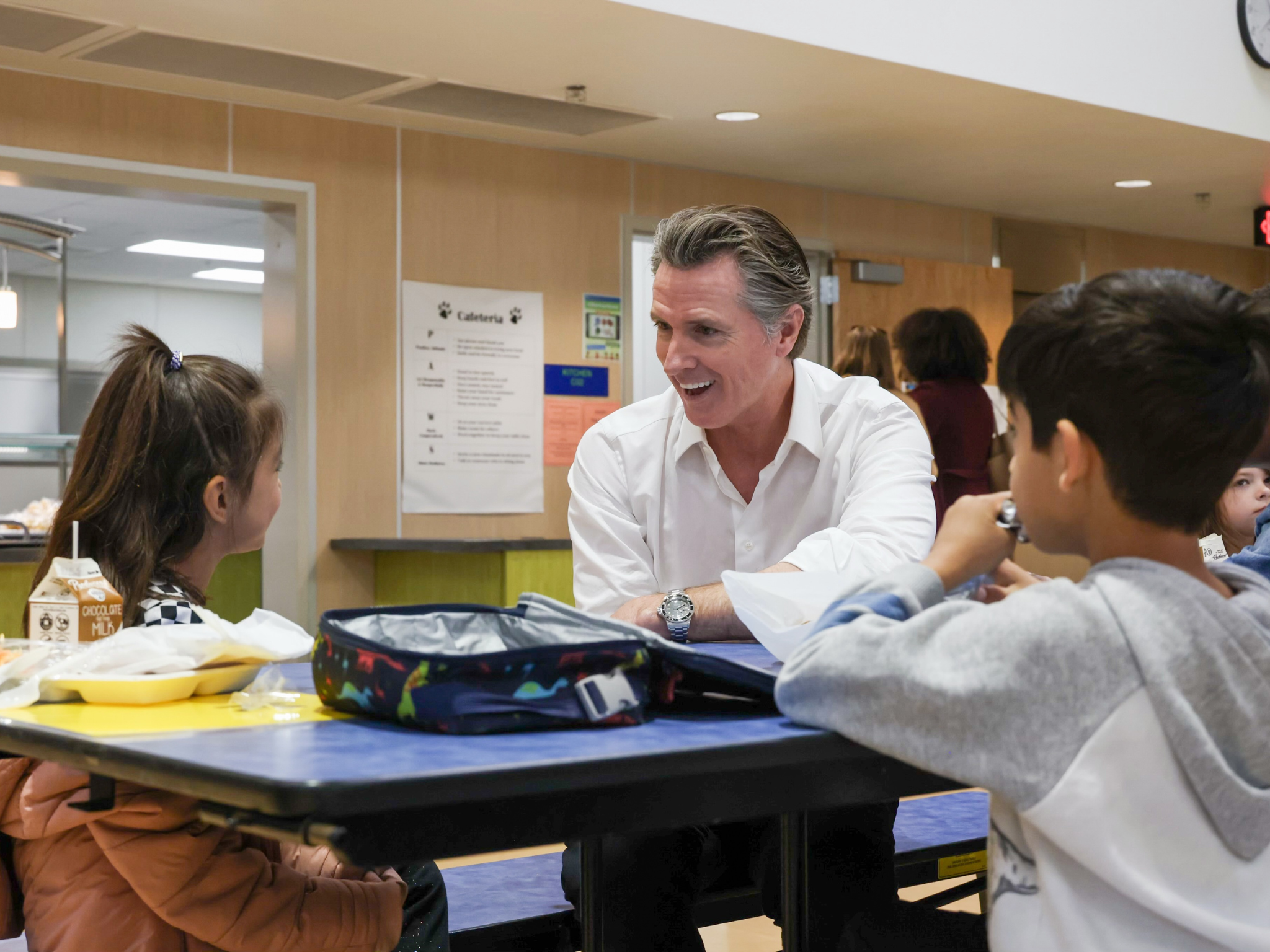
California’s 2026-27 budget includes a $500M school kitchen provision that enables educational institutions to purchase plant-based meals and milk alternatives.
He may be running for president in 2028, but if his final state budget is anything to go by, Gavin Newsom’s commitment to nutrition and food sustainability is already a welcome departure from the Trump administration’s approach.
The Californian governor has finalised the $351.7B budget for the 2026-27 period, which includes a provision that enables schools to expand access to plant-based meals and milk.
The state legislature has approved the budget, $500M of which is earmarked for the Kitchen Infrastructure and Training (KIT) programme. This contains language allowing educational institutions to use the funds to buy vegan meals and non-dairy milk for students.
This language was championed by Assemblymember Robert Garcia, who led the budget request that ultimately secured the investment. “The expanded dietary flexibility will allow students access to meals that meet their needs, and a child who is not worried about hunger is a child who will be able to learn,” he said.
Schools can take advantage of federal school milk law with new budget

The KIT programme funding will help school districts modernise kitchen infrastructure, train nutrition staff, expand scratch cooking, and purchase healthy foods, including plant-based foods and milk.
They will also be able to widen access to nutritious and inclusive meal options, catering to children with allergies, intolerances and dietary preferences, while taking advantage of a federal law that expands access to plant-based milk in school meals.
In January, President Donald Trump signed the Whole Milk for Healthy Kids Act into law. The bipartisan measure overturns an Obama-era reform that prohibited full-fat and 2% milk from the school lunch programme, and includes a provision allowing institutions to offer nutritionally equivalent non-dairy milks to kids. It further requires them to serve these alternatives to students with disabilities based on a note from their parents or guardians, not just their doctors.
Moreover, it expands the text of the 80-year-old school lunch law, which stated that schools “shall offer students a variety of fluid milk”. Now, this includes a variety of milk products, including “non-dairy beverages that are nutritionally equivalent to fluid milk and meet the nutritional standards established by the secretary”.
Following its enactment, activists and policy advocates in California – including plant-based companies, non-profits, school districts, health organisations, parents and students – called on the legislature to enable funding that would help schools implement the new federal flexibility.
This included a coalition letter signed by over 120 school districts, businesses, and partner organisations, including Oatly, Forager Project, the Physicians Committee for Responsible Medicine, Friends of the Earth, the Good Food Institute, and the Plant Based Foods Association (PBFA).
They called on the state to set aside a one-time $1M allocation to enable select K-12 schools to offer fortified plant-based milks, which continue to be pricier than dairy, which benefits from long-standing government subsidies.
“This is a significant win for California students, families, and school nutrition programs,” said PBFA executive director Marjorie Mulhall. “By allowing schools to use these funds to purchase plant-based food and milk options, California is giving districts greater flexibility to serve nutritious meals that reflect the diverse dietary needs and preferences of the students they serve.”
California a trailblazer in healthy and sustainable school meals

The calls for governments to broaden access to plant-based milk in schools are rooted in inclusivity. Lactose intolerance is classed as a disability in the US, and affects around half of the nearly 30 million children who benefit from the school lunch programme.
Lactose malabsorption rates are especially high among people of colour, with 65% of Hispanic and 75% of Black Americans suffering from the condition. This rises to 90% for Asian Americans and 95% for Native Americans. In California, close to 80% of public school students are children of colour.
There’s an environmental argument, too. Dairy accounts for around a third of greenhouse gas emissions from school meals, with research showing that replacing it with soy milk would shrink this footprint by 25% without changes to menus or nutrition standards. More broadly, meat and dairy are the dominant sources of agrifood emissions, water consumption and land use, with plant-based alternatives linked to a fraction of the impact.
Animal proteins can also be high in cholesterol and saturated fat, and they contain no fiber, something most Americans are deficient in. It’s why the Trump administration’s new dietary guidelines, which promote red meat, tallow and full-fat dairy consumption, are controversial.
Under Newsom, California has spearheaded the policy shift towards sustainable and healthy food procurement. Its School Food Best Practices Fund, which ran until 2025, expanded plant-based meals in participating school districts, 34% of which used the funding to collectively double the share of vegan entrées from 13.5% to 26.1%.
These policies have broad public support. In a 2025 survey, two-thirds of American adults agreed that school students should have access to plant-based meals and dairy-free milk.
“California is continuing to lead the nation by investing in school meals that are healthier, more inclusive, and better for the climate,” said Chloë Waterman, senior programme manager at Friends of the Earth.
“By ensuring schools can use KIT funding to procure plant-based foods and nondairy beverages, this budget helps equip districts with the resources they need to expand student choice while reducing the climate impact of school meals.”
On a federal level, over 100 food, farming and nutrition groups have written to the USDA to incorporate more legume-based ingredients in school meals, and two members of the House of Representatives have introduced the Plant Powered School Meals Pilot Act, which seeks to create a $10M voluntary grant programme to help school districts serve healthy plant-based meals.