

Exclusive: Maia Farms Takes Health-First Approach to Mushroom & Mycelium Ingredients


Canada’s Maia Farms will expand its specialty mushroom and mycelium ingredients with a focus on functional and nutritional support, having secured C$3.75M ($2.7M) in new funding.
Vancouver-based food tech startup Maia Farms is transitioning from “farm to pharmacy” as it puts public health first in 2026 with its mushroom-based ingredients.
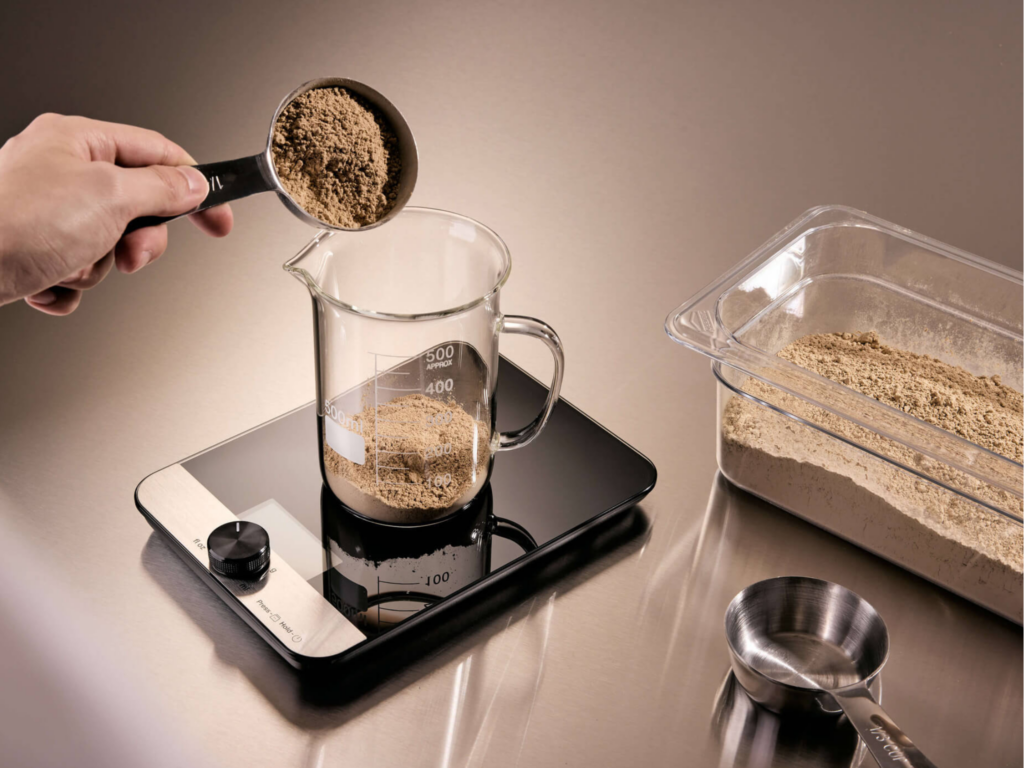
The firm uses fermentation to create oyster mushroom flours and textured mycelium proteins with exceptional nutritional credentials. These can be used in a wider range of food applications, from meat alternatives and blended proteins to noodles and baked goods.
To support its expansion, it has raised C$3.75M ($2.7M) in an oversubscribed seed funding round led by Active Impact Investments, with follow-on financing from Nya Ventures, Ag-West Bio, PIC Investment Group, and Deep Checks. It takes the startup’s total funding to C$8.8M ($6.3M), both from equity and non-dilutive sources.
“We will be using the capital for commercial expansion, team development, scaling our production process, and expanding our research laboratory. To support the surging demand for our ingredients, we need to add additional co-manufacturing options and the internal team to support this growth,” co-founder and CEO Gavin Schneider tells Green Queen.
“Additionally, we will be positioning a new portfolio of specialty ingredients that complement our current award-winning products,” he adds.
Reflecting on the investment, Mike Winterfield, managing partner at Active Impact Investments, noted: “Maia has demonstrated making food ingredients with a fermentation and extrusion-based process that can outperform conventional options on cost, nutrition and taste. We see significant potential for the company to shape the future of global production and consumption.”
Maia Farms working with ‘household brands’ across food categories
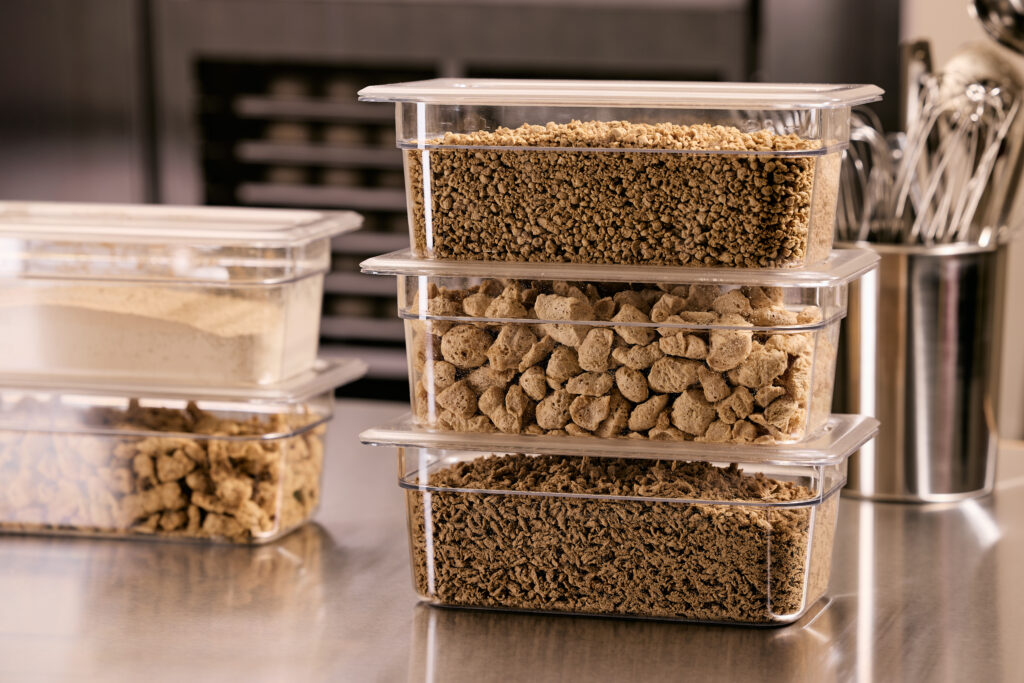
Founded in 2021 by Schneider, Ashton Ostrander, and Sean Lacoursiere, Maia Farms has patented and commercialised two core processes for manufacturing mushroom-based ingredients.
“First, we specialise in a dry extrusion process for making shelf-stable textured mushroom ingredients, which we call Maia Form. Second, we have developed a low-cost, high-yielding fermentation process for making high-moisture pure mushroom mycelium pulp, which we call Maia Fresh,” Schneider explains.
“The two production processes have been scaled at multiple locations across North America. These processes position Maia as a diversified ingredient provider for meeting the needs of different food manufacturing companies.”
The startup has steadily increased its capacity in the last year, and is positioned to deliver up to 200,000 kgs of product with its current co-manufacturing capacity. “Additional funding will allow us to set up our process across the planet to reduce lead times and decrease transportation costs,” the CEO says.
Over the last year, Maia Farms’s ingredients have powered the launch of more than 20 products in North America. “You can find our ingredients listed in various soups, chilis, curries, chorizo sausage, spice mixes, burrito bowls, and soon-to-be cookies,” he notes. “We’re in active product development with household brands who are racing to get their products on the shelves this year.”
At the existing capacity, Maia Farms can supply a plated 4oz serving below the cost of both beef and chicken mince. “We set out to create a product that is attractive to food manufacturers on the taste, texture, and unit economics – and we’ve achieved that goal,” he outlines.
Last year, its core growth was in the ready-to-heat, ready-to-eat category. “Beyond that, we are supporting go-to-market and value propositions in categories ranging from ice cream to chocolate chip cookies. Maia has established itself as the expert in how to incorporate mushrooms into food products,” says Schneider.
‘We’re not anti-animal or anti-plant’
As part of its Nourish Life Mission, the company has also co-launched a centre-of-plate option with The Greater Vancouver Food Bank. Plus, it has partnered with Phytokana Ingredients on a $24M project backed by Protein Industries Canada, in which it is evaluating the upcycling of Phytokana’s fava bean byproducts for use as a component in its fermentation media.
“Together, we have demonstrated that our fermentation process can become more cost-effective and produce a superior end product. As part of the funding, we will increase our capacity to test agricultural residuals at commercial scale,” says Schneider.
Mycelium has quickly risen through the ranks of the alternative protein ecosystem, recognised as a highly climate-friendly and nutritious protein source that can help tackle food insecurity at scale. Maia Farms’s mycelium extrudates, which are blended with pea protein, have a PDCAAS score of 0.92 and boast 66g of protein per 100g.
“In December, we were awarded Best Meat Solution, beating out well-known incumbents with our simple solution. However, we are beyond protein as an ingredient supplier. Mushrooms provide so much more nutritional and functional support that consumers are after,” says Schneider.
“If I look out over the next year, I see Maia transitioning from farm to pharmacy as we work with customers who are putting health first through the food we eat on a daily basis.
“We will be launching a portfolio of mycelium-based specialty ingredients that have unique functionality for the food industry. We’ve found that small inclusion rates of mushroom mycelium, in the right application, can have a huge impact beyond the traditional protein market.”
Schneider lays out Maia Farms’s “compelling vision” for the future. “Our founding story – a farmer, an engineer, and a neuroscientist winning a space food competition – instantly resonates. We are not anti-animal. We are not anti-plant. We are food-first. We are planet-forward,” he says.
“As a business, we are agile and embrace artificial intelligence and technology with a human face. We have an unusually talented team with a foundational business model that fits the food industry. And customers love our product – that’s the traction that matters most.”