

Mezcla Raises the Plant-Based Protein Bar with $9.5M in Series B Funding

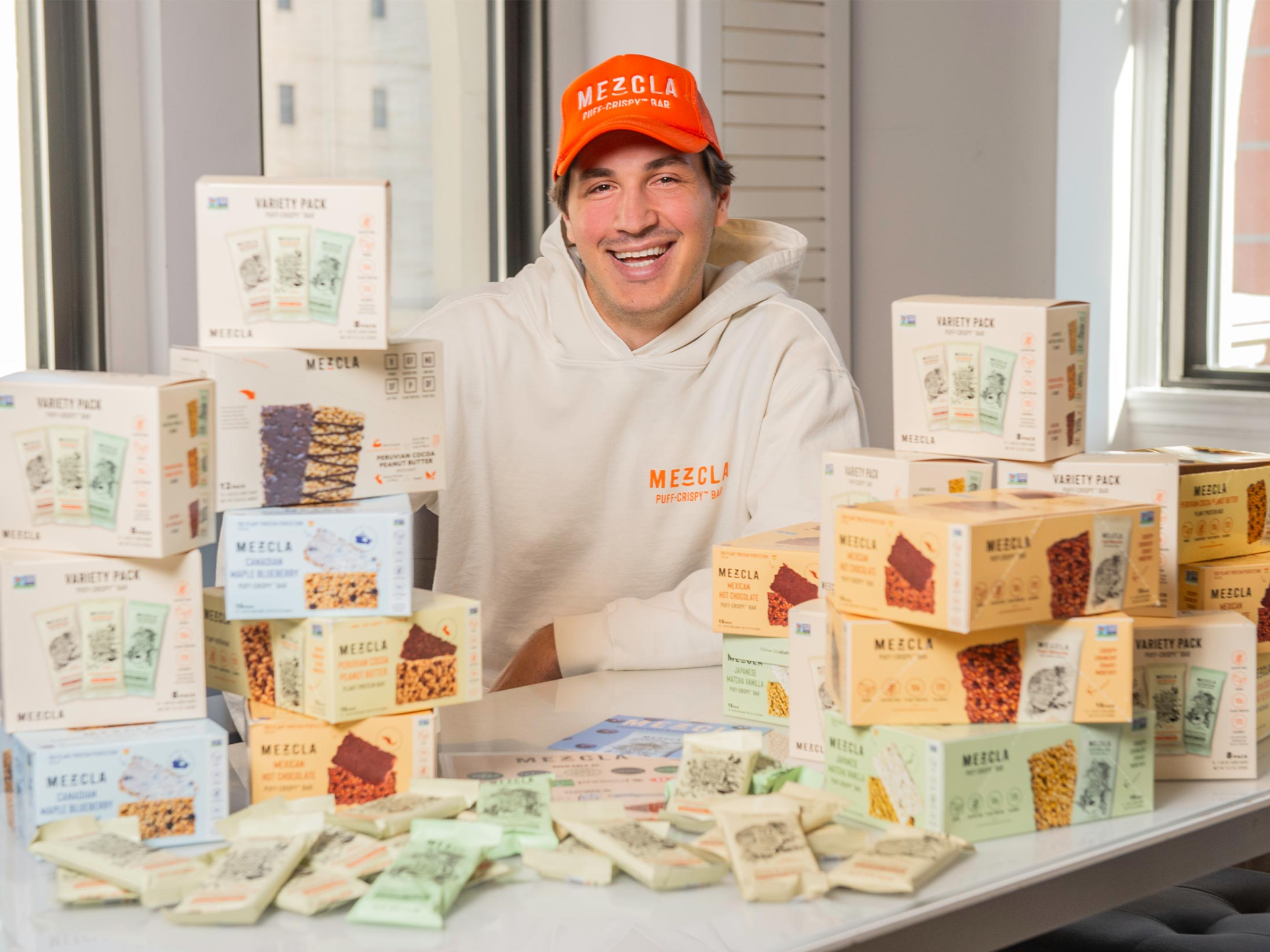
US plant-based protein bar maker Mezcla has closed a $9.5M Series B funding round to develop new products and expand its distribution.
Protein’s hold on the food industry shows no signs of stopping, and investors are taking note.
New York-based Mezcla, known for its puff-crispy plant protein bars, has secured $9.5M in new financing to fuel product development and expand its footprint in supermarkets and online.
The Series B raise, first reported by Nosh, was led by Bluestein Ventures, with additional participation from Santatera Capital, Grupo DMI, Lever VC, Habitat Partners, Tonic Ventures, and former BrightFarms and Icelandic Provisions CEO Steve Platt. SG Credit Partners provided debt financing for the round.
Mezcla, which has raised $16.5M to date, has witnessed a 128% compound annual growth rate since 2022, and is now gearing up to deepen its distribution across a protein-obsessed America.
Mezcla sets itself apart with crispy puffs
The startup has its roots at the University of Virginia, where founders Griffin Spolansky and Coco Sotelo met in a social entrepreneurship class. They formed a close friendship and began mixing recipes to create their first protein bar, launching the brand in 2019.
In the US, the protein bar shelf is crowded and can be overwhelming for a shopper. With so many options to choose from within the plant-based category alone – such as Trubar, Aloha, Misfits, Bareballs, and No Cow, to name a few – it’s hard to stand out.
Mezcla, a Mondelēz CoLab alum, offers one key differentiator: crunch. All its products are built on pea protein puff crisps, which gives them the functionality of a protein bar with the taste and texture of a rice crispy treat.
The pea puffs contain pea protein and rice starch, and are mixed with quinoa, nuts, seeds, coconut and palm kernel oils, and tapioca fibre to form a base for the various flavours.
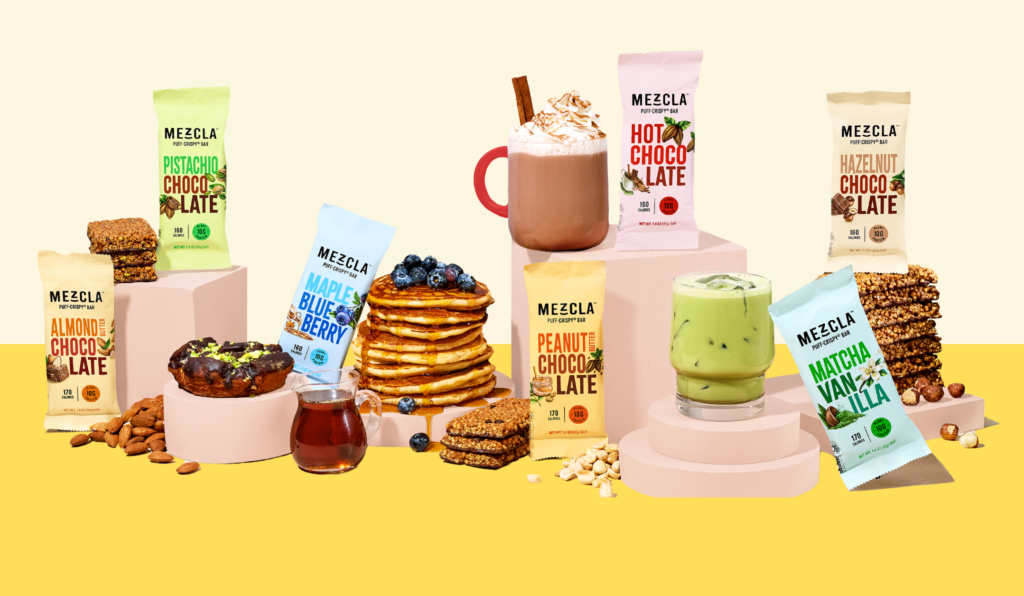
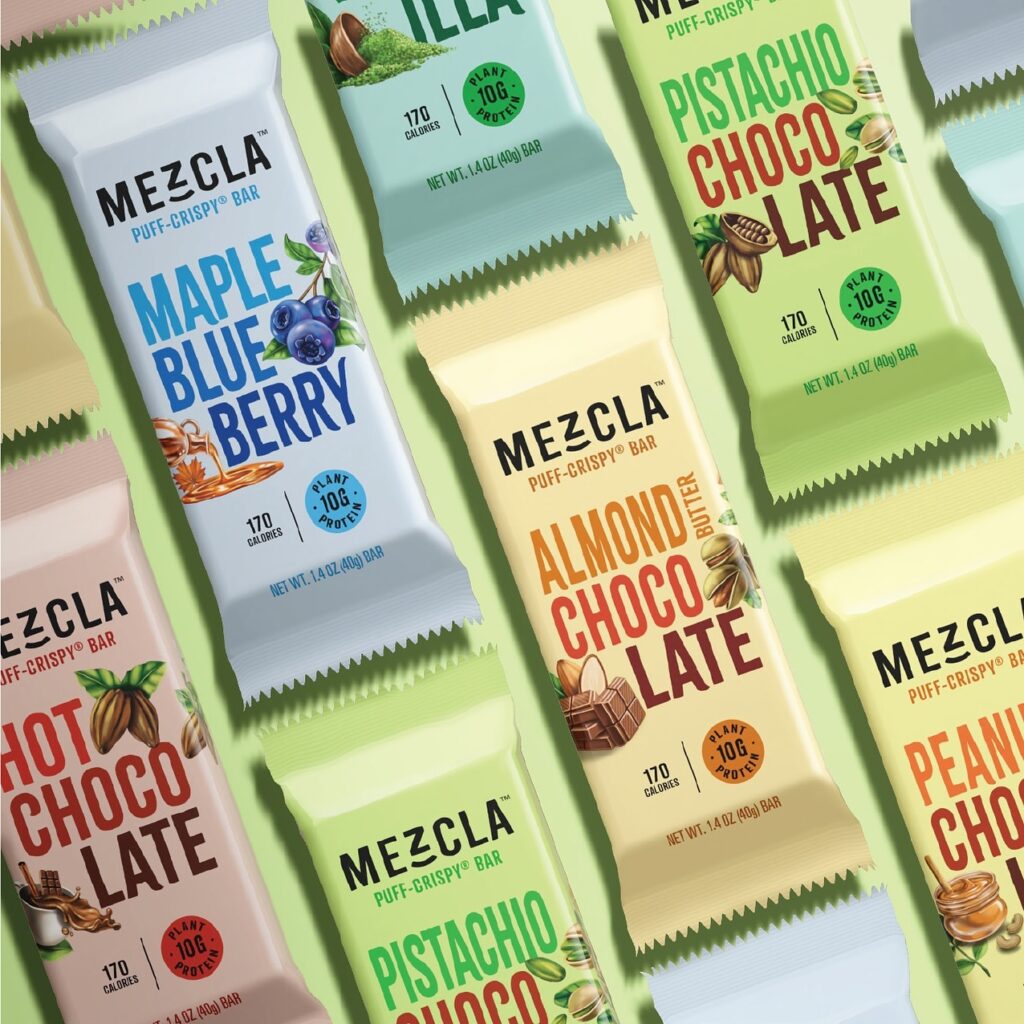
These include pistachio-chocolate, matcha-vanilla, maple-blueberry, hazelnut-chocolate, peanut butter-chocolate, almond butter-chocolate, hot chocolate, and frosted strawberry. Each 40g bar contains 10g of plant protein, 170 calories, 4-5g of fibre, and 15% of the daily recommended intake of iron.
“Most protein bars ask consumers to trade off taste, texture, or functionality – Mezcla delivers on all three,” Lindsay Levin, a venture partner at Bluestein Ventures who has now joined Mezcla’s board, told Nosh.
“We’ve been tracking the brand for over three years and have seen exceptional performance across channels. We believe Mezcla is positioned to become a leading brand in the category as it continues to scale,” she added.
Mezcla eyes expansion amid protein proliferation
Mezcla’s vegan protein bars have already made it to over 9,000 retail stores across the US, including Whole Foods, Sprouts, Publix, H-E-B, Target, Albertsons, Kroger and Costco.
With the fresh capital infusion, it is now seeking to ramp up distribution across the retail channel, including brick-and-mortar stores and online marketplaces like Amazon and Misfits Market. The startup will also use the funds to develop new products, build its brand further, and expand its team across areas like marketing, R&D, and e-commerce.
Beyond the nutritional and environmental benefits delivered by its plant-based strategy, Mezcla has also been working with The Hunger Project since 2022. As part of the partnership, the company donates a portion of sales from each protein bar to the non-profit, which fights food insecurity in 22 countries with women-focused strategies.
Its funding round comes amid protein’s continued ascendency in the US. Nearly three in five (57%) Americans plan to prioritise protein this year to increase energy (52%), build strength (51%), and manage weight (48%). In fact, 39% of Americans regularly consume protein bars, whose household purchases increased by 5% between 2021 and 2025.
The doubling of GLP-1 use between early 2024 to 12.4% in summer 2025 has contributed to this boom, since these drugs cause a 5-40% decrease in muscle mass over eight to 16 months (much more so than non-medicated weight loss approaches and age-related muscle loss).
The contentious update to the national dietary guidelines has further intensified attention on this macronutrient, pushing its daily recommended intake from 0.8g to 1.2-1.6g per kg of body weight.
Mezcla’s funding success is the latest example of the financial windfalls accessible to protein bar makers. Last month, Turkey’s Eti Gıda completed its $173M purchase of Miami-based Trubar, which sells 50 million plant protein bars annually.