

Danish Startup Bags $5.8M to Roll Out Fossil-Free Pigments for Food & Textiles


Denmark’s Octarine Bio has raised €5M ($5.8M) in new funding to launch precision-fermented pigments for food, textiles, and personal care this year.
In yet another sign of the post-petroleum dye era, Danish startup Octarine Bio has secured fresh financing to bring its bio-based pigments to market.
The Copenhagen-based firm has brought in €5M ($5.8M) in new capital to take its total Series A amount to €12.8M (around $15M). The round was led by new and existing backers, including The Footprint Firm, Edaphon, Unconventional Ventures, DSM-Firmenich Ventures, and Oskare Capital, alongside angel investors like 21st.Bio co-founder Per Falholt and former Novonesis CEO Steen Riisgaard.
The funds will allow Octarine Bio to accelerate the industrial-scale validation and commercial rollout of its precision-fermented pigment platform, PurePalette, which can be used across multiple industries, from food to fashion.
“The completion of our Series A is a pivotal step for Octarine. It enables us to scale production of our first three flagship PurePalette colours, execute on commercial partnerships already in place, and expand product development of our safe and sustainable pigments into new industries,” said co-founder and CEO Nethaji Gallage.
Speaking to Green Queen, she confirmed that Octarine Bio is in talks with manufacturers, adding that the first set of these bio-based colours will be on the market this year.
Octarine Bio offers “cost-effective” alternatives to synthetic pigments
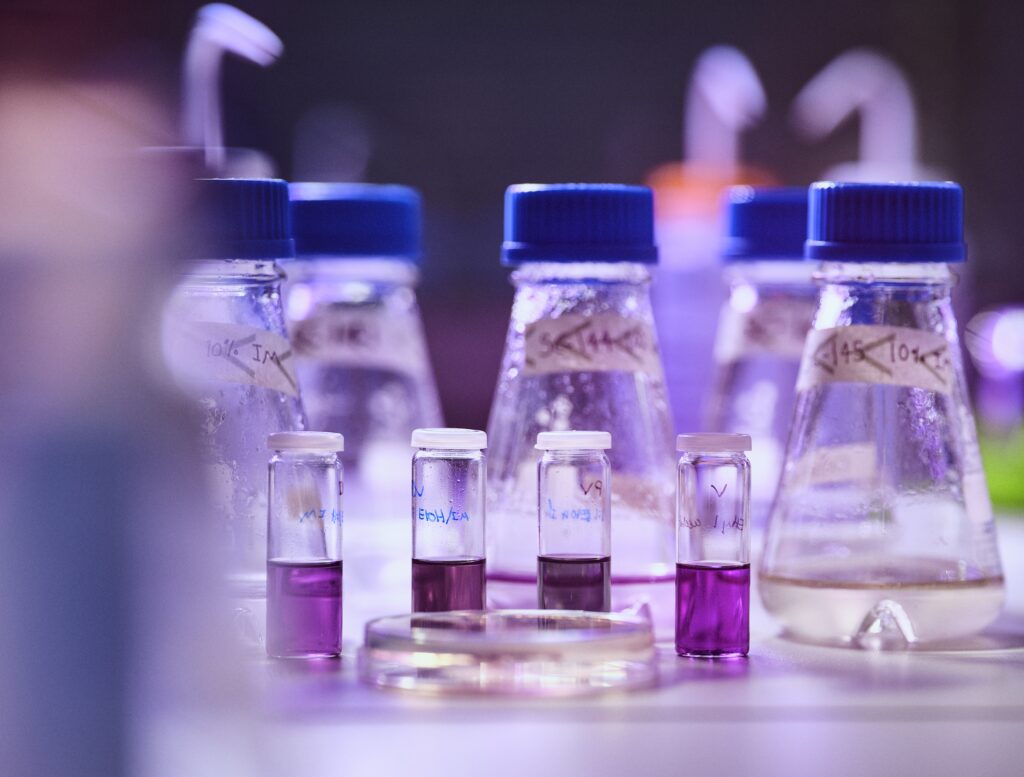
Precision fermentation involves genetically engineering microbes by inserting specific DNA and instructing them to produce specific molecules when fermented.
Octarine Bio, which Gallage founded with CSO Nick Milne in 2018, is using the technology to take on the synthetic dye industry. It describes PurePalette as the only fully bio-based pigment platform that can deliver the entire colour spectrum through a single production process.
“Our proprietary engineered microbial strains each produce a unique PurePalette colour,” explained Gallage. “The pigments are manufactured using precision fermentation, using bio-based and renewable bulk feedstocks. After fermentation, the pigments are purified […] and formulated into final products for each application we are targeting.”
Those applications include textiles, food and beverages, cosmetics, printing, plastics, and packaging. The pigments offer high colour strength, performance and stability while maintaining a low environmental impact. This year, Octarine Bio will work on scaling up its first three colours: PurePurple, PureGreen and PureBlue.
Asked about its current capacity, Gallage said the company has produced 100kg of its first flagship pigment, and the new funding will help bring its second and third coloursto the same stage. “Most of our focus in the coming months would be around formulation and product development with our partners,” she outlined.
“Our manufacturing is very much cost-effective with [our] production strain, with double-digit yield per litre and excellent recovery. As these pigments are super strong in colour strength, we can meet cost in parity with synthetic pigments already at very early stage scales of production.”
Bio-based colours on a red-hot streak
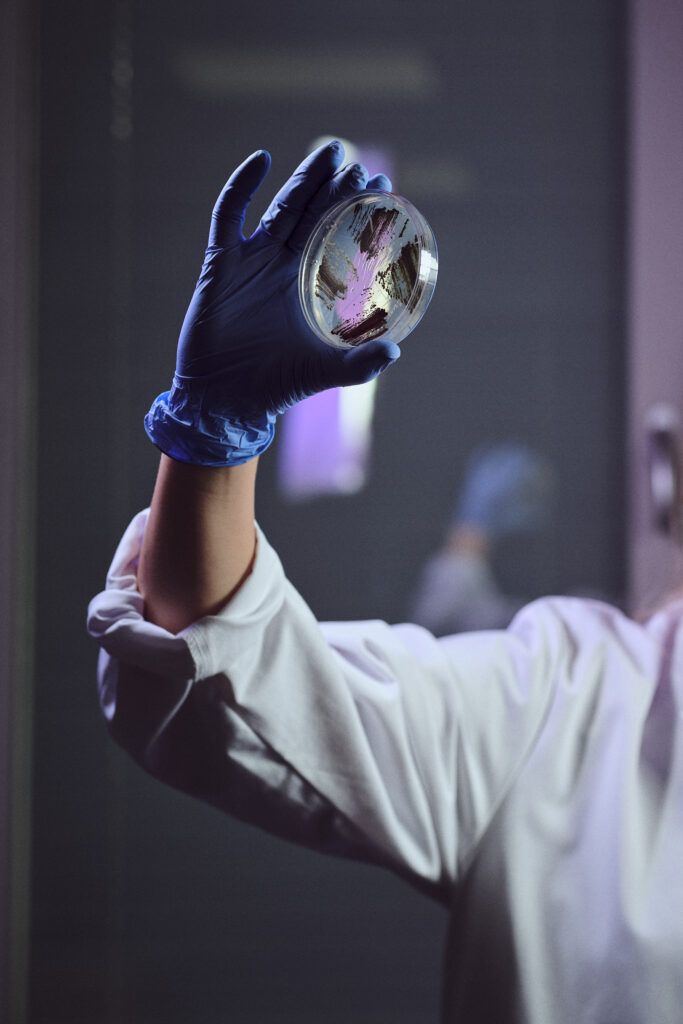
In the textile industry, the vast majority of pigments are derived from fossil fuels, requiring massive amounts of water to produce. Much of the toxins in these dyes leach into the waterways and escape wastewater treatment, which is why textile dying is responsible for 17-20% of global water pollution.
Synthetic dyes aren’t just confined to what we wear – they’re all over what we eat too. The Make America Healthy Again movement in the US has ramped up the backlash against artificial colours in food, with two-thirds of consumers supporting a shift away from them.
Last year, the FDA announced a ban on Red Dye No. 3, a petroleum-derived hue shown to be carcinogenic in rats. And Big Food has since followed suit, with Nestlé, Mars, Kellogg’s, General Mills and others all removing artificial dyes from various products.
“Customers are becoming increasingly conscious about the environmental footprint of the products they buy and their potential health concerns. In many of our favourite consumer products, synthetic colours have a significant negative impact in both areas, making this a real hotspot for sustainable change,” said Galllage.
“Both the regulation and environmentally conscious customer demands are helping the bio-based pigments [sector],” she added.
And investors and manufacturers are taking note. Octarine Bio isn’t the bio-based colour startup to benefit from a capital injection in recent months – in November, Chromologics raised $8M to launch its food-grade, microbial alternative to synthetic red dye in the US and Europe. Meanwhile, Michroma has teamed up with South Korea’s CJ CheilJedang to scale up its own fermentation-derived red dye for food and cosmetics.
Reflecting on the Octarine Bio investment, Anna Zimmermann, senior associate at Edaphon, said: “PurePalette has the potential to drastically reduce the environmental impact of textile dyeing, one of the most polluting steps in the textile value chain.
“By fitting into existing dyeing processes, the pigments can be widely adopted and drive meaningful change across the industry. We are excited to support the team as they move into this next phase.”