

French Plant-Based Meat Startup Swap Food Enters Liquidation, Faces Shutdown Without Buyer


Parisian plant-based whole-cut meat maker Swap Food (formerly Umami) has entered liquidation and ceased activities in France, with a closure of its US operations imminent unless a buyer is found.
A year after replacing its CEO amid financial struggles, French startup Swap Food – best known for its whole-cut vegan chicken – has fallen into insolvency.
The firm was placed into judicial liquidation by the Paris Economic Activities Court in April and ceased activities in its home country this week, affecting 66 employees. It has begun a sale process for its assets, which includes its subsidiary in the US. And if that fails, the latter will also end its operations next month.
Swap, which has raised over €100M ($116M) since being founded in 2019, racked up €16.5M ($19.1M) worth of debt in 2024, when its turnover totalled just €1M ($1.2M).
Its co-founder, Tristan Maurel, stepped down as CEO and moved to the role of board chairman in May 2025. He was replaced by former Mondelēz and Pierre Martinet executive Hervé Salomon, who was tasked with turning the business around.
The development comes despite a rise in sales of plant-based meat in France over the last couple of years, as meat consumption has been steadily declining over the previous two decades.
Swap CEO blames ‘slower than expected’ growth of plant-based food
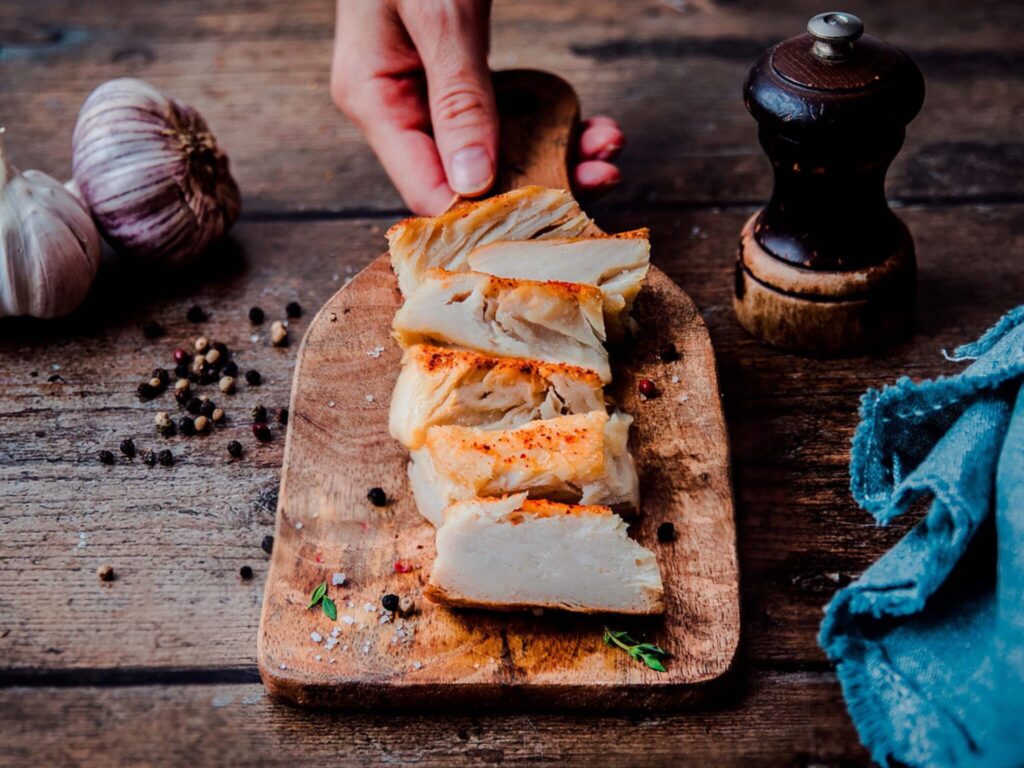
Swap was founded as Umiami by Maurel, Clémence Pedraza and Martin Habfast, built on its ‘Umisation’ texturising platform for producing whole-muscle replicas of conventional fillets like chicken and fish.
This involves a technique that transforms plant proteins into structured fibres without high heat or pressure. The tech was touted as a key reason why the company was able to produce plant-based meat with a handful of ingredients; Swap’s chicken features eight ingredients and no artificial flavours, colourants or texturisers.
The firm opened a 14,000 sq m facility in the Alsace region last year, backed by a €38M ($41.3M) investment with support from local and federal governments. This was said to be capable of producing 7,500 tonnes of plant-based meat annually, eventually rising to 20,000 tonnes.
In October 2024, the company rebranded as Swap and launched into the US foodservice sector, targeting flexitarians through Chicago restaurants such as Spirit Elephant, Soul Veg City, Majani, and Clucker’s Charcoal Chicken.
Between 2024 and 2026, Swap’s fixed costs have halved. And since Salomon’s arrival, monthly losses were also slashed in half (to around €1M) while annual revenues doubled, totalling €2M in 2025.
The market did not respond as quickly as it had hoped, in part because of its premium pricing compared to meat, with Swap’s products sold at around €20 per kg. Even though plant-based food is an expanding market, “the pace of this growth is slower than expected” a few years ago, Salomon told the AFP.
According to L’Informé, the company required €9M ($10.2M) by year-end, and nearly €30M ($34.1M) by the end of 2026, to stay afloat. Swap’s annual accounts show that the firm was in discussions to close a €20M financing round by August 2025, which would have given it a runway until 2026, although it seemingly did not materialise.
Swap’s factory was ‘a bit too large’, but plant-based market remains strong
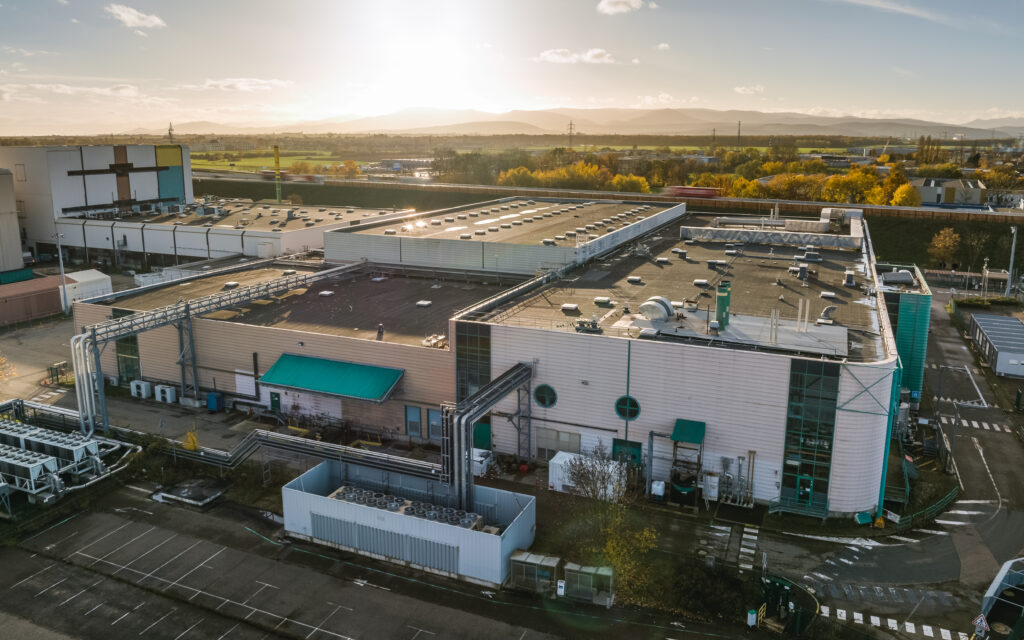
One of the major factors behind Swap’s struggles was its production facility, which struggled to scale up, leading to delays in commercial development. It has been operating at less than 10% of its capacity.
“We had a real differentiator, with a patented steaming process that allowed us to produce fillets of the right size with a texture similar to meat,” Salomon told L’Usine Nouvelle. “We had an advantage over the extrusion processes. However, we had a problem with our product range, offering only one item, […] as well as a problem with the formats”
Speaking to the AP, he noted: “Everyone expected this market to explode, on par with the meat market. Today, the meat substitute market represents only about 2% of the meat market, between 1% and 3% depending on the country.
“So yes, the production facility was probably a bit too large for this potential, but let’s not judge the way the company got started, because in this type of business, you have to invest quickly and heavily.”
Initially, Swap’s operations in France were set to continue until June 30. Last month, Maurel submitted a partial takeover for the company, with plans to reportedly shift to a contract manufacturing model and make Swap’s facility available to any company looking to enter the alternative protein market.
He argued that this approach would help offset fixed costs. However, a week before his bid was set to be reviewed by the court, Maurel withdrew his offer, forcing an early shutdown of production to implement a job protection programme for Swap’s employees.
Swap’s struggles reflect the wider alternative protein category, where more than 70 companies have been bought out or acquired, merged, fallen into insolvency, or shut down altogether since September 2024. Recent examples include Hooked Foods, Clive’s Purely Plants, Konscious Foods, and Aqua Cultured Foods.
Despite these challenges, the overall plant-based meat sector has been resilient. Global sales of these products rose by 8% last year, reaching $6.6B. And in France, sales of chilled vegan meat rose 13.5% year-on-year in 2025, outpacing all other categories, according to the Good Food Institute Europe.
In fact, France was the other country that observed growth in each plant-based category analysed. Sales reached €572M in 2025, 11% higher than the previous 12 months – that’s faster than any of its European counterparts in the report.