

US Startup Oobli Gets Third FDA Approval Letter to Use Sweet Proteins in Food


Known for its novel sweet proteins, US firm Oobli has secured its third FDA approval letter to sell one of its ingredients as a sweetener for food and drink products.
Californian food tech startup Oobli has received its latest ‘no questions’ letter from the US Food and Drug Administration (FDA) for one of its precision-fermented sweet proteins.
The letter confirms that brazzein-54, a natural sweet protein up to 550 times sweeter than sucrose, is Generally Recognized as Safe (GRAS) for use as a sweetener in a range of food and drink products.
It is the third such regulatory letter received by the startup, following the approval of brazzein-53 and monellin (naturally found in the serendipity berry and even sweeter than brazzein).
“The ‘no questions’ letter from the FDA is further testament to the strong potential that sweet proteins have to disrupt our global dependence on sugar and alternative sweeteners,” said Oobli CEO Ali Wing.
How sweet is Oobli’s newest protein?
The company derives its name from the Oubli fruit, which is native to West Africa and contains brazzein, though in quantities that make large-scale production impossible.
So Oobli uses precision fermentation instead, inserting the DNA sequence of brazzein into Komagataella phaffii (a yeast strain with a long history of use in food), which are added to a fermentation tank filled with a nutrient-rich broth. The microbes feed on the sugars in the broth to produce the proteins, which are filtered out and purified.
It secured the FDA letter for brazzein-53 (a minor isoform with 53 amino acids) in April 2024, intending to use it as a sweetener in products spanning packaged drinks, non-dairy milk and yoghurts, granola, energy bars, smoothies, and even gummy bears, in concentrations ranging from two to 99mg per 100g.
Now, the startup is extending its portfolio with the major isoform of brazzein, which contains 54 amino acids, thanks to the addition of N-terminal pyroglutamic acid residue.
There is a difference in sweetening ability too. Oobli’s brazzein-53 ingredient contains 48% of the minor isoform and is 360 times sweeter than sucrose. But its version of brazzein-54 comprises 51% of the major isoform at a sweetness level 280 times higher than table sugar, giving a new option to manufacturers looking to formulate healthy, sugar-free products.
“The oubli fruit sweet protein can be safely used in a wide range of foods with support from the scientific community and the FDA,” said Wing. “It can replace 70% or more of sugar in products such as sodas, teas, baked goods, and more, making the opportunities to reduce our sugar consumption virtually endless.”
Oobli working on launches with Ingredion and Grupo Bimbo

Sweet proteins bind to and activate the same taste receptors on your tongue that sugar does, enabling us to “taste sugar without ingesting sugar”, and digest and metabolise sweet proteins just like any other protein.
Since the amount of sweet proteins needed is minuscule, the ingredients don’t have any impact on your daily protein intake; instead, they help with glucose management and weight loss.
“Sweet proteins are a class of proteins that deliver a sugar-like sweetness but don’t affect blood sugar, insulin, or the gut microbiome,” said Oobli founder and CTO Jason Ryder. “Oobli is changing the future of sweetness through the use of sweet proteins as a replacement for traditional cane sugar and other alternative sweeteners like aspartame, sucralose, stevia and erythritol.”
Americans eat 17 teaspoons of sugar every day, much higher than the recommended amount. The calorie-rich ingredient has been a major contributor to America’s obesity epidemic, which plagues 42% of its citizens. Meanwhile, over 11% of US consumers have type 2 diabetes.
It’s why four in five Americans find it important to reduce the overall sweetness of their diet, citing healthy eating (49%), blood sugar control (43%), and weight management (41%) as their main motivations. The shift is further spurred by the rise of GLP-1 drugs like Ozempic, which have turned users away from sugar more than other dietary elements.
Aside from the health benefits, sugar is also bad for the planet, thanks in large part to extensive land use, which will further spur the $7B sugar alternatives industry into action.
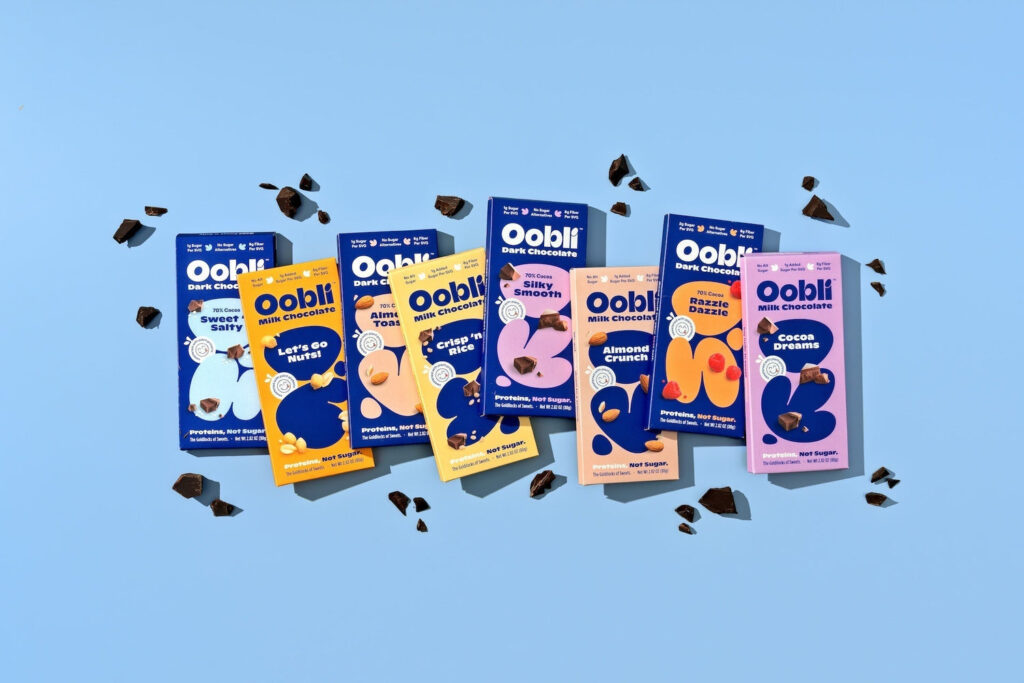
Oobli, which has raised nearly $50M to date, currently sells a line of dark and milk chocolates sweetened with its proteins. It is now preparing to launch into new categories through partnerships with ingredient giant Ingredion and Grupo Bimbo, the world’s largest producer of baked goods.