

Plant-Based Seafood Startup Oshi Nets $3M in Funding After Fourfold Growth in Sales

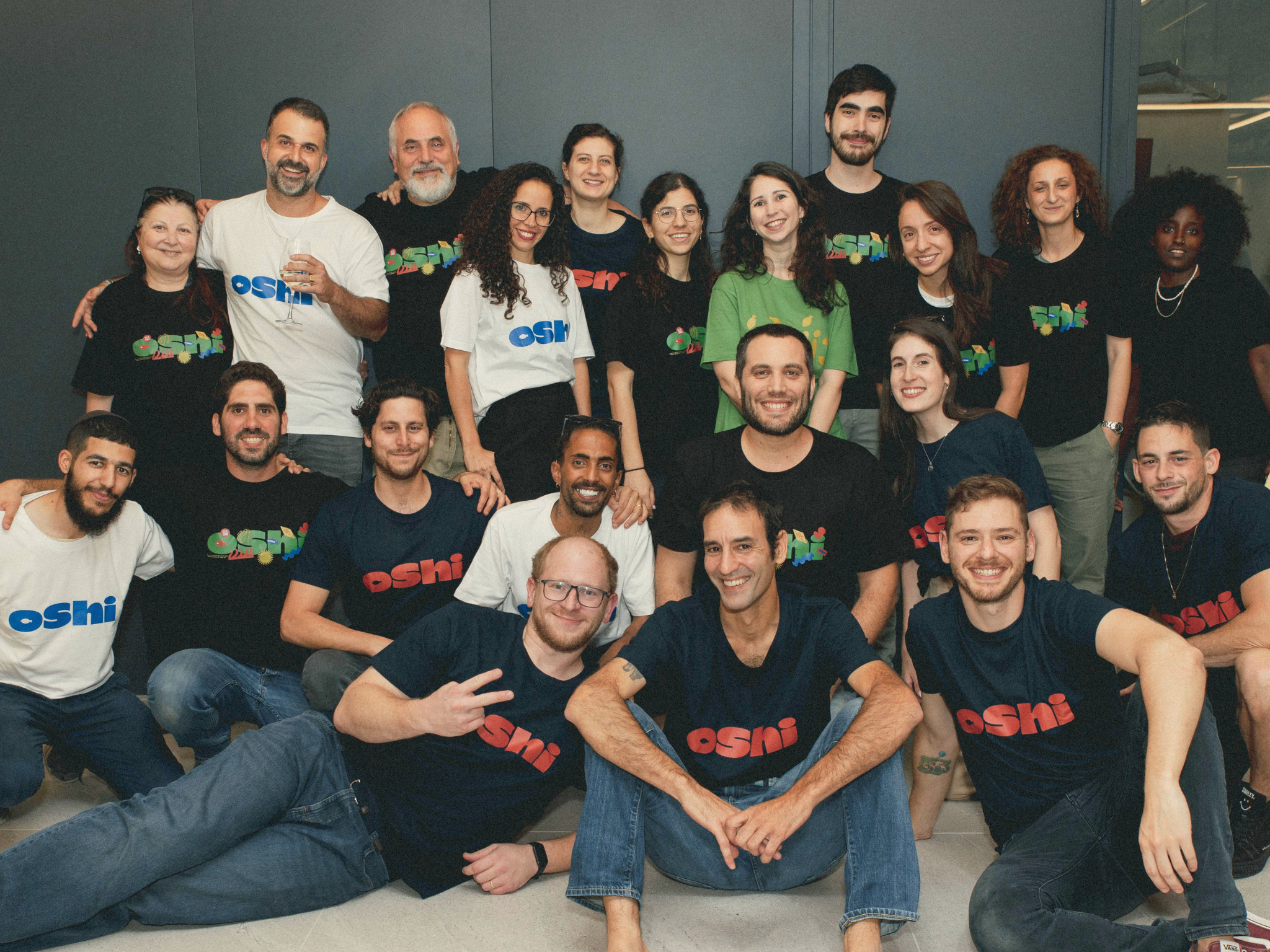
Vegan seafood maker Oshi has received $3M in investment from a Latin American seafood major and launched a crowdfunding round to build on its fourfold sales increase and launch a whitefish product.
Known for its whole-cut fish-free salmon, food tech startup Oshi has hooked $3M in new financing to expand its portfolio and footprint.
The investment comes from a Latin American seafood giant, which will help the firm open a production facility and distribution centre in the region to support mass scale-up.
It serves as a precursor to a new crowdfunding campaign on WeFunder, and builds on Oshi’s growth in the US, where its sales quadrupled in 2025. It expects another fourfold increase this year, with revenues forecast to hit $1M. That will be helped by its increased distribution and the launch of a new vegan whitefish alternative.
“A few months ago, we were close to the end of our runway. I was worried that the company I had given everything to might not survive,” Oshi co-founder and CEO Ofek Ron said in a LinkedIn post. “Then a strategic investor came in. Not just with capital, but with a real commitment to help us scale.”
Oshi boosts distribution and cuts costs by 80%
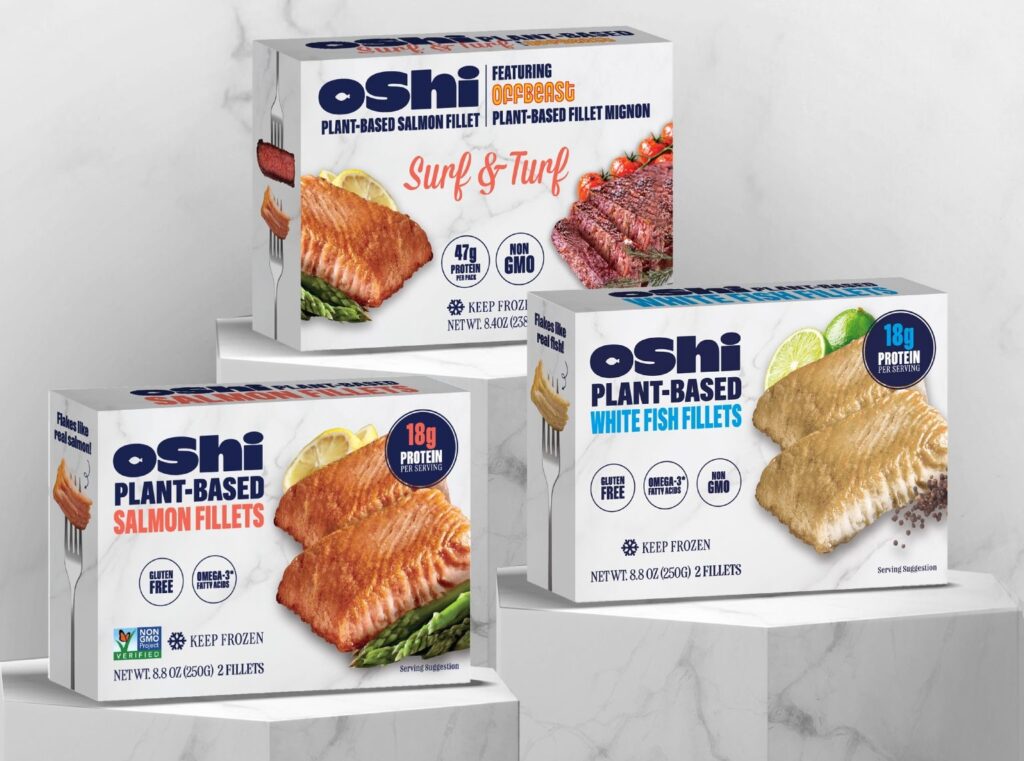
Formerly known as Plantish, Oshi leverages 3D printing to turn soy protein and mycoprotein into whole-cut fish alternatives featuring 18g of protein and algal omega-3 fatty acids. (The mycoprotein is sourced from The Better Meat Co.)
It operates a plug-and-play manufacturing model that has enabled it to reduce production costs by 80%, narrowing the price gap with conventional fish. And earlier this year, it brought its “scale-up machine” to the US to ramp up production.
The firm has been ramping up its US distribution, with its salmon now available on over 100 restaurant menus, including Veggie Grill by Next Level Burger and City Roots. This has been helped by a distribution deal with Sysco, which has made its products available to foodservice operators in all 50 states.
It began direct-to-consumer sales last summer, and has partnered with distributors like KeHE and UNFI, enabling the brand to enter retailers like Lassens, Mother’s Market, Country & Market, and Earth Fare. The company is now preparing for a rollout with a major national grocery chain, targeting 686 doors this year.
“We are also being approved to sell in two new countries this year,” said Ron. “The company that, only a few months ago, I was afraid might close, is now entering the strongest momentum we have ever had.”
With the launch of its whitefish alternative – a whole-cut fillet that replicates the delicate, flaky texture of its conventional counterpart – Oshi is evolving into a comprehensive vegan seafood platform.
The 3D-printed whitefish has an “ocean-scented” flavour profile designed to appeal to a wide audience, from families to fine-dining chefs. It is joining the firm’s flagship salmon in high-profile venues and retailers across the US.
Interest in Oshi contrasts with overall plant-based meat category
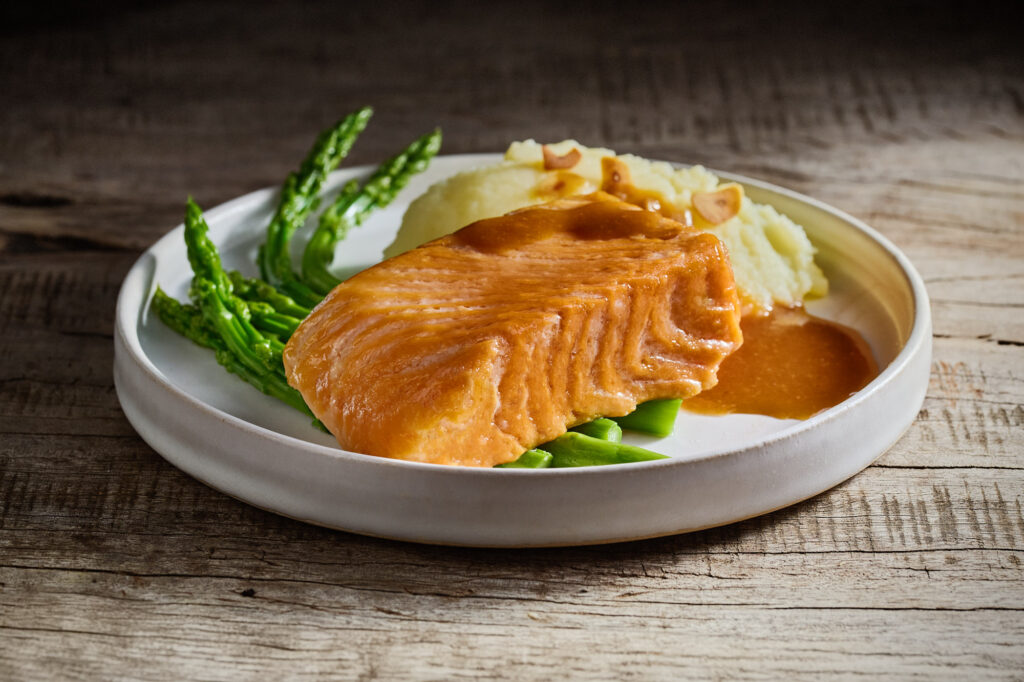
After five years of rigorous R&D, Oshi is now moving from pilot success to national scale with the backing of a seafood industry leader. “We are at a tipping point,” said Ron.
“The fact that one of the largest traditional seafood players in Latin America is investing in us is a clear signal that plant-based seafood is the future of food security. We are now inviting our community to join this momentum – investing in a mission that is good for the ocean and built for massive commercial growth.”
The crowdfunding round starts at $250 and enables Oshi’s customers and supporters to invest under the exact same terms as the seafood giant. They will join existing investors like Oatly founder Björn Öste, Unovis, and Alumni Ventures on its cap table.
“When I first tasted Oshi’s prototypes in 2022, I initially tried to talk Ofek out of it. Plant-based fish is a brutally tough challenge. What changed my mind was their execution,” said Öste.
“Oshi hasn’t just developed a compelling product; they’ve built a proprietary production process that gives them a real edge. They have a real shot at defining this category,” he added.
The investment in Oshi is a welcome shift from the bleak environment for plant-based meat and seafood in the US, which still make up just 1% of meat sales and saw purchases fall by 10% in 2025. Meanwhile, plant-based companies witnessed a 31.5% increase in funding last year, but this was largely due to Beyond Meat’s $100M round. Without it, funding for the category would have only increased by 2%.
“Seafood is one of the last frontiers in the alternative protein revolution. We’ve seen what plant-based can do to meat and dairy – Oshi is bringing that same disruption to salmon, the most consumed seafood in America,” Unovis, an early investor in Beyond Meat, noted in a statement.