

Dutch Supermarkets Urge Government to Commit to Protein Transition

The Netherlands’ Central Bureau of Food Trade has published a report on supermarkets’ best practices to drive the protein transition, and is calling on the government to play its part too.
This year, supermarkets in the Netherlands embraced blended meat and dairy, ‘protein split’ goals, and methane reporting. Now, they’re asking the government to support the protein transition.
In a letter sent to the Dutch House of Representatives, the Central Bureau of Food Trade (CBL) – a representative body for supermarkets and foodservice operators in the country – the protein transition can only succeed if policymakers, businesses, and civil society groups work together.
“Supermarkets are working on this transition every day, but they can’t do it alone. To truly get this movement off the ground, collaboration with the government and civil society organisations is crucial,” said Latoya Balogun, manager of sustainable supply chains and foods at CBL.
How Dutch retailers are embracing plants
CBL has produced a new outlook report to illustrate how supermarkets have been working towards the protein transition. Jumbo, for example, had the highest share of plant-based products of all major national supermarkets (44.3%), while at the same time expanding its range of blended meats. This year, 65% of minced products were blended, saving 7,000 tonnes of CO2e in total. In addition, it stopped offering temporary price promotions on meat.
Albert Heijn, which aims to make 60% all protein sales plant-based by 2030, has expanded the range of its vegan products and the number of meat-free recipes available in its Allerhande magazine and its website and app (which also feature carbon labels).
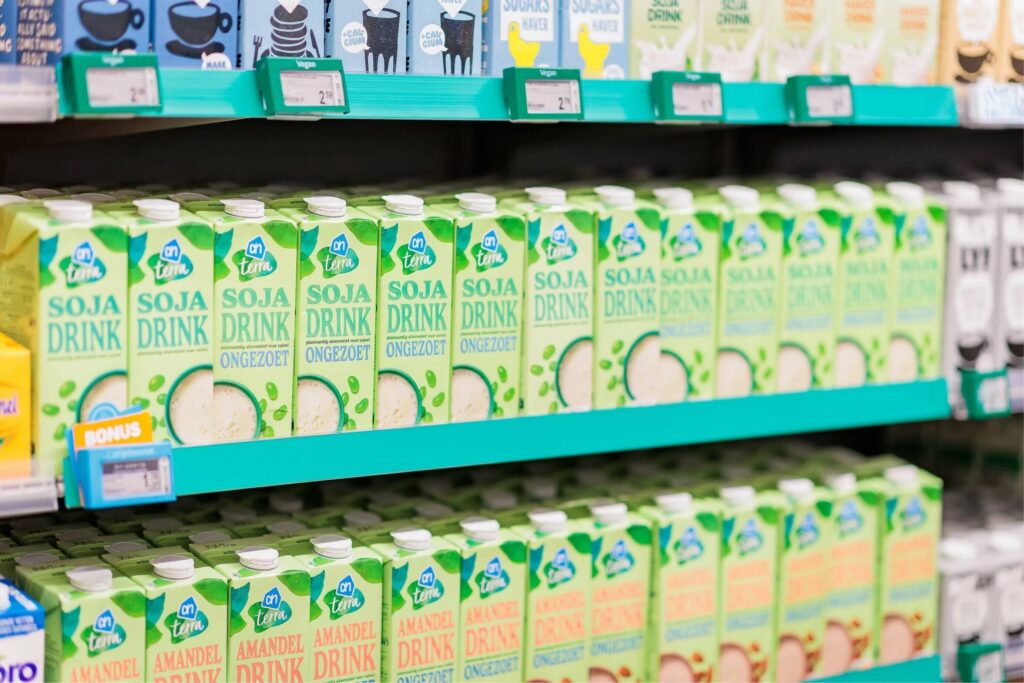
Many plant-based alternatives at Albert Heijn are cheaper than their conventional counterparts, and over 25% of vegan products receive price promotions for members of its premium subscription service. Plus, it has the most extensive range of blended proteins of any supermarket globally, offering more than 15 products, from sausages and deli meats to milk and yoghurt.
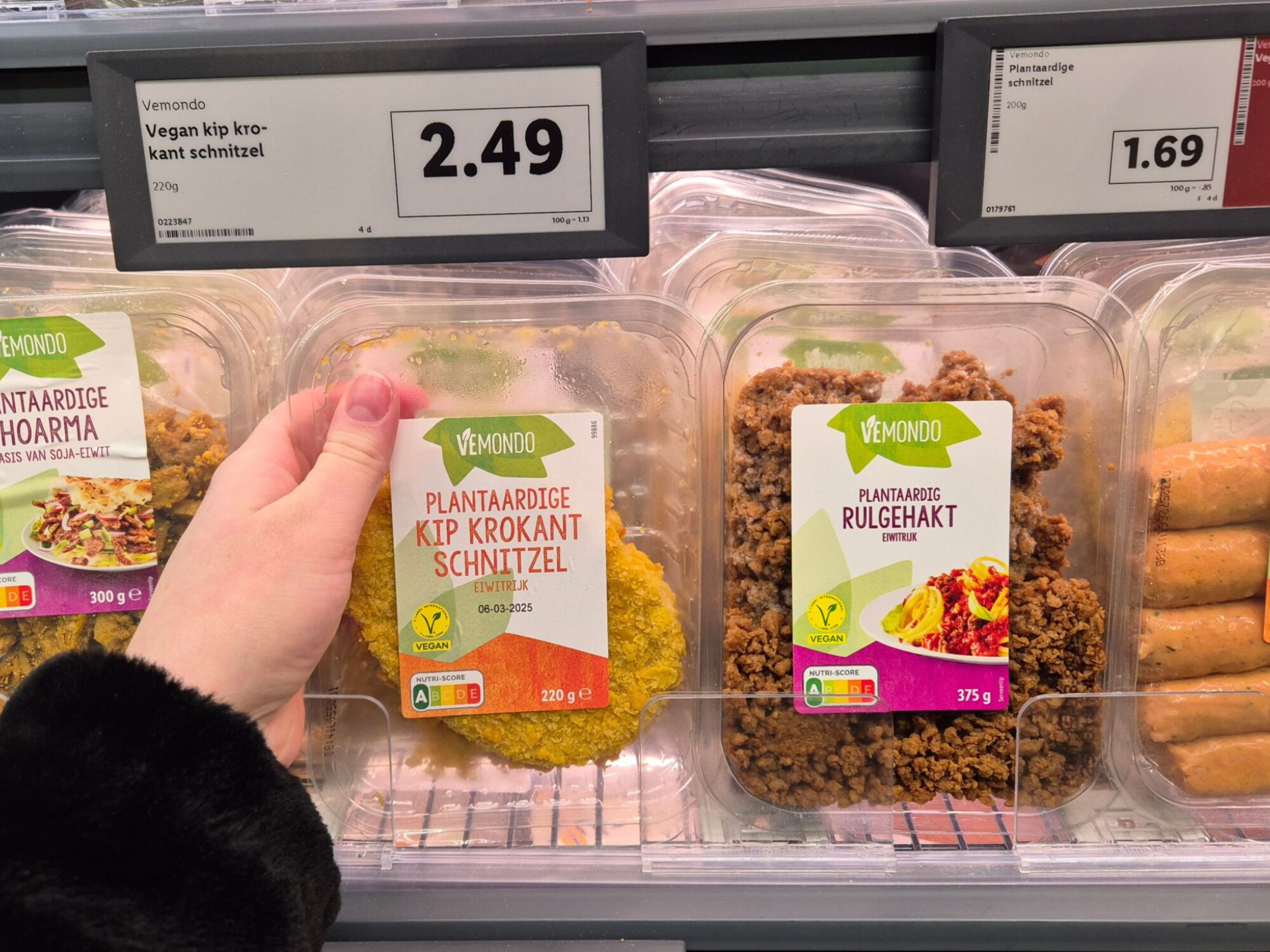
Lidl, meanwhile, shifted meat analogues to the meat aisle and found a 7% increase in purchases. It has pioneered blended meat (with a 60-40 beef-plant patty) as well as price parity, making all plant-based alternatives cheaper than or the same price as conventional meat and dairy.
The discount retailer has a global goal to increase sales of plant-based food by 20% by 2030, in addition to its Dutch-centric target of achieving 60% of protein sales from plant-based sources in this time.
Government urged to provide financial support for protein transition

The Dutch government is targeting a protein consumption split of 50% plant-based and 50% animal-derived by 2030, and many supermarkets have gone beyond to set more ambitious targets.
And earlier this month, the Health Council of the Netherlands updated the national dietary guidelines to lower per capita red meat intake from 475g to 200g per week, and instead increase the consumption of legumes by fivefold (to 250g per week).
The new recommendations call for a greater intake of nuts too, and noted that meat and dairy alternatives “can fit into a healthy and sustainable diets”. According to CBL, the guidelines show that “plant-based foods are playing an increasingly important role in a healthy diet”.
It suggested that retailers will continue to double down on the protein transition in the coming years, both through individual operations and jointly with various partners in the food chain. However, the transition remains challenging.
“Despite the efforts of supermarkets, the shift towards more plant-based food is not yet sufficiently taking off,” said Balogun. “This is due to a combination of factors, including consumer behaviour and existing preferences, price and economic considerations, and limited social support and education surrounding the protein transition.”
CBL is in regular contact with advocacy groups like the Green Protein Alliance, the World Wide Fund for Nature, ProVeg International, the Food Transition Coalition, and Questionmark. Working with them enables supermarkets to communicate to consumers more broadly and effectively, but policy support is necessary to accelerate the protein transition.
“The government also plays an important role in this, both as a policymaker and in raising public awareness,” said Balogun. “The supermarket sector, therefore, asks the government for active support of the protein transition.
“This can be done, for example, by increasing support and knowledge among citizens through public campaigns and education, providing financial incentives that make sustainable and plant-based choices more attractive, and collaborating with businesses and civil society organisations.”