

After Years of Infighting, France Urges Its Citizens to Eat Less Meat


The French government has updated its national dietary guidelines, which recommend limiting meat and increasing plant-based protein consumption to improve public and planetary health.
It took three extra years, but France finally got there.
The land of beef bourguignon has published a long-awaited update to its dietary guidelines, which set out the government’s goal of achieving healthy diets, reducing food-related emissions, and boosting food security through to 2030.
Developed under the National Nutrition and Health Programme (PNNS), the headline recommendation of the new guidance is sure to ruffle more than a few feathers in the country.
The National Strategy for Food, Nutrition and Climate advises French citizens to limit consumption of meat (including processed meat) and actively reduce their intake of imported meat. At the same time, this should be complemented by an increase in the share of plant-based proteins.
It is a welcome yet cautious recommendation, having been the sticking point of the negotiations that postponed the publication of the update.
“We’re relieved this plan was published, we were really worried it would be dropped,” Stephanie Pierre, a national advisor at patients’ health association France Assos Sante, told AFP. “But we were hoping for a much more ambitious plan.”
Climate concerns behind meat limitation advice

France’s dietary guidelines were drafted jointly by the ministries of health, agriculture and the environment, and aim to “encourage dietary choices that are beneficial for health and respectful of the environment, while reducing inequalities in access to sustainable, high-quality food”.
The publication wasn’t a straightforward affair. The guidelines were initially set to be unveiled in 2023, then went through several rounds of delays due to internal disagreements, primarily over the verbiage of the meat recommendation.
The agriculture ministry wanted to use the term ‘limitation’, but the environment ministry preferred the word ‘reduction’. The prime minister’s office floated a different approach, which would replace the idea of lowering meat intake with a strategy of “balanced meat consumption”.
Last September, then Prime Minister François Bayrou reportedly blocked the draft over these disagreements. In November, a new draft softened this language to only advocate for a limiting of meat consumption, though this was postponed too, after MPs raised concerns about the removal of the term “limiting ultra-processed products” from the text.
The final document, published this week, marks a compromise between the differing opinions, discouraging meat produced overseas while limiting overall meat consumption. At the same time, it asks French people to eat a diet focused on fruits, vegetables and whole grains.
To justify these recommendations, the government stated how agriculture is responsible for a quarter of France’s greenhouse gas emissions, with meat production accounting for two-thirds of this share. The reliance on imported proteins like beef “contributes to deforestation” and threatens the country’s food sovereignty.
“Eating better means taking action for the planet, our health, and supporting quality agriculture: by choosing local and sustainable products, we reduce our carbon footprint, protect biodiversity, and value the work of our farmers,” said Environment Minister Monique Barbut.
France takes a stand after years of meat advocacy
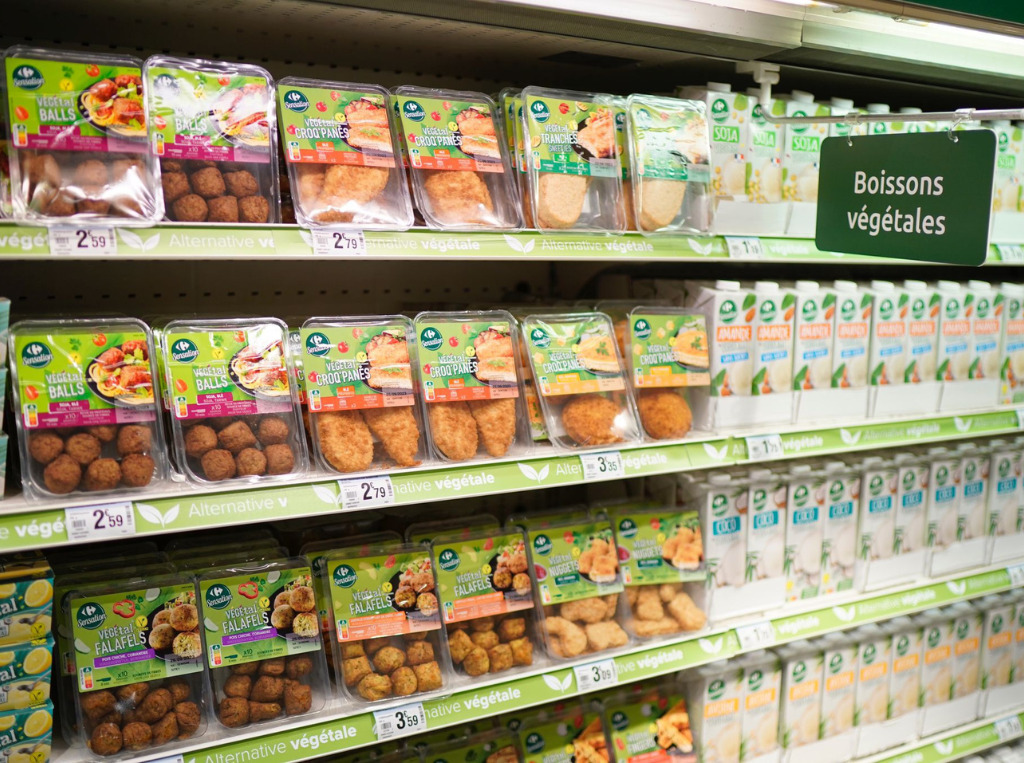
The French government said its new dietary guidelines aligned “with other national plans related to food and nutrition”. Indeed, over the last couple of years, its counterparts in Finland, Norway, Germany, Austria, and the Netherlands have all championed a reduction in meat intake, albeit much more emphatically.
That said, the US’s latest guidelines have failed to embrace science, overturning decades of evidence-based recommendations by promoting red meat, tallow, and full-fat dairy, and ignoring advice to prioritise plant proteins. They have since been heavily criticised and faced calls for a revision.
France, for its part, has managed to evolve its stance on plant proteins, despite being home to one of the world’s most powerful livestock lobbies. Its government has unsuccessfully tried to impose a labelling ban on plant-based meat twice since 2023, and it was French MEP Celina Imart who kickstarted another such attempt at the EU level, which is currently under discussion.
And last year, the national food safety agency recommended banning soy-based products in mass-catering settings such as schools, corporate cafeterias, and daycare facilities.
That said, France has invested €11.7M in 10 projects to expand domestic plant protein production, as part of the agriculture ministry’s National Strategy for Plant Proteins. It aligns with the 35% of French residents who rate legumes and pulses among the richest sources of protein, and the two-thirds who eat foods like beans, grains, lentils and wheat weekly.
In fact, meat consumption has been steadily declining in France over the last two decades, and one survey revealed that 53% of its citizens have cut back on meat in the last three years alone. At the same time, sales of plant-based food grew by 9% in 2024 to reach €537M, making it the third-largest market for these products in Europe. Chilled meat alternatives recorded a 15.5% growth.
Agriculture and food sovereignty minister Annie Genevard, who targeted the term ‘veggie steak’ in a labelling debate at the EU’s Agriculture and Fisheries Council last year, said the new dietary guidelines mark a “new stage” in the transition towards a healthy and sustainable food system.
“It presents clear objectives for 2030 and concrete actions to achieve them,” she said. “This is an important step to strengthen our food sovereignty by influencing consumer behaviour, particularly to promote markets for sustainable and high-quality agricultural production from our regions.”