

Eat Foundation, Creator of the Eat Lancet Planetary Health Diet, to Wind Down Operations

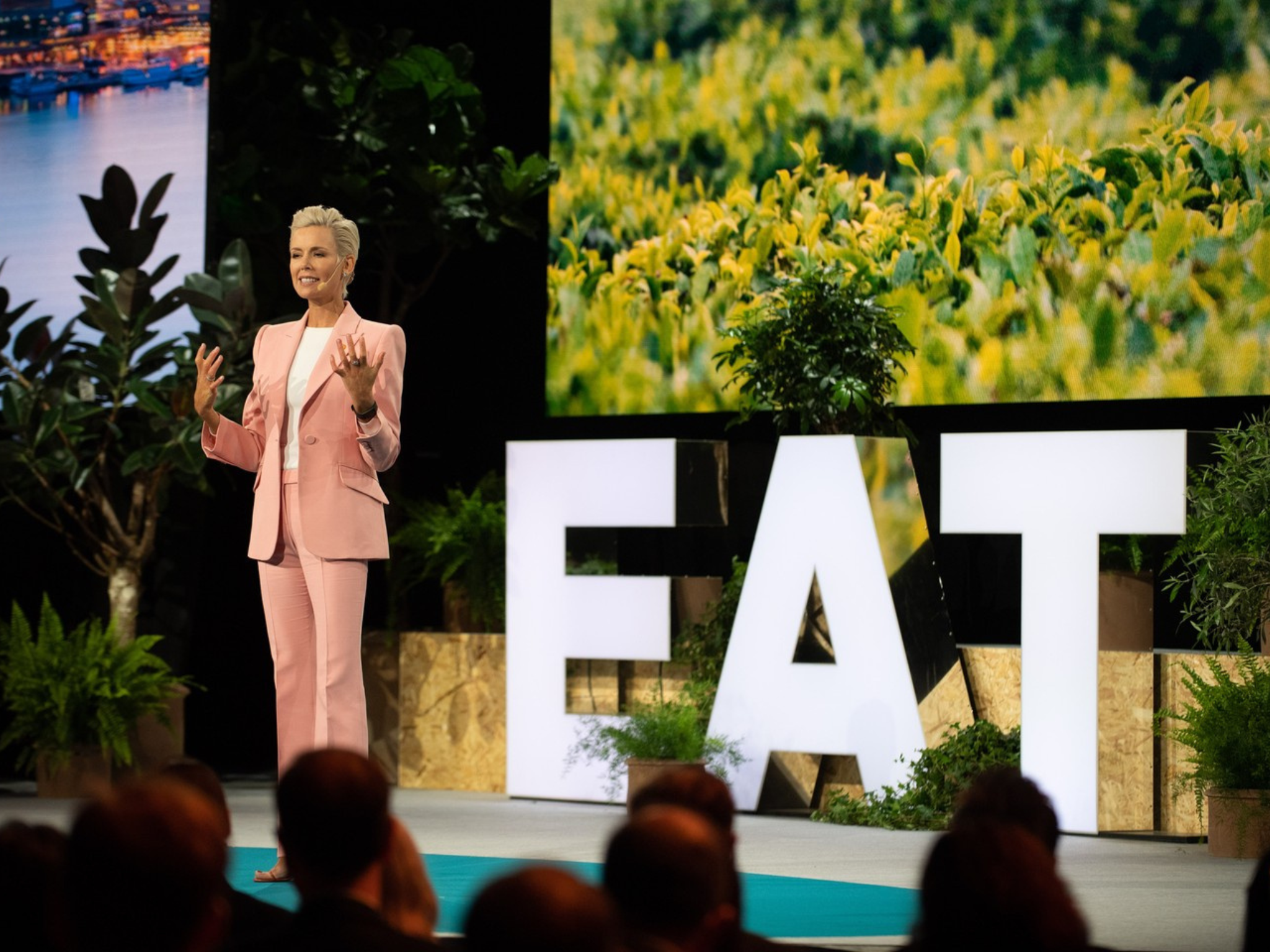
Norwegian food systems non-profit Eat Foundation will discontinue operations in its current format amid a significant shift in the global donor landscape.
Eat Foundation, one-half of the research body that created the Planetary Health Diet, has announced that it will wind down this year and explore new pathways for its flagship initiatives.
The Oslo-based non-profit, one of the leading authorities on the intersection of food, health and climate, ascribed the decision to a “profound change” in the funding priorities and conditions of the international donor landscape.
“We have succeeded in many things and achieved important goals, but when the world changes, we must also change,” said EAT co-founder and executive chair Dr Gunhild A. Stordalen. “We must therefore rethink how we can contribute to the transformation that is more urgent than ever.”
The impending closure doesn’t spell an end to Eat’s pioneering work, with its board actively exploring new pathways and models with “aligned actors and donors” to enable its flagship initiatives to continue and, where possible, scale beyond the current setup.
A pioneer of food systems transformation
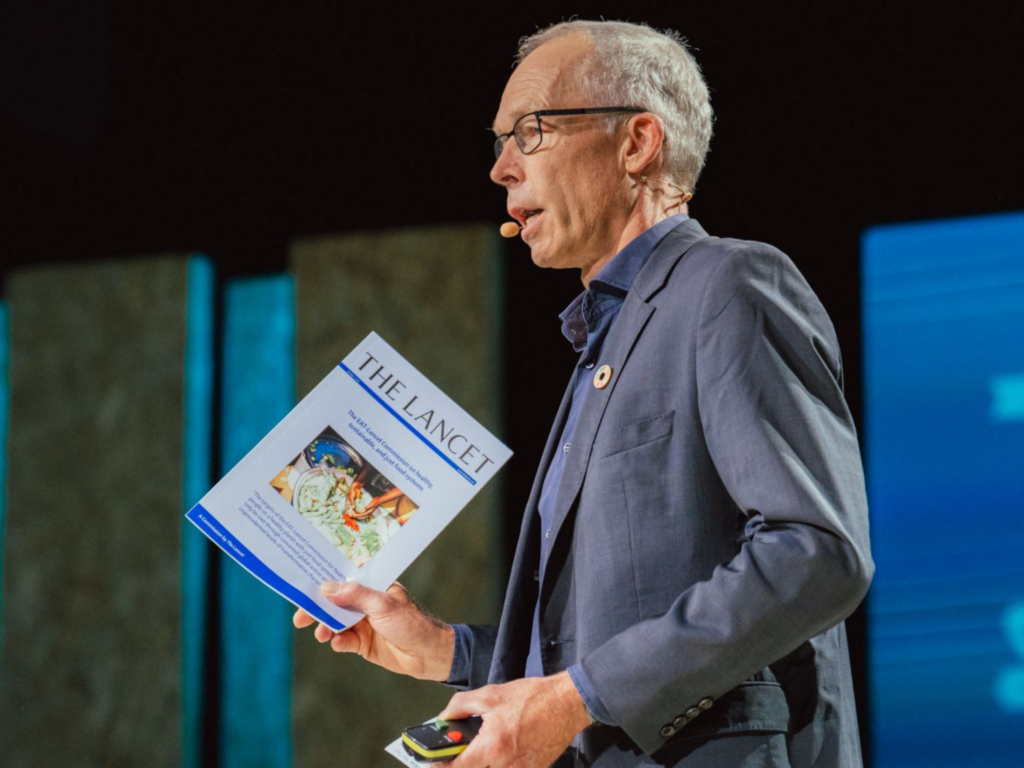
Eat was founded by Stordalen and Johan Rockström (who co-designed the Planetary Boundaries Framework) in 2013, before being established as an independent foundation three years later by the Wellcome Trust, the Stockholm Resilience Center and the Strawberry Foundation.
Its work on food systems transformation has helped shape research, policy and practice across the world, including the widespread uptake of science-based targets and updates to national dietary guidelines.
The foundation has supported major science initiatives, including the Blue Food Assessment (2023) and the Food Systems Economics Commission (2024), and convened platforms like the Stockholm Food Forum. Last year, Eat and partners launched 10 global Communities for Action, engaging hundreds of organisations to identify actionable pathways and address systemic barriers to change.
All these aside, the initiative the organisation is best-known for is the Eat-Lancet Commission, a scientific body of world-leading food, health, sustainability and policy experts created in collaboration with peer-reviewed journal The Lancet.
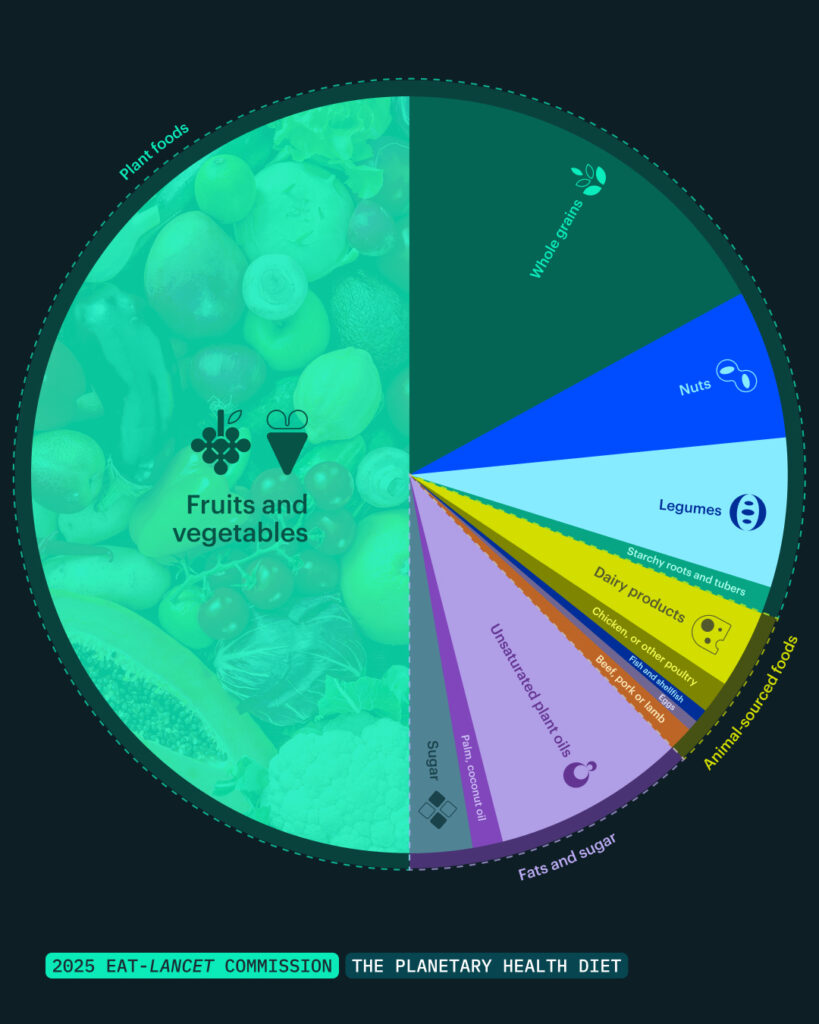
In 2019, the Commission published its first report on the future of the food system, highlighting how the world can feed a population that will inch close to 10 billion by 2050. It marked the debut of the Planetary Health Diet, which emphasised a plant-rich eating pattern.
It recommended that fruits and vegetables should make up over half of people’s diets, while whole grains, plant proteins and plant oils should account for over a third. Animal proteins like dairy, meat and seafood should make up only 3.6% each.
Subsequent independent studies suggested that the Planetary Health Diet could lower global food-related emissions by 17% and reduce the risk of death by 30%.
Last year, the Eat-Lancet Commission published an update to its flagship report, reiterating the Planetary Health Diet as a way to prevent over a quarter of early deaths from happening every year, reduce emissions by over a third, and lower the amount of money people spend on food.
Eat looks to preserve flagship initiatives
The Eat-Lancet Commission’s reports were so influential that there was a concerted effort from livestock industry interest groups to discredit their findings, both before and after their publication. On the other hand, the world’s leading food and climate experts have largely praised the work.
“The Commission provided clear evidence on how the food system could simultaneously achieve both dietary and environmental goals and set a new benchmark for evidence‑based ambition,” said John-Arne Røttingen, CEO of the Wellcome Trust.
Rockström, who co-chairs the Commission, said: “Eat has shown what becomes possible when science is connected to decision-makers and doers across the system. The need for evidence-based pathways has not diminished – it has grown.”
In a blow to sustainable food policy, the foundation’s board said its existing organisational and funding model is “not sufficiently resilient” for sustainable and ambitious growth in the years ahead, and has agreed on a set of immediate steps to initiate an “orderly wind-down” of the Norwegian legal entity.
Eat said its essential documentation will be securely archived and key scientific outputs will remain accessible through partner institutions and established publication channels. Additionally, it’s exploring partnerships to enable flagship programmes and future work to continue in new channels.
“Although no concrete arrangements have been agreed, there are encouraging indications of interest in sustaining projects that have delivered significant impact over the past decade,” said Stordalen.
She added: “The challenge hasn’t gone away. If anything, it’s more pressing, and the next chapter must be built to scale solutions in a way that is sustainable and fit for the world we are in.”