

Starbucks Brings Protein Drinks to Europe, Including Lattes with Alpro Soy Milk

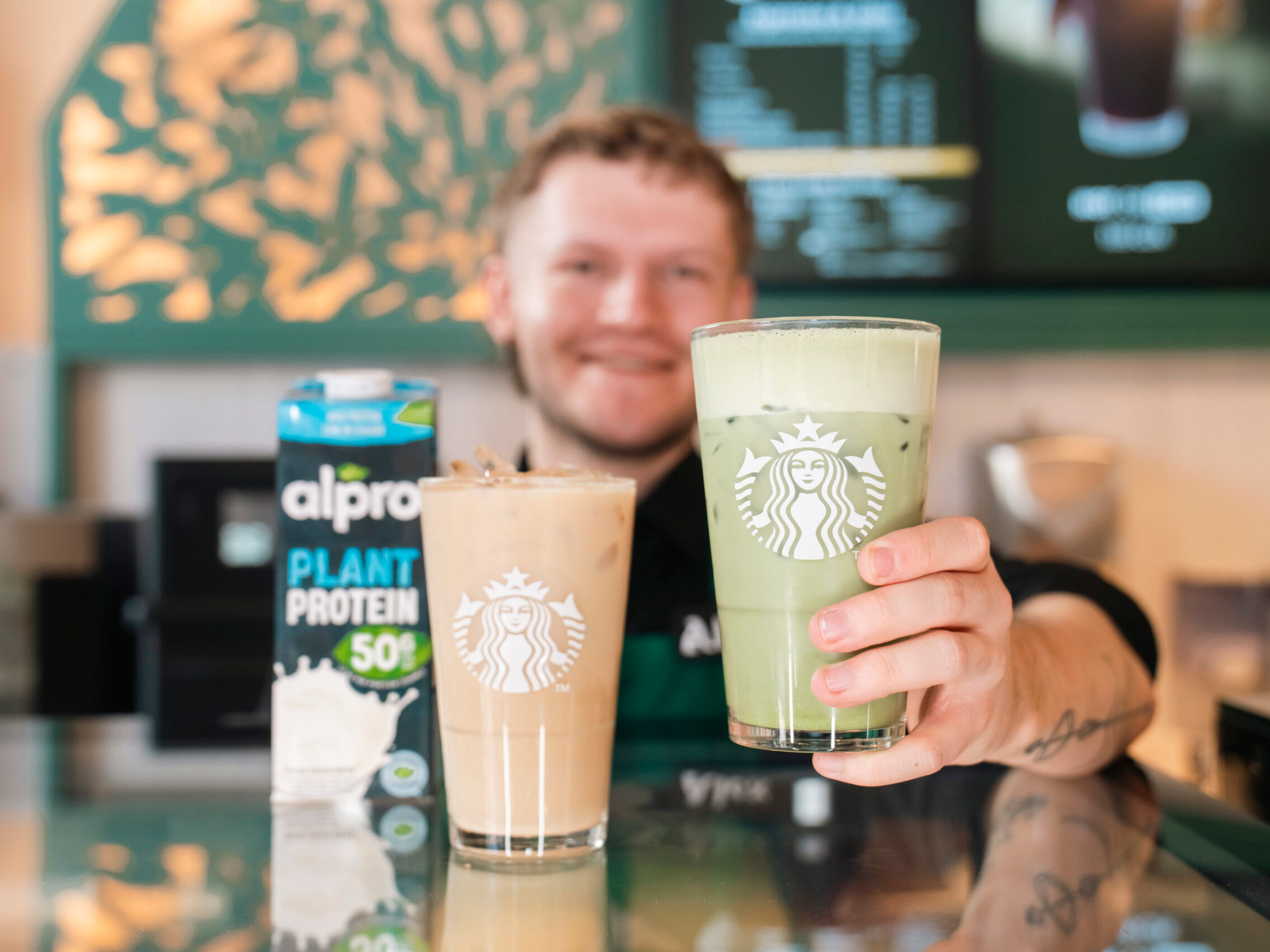
Starbucks has teamed up with Danone to launch protein lattes featuring Alpro’s protein-boosted soy milk in Central Europe. Plus, it has introduced protein cold foams in EMEA, although they’re not plant-based.
Following rollouts in North America and India, Starbucks’s protein-boosted lattes have finally come to Europe – and they’re plant-based.
The coffee chain has partnered with Danone to offer two new beverages made with Alpro high-protein soy milk, which provides 5g of protein per 100ml, across all its locations in Central Europe. These are operated by AmRest, which runs over 450 Starbucks stores in eight countries.
The new drinks – a sugar-free vanilla latte and a matcha latte made with soy milk – can be ordered hot or iced and contain 8-22g of protein, depending on the size.
True to Starbucks’s customization ethos, customers can choose to swap dairy with Alpro’s protein soy milk in any milk-based drink – from flat whites to Frappuccinos – free of charge until April 21.
In addition, the coffee chain has launched protein-rich cold foams across its Europe, Middle East and Africa (EMEA) stores, which add 15g of protein to any iced drink. However, despite its decision to opt for a plant-based protein option for the lattes in Central Europe, these foams are made with whey protein instead (echoing the strategy in the US).
Alpro soy milk brings more protein to Starbucks lattes than dairy
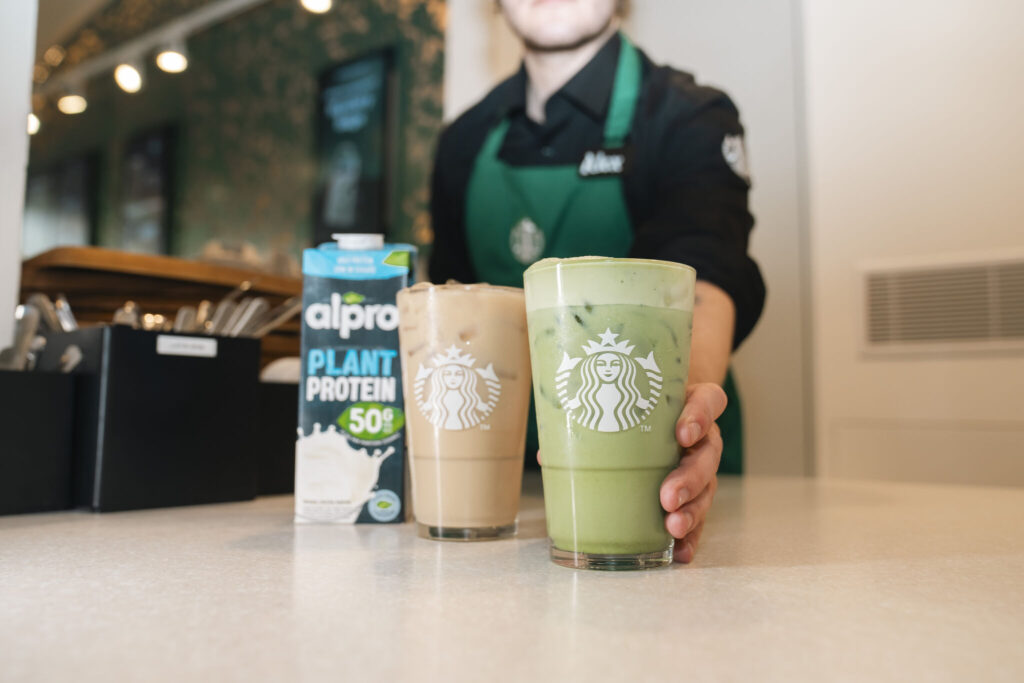
Alpro’s high-protein soy milk offers a higher macronutrient ratio than cow’s milk or conventional plant-based alternatives. The company achieves this simply by elevating the amount of soybeans it uses in the product, from 8.3% in its regular soy milk to 13.1% in this protein-rich version.
While the company doesn’t market it as a barista-friendly option, soy milk tends to froth naturally, and this product contains an acidity regulator to prevent splitting when added to espresso. Starbucks’s embrace of the milk further confirms its coffee potential.
The protein lattes are available in countries including Germany (the largest market for plant-based food in Europe), Poland, Slovakia, the Czech Republic, Hungary, and Romania.
“Today’s customers are looking for beverages that offer great taste and added benefits,” noted Grzegorz Kazmierczak, Starbucks’s regional operations director for Slovakia and the Czech Republic. “Collaborating with Alpro allows us to meet this need and introduce plant-based protein options that naturally fit into our customers’ daily routines.”
The move means a Grande sugar-free iced vanilla latte can now provide consumers with 11.3g of protein, rising to 16.6g for the hot version. The matcha lattes have a slightly higher concentration of the macronutrient, maxing out at 22.7g of plant protein with the Venti-sized hot version.
It comes as demand for protein in Europe mirrors that in other parts of the world. According to Innova Market Insights, half of Europeans are actively seeking to add more protein to their diets, in various formats and for a range of occasions, to enhance their overall health.
“We’ve noticed that our guests are increasingly looking for beverages that not only taste good, but also fit into their daily choices and lifestyle. That’s why we are expanding our offerings to include plant-based milk alternatives with added protein,” said Olga Wettler, communications manager for Starbucks Central Europe, who called it a step towards a more “tailored and contemporary” coffee experience.
Starbucks’s plant protein bet hindered by whey inclusion in cold foams

The protein lattes came months after the Seattle-based company launched its first in-store protein drinks in the US and Canada, which included lattes and cold foams made with whey protein. It was followed shortly by the rollout of protein cold foams in India, where Starbucks collaborated with Bollywood star Ranveer Singh’s SuperYou, a producer of fermented yeast protein.
The bet on alternative proteins in Europe reflects customer preferences in the region. Innova Market Insights suggests that these consumers value the plant-based category for its nutritional benefits more than other factors, and that over half of them consider it a standalone product (rather than a substitute for animal protein).
Fibre is another major selling point, while digestibility and additional health benefits are further driving consumers to choose plant-based products on the continent.
“We are thrilled to be partnering with Starbucks to bring our Alpro ‘plant protein’ soy drink to customers in a whole new way,” said Jana Petrová, head of plant-based for Central and Eastern Europe at Alpro. “Our partnership celebrates innovation in plant-based beverages and gives customers more opportunities to recharge with low-sugar plant-based protein drinks.”
Starbucks’s choice of soy milk for the lattes is a strong signal of the potential of alternative proteins in Europe. It would also have helped enhance its efforts to halve greenhouse gas emissions by 2030 had it not been for the decision to use whey in its cold foams across the wider EMEA region (which includes the UK).
These are available in caramel and sugar-free vanilla flavours, and can top drinks like lattes, matcha, and Americanos. “We’ve launched several premium, hype-worthy protein beverages that tap into growing consumer demand for protein, innovating with our high-quality arabica coffee to develop new, modern, relevant products that resonate with our customers,” said Dan Saxby, beverage product developer for Starbucks EMEA.
As of the 2024 financial year, the company’s full-scope emissions had increased by nearly 3% since 2019, the baseline year for its sustainability plan. And the share of emissions from buying fluid dairy has remained steady at 13% (in contrast with green coffee purchases, which are down by three percentage points). In fact, 6% of its scope 1 and 3 emissions come from methane released by dairy farms.
Starbucks could have opted for a plant-based protein or a yeast-derived option (as it has in India) for the cold foams in the EMEA region, aligning with its climate goals. Still, the partnership with Alpro represents a win for the plant-based dairy sector, which could see greater consumer uptake as a result.