

Bike-Thru: Oatly Reinvents Coffee Drive-In with Amsterdam Kiosk Stunt

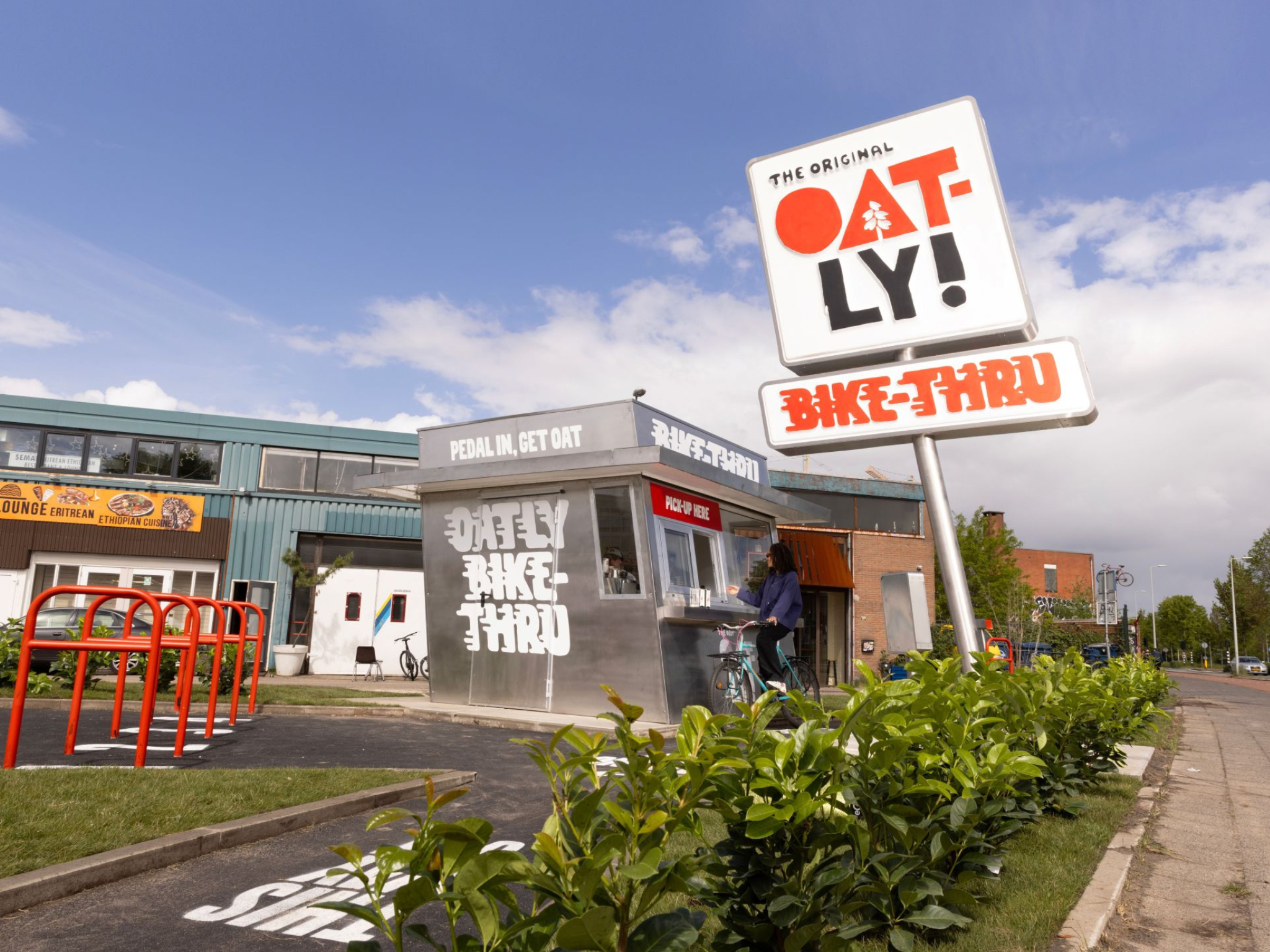
In its latest coffee-centric brand activation, Oatly has opened a “bike-thru” pop-up in Amsterdam, offering the city’s bikers a rotating menu of oat milk creations.
Oatly’s latest stunt to push its taste-led strategy involves some of Europe’s best coffee roasters, a spate of signature drinks, and bikes.
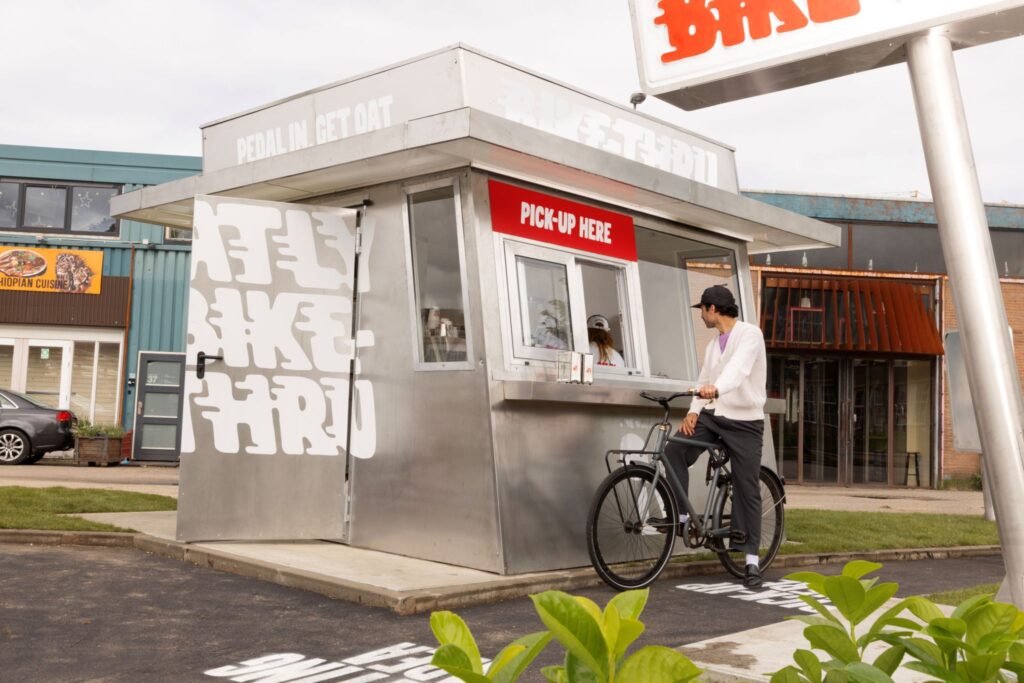
The oat milk producer has set up a “bike-through” pop-up in Amsterdam, a first-of-its-kind concept that ditches high-emission four-wheelers in favour of the Dutch capital’s vehicle of choice.
Between May 15 and June 7, Oatly is hosting a rotating lineup of coffee roasters and innovative creations featuring its oat milk products, available for purchase through a dedicated lane without leaving their bikes.
“What if the best way to change behaviour wasn’t to ask for it, but to design for what already exists? In Amsterdam, that means bikes,” Christiaan van Doornik, Oatly’s general manager for the Benelux region, said in a LinkedIn post. “So, we built the Oatly Bike-Thru: a simple shift in perspective, removing friction entirely and meeting.”
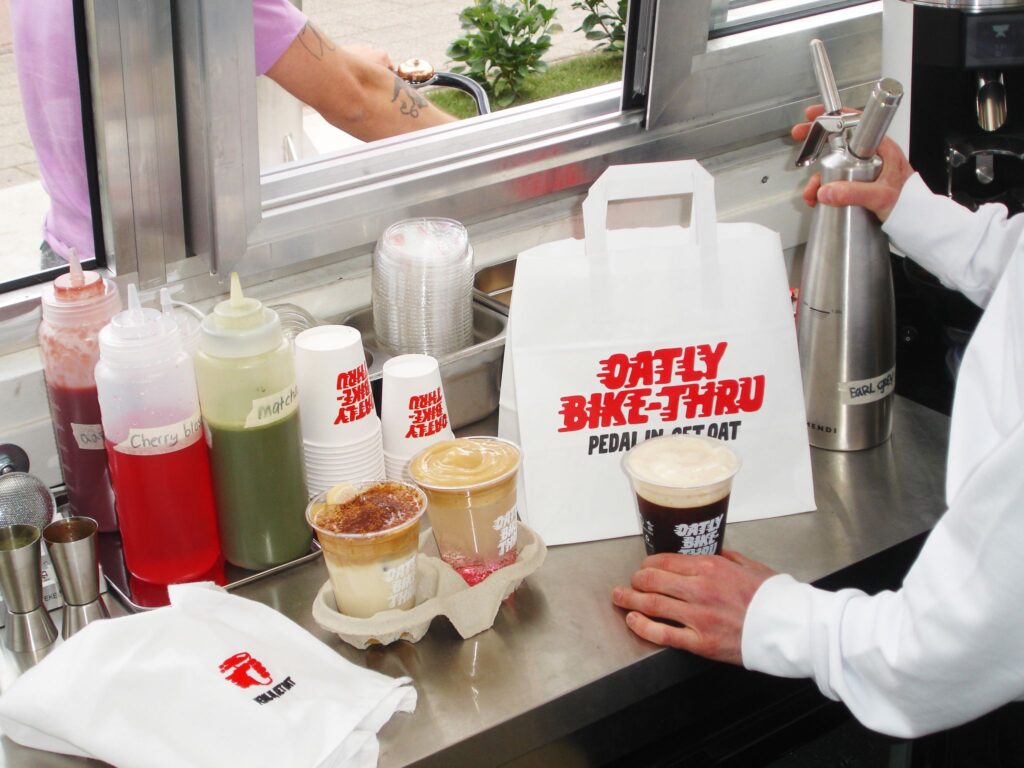
Coffee roasters bring signature drinks to Oatly’s bike-thru
Amsterdam is the cycling capital of the world, with more bikes than residents and 400km of dedicated bicycle paths. This is a big part of why it’s one of the most sustainable cities globally, a fact that has not been lost on Oatly.
“We believe that sustainability doesn’t have to be boring, preachy, or inconvenient. By adapting the drive-thru model to the local culture, our Bike Thru simultaneously shows how delicious specialty drinks with oat milk can be and what a future could look like where convenience doesn’t automatically have to go hand in hand with emissions,” said van Doornik.
“Moving sustainably should feel logical, not forced. Amsterdam had already chosen the bike. We just cycled towards the city,” he added.
Oatly describes the bike-thru as a “fast-drink restaurant where you pedal in, place your order, and get oat”. It’s located at Papaverhoek 24, and will feature a range of coffee roasters from across Europe.
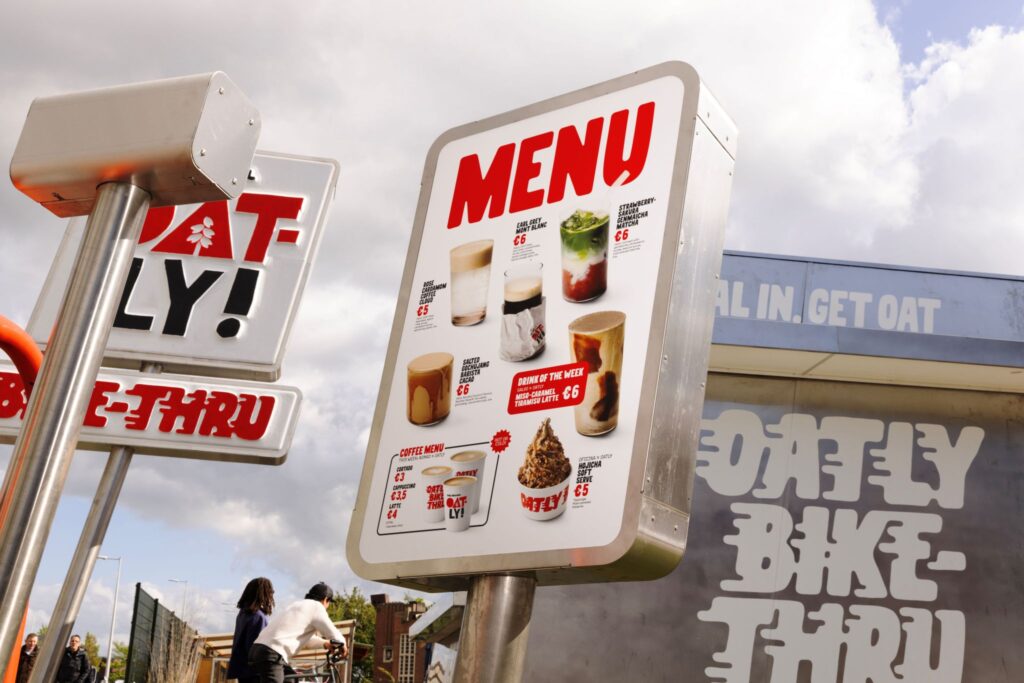
Barcelona’s Nomad has taken over the pop-up from May 15-22, with a signature miso caramel tiramisu latte. It will be followed by Copenhagen roaster April until May 29, which will sell a shakerato-style drink with woodruff cold foam.
Brussels-based Wide Awake will unveil a mystery drink during its run from May 30 to June 7, while Amsterdam’s Dak Coffee Roasters will join for the final weekend (June 5-7).
Aside from the weekly signature drinks, cyclists can grab concoctions like rose-cardamom coffee cloud (which appeared in one of Oatly’s recipe lookbooks), salted gochujang barista cacao, Earl Grey Mont Blanc, and strawberry-sakura genmaicha matcha. The oat milk maker has also teamed up with Oficina to offer hojicha soft serve throughout the bike-thru.
Taste strategy dovetails with Amsterdam’s sustainability credentials
The Amsterdam campaign is part of Oatly’s flavour-forward marketing strategy, which is patterned on the fashion industry and has spawned a Future of Taste trend report and the aforementioned seasonal lookbooks.
These feature innovative drinks to showcase the versatility of Oatly’s products and court Gen Z consumers, with an emphasis on café and barista collaborations.
“This is not just an activation. It’s a live expression of our taste strategy, proving that what we make matters as much as when and where it’s experienced,” van Doornik said on LinkedIn.
“By collaborating with local tastemakers, we’ve created a rotating menu of oat-based signature drinks rooted in culture, shaped by the city, and designed for everyday life.”
Sustainability has always been a focal point for the Swedish firm – it was the world’s first food and drink producer to be named a ‘climate solutions’ company. So choosing Amsterdam, one of the world’s most climate-friendly cities, for its marketing drive is a shrewd move.
The city has a goal to reach net-zero emissions by 2050 and to increase the share of plant-based protein consumed by residents from 40% to 60% by the end of the decade.
And this month, as part of its efforts to encourage plant-rich diets and greener mobility to lower its climate impact, it became the world’s first capital city to ban ads promoting meat and fossil fuels. The measure applies to city-owned properties and public spaces, such as billboards, bus stops, train and tram stations, and all public transport vehicles.