

Brazilian Researchers File Patent for Waste-Fermented Aromas to Enhance Plant-Based Meat

Researchers in Brazil have developed a fermentation process that turns food waste into natural aromas that could be used to enhance the flavour of products like plant-based meat.
Can food waste become a catalyst for tastier meat alternatives?
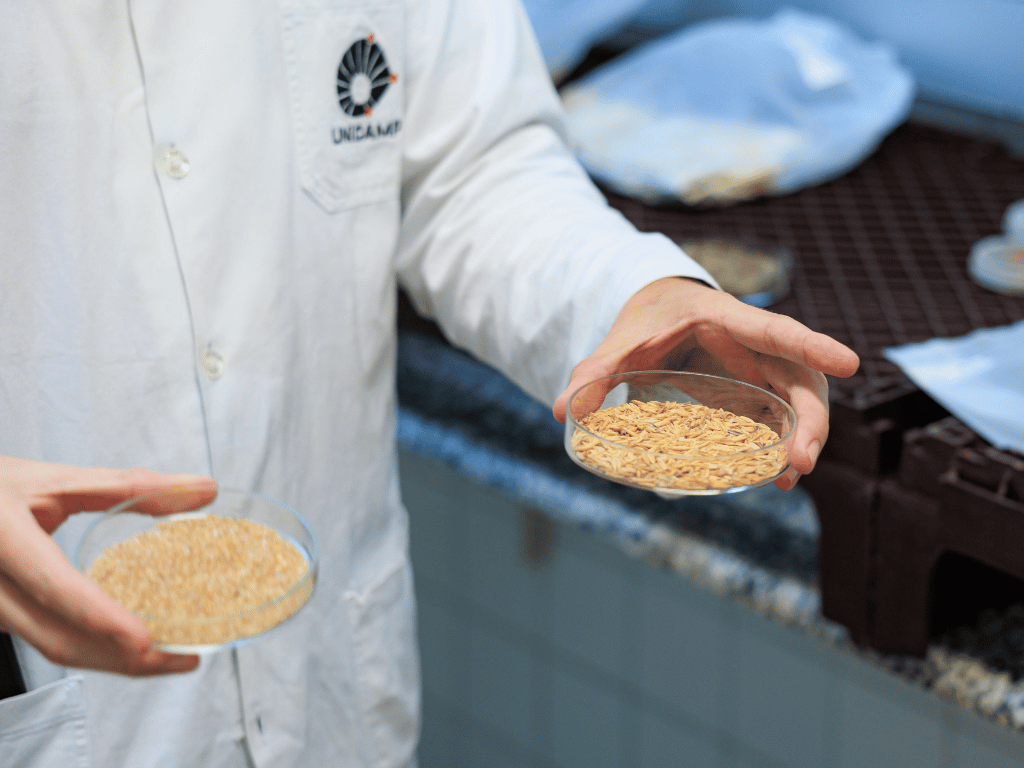
The Universidade Estadual de Campinas (Unicamp) and the Good Food Institute (GFI) Brazil have filed a patent application with the World Intellectual Property Organization for a fermentation process that valorises plant waste like potato peels, oat husks and açaí residues to create an aromatising agent for use in a range of products.
By using solid-state fermentation, they can turn these sidestreams into an ingredient that smells like passionfruit. Heating it turns the aroma meaty, which could boost the flavour of plant-based alternatives that suffer from a perceived inferior sensory profile without relying on artificial additives.
Why solid-state fermentation is ideal for aroma extraction

The patent submission notes how aroma is a crucial element in the acceptability of a product. Currently, aroma production is mostly carried out through chemical synthesis, which often involves the use of non-renewable resources and large amounts of energy, as well as generates waste.
“According to the legislation of several countries, aromas obtained through chemical synthesis are not considered natural,” the filing states. “This context represents a challenge for a wide variety of industries, such as food, animal feed, pharmaceuticals and cosmetics, considering the growing consumer preference for products with natural ingredients.”
Natural aroma is often described as that derived from natural sources or biotechnological processes. The researchers point out how passion fruit aroma can be obtained through extraction or enzymatic processes, but both have limitations, from low concentrations and high costs, to long processing times and susceptibility to seasonality.
Meat aromas can be obtained synthetically, too, by heating a mix of amino acids; however, the non-natural aspect goes against what consumers are looking for. Submerged fermentation is another solution, though quantity is a limitation here.
Solid-state fermentation, where microbes are grown atop an inoculated solid surface, overcomes the shortcomings of non-natural processes as well as extraction from natural sources, since it’s a sustainable solution that isn’t susceptible to seasonality.
The researchers’ process simulates the natural habitats of the fungal strain Trametes villosa, enabling the microbes to produce aromas in greater quantities than via submerged fermentation. They sterilised the solid fermentation medium and inoculated a solution containing fungal spores into this medium, which was then incubated at near-ambient temperatures for a specified period.
The invention enables the use of agro-industrial waste as a substrate, providing a more suitable destination for these byproducts. It also enables the fermented substrate to be used directly in the formulation of food, animal feed, and cosmetic products, without the need for a prior recovery and purification process.
Heating passion fruit ferment brings out meaty aroma
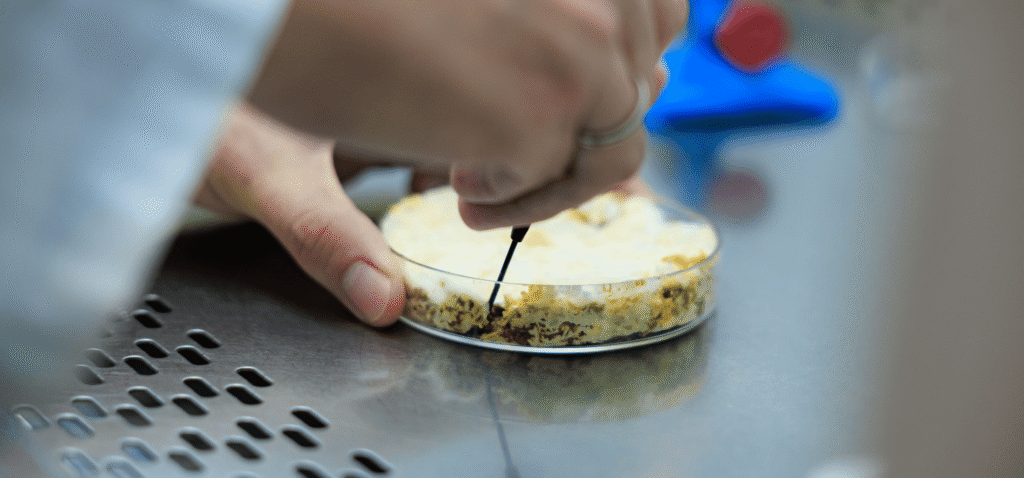
When the fungi are fed on potato peel, oat husk or açai residue, they produce an aroma similar to that of passion fruit. As for the meat-like aromas, the researchers sought to produce them using sulfur-rich substrates, without success.
They then found that heating the product of oat-husk-fermented fungi in a microwave for one minute alters the aroma of the passion fruit ferment to one resembling meat.
“Within the scope of the present invention, the product itself from fermentation with T villosa can be considered a food product for immediate application, ready for human or animal consumption,” the filing states.
“Alternatively, it can be used as an ingredient (for example, in dry, powdered form) in the formulation of a food product, imparting the aroma of passion fruit or meat products to the product in which it is added, as well as potentially providing other advantageous properties such as improved nutritional value and emulsification capacity.”
The innovation could be a game-changer for meat alternatives, which have witnessed a decline in sales in some leading markets as consumers remain unsatisfied with their flavour and overprocessed nature.
In the US, a large taste test by Nectar last year saw only 30% of participants like the average meat-free product, compared to the 68% who liked conventional meat. Off-flavours and a weird aftertaste were two of the leading weaknesses identified for plant-based meat.
Meat-free offerings were found to be savoury 35% less often and have a weird aftertaste or off-flavour five to six times more often than animal proteins. “These differences were associated with a 1.5- to two-point liking gap between animal and plant-based products,” Nectar director Caroline Cotto told Green Queen at the time, noting that flavour is the “biggest opportunity for plant-based as a whole to improve”.