

Korean County Debuts Plant-Based Leather Made From Discarded Melons

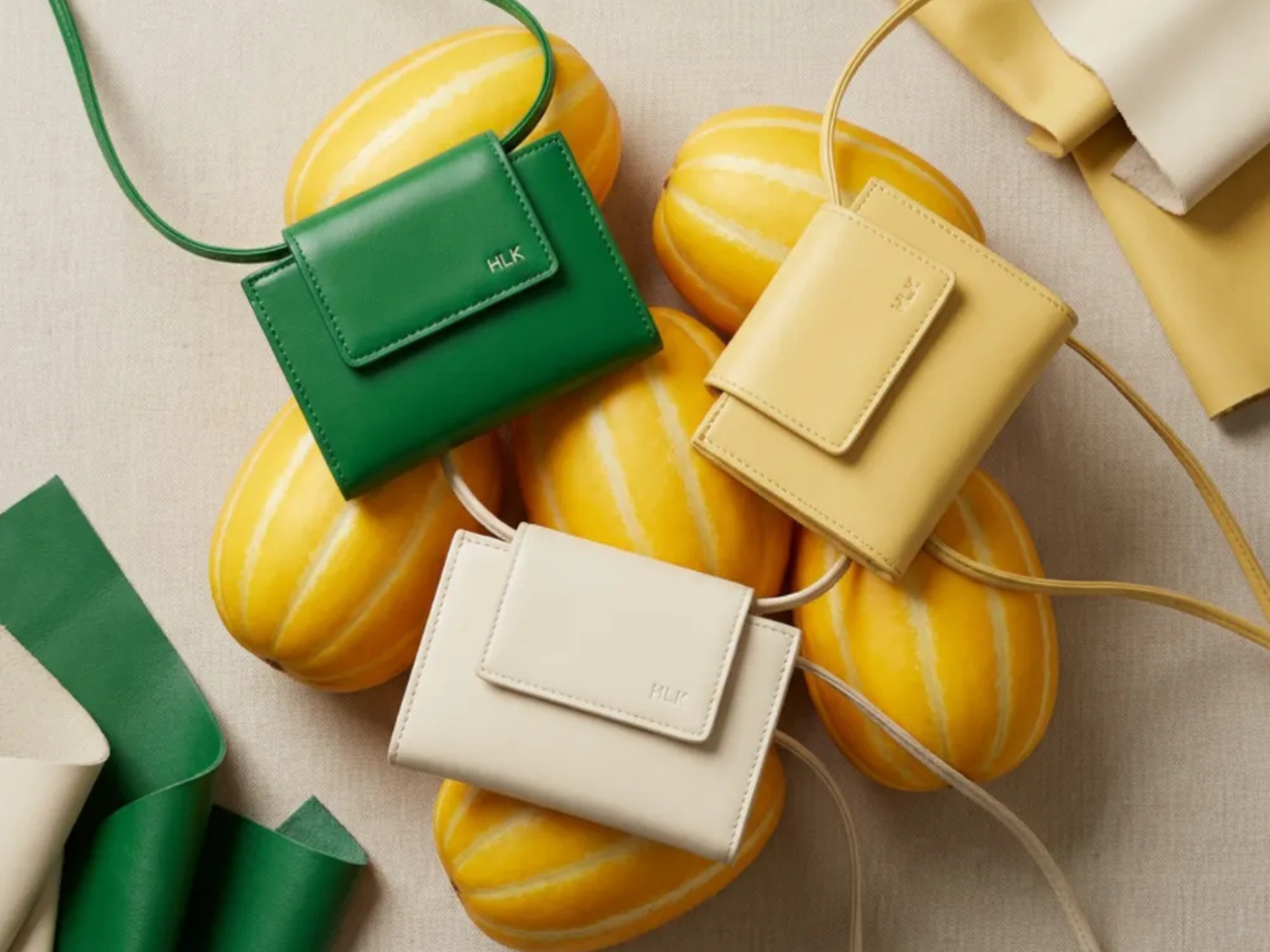
South Korea’s Chilgok County has created a plant-based leather alternative from discarded melon peels, with the aim of boosting farm incomes and the local economy alike.
As leather’s true climate impact speeds up efforts to commercialise sustainable alternatives, a county in South Korea has turned to one of the country’s most revered fruits for a solution.
Chilgok County, part of the North Gyeongsang Province, has developed a novel plant-based leather material from the peels of Korean melons otherwise destined to be thrown away.
“This is an example demonstrating that even agricultural products with low marketability can become a new industry when combined with ideas and technology,” said Chilgok County governor Kim Jaewook.
Saving melons and curbing river pollution with leather
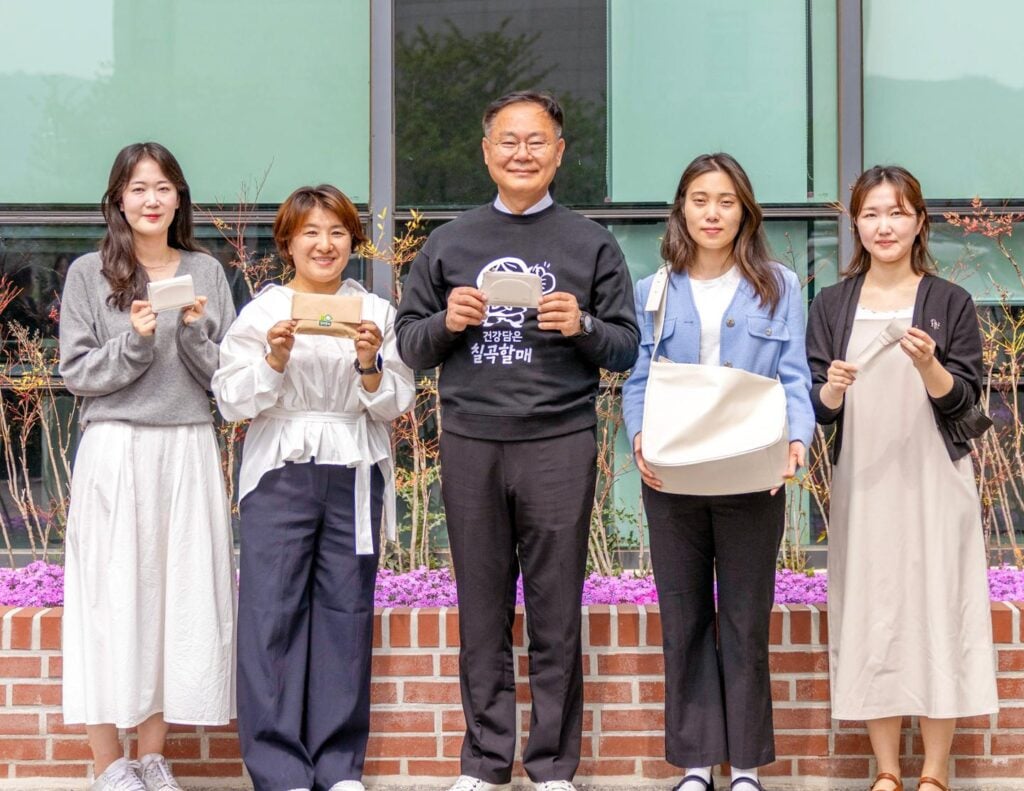
The county’s Agricultural Technology Center began research on the melon leather in 2024, looking to make use of discarded melons as a new industrial material.
In South Korea, melons deemed low in quality and unsuitable for sale are thrown away during the rainy season, with many flowing into the Nakdong River and causing all sorts of environmental problems. Even those purchased merely to stabilise prices were going to waste.
That became a major problem for Chilgok County, a top melon-producing region. Its efforts to upcycle wasted melons began with an approach that dried the whole fruit to make leather, but their high moisture and sugar content posed challenges in achieving the desired strength and durability of the finished material.
The county then pivoted to utilising just the peel as a raw material, setting aside the flesh for livestock feed. Following dozens of experiments combining dried and powdered peels with plant-based fabrics, its researchers created an eco-friendly leather alternative with 4% melon content.
They partnered with South Korean fashion atelier Harlie K to produce and commercialise the first prototype products with the melon leather, including bags, purses, wallets, pen cases, and business card holders.
Further refinements have seen the melon content increase to 10% this year, during which it has also obtained accreditation for the plant-based leather from the Korea Vegan Certification Institute, and reached crowdfunding goals for the material ahead of schedule.
Chilgok County looks to boost melon content and scale up production

Producing leather, meanwhile, is an energy– and water-intensive process linked to deforestation and biodiversity loss, and it generates many hazardous chemicals during tanning, which are detrimental to human health.
The fashion industry generates 8.3 million tonnes of methane annually (nearly four times as much as France), and leather alone accounts for 54% of this share, producing 110kg of CO2e per sq m when derived from cows.
This falls to 15.8kg for plastic-based synthetic leather, an 85% reduction. But plastic, derived from petrochemicals, is highly problematic: its production is responsible for 3.4% of global emissions; it takes 20 to 500 years to break down; and it sheds toxic microplastics that can enter waterways, destroying aquatic life and wreaking havoc on our food systems.
It’s why companies across the world are innovating with bio-based leather alternatives, whether from mycelium, plants, or cell culture. These include Uncaged Innovations, Ecovative, MycoWorks, Mushmycel, Faircraft, Qorium, and Cultivated Biomaterials.
For Chilgok County, utilising food waste is a shrewd move, considering that it accounts for up to a tenth of global emissions. Its material is currently produced at a local workshop and sold at Buksam Nonghyup’s Hanaro Mart. The county now plans to raise the melon inclusion rate to 22%, scale up production, and expand into industrial applications like automotive interiors.
“We will continue to spare no support to enhance the value of agricultural by-products through research and development, ensuring this leads to increased farm income and the growth of local industries,” said Jaewook.