

Qorium Rebrands to Reyva As It Eyes 2027 Launch of Lab-Grown Leather


Dutch alternative materials startup Qorium has changed its name to Reyva as it works to industrialise its lab-grown leather production and develop products with fashion and automotive brands.
A year after raising $25M to bring its lab-grown leather to market, Dutch startup Qorium has unveiled a new brand identity to advance its scale-up and commercialisation efforts.
The Maastricht-based firm is now called Reyva, a name it says marks an evolution from an emerging tech business towards becoming a global materials brand for the luxury leather space.
The name combines ‘re’ (inspired by reinventing leather) and ‘va’ (denoting forward movement), and also echoes ‘rey’, the Spanish word for ‘king’. The rebrand reflects its progression towards a company that’s “ambitious, design-led and ready to stand alongside the world’s leading material brands”, according to CEO Michael Newton.
Reyva has established development partnerships with major luxury fashion and automotive brands, whose identities remain under wraps. “Our initial focus is on leather for luxury goods and automotive interiors. We work with partners to develop the thickness, structure, finish and performance required for their particular applications,” he tells Green Queen.
Reyva working to speed up lab-grown leather production
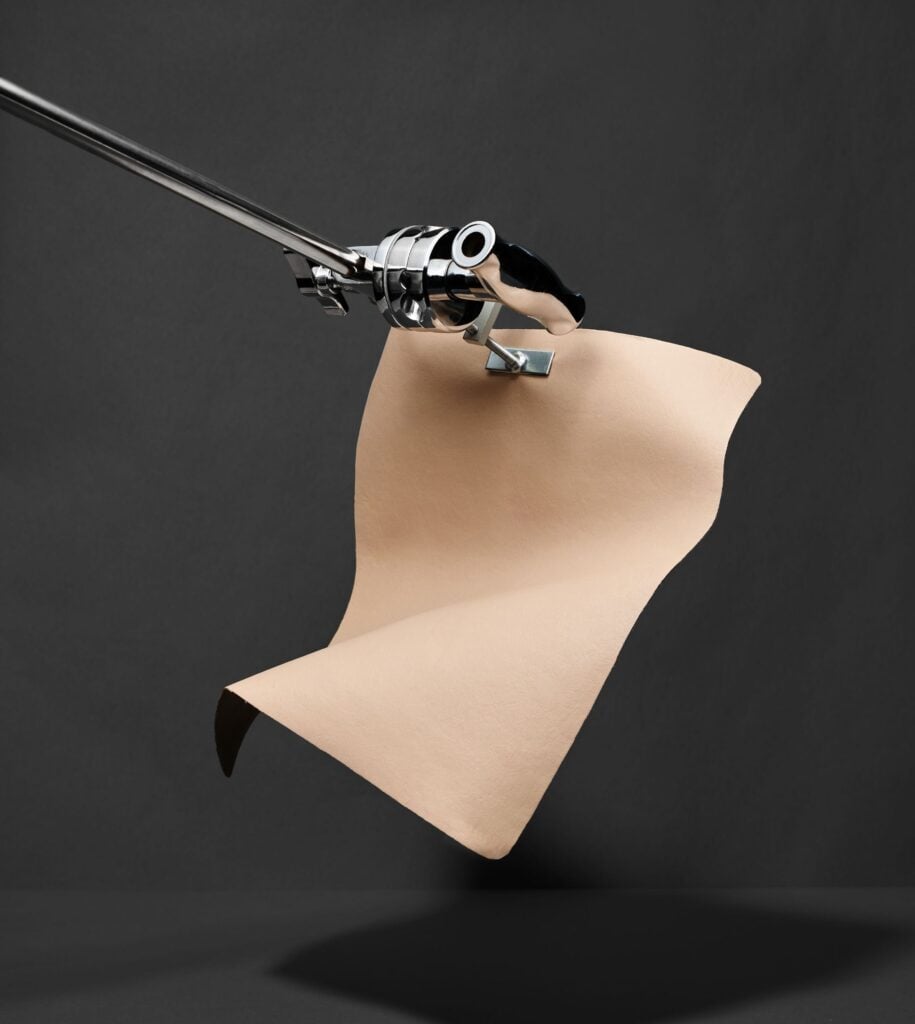
Reyva was founded by sixth-generation tanner Rutger Ploem, eco entrepreneur Stef Kranendijk, and pharmacologist Mark Post, who is best known for co-founding Mosa Meat and unveiling the world’s first cultivated meat burger.
It begins with a small, painless biopsy from living cows with the most desirable hides. Selected cells are banked and multiplied before being cultivated in proprietary tissue bioreactors, where they form uniform collagen sheets. These sheets are then sent to leading tanneries and finished using traditional techniques. The resulting material can be cut, stitched, embossed, and engineered to meet different requirements.
Besides the cells, the process uses no other animal inputs, and the resulting cultivated material can integrate seamlessly into existing leather manufacturing processes, allowing it to be utilised across the full leather goods industry.
“We cultivate bovine collagen from animal cells into uniform sheets, which are then tanned and finished using established leather-making expertise,” explains Newton.
“Our end-to-end production process currently takes approximately five weeks,” he adds. “As we improve the process, our longer-term goal is to reduce that timeline to three to four weeks.”
The company is industrialising its process at the Brightlands Maastricht Health Campus in the Netherlands, moving from lab production towards commercial volumes. “Initial availability will be limited, with capacity increasing as we reach successive scale-up milestones,” he says. “We have recently initiated our 1×2 sq m tissue bioreactor, providing us with full commercial size sheets for the first time.”
Pricing remains one of the biggest bottlenecks for Revya’s cell-based leather. “Our production costs are currently higher because we have not yet reached commercial scale. As we expand capacity and improve process efficiency, we will be price-competitive with high-end conventional leather,” notes Newton.
“Beyond the price per square metre, uniform sheets and controlled thickness offer the potential to improve cutting yields and reduce manufacturing waste.”
First product launches expected in first half of 2027
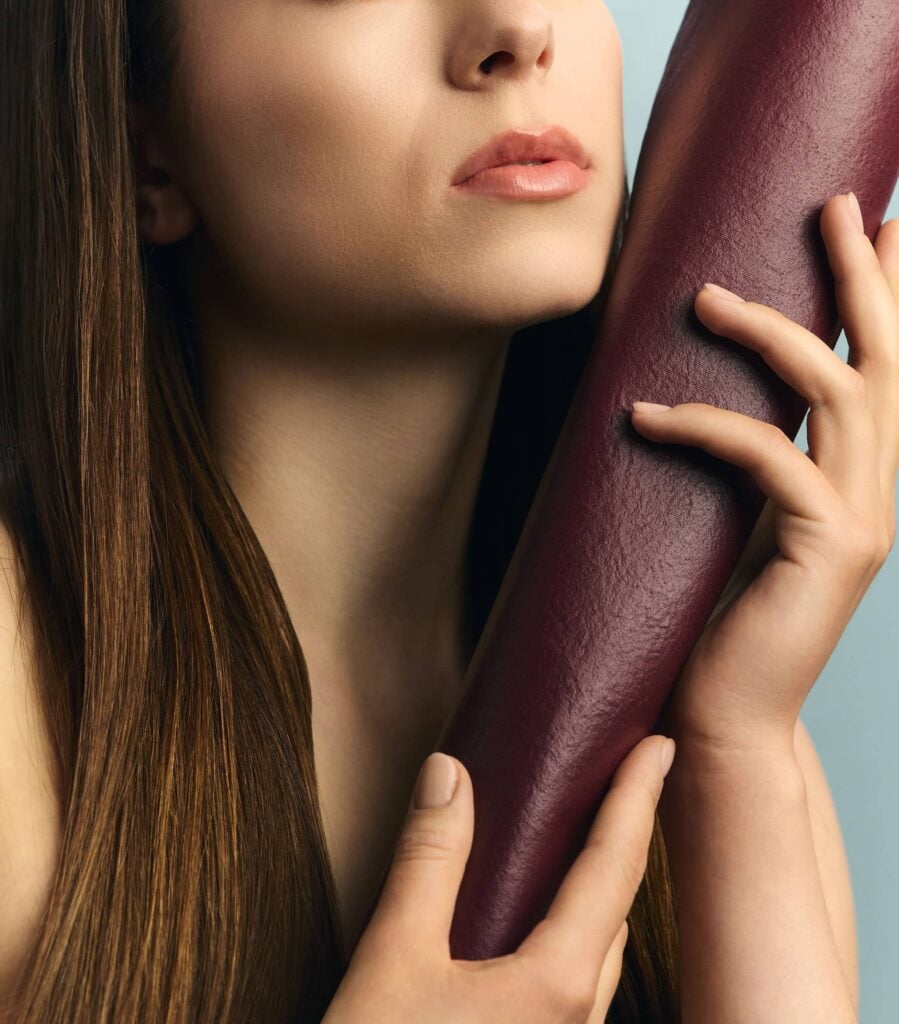
Since leather typically comes from animal hide, producing it is an energy– and water-intensive process linked to deforestation and biodiversity loss, and it generates many hazardous chemicals during tanning, which are detrimental to human health.
The fashion industry generates 8.3 million tonnes of methane annually (nearly four times as much as France), and leather alone accounts for 54% of this share, producing 110kg of CO2e per sq m when derived from cows. A more recent study using UN FAO data found that the true climate impact of leather is actually 70% higher than previous estimates.
And while synthetic leather emits 15.8kg of CO2e per sq m (an 85% reduction), it’s based on plastic. This material is derived from petrochemicals, is responsible for 3.4% of global emissions, and it takes 20 to 500 years to break down. It can also shed toxic microplastics that enter waterways, destroying aquatic life and wreaking havoc on our food systems.
This is where bio-based alternatives like Reyva’s shine. An independent life-cycle assessment by CE Delft estimates that its cultivated leather could have an 87% lower carbon footprint at full-scale production using renewable electricity in 2029. The analysis calculated CO2e emissions of 10.5kg per sq m at the tannery gate (including finishing), compared to a benchmark of 77-83kg for French calf leather.
Reyva does not need any regulatory approvals to commercialise its lab-grown leather, but instead will comply with all standard rules that apply to the conventional material.
Instead of targeting the beauty industry with cell-based collagen, the company’s focus for the foreseeable future remains on cultivating collagen sheets for leather, initially for luxury goods and automotive interiors.
“We are working towards commercial availability as we industrialise production and increase capacity. Our first product reveals are anticipated in the first half of 2027,” he reveals.
Several startups are advancing this technology. Paris-based Faircraft raised $16M in 2024, acquired fellow cultivated leather brand VitroLabs, and is working with local leather artisans and fashion brands.
In the UK, BSF Enterprise is advancing cell-based leather through its Lab-Grown Leather material, while Singapore’s ProjectEx is working on cultivating exotic leather alternatives to crocodile and ostrich. And in the US, Cultivated Biomaterials has created Angelry, a line of jewellery made with cell-based leather.