

60% of Indian Meat-Eaters Like Vegan Alternatives, But the Taste Gap with Animal Protein Persists


A majority of Indian meat-eaters like the flavour of plant-based meat and eggs and are interested in buying them, but further R&D is critical to closing the gap with their conventional counterparts.
India’s plant-based meat market is maturing quickly, but further investment in product innovation is crucial to help these products better compete with animal proteins, according to new research.
Nectar, the sensory analysis arm of Food System Innovations, partnered with the Good Food Institute (GFI) India and India Animal Fund to conduct a blind taste test of 700 meat-eaters in the metropolises of Bangalore and Mumbai.
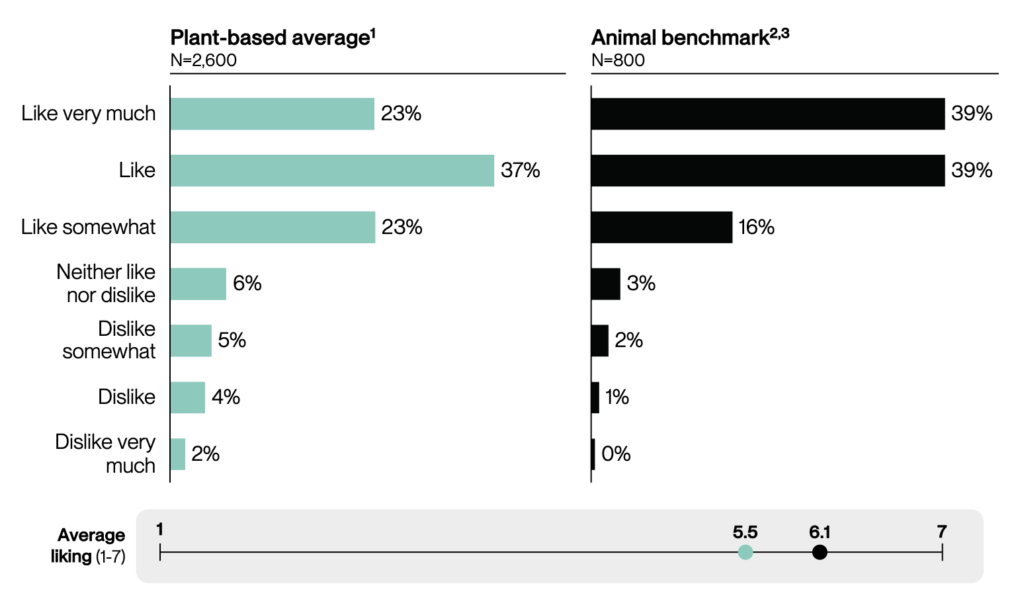
The results show that the average vegan meat and egg products are ‘liked’ or ‘liked very much’ by 60% of consumers, rising to 68% when assessing the taste of the market-leading alternatives. That’s in comparison to the 78% of respondents who hold the same view of conventional meat and eggs.
Overall liking scores for the 26 plant-based products tested ranged from 4.3 to 6.0 on a seven-point scale across seven meat categories, plus eggs. And broadly, 85% conceptually say they would buy vegan alternatives, versus 89% who say the same for animal proteins.
And while all plant-based categories trailed animal-derived meat or egg benchmarks, a few leading products approached taste parity, with no meaningful difference in liking. For instance, 70% and 68% of Indians rated vegan chicken patties and tikkas, respectively, as the same or better than the conventional versions.
That underlines the potential for targeted R&D to close sensory gaps and strengthen alternative proteins’ readiness for wider adoption. “Taste is paramount to the success of plant-based meat. Values can drive trial, but off-flavours or texture issues will prevent repeat purchases,” said Nectar director Caroline Cotto.
“We’re encouraged that participants liked a notable share of the products tested; however, important improvements are needed to better meet consumer taste expectations. These results give R&D teams clear direction on where to focus first.”
Flavour the biggest opportunity for plant-based meat in India
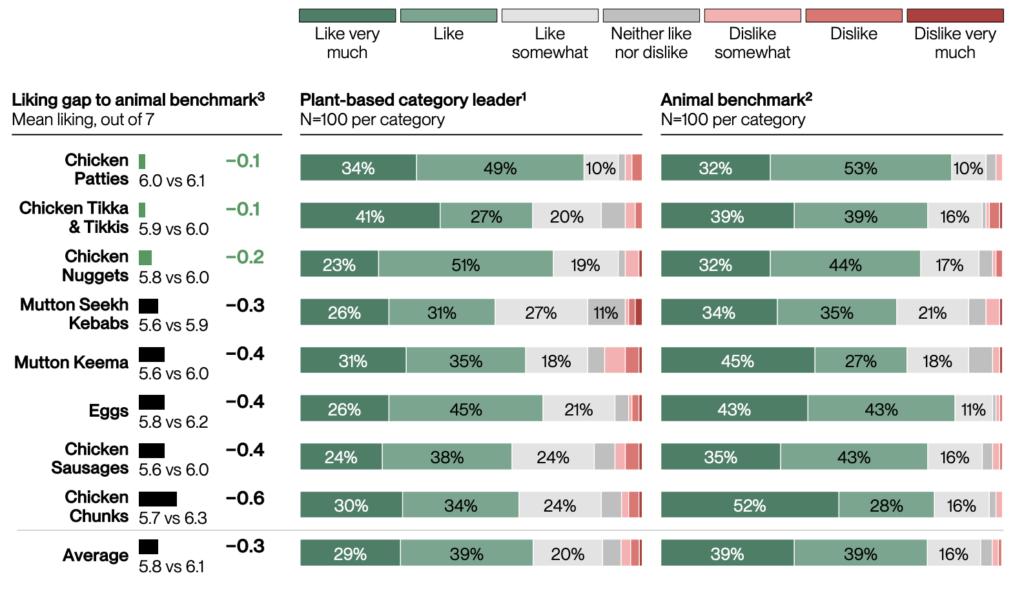
Chicken patties lead the taste race for plant-based meat in India, with 83% of consumers saying they ‘like’ or ‘like very much’ the flavour of the category-leading alternative, versus 85% who enjoy the conventional benchmark. That’s the smallest gap between a vegan and animal-derived product. The largest, however, materialises in the chicken chunks category (a 16-point difference).
There’s also a large chasm between the bottom-performing and best-performing plant-based products – the former are liked by 32% of Indians, and the latter by 73%.
When it comes to the category average, the widest gap occurs in the egg category, where plant-based analogues are only liked by 42% of taste-testers, compared to 86% who say the same for chicken eggs. But the research shows that R&D can lead to a boost in palatability, with the leading vegan egg product viewed as the same or better-tasting than the animal benchmark by 64% of participants.
The study suggests that R&D teams should prioritise improvements in flavour more than in texture or appearance, with a particular focus on increasing rich, buttery or animal-like flavours while reducing off-notes and unpleasant aftertastes.
“These findings point to a major opportunity for innovation. Indigenous crops and traditional food processing techniques could be used to improve the taste, flavour and texture of plant-based protein products,” said Sneha Singh, managing director of GFI India.
A recent analysis by GFI India and the CSIR-Institute of Himalayan Bioresource Technology found that meat alternatives and plant proteins available in the domestic market deliver comparable or higher bioavailable protein than meat.
“Drawing on India’s rich culinary traditions, these products could appeal to the Indian palate while helping meet the country’s growing demand for protein sustainably,” said Singh.
Protein first, everything else after
The taste tests come amid a protein boom in India, where studies suggest 73% of citizens don’t get enough of this nutrient. But a 2025 poll showed that 37% of Indians want to add more plant proteins to their diets, and a greater share want to increase their protein intake from plant-based sources than from animal products.
This new research reveals that 99% of consumers consider protein important, and 74% want to eat more meat or eggs to meet their intake goals. According to the authors, that provides an opening for plant-based manufacturers: for instance, purchase intent for vegan chicken sausages is higher (71%) than it is for conventional ones (64%).
Indians recognise animal welfare, eco-friendliness, and the uniqueness of plant-based options as their biggest strengths over animal proteins, while there was no difference in the health perception around both categories.
Conversely, the starkest difference between conventional products and vegan alternatives is around protein concentration and taste, with the former category rated more positively.
The research suggests that Indians mainly focus on lunch (65%) and dinner (50%) as protein occasions, and these figures rise to 91% and 92%, respectively, when it comes to meals where they most depend on meat for protein. This indicates that plant-based producers shouldn’t focus on breakfast-style products, but rather those that fit into meals after noon.
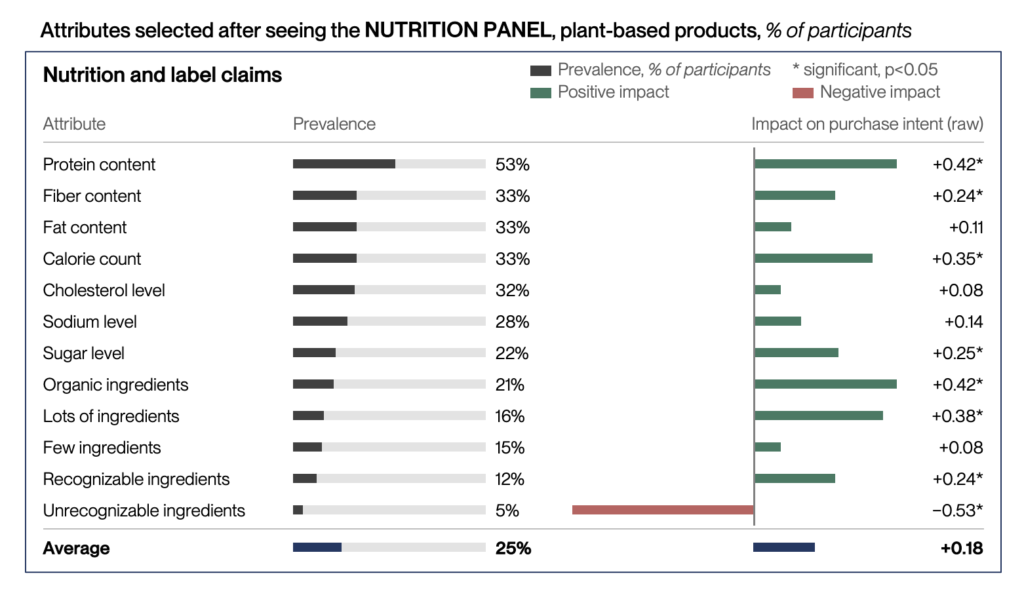
Meanwhile, protein content is the most-noticed claim on the nutritional label of a product, and has the highest impact on purchase decisions, too, followed by fibre content. Unrecognisable ingredients are the least noticed, but are the only component associated with a negative effect on purchases. So ultra-processing matters to Indians, but nowhere near as much as protein does.
“India’s protein needs are growing, and this study suggests plant-based options are well received in principle,” said Rekha Raghunathan, CEO of India Animal Fund.
“Consumers value their ethical and environmental benefits, and the next stage of growth will depend on continued innovation in sensory quality and on products developed with India’s diverse food cultures in mind. With progress on both fronts, plant-based protein can become a lasting part of how India eats.”