

Bezos Centre for Sustainable Protein Kicks Off Equity-Free Future Food Accelerator

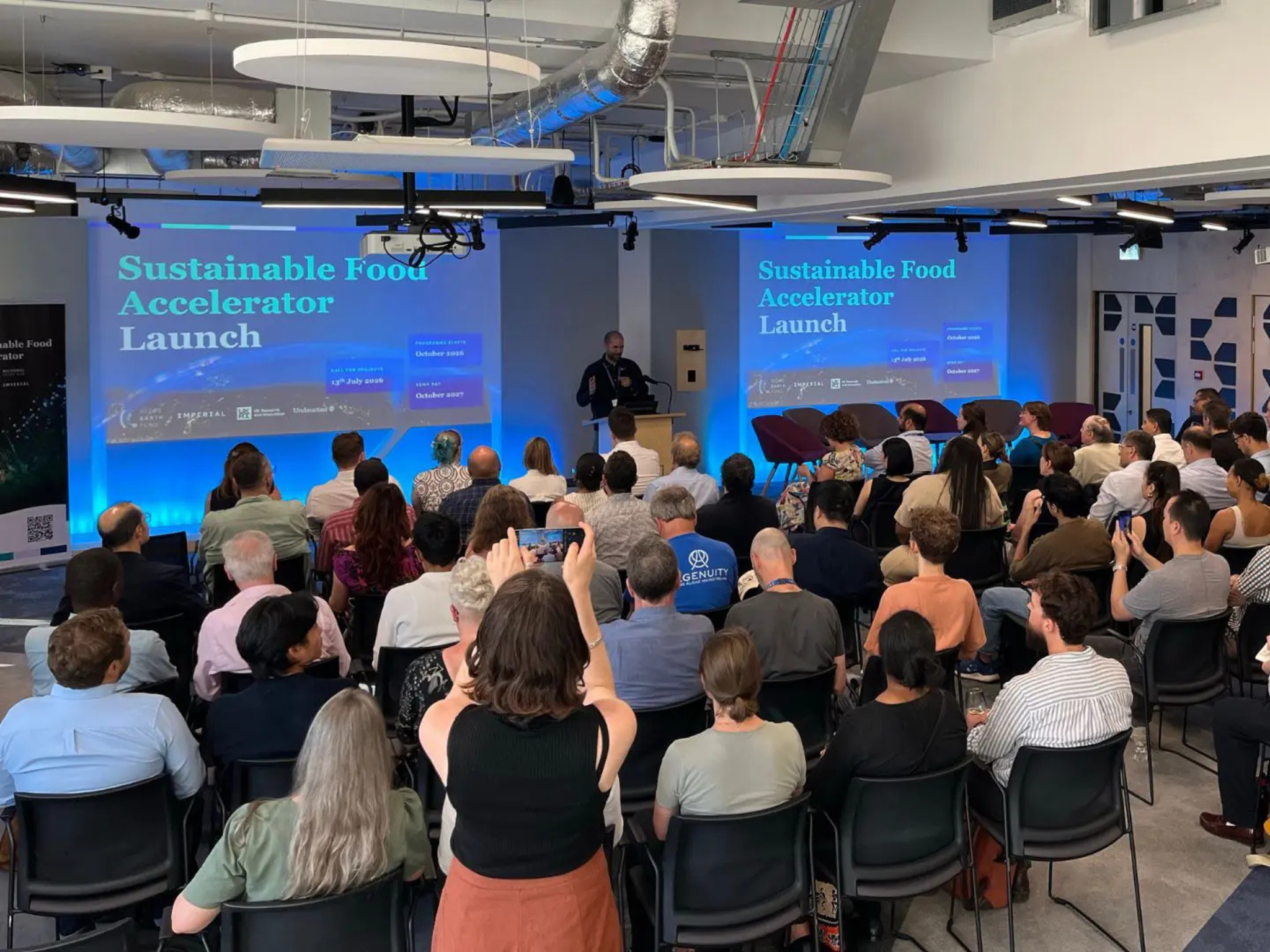
The Bezos Centre for Sustainable Protein and Imperial College London have launched a future food accelerator to help startups reach commercial scale, connecting them with Danone, Mars, Cargill and Kerry.
Bezos Earth Fund is extending its future food focus by building on its ongoing partnership with Imperial College London to help startups navigate the food tech ”valley of death”.
The fund’s Centre for Sustainable Protein, located at Imperial College, has joined forces with the university’s Undaunted climate innovation centre and the Microbial Food Hub to launch a Sustainable Food Accelerator.
The 12-month programme is built around industry challenges identified by Cargill, Danone, Kerry and Mars, who have committed pilot budgets for ventures that meet the agreed milestones.
Future food startups will be able to access up to £100,000 ($134,000) in equity-free funding, and as much as £2M ($2.7M) in potential venture investments from Oyster Bay VC and Foodlabs.
The accelerator aims to address ”one of the most difficult gaps” in sustainable food innovation: transforming promising tech, ingredients and processes into solutions corporations can validate, investors can back, and the market can adopt.
”Too many promising technologies struggle to make the journey from lab to plate,” said Alyssa Gilbert, director at Undaunted and innovation director at Imperial Grantham Institute.
”This partnership strengthens pathways between deeply technical scientific discovery, and commercial success, helping founders leverage cutting-edge research, specialist expertise and infrastructure across Undaunted and Imperial, in tandem with overcoming technical, commercial and investment barriers to growth with strategic corporate partners,” she added.
Investors and food industry giants join forces to propel future food startups
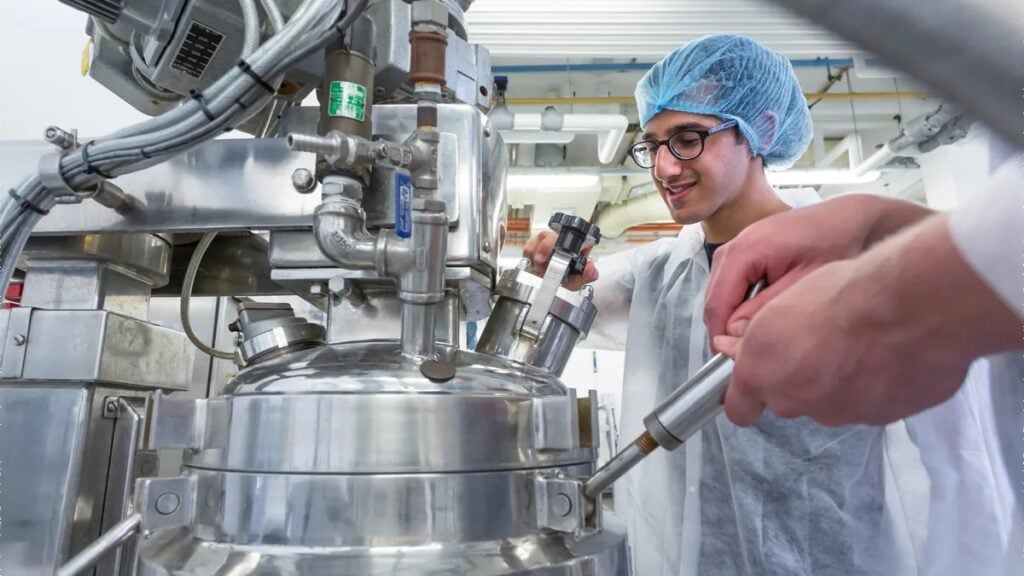
According to the Centre for Sustainable Protein, promising science often lacks a clear route to market, with many startups reaching the same difficult transition point.
The science may be strong, but they often lack pilot-scale data, evidence of product performance, regulatory clarity, cost modelling, technical specification, and commercial validation – all crucial to move from lab scale to real-world adoption.
That has a cascading effect. Corporations need confidence before committing to pilots and investors need evidence before backing scale-ups – but founders need infrastructure, partners and market insights before they can generate that evidence.
It’s a big reason why the alternative protein sector witnessed a seven-year low in VC funding last year, and why consolidation is sweeping through it: more than 80 companies involved in the space have been bought out or acquired, merged, fallen into insolvency, or ceased operations since September 2024.
One of the accelerator’s core principles is that future food businesses should build towards the technical, commercial and regulatory proof the industry actually needs. So instead of supporting startups in isolation, it’s being shaped around real market demand.
The four aforementioned corporate partners will define commercial challenges and help clarify the evidence required to progress towards a pilot.
They’re joined by investors across the food tech sector to help deliver the programme’s goals, including Beyond Impact, Big Idea Ventures, Biotope by VIB, Clay Capital, Döhler Ventures, FoodLabs, Newland Ventures, Oyster Bay, SOSV, Synthesis Capital, and The Mills Fabrica.
Selected companies will receive technical validation, regulatory insights, grant writing support, investor readiness training, and access to scale-up infrastructure to generate the commercial proof needed to secure pilots and investment.
Startups will gain access to scale-up infrastructure from a host of partners
The first cohort of the accelerator will focus on developing technologies that can respond to the evidence, performance and scale-up challenges faced by the future food industry today.
These include solutions to improve production economics, deliver stronger ingredient performance, unlock circular food system inputs, and derisk the scale-up journey.
The accelerator will focus on breakthroughs that reduce costs and boost production efficiency, and infrastructure, tools and capabilities that enable real-world validation.
Startups will design ingredients that deliver the taste, texture, nutrition and functional performance consumers expect, and technologies that transform waste streams and low-carbon feedstocks into high-value, scalable food ingredients.
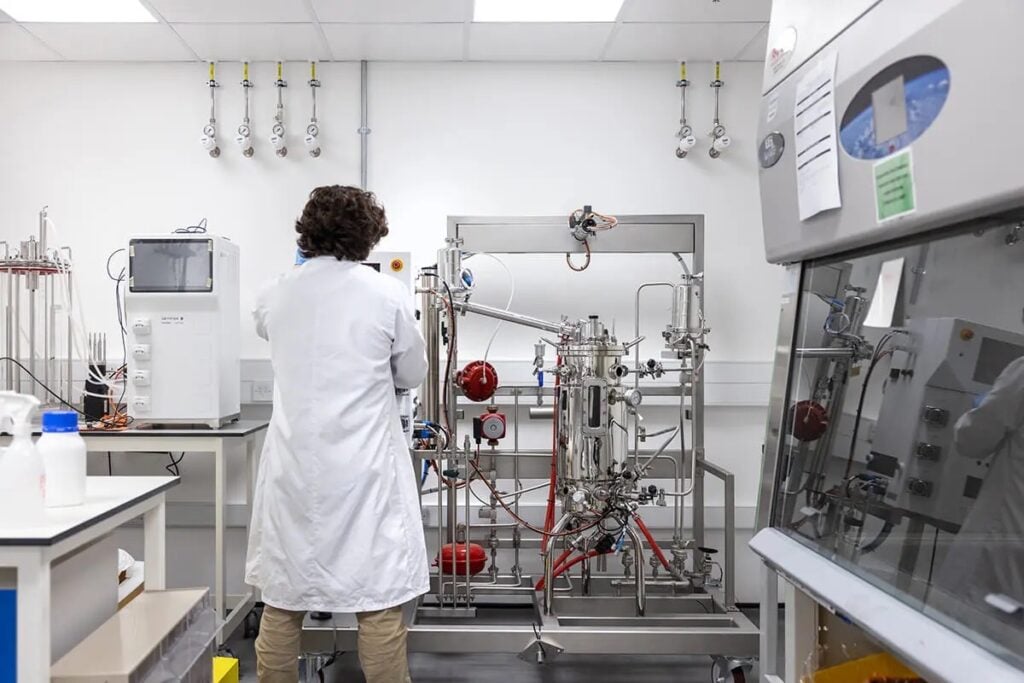
They will be able to access a connected network of research and innovation facilities, spanning discovery and strain engineering, bioprocessing, pilot scale-up, downstream processing, analytical characterisation, food application, and product prototyping.
This network, which includes universities and scale-up partners across the UK and Europe, is designed to help ventures move across the development pathway, from early-stage discovery and strain engineering through to pilot-scale production, food-grade product development, sensory analysis, and commercial validation.
The Centre for Sustainable Protein was set up via a $30M investment from Bezos Earth Fund, with sister hubs in the US and Singapore, as part of a $100M commitment towards alternative proteins. That itself is a core part of its $1B Future of Food initiative.
“Many of the technologies needed to transform the food system already exist in laboratories, startups and research teams. The challenge is helping them become scalable, investable and useful to industry,” said Rodrigo Ledesma Amaro, Director of the Bezos Centre for Sustainable Protein.
”The Sustainable Food Accelerator has been designed to close that gap. By connecting founders with corporate demand, scale-up infrastructure, regulatory insight and investment networks, we want to help promising science become commercial reality.”