

All G Debuts Cow-Free Lactoferrin in US, with Human-Identical Protein Launch Imminent

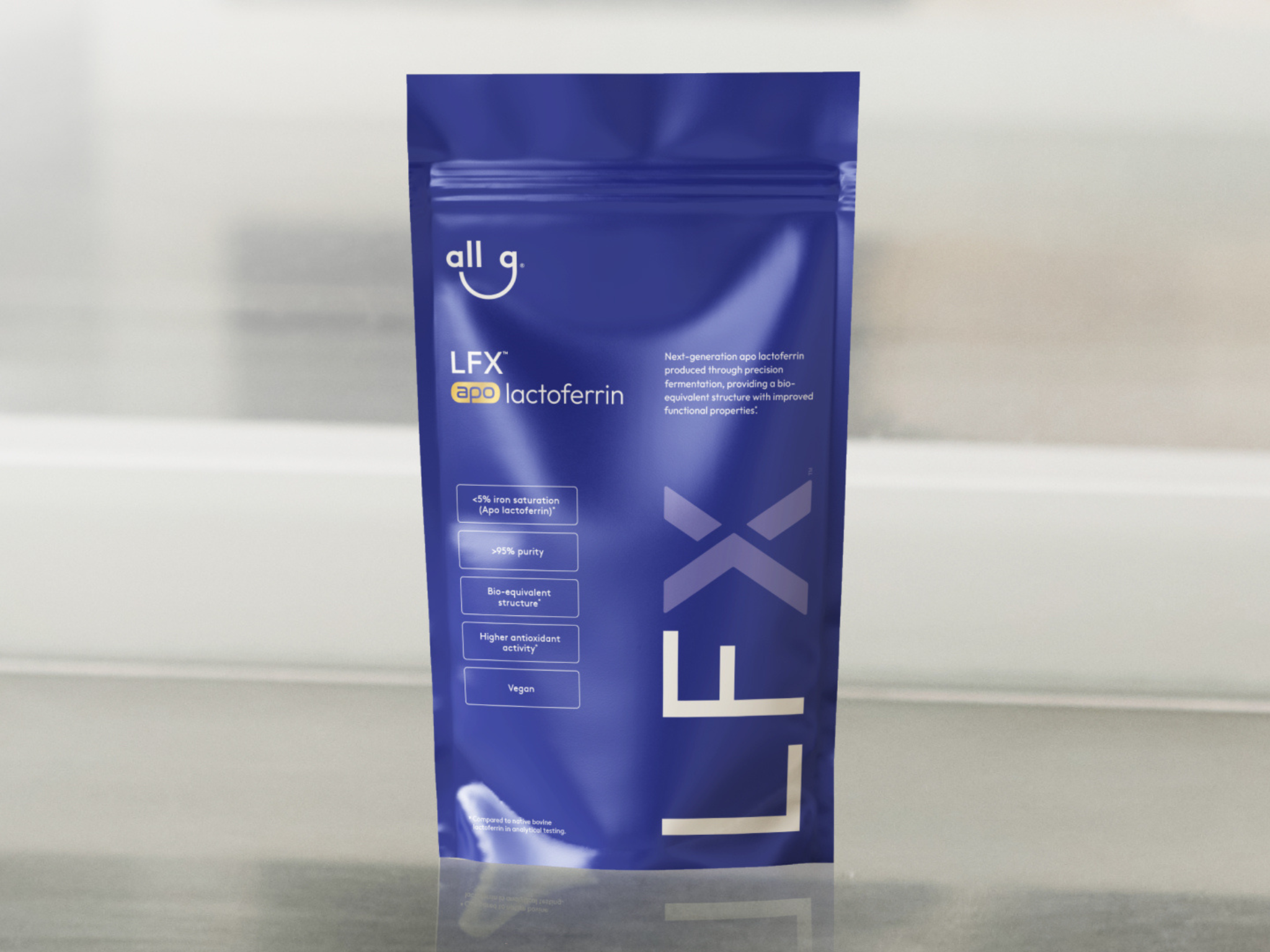
Australian startup All G has launched its precision-fermented bovine lactoferrin in the US, just as it plans a second facility and expects to bring its human lactoferrin ingredient to market within six months.
Months after securing a ‘no questions’ letter from the US Food and Drug Administration for its cow-free lactoferrin protein, Australia’s All G has now launched the precision-fermented ingredient in the country.
Called LFX, the innovation is a powdered form of apo-lactoferrin that can be used by manufacturers for a host of applications, including functional food and drinks, dietary supplements, and products geared towards active nutrition, gut wellness, healthy ageing, women’s health, and immune support.
“The first product for the US market has already been shipped and is being used in supplements right now,” reveals All G co-founder and CEO Jan Pacas, adding that the proprietary nature of its formulations prevents the startup from naming its customers. “We expect to announce several branded partnerships before SupplySide Global in Las Vegas in late October.”
Why All G is targeting a low-iron form of lactoferrin
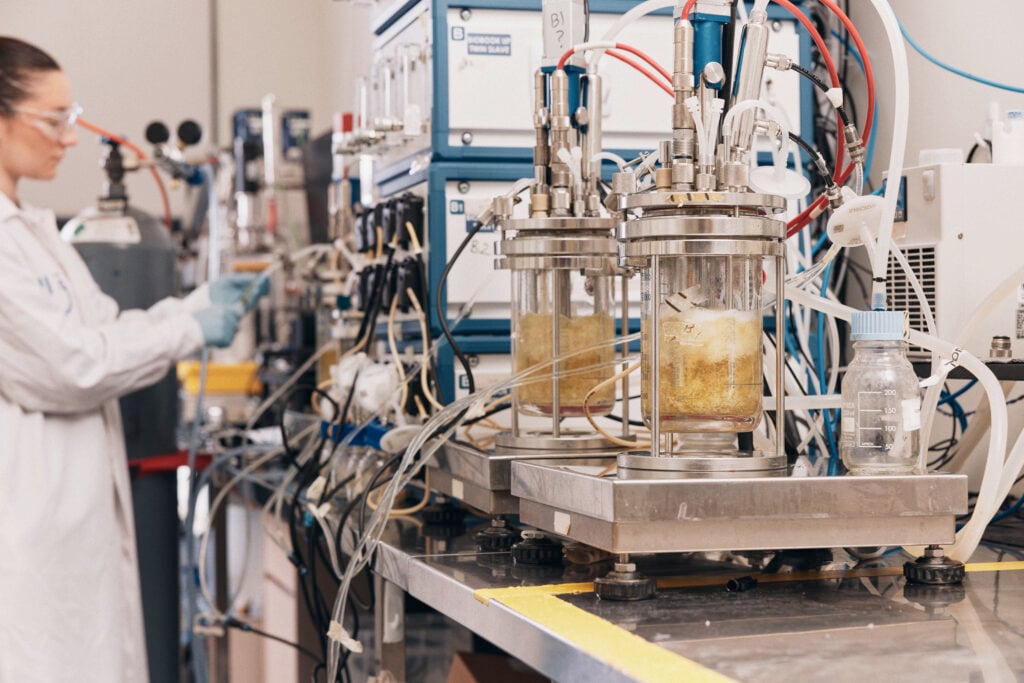
Precision fermentation involves inserting specific DNA into microbes to instruct them to produce desired molecules when fermented. All G employs this tech to produce both dairy and human milk proteins, starting with a bioidentical version of bovine lactoferrin.
Lactoferrin is a glycoprotein found in both bovine colostrum and human milk, known for its iron-regulating abilities. It’s prized for its antiviral, antibacterial, immunity-boosting, and gut-strengthening properties, and is used to treat low iron levels during pregnancy, lower the risk of respiratory tract infections, and enhance metabolism.
Its biological activity is strongly influenced by iron saturation (the amount of iron already occupying the protein’s binding sites). There are three types of lactoferrin. The native form found in dairy features around 20% iron saturation after processing. Holo-lactoferrin is heavily iron-loaded, with over 80% saturation. And apo-lactoferrin, which naturally occurs in breast milk, has very little iron bound to it.
All G is focused on the latter. Its ingredient contains less than 5% iron saturation, which it achieves during the fermentation process rather than through filtration.
“Apo-lactoferrin boasts rigorously proven superior health benefits to partially saturated or (fully saturated) holo-lactoferrin, across areas like iron absorption, immune support and gut health,” explains Jared Raynes, All G’s co-founder and chief scientific officer.
When iron saturation is low, empty iron-binding sites can bind excess free iron and help regulate homeostatis, limit the amount of iron available to harmful bacteria, support gut health, promote immune cell activity, and improve dietary iron absorption, without requiring the body to consume more iron.
A white paper published by the startup outlines how, compared to holo-lactoferrin, this low-iron form of the protein can better boost iron absorption in meals, reverse gut damage, lower inflammation, guard against bacteria like E. coli, enhance immunity and bone health, and support healthy ageing.
All G in talks for second contract manufacturing facility
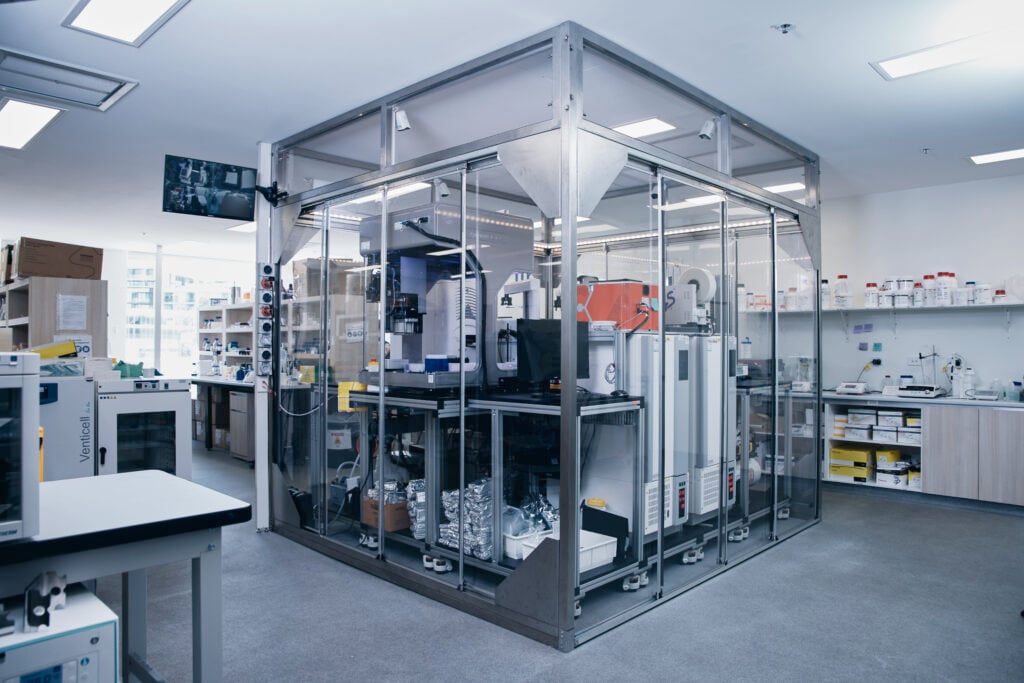
Lactoferrin is present in small concentrations in cow’s milk, and extracting 1kg of purified lactoferrin requires at least 10,000 litres of milk. This drives up costs, ranging from $600 to $2,000 per kg. Producing it via microbes in bioreactors can solve this bottleneck and enable companies to scale up the ingredient.
That effect is even more pronounced with apo-lactoferrin. “Beyond the general supply constraints that make lactoferrin hard to source, the dairy industry can only produce apo-lactoferrin through harsh intervention in downstream processing – by lowering the pH to strip the iron from the lactoferrin,” says Raynes.
“This process is well known to degrade the lactoferrin. For this reason, apo-lactoferrin has only been offered for pharmaceutical applications as the price is close to double the price of widely available, partly saturated lactoferrin.”
All G is producing single-digit tonnes of LFX per year at a 60,000-litre scale (though its potential capacity can reach tens of tonnes), with a yield that delivers positive unit economics when sold at the current market price of bovine lactoferrin, according to Pacas.
“We are producing with one of the top global fermentation contract manufacturing organisations in China, [which] has the experience and quality consistency that will allow us to scale precision-fermented lactoferrin globally,” he says.
“Talks of a second facility, likely in Europe, are well underway. On this part, we are leveraging our established relationships with our joint venture partner Savencia and our strategic investor partner Döhler. All G keeps local stock in the US for fast fulfilment of US customers.”
Its launch comes amid a lactoferrin wave in the US, with more and more precision fermentation companies dedicating their resources to commercialising this protein. Helaina‘s human lactoferrin is already available in around a dozen products, and Nestlé is now working with the startup to develop baby formula.
TurtleTree’s bovine lactoferrin is also on the market via products like IronKind (by its consumer brand Intentional) and Waywyld’s supplement powder, with the firm now manufacturing and commercialising its protein with Novonesis. Meanwhile, Vivici has self-affirmed Generally Recognized as Safe (GRAS) status for its bovine lactoferrin in the US.
“Although we welcome any competition, achieving a low iron saturation at commercial scale is significantly more challenging than at lab scale and we have yet to see any other company prove that it can be done,” Raynes says when asked how All G plans to compete in this red-hot space.
“From publicly available data relating to our precision fermentation competitors, they are producing lactoferrin that is very highly saturated. On top of our low iron saturation, our product carries over 93% protein content, over 95% purity, and over 95% binding to heparin, the latest industry standard measure for bioactivity.”
Human lactoferrin set to launch within six months
All G has previously called its FDA green light a gateway for clearance in other markets, establishing a regulatory precedent for similar ingredients globally. The company already has a green light to use its lactoferrin for personal care sales in China, and is targeting approval for infant formula (which will involve a separate GRAS filing and additional safety data).
Further, the company is working on a human-identical version of lactoferrin, which is present in up to 10 times higher concentration in breast milk. Bovine lactoferrin only shares about 70% homology with the human milk version, which can influence how efficiently the protein is recognised, absorbed and utilised by the body.
“We will have a self-affirmed GRAS for human lactoferrin before the end of 2026, and we will be in market within six months,” says Pacas. “The data we have generated from our scale-up human lactoferrin batches is significantly superior to what is currently on the market. One thing we can already share now is that our human lactoferrin will also come in apo-form, mimicking human breast at around 4% iron saturation.”
Raynes believes that human and bovine equivalent lactoferrin will co-exist, with the former serving the markets “where it makes the biggest difference, such as women’s health and infant nutrition”.
“At the same time, bovine lactoferrin remains one of the most studied and proven proteins for human health, backed by thousands of peer reviewed papers and dozens of clinical trials. We can’t simply dismiss that body of research and write off this protein just because human lactoferrin is now available,” he outlines.
“Bovine and human lactoferrin will also be priced differently, putting bovine in a more accessible category and keeping the option open for formulators that are price conscious.”
All G, which has secured $36M to date and is currently fundraising, is additionally developing human beta-casein (which makes up 20-45% of the protein content in breast milk).
Raynes says this is “progressing well towards scale-up”, following the award of an A$1.1M ($775,000) biosciences grant from the New South Wales government: “This protein is key in our pathway to humanising infant formula using our precision-fermented human breast milk proteins.”